You're viewing free preview questions — 5 questions previewing here — subscribe to unlock 109 more, plus the Full Question Bank, Mock Papers & Worksheets.Upgrade
Immune System and Diseases — Free MYP5 Biology Practice Questions

1QuestionAntibiotics, Resistance, and Public HealthConcept Practice
2 marks~3 minCriterion A
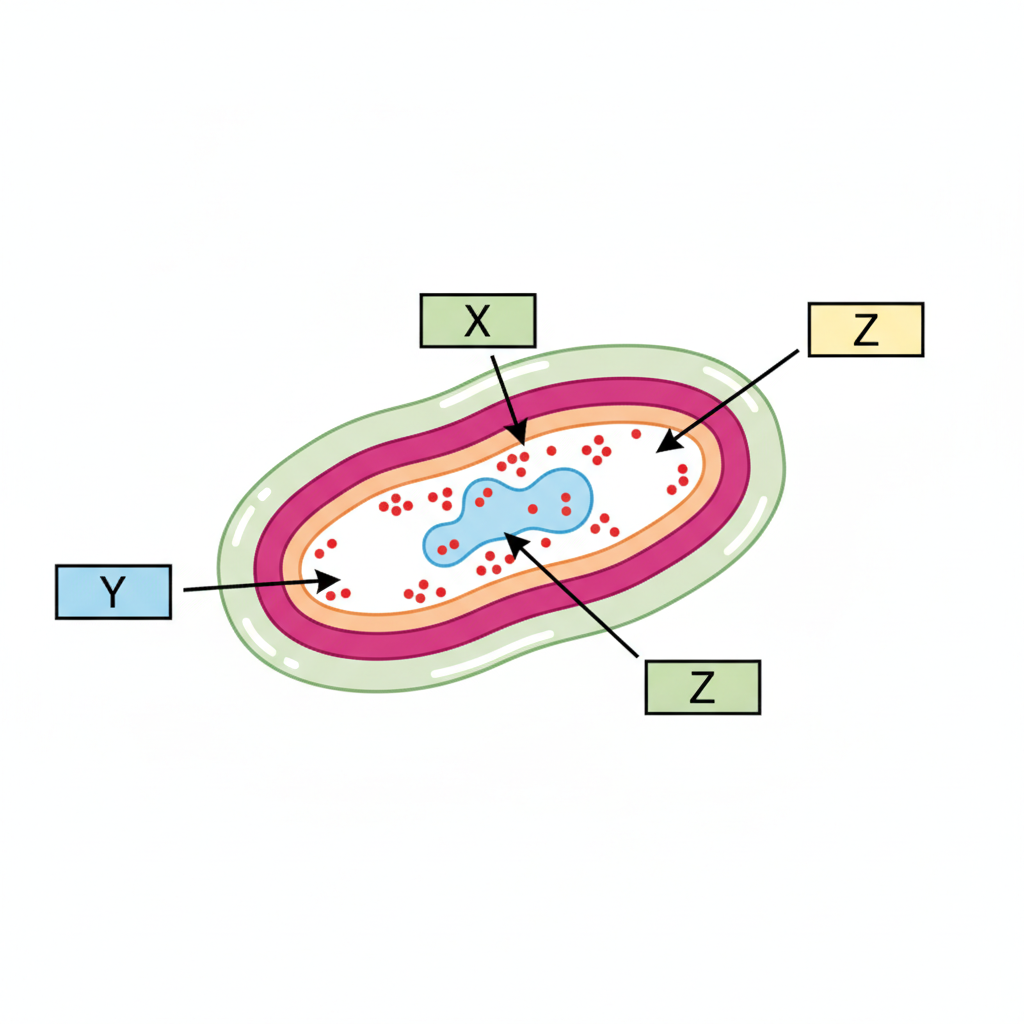
Penicillin is a widely used antibiotic that disrupts a specific structure found in bacterial cells but absent in human cells.
The diagram below shows a cross-section of a bacterium with structure X labelled.
The diagram below shows a cross-section of a bacterium with structure X labelled.
a
Identify structure X. [1]
b
Explain why structure X makes an effective target for penicillin antibiotics. [1]

Solutions
2QuestionAntibiotics, Resistance, and Public HealthAssessment Practice
2 marks~3 minCriterion D
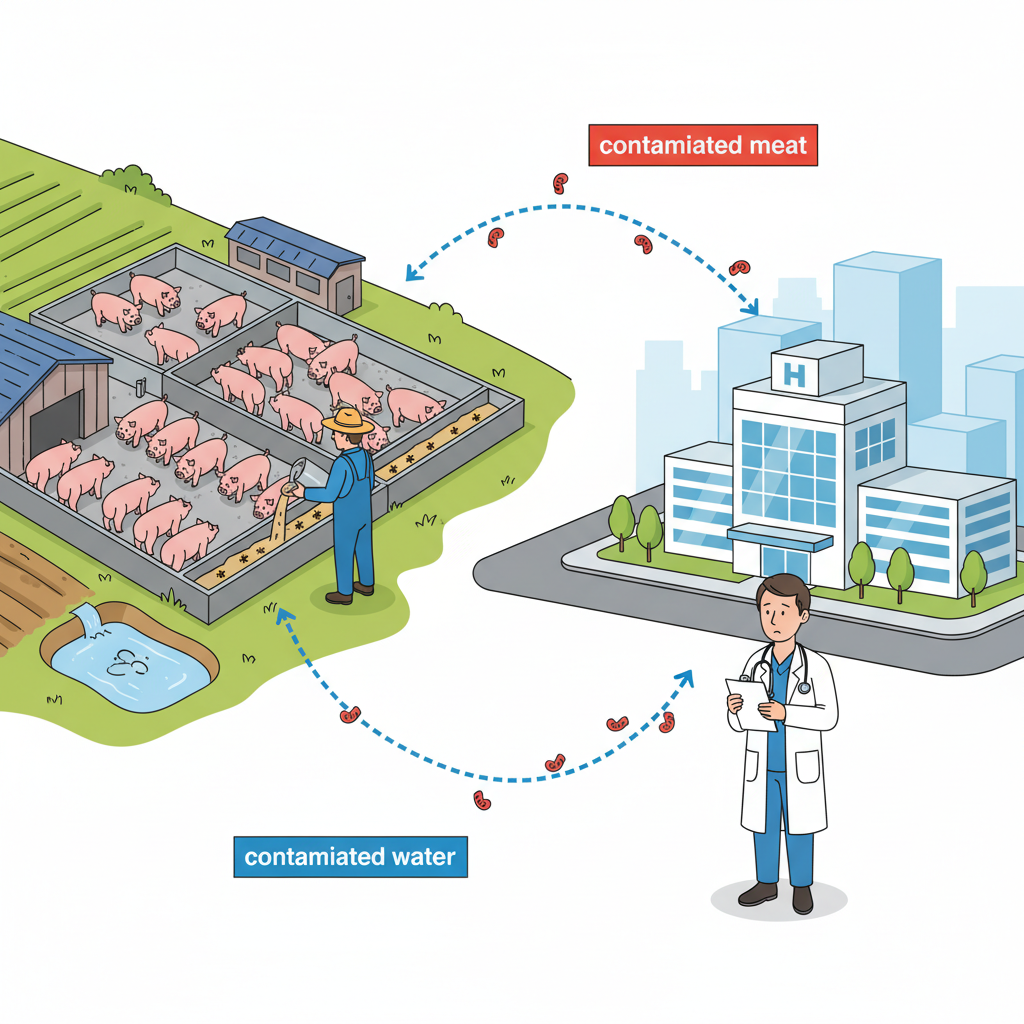
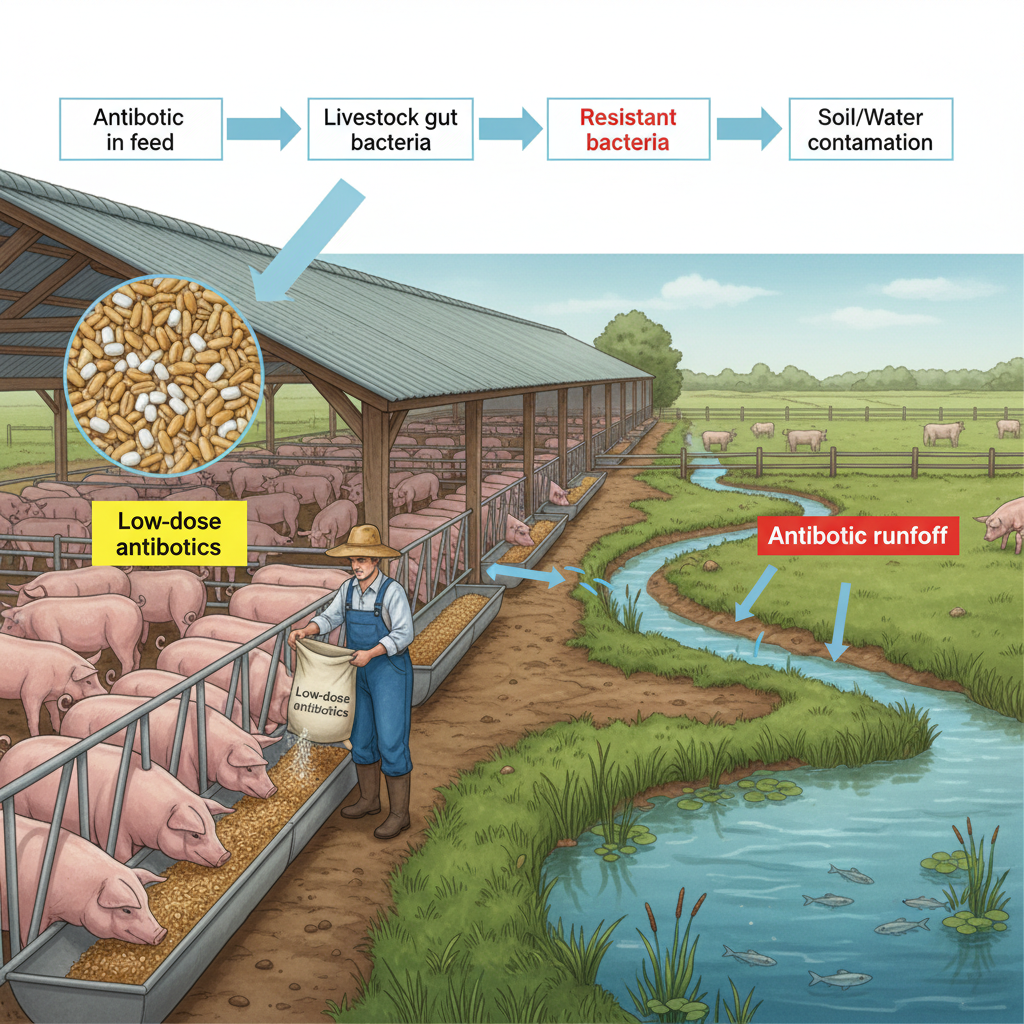
In many countries, farmers routinely administer low doses of antibiotics to healthy livestock to accelerate growth and prevent disease outbreaks in crowded conditions. Resistant bacteria can then transfer to humans through the food chain, contaminated water, or direct contact with animals.
a
Outline one specific agricultural practice that involves antibiotic use. [1]
b
Explain the ethical conflict this practice creates for public health. [1]
Solutions
3QuestionComponents of the Immune SystemAssessment Practice
3 marks~5 minCriterion C
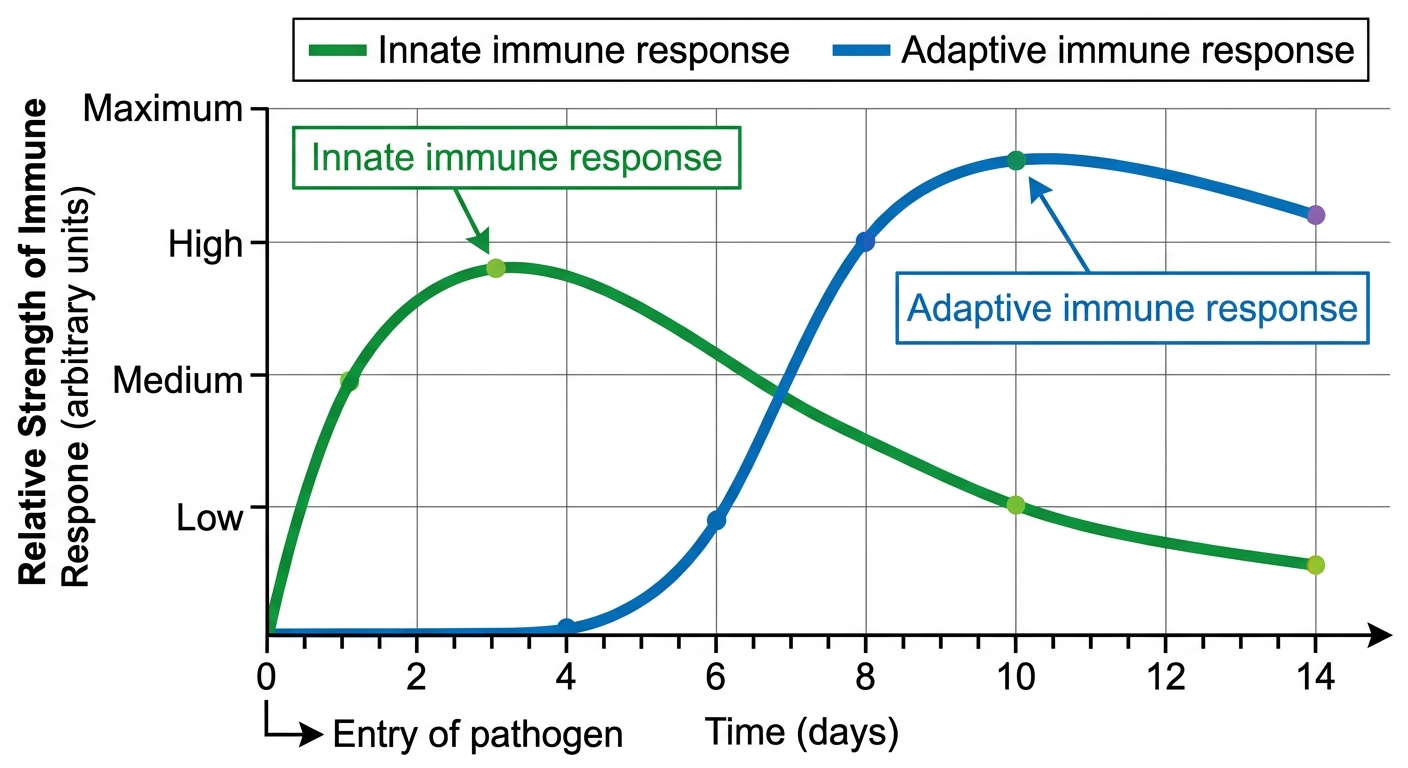
The graph shows the relative strength of the innate and adaptive immune responses over 14 days following pathogen entry into the body.
a
Describe the trend of the innate immune response shown in the graph. [1]
b
Explain why the adaptive immune response peaks later than the innate response. [1]
c
A patient with a genetic condition lacks functional B cells and T cells. Analyse how this would affect their ability to fight a pathogen over the 14-day period shown, compared to a healthy individual. [1]
Solutions
4QuestionAntibiotics, Resistance, and Public HealthAssessment Practice
4 marks~6 minCriterion A
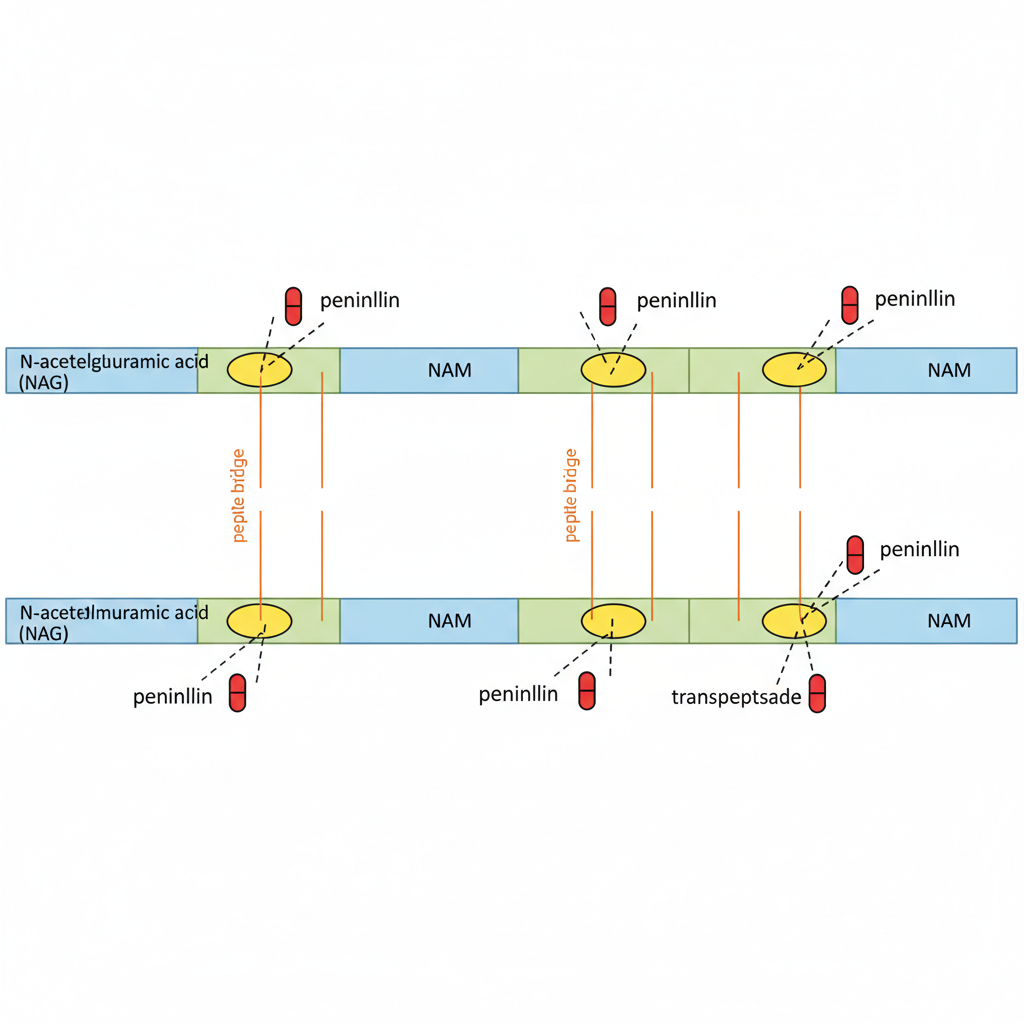
The diagram below shows a simplified bacterial cell wall. Peptidoglycan strands — composed of alternating -acetylglucosamine and -acetylmuramic acid — are linked by short peptide bridges. The enzyme transpeptidase catalyses the formation of these cross-links. Penicillin molecules are shown binding to transpeptidase at the cross-link sites.
a
State the function of the bacterial cell wall. [1]
b
Explain how penicillin inhibits transpeptidase and prevents cell wall synthesis. [1]
c
Analyse how the inhibition of transpeptidase ultimately leads to bacterial cell death, referring to osmotic pressure in your answer. [2]
Solutions
5QuestionAntibiotics, Resistance, and Public HealthAssessment Practice
6 marks~9 minCriterion D
A farmer routinely adds low doses of antibiotics to the feed of healthy livestock to promote faster growth. This practice is widespread in industrial agriculture across many countries, though regulations vary considerably by region. Some nations have introduced partial bans, while others permit unrestricted sub-therapeutic use. Antibiotic residues are excreted by animals and enter surrounding environments through manure and agricultural runoff.
a
Explain how routine sub-therapeutic antibiotic use in livestock contributes to antibiotic-resistant bacteria entering the human food chain. [2]
b
Analyse the ecological consequences of antibiotic runoff from farms entering adjacent soil and water systems. [2]
c
Evaluate the effectiveness of current regulations governing agricultural antibiotic use, and propose one specific improvement. [2]
Solutions
That's every free question here — 5 of 114.
+109 more questions, plus Mock Papers & Worksheets, are waiting in Premium.