You're viewing free preview questions — 5 questions previewing here — subscribe to unlock 124 more, plus the Full Question Bank, Mock Papers & Worksheets.Upgrade
Nervous systems — Free MYP5 Biology Practice Questions

1QuestionCentral and Peripheral Nervous SystemConcept Practice
4 marks~6 minCriterion A
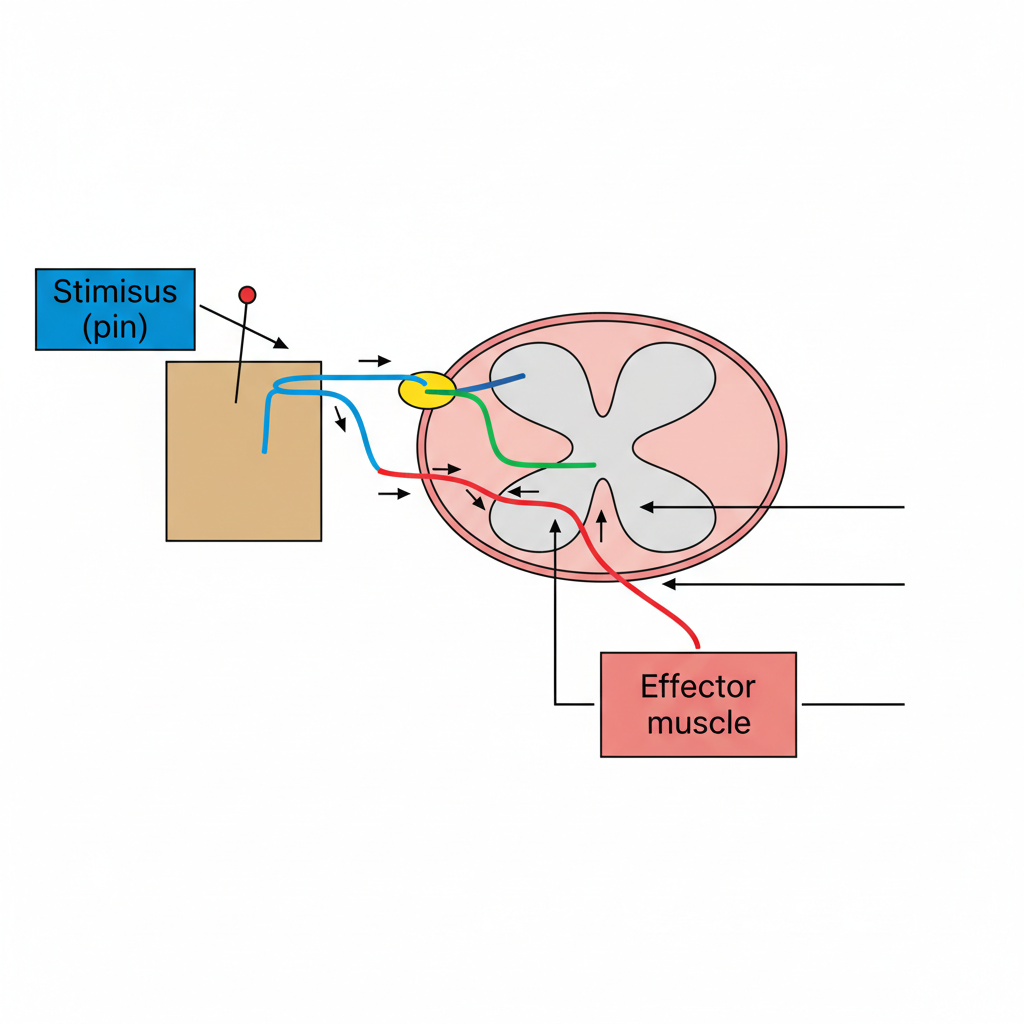
The diagram below shows a spinal reflex arc. A pin pricks the skin, generating a nerve impulse that travels through three neurons before reaching a muscle.
a
Identify the four labelled components of the reflex arc shown in the diagram. [2]
b
Explain the sequence of signal transmission from the moment the pin pricks the skin until the muscle responds, describing the role of each component identified in part (a). [2]

Solutions
2QuestionCommon disordersAssessment Practice
2 marks~3 minCriterion D
A 35-year-old woman with a family history of Huntington's disease — a neurodegenerative disorder caused by a dominant allele — is currently symptom-free and considering predictive genetic testing.
Identify and explain one ethical issue she may face when deciding whether to undergo this testing. [2]
Identify and explain one ethical issue she may face when deciding whether to undergo this testing. [2]

Solutions
3QuestionCommon disordersAssessment Practice
3 marks~5 minCriterion A
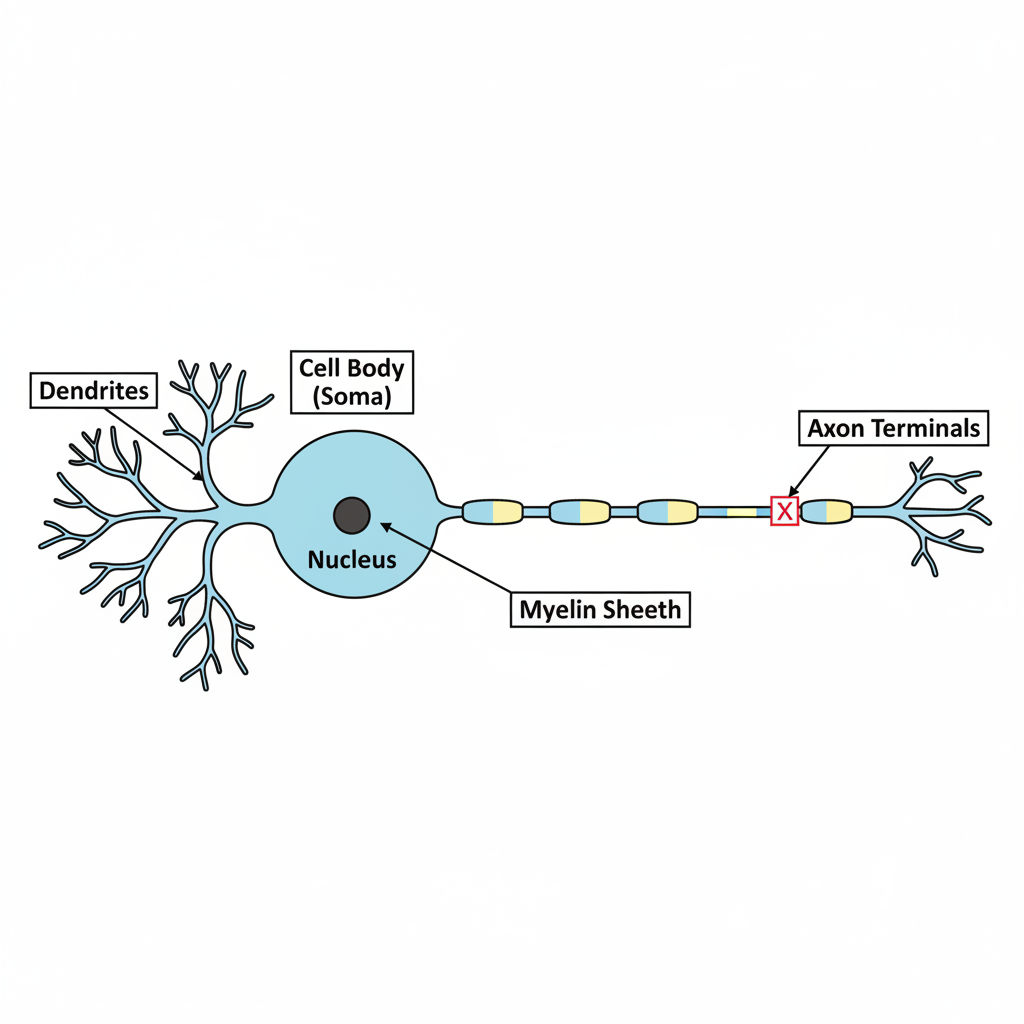
The diagram shows a myelinated neuron with structure X labelled on the axon.
a
Identify structure X. [1]
b
Explain how structure X increases the speed of nerve impulse transmission along the axon. [1]
c
A patient with multiple sclerosis (MS) shows progressive damage to structure X. Evaluate how this damage accounts for the slowing of nerve impulse transmission seen in MS patients. [1]
Solutions
4QuestionCentral and Peripheral Nervous SystemAssessment Practice
4 marks~6 minCriterion D
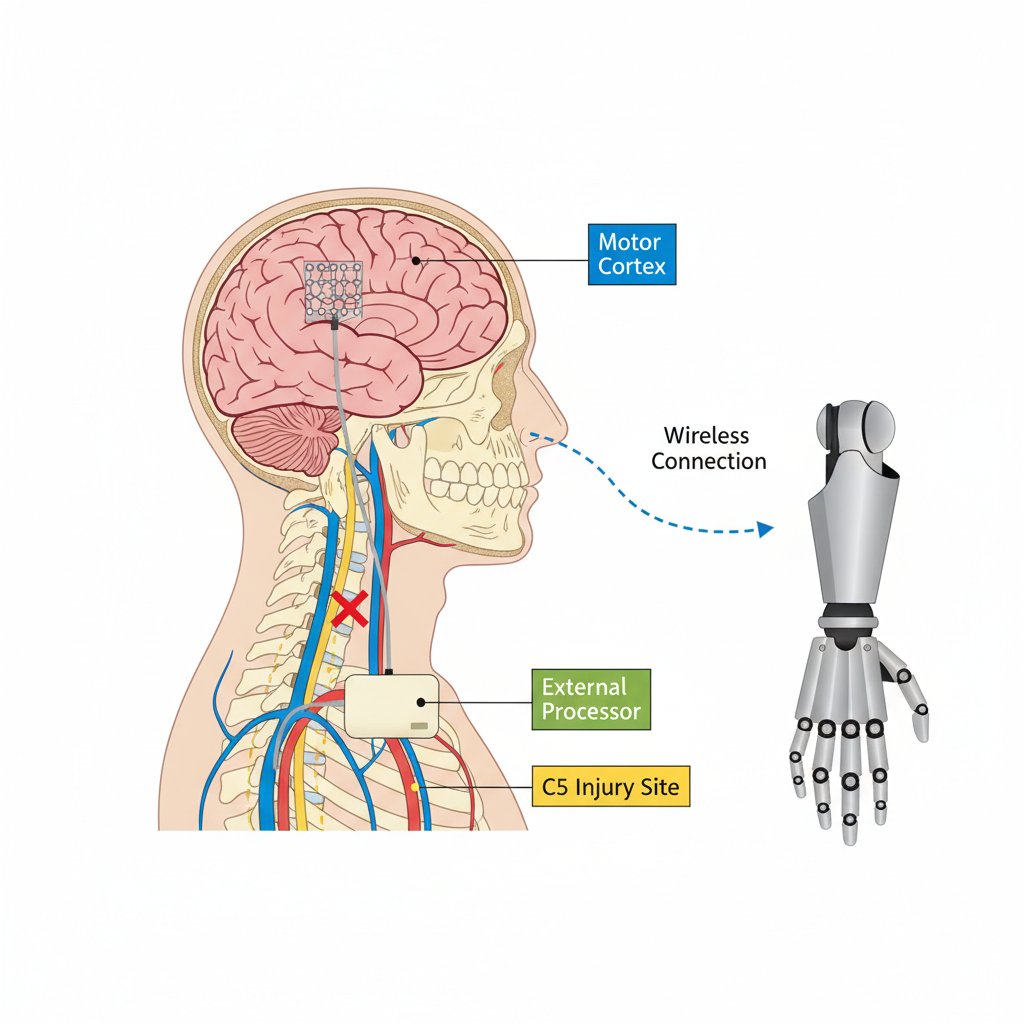
A 30-year-old patient with a complete spinal cord injury at C5 is offered an experimental brain-computer interface (BCI). Electrodes implanted in the motor cortex interpret neural signals to control a robotic arm, restoring basic hand movements. Clinical trials report a 15% infection risk at the implant site. Signal quality degrades noticeably within 6 months, requiring surgical electrode replacement to restore function. The device also requires daily recalibration by the patient at home.
a
Discuss the ethical tension between respecting the patient's autonomy and protecting them from the harms associated with this BCI. [2]
b
Discuss how signal degradation over time affects the real-world viability of this BCI as a long-term treatment for patients with spinal cord injury. [2]
Solutions
5QuestionCommon disordersAssessment Practice
5 marks~8 minCriterion C
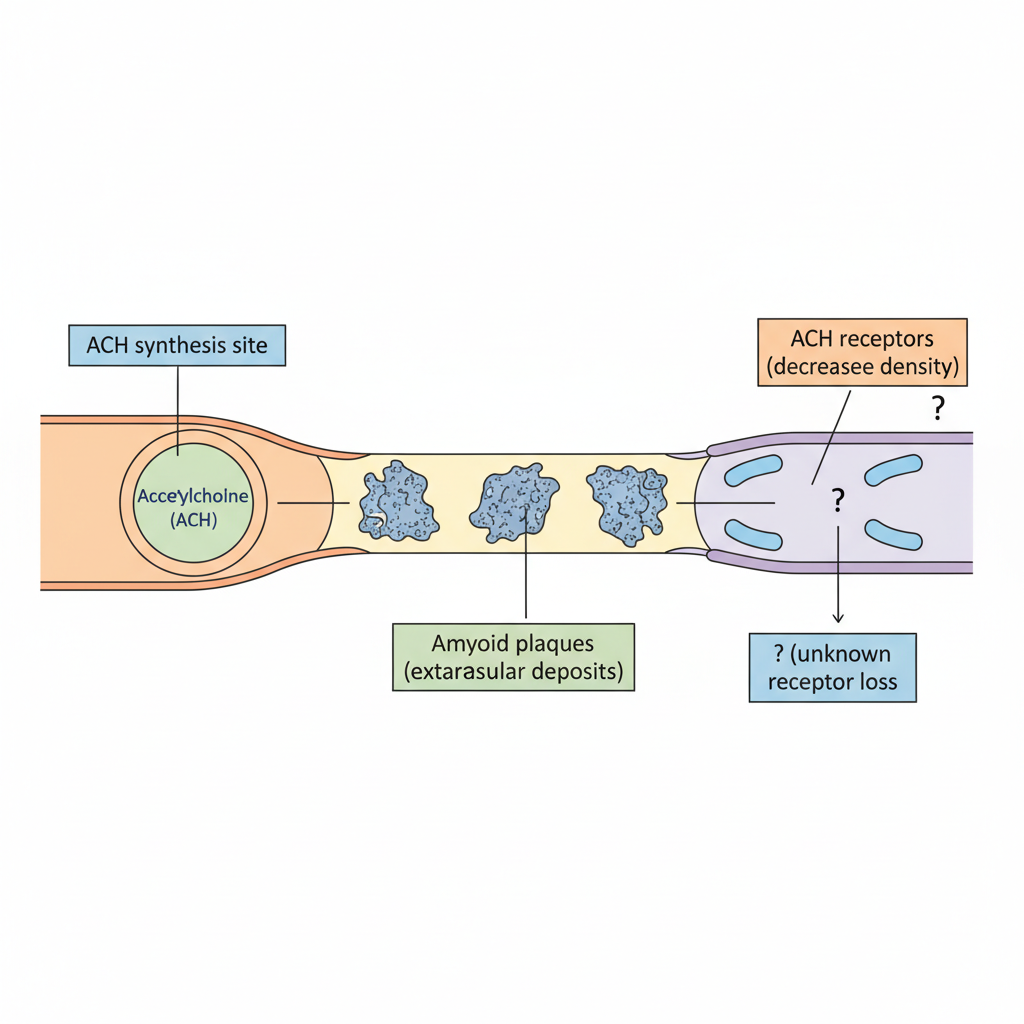
A 68-year-old patient with Alzheimer's disease shows reduced acetylcholine levels in the hippocampus and extracellular amyloid plaque deposits between neurons. Postsynaptic neurons in affected regions show decreased acetylcholine receptor density.
Two hypotheses explain the observed memory loss:
- Hypothesis 1: amyloid plaques disrupt neurotransmitter release from presynaptic terminals.
- Hypothesis 2: degradation of receptors on postsynaptic neurons impairs signal reception.
Two hypotheses explain the observed memory loss:
- Hypothesis 1: amyloid plaques disrupt neurotransmitter release from presynaptic terminals.
- Hypothesis 2: degradation of receptors on postsynaptic neurons impairs signal reception.
a
Describe the sequence of events in normal cholinergic synaptic transmission, from action potential arrival to postsynaptic response. [2]
b
Explain how each piece of evidence either supports or weakens each hypothesis. [2]
c
Justify which hypothesis is more strongly supported by the evidence provided. [1]
Solutions
That's every free question here — 5 of 129.
+124 more questions, plus Mock Papers & Worksheets, are waiting in Premium.