You're viewing free preview questions — 5 questions previewing here — subscribe to unlock 43 more, plus the Full Question Bank, Mock Papers & Worksheets.Upgrade
Respiratory — Free MYP5 Biology Practice Questions

1QuestionCommon diseasesConcept Practice
2 marks~3 minCriterion D
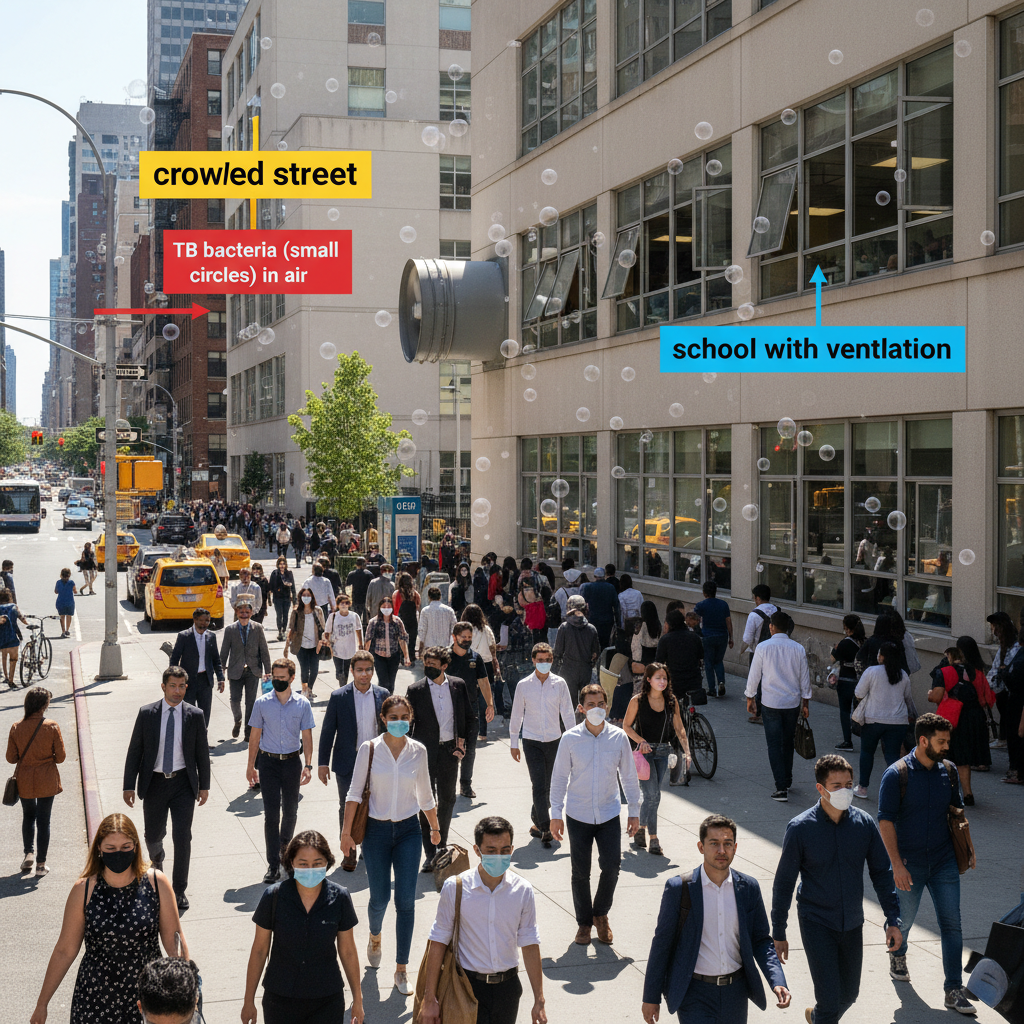
Tuberculosis (TB) is a bacterial respiratory disease transmitted via airborne droplets released when an infected person coughs or sneezes. In densely populated urban areas, close proximity between individuals significantly increases transmission risk. Public health authorities must balance disease control with the rights of individuals when designing intervention policies.
a
Explain how knowledge of TB's airborne transmission mechanism can inform the development of one specific public health policy in densely populated urban areas. [1]
b
Discuss one ethical issue that may arise when implementing TB control policies in urban communities. [1]

Solutions
2QuestionCommon diseasesAssessment Practice
4 marks~6 minCriterion A
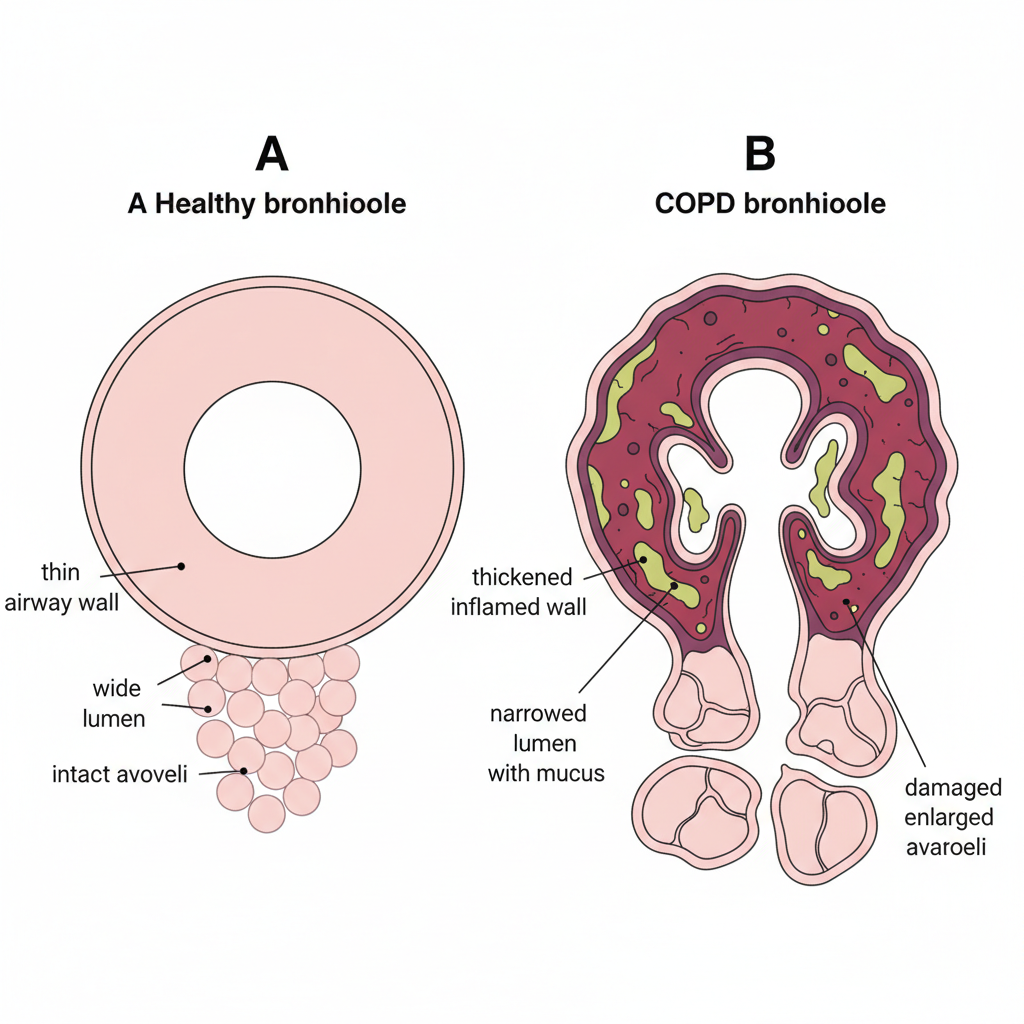
The diagrams below show cross-sections of a bronchiole from a healthy individual (A) and from a patient with chronic obstructive pulmonary disease (COPD) (B).
Diagram A – Healthy bronchiole: thin, smooth airway wall; wide, open lumen; intact alveoli of normal size.
Diagram B – COPD bronchiole: thickened, inflamed airway wall with excess mucus; narrowed, partially blocked lumen; damaged, enlarged alveoli with reduced surface area.
Diagram A – Healthy bronchiole: thin, smooth airway wall; wide, open lumen; intact alveoli of normal size.
Diagram B – COPD bronchiole: thickened, inflamed airway wall with excess mucus; narrowed, partially blocked lumen; damaged, enlarged alveoli with reduced surface area.
a
Identify two structural differences between bronchiole A and bronchiole B visible in the diagrams. [2]
b
Explain how the structural changes shown in diagram B contribute to shortness of breath in a COPD patient. [2]
Solutions
3QuestionCommon diseasesConcept Practice
2 marks~3 minCriterion A
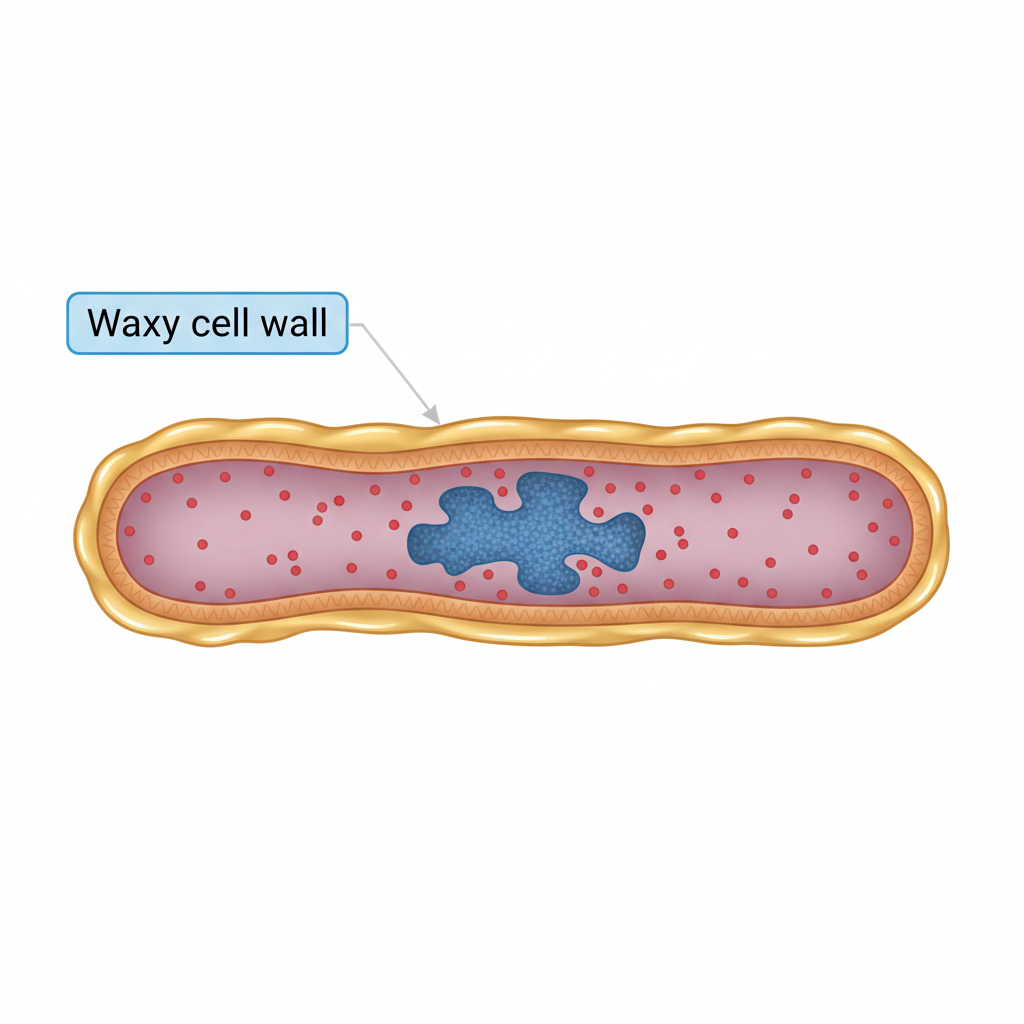
The diagram below shows a rod-shaped bacterium with a thick, waxy outer wall containing mycolic acids.
a
State the name of the disease caused by this bacterium. [1]
b
Explain one reason why the waxy cell wall makes this bacterium difficult to treat with standard antibiotics. [1]
Solutions
4QuestionCommon diseasesAssessment Practice
6 marks~9 minCriterion D
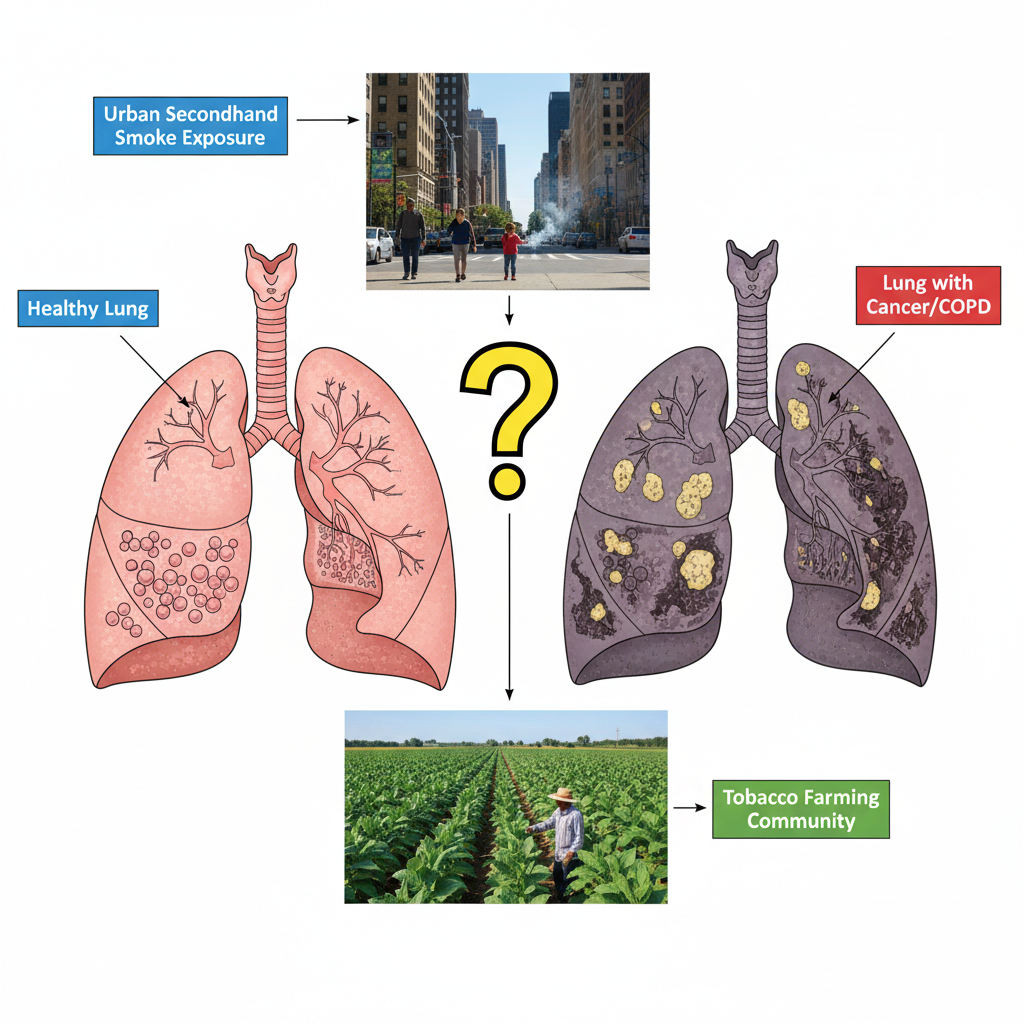
A government is considering a nationwide ban on tobacco sales to reduce respiratory disease. Studies project that over 20 years, smoking prevalence could fall by 40%, and tobacco farmland currently covers 15% of the country's agricultural area.
a
Identify two specific ways tobacco smoke damages the respiratory system, naming the disease each causes. [2]
b
Explain how a 40% reduction in smoking prevalence would affect rates of respiratory disease and secondhand smoke exposure across the population over 20 years. [2]
c
Evaluate the overall effectiveness of this ban, considering both its benefits — including environmental impacts of reduced tobacco farming — and its limitations, such as black market activity and economic displacement of farming communities. [2]
Solutions
5QuestionCommon diseasesAssessment Practice
6 marks~9 minCriterion D
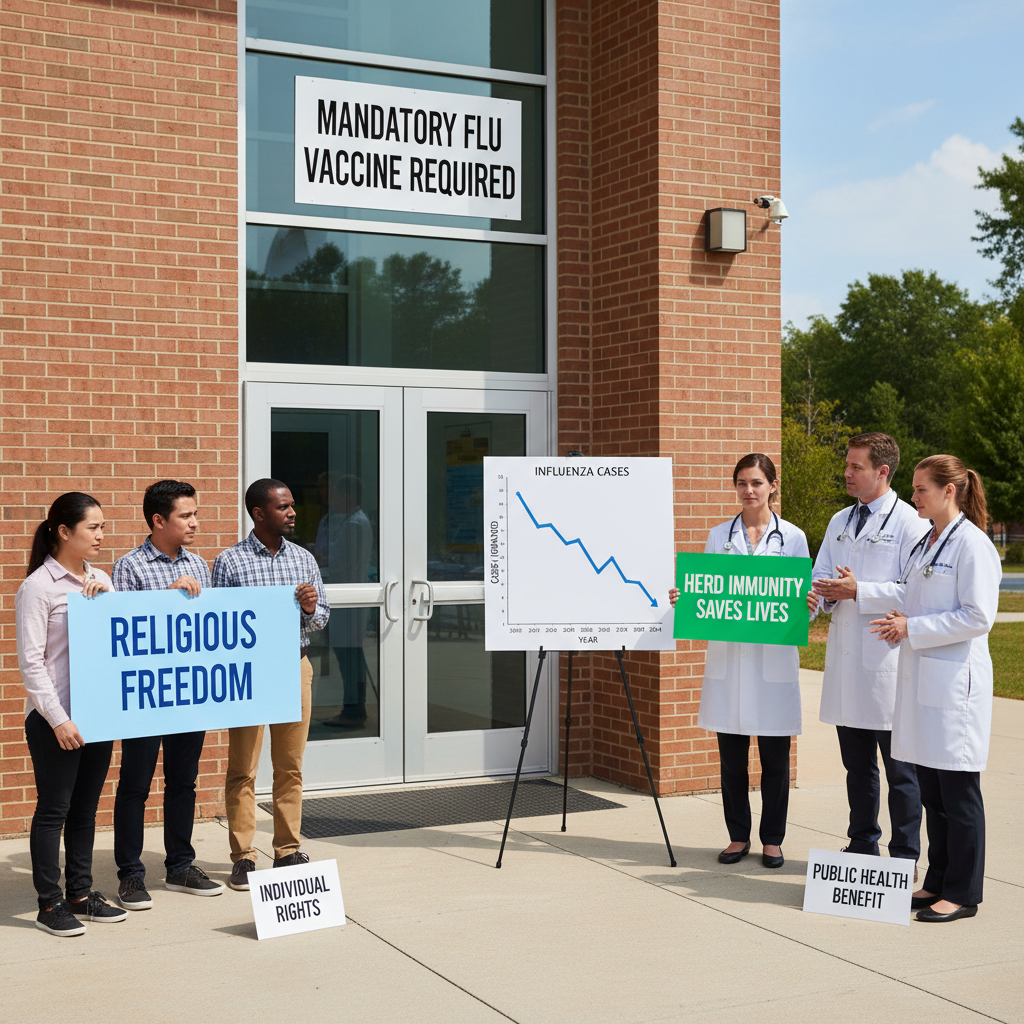
A school district is considering a policy requiring all students to receive the influenza vaccine before attending school. Influenza spreads primarily via respiratory droplets; vaccination stimulates antibody production, reducing transmission. Supporters cite herd immunity as protection for immunocompromised students who cannot be vaccinated. Opponents, including some parents, argue the policy violates religious freedom and parental autonomy over medical decisions. Equity concerns also exist, as vaccine access varies across the community.
a
Explain how vaccination interrupts influenza transmission and contributes to herd immunity in a school population. [2]
b
Analyse the public health benefits of mandatory vaccination against the ethical challenges it raises in a diverse community. [4]
Solutions
That's every free question here — 5 of 48.
+43 more questions, plus Mock Papers & Worksheets, are waiting in Premium.