You're viewing free preview questions — 6 questions previewing here — subscribe to unlock 72 more, plus the Full Question Bank, Mock Papers & Worksheets.Upgrade
Back

Respiratory System and Gas Exchange — Free MYP5 Biology Practice Questions

Free questions

Open in full, with answers, mark scheme and examiner insights.

Question 1Criterion A · Band 1-2 · Easy · 4 marksrevisionprep.com

Ventilation: the mechanism of breathing

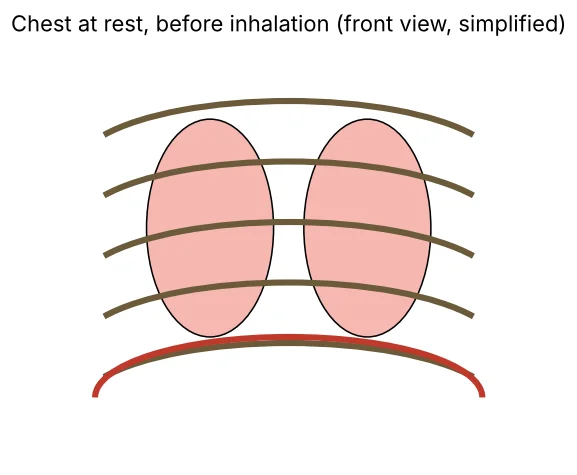
During inhalation the volume of the thorax increases.

The diagram shows the chest at rest.
Question diagram
(a)
Name the two sets of muscles that contract during inhalation. [2]Criterion A (i) · Level 1-2
(b)
Describe the movement produced by each set of muscles. [2]Criterion A (i) · Level 1-2

revisionprep.com

Summary Answer

Not available for this question.

Model Answer

Not available for this question.

Marking Scheme

Not available for this question.

Examiner Insights

Not available for this question.

Question 2Criterion A · Band 1-4 · Easy · 3 marksrevisionprep.com

Structure and Function of the Lungs

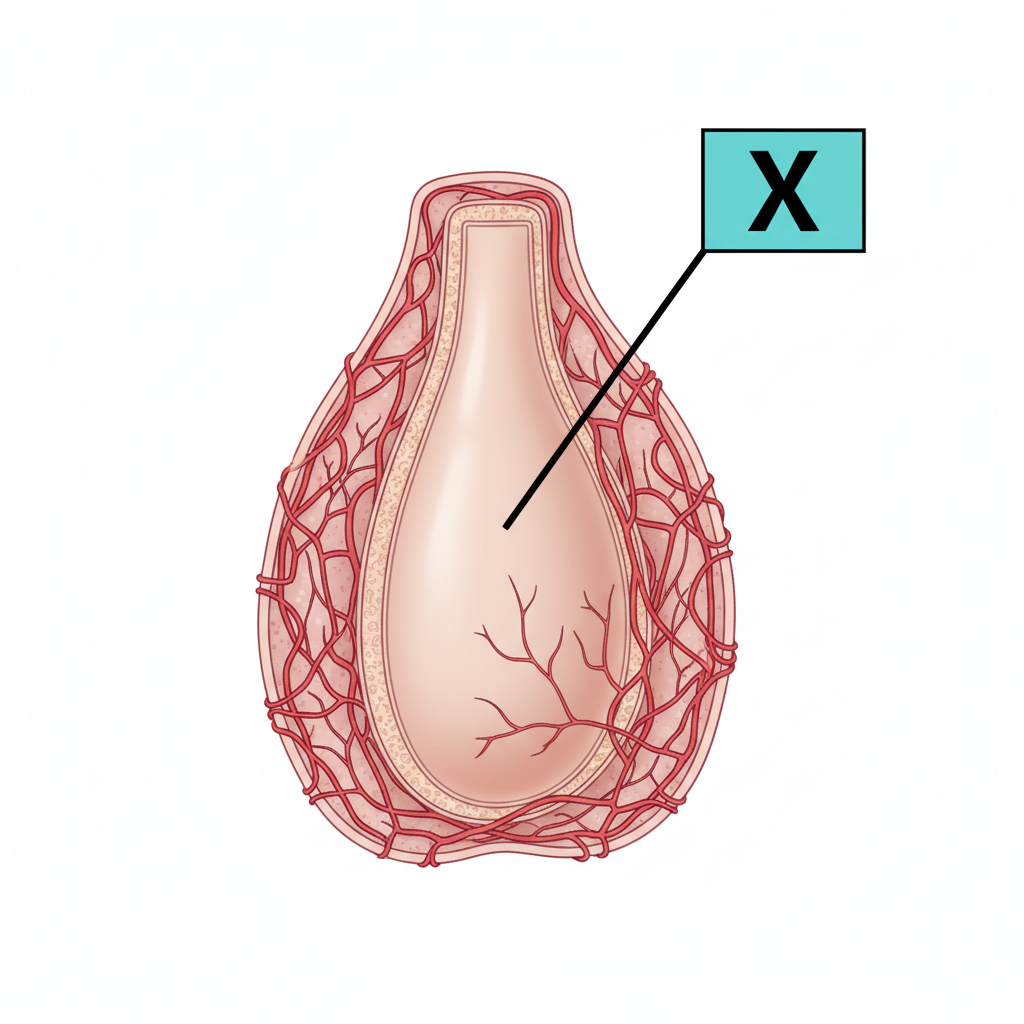
The diagram shows one alveolus with structure X labelled. Each human lung contains about 300 million alveoli.
Question diagram
(a)
Identify the structure labelled X. [1]Criterion A (i) · Level 1-2
(b)
Explain two features visible in the diagram that make gas exchange efficient. [2]Criterion A (i) · Level 3-4

revisionprep.com

Summary Answer

Not available for this question.

Model Answer

Not available for this question.

Marking Scheme

Not available for this question.

Examiner Insights

Not available for this question.

Question 3Criterion C + A · Band 3-6 · Medium · 7 marksrevisionprep.com

Ventilation: the mechanism of breathing

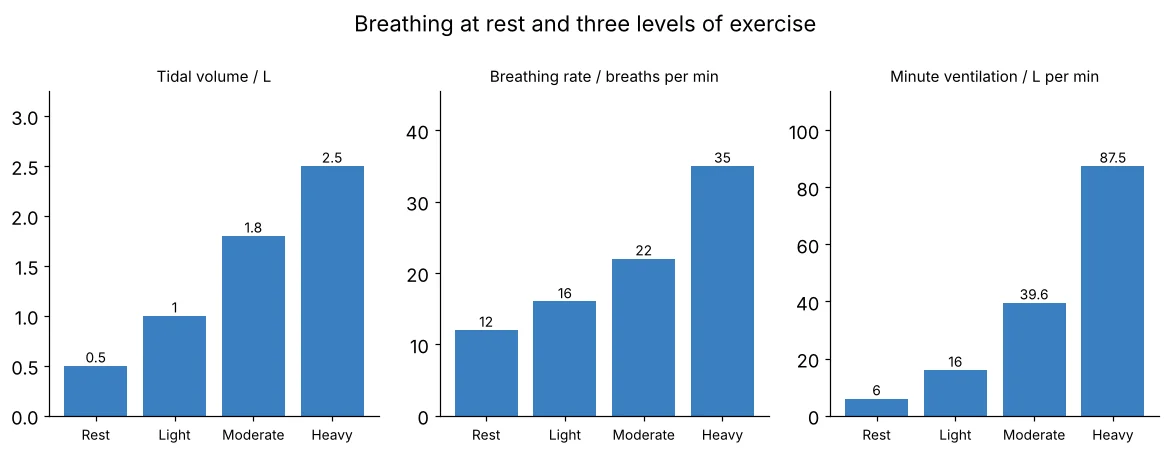
The data below show breathing data for a healthy adult at rest and at three levels of exercise. Minute ventilation = tidal volume × breathing rate.

Resttidal volume 0.5 Lbreathing rate 12 breaths/minminute ventilation 6.0 L/minLighttidal volume 1.0 Lbreathing rate 16 breaths/minminute ventilation 16.0 L/minModeratetidal volume 1.8 Lbreathing rate 22 breaths/minminute ventilation 39.6 L/minHeavytidal volume 2.5 Lbreathing rate 35 breaths/minminute ventilation 87.5 L/min\begin{array}{|l|c|c|c|}\hline \text{Rest} & \text{tidal volume 0.5 L} & \text{breathing rate 12 breaths/min} & \text{minute ventilation 6.0 L/min} \\ \hline \text{Light} & \text{tidal volume 1.0 L} & \text{breathing rate 16 breaths/min} & \text{minute ventilation 16.0 L/min} \\ \hline \text{Moderate} & \text{tidal volume 1.8 L} & \text{breathing rate 22 breaths/min} & \text{minute ventilation 39.6 L/min} \\ \hline \text{Heavy} & \text{tidal volume 2.5 L} & \text{breathing rate 35 breaths/min} & \text{minute ventilation 87.5 L/min} \\ \hline\end{array}

The graph shows these data.
Question diagram
(a)
Calculate the percentage increase in minute ventilation from rest to heavy exercise. [2]Criterion C (i) · Level 3-4
(b)
Describe how the tidal volume and the breathing rate each change from rest to heavy exercise. Use the data. [2]Criterion C (ii) · Level 3-4
(c)
Explain why minute ventilation must increase during exercise. Refer to oxygen and to carbon dioxide. [3]Criterion A (i) · Level 5-6

revisionprep.com

Summary Answer

Not available for this question.

Model Answer

Not available for this question.

Marking Scheme

Not available for this question.

Examiner Insights

Not available for this question.

Question 4Criterion A + D · Band 1-6 · Medium · 6 marksrevisionprep.com

Respiratory diseases and the effects of smoking
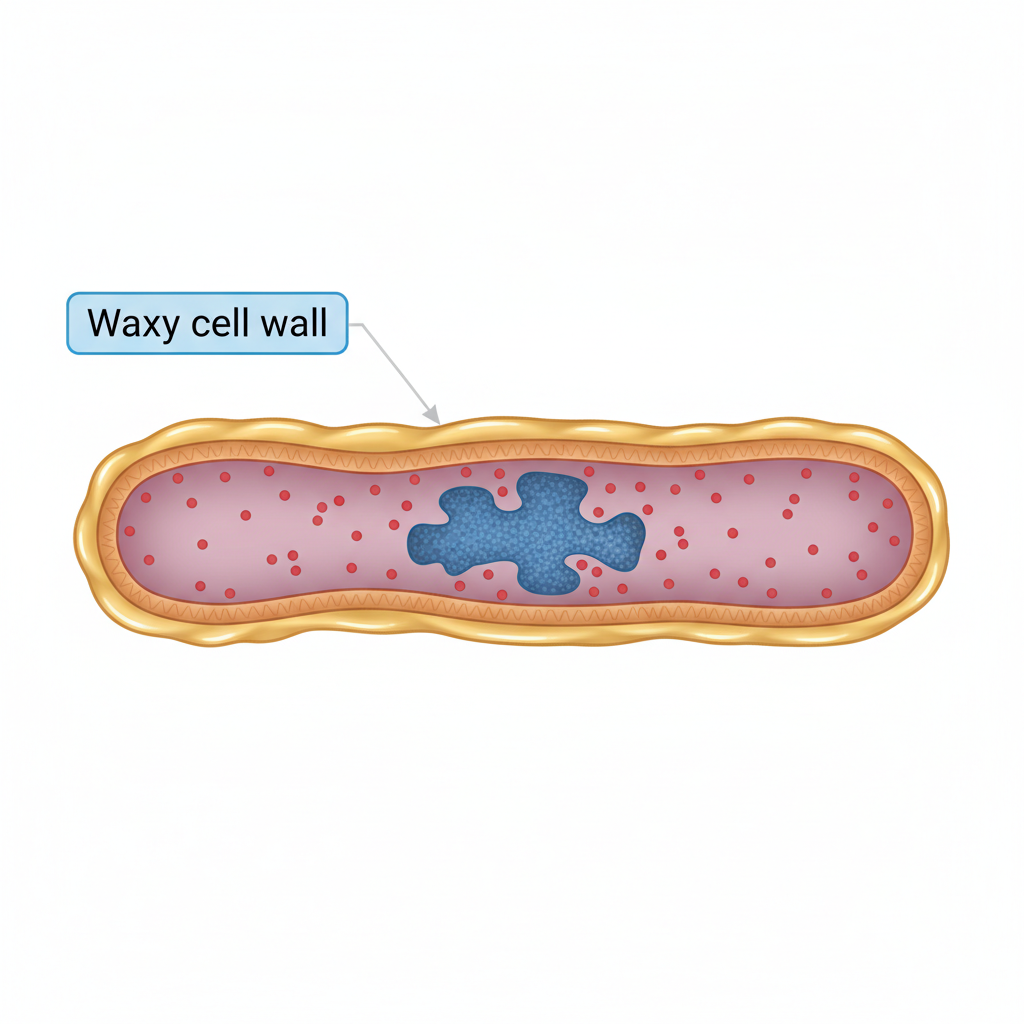
The diagram shows a rod-shaped bacterium that causes a serious lung disease. It has a thick, waxy cell wall.
Question diagram
(a)
Name the disease caused by this bacterium. [1]Criterion A (i) · Level 1-2
(b)
Describe how this bacterium is spread from person to person. [2]Criterion A (i) · Level 1-2
(c)
Treatment uses several antibiotics taken for at least six months. Suggest how the waxy cell wall contributes to this long treatment. [1]Criterion A (iii) · Level 3-4
(d)
Explain why patients must finish the full course of antibiotics even when they feel better. [2]Criterion D (i) · Level 5-6

revisionprep.com

Summary Answer

Not available for this question.

Model Answer

Not available for this question.

Marking Scheme

Not available for this question.

Examiner Insights

Not available for this question.

Question 5Criterion D + A · Band 3-8 · Challenge · 8 marksrevisionprep.com

Respiratory diseases and the effects of smoking
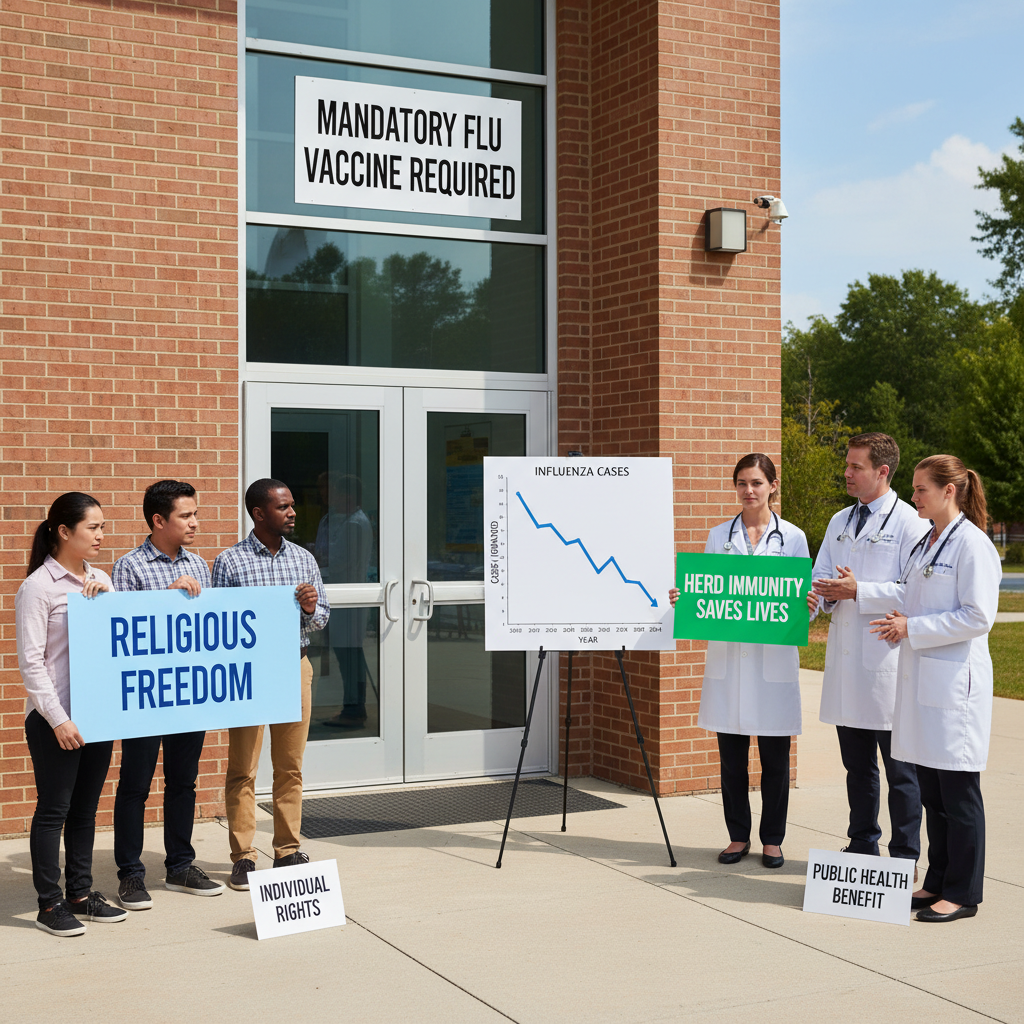
A school district is considering a policy that all students must receive the influenza vaccine before attending school. Influenza spreads mainly in respiratory droplets. Supporters point to herd immunity, which protects students who cannot be vaccinated because of a weak immune system. Some parents argue the policy goes against their religious beliefs and their right to make medical decisions for their children. Vaccine access is not equal across the community.
Question diagram
(a)
Explain how vaccination protects a vaccinated student from influenza. [2]Criterion A (i) · Level 3-4
(b)
Explain how vaccinating most students also protects students who cannot be vaccinated. [2]Criterion D (i) · Level 5-6
(c)
Discuss whether the school district should make the vaccine compulsory. Consider at least two of the viewpoints shown in the picture and reach a conclusion. [4]Criterion D (ii) · Level 7-8

revisionprep.com

Summary Answer

Not available for this question.

Model Answer

Not available for this question.

Marking Scheme

Not available for this question.

Examiner Insights

Not available for this question.

Question 6Criterion B · Band 1-8 · Challenge · 10 marksrevisionprep.com

Gas Exchange and Role of Alveoli

Limewater turns cloudy when carbon dioxide bubbles through it. The more carbon dioxide in the air bubbled through, the sooner it turns cloudy. A student wants to investigate how the duration of exercise affects the amount of carbon dioxide in exhaled air, by breathing out through a straw into 10 cm³ of limewater after different periods of skipping.
(a)
State a focused research question for this investigation. [1]Criterion B (i) · Level 1-2
(b)
Formulate a hypothesis and explain it using scientific reasoning. [2]Criterion B (ii) · Level 3-4
(c)
Explain how the student should manipulate the variables and collect sufficient, reliable data. [3]Criterion B (iii) · Level 5-6
(d)
Design a method, including safety precautions. [4]Criterion B (iv) · Level 7-8

revisionprep.com

Summary Answer

Not available for this question.

Model Answer

Not available for this question.

Marking Scheme

Not available for this question.

Examiner Insights

Not available for this question.

That's every free question here — 6 of 78.

+72 more questions, plus Mock Papers & Worksheets, are waiting in Premium.

Upgrade