You're viewing free preview questions — 6 questions previewing here — subscribe to unlock 78 more, plus the Full Question Bank, Mock Papers & Worksheets.Upgrade
Back

Structure of the Atom — Free MYP5 Chemistry Practice Questions

Free questions

Open in full, with answers, mark scheme and examiner insights.

Question 1Criterion A · Band 3-4 · Easy · 3 marksrevisionprep.com

Subatomic particles: protons, neutrons and electrons

The nuclear symbols of three neutral atoms are given.

(a) State the number of protons, neutrons and electrons in each atom. [3]
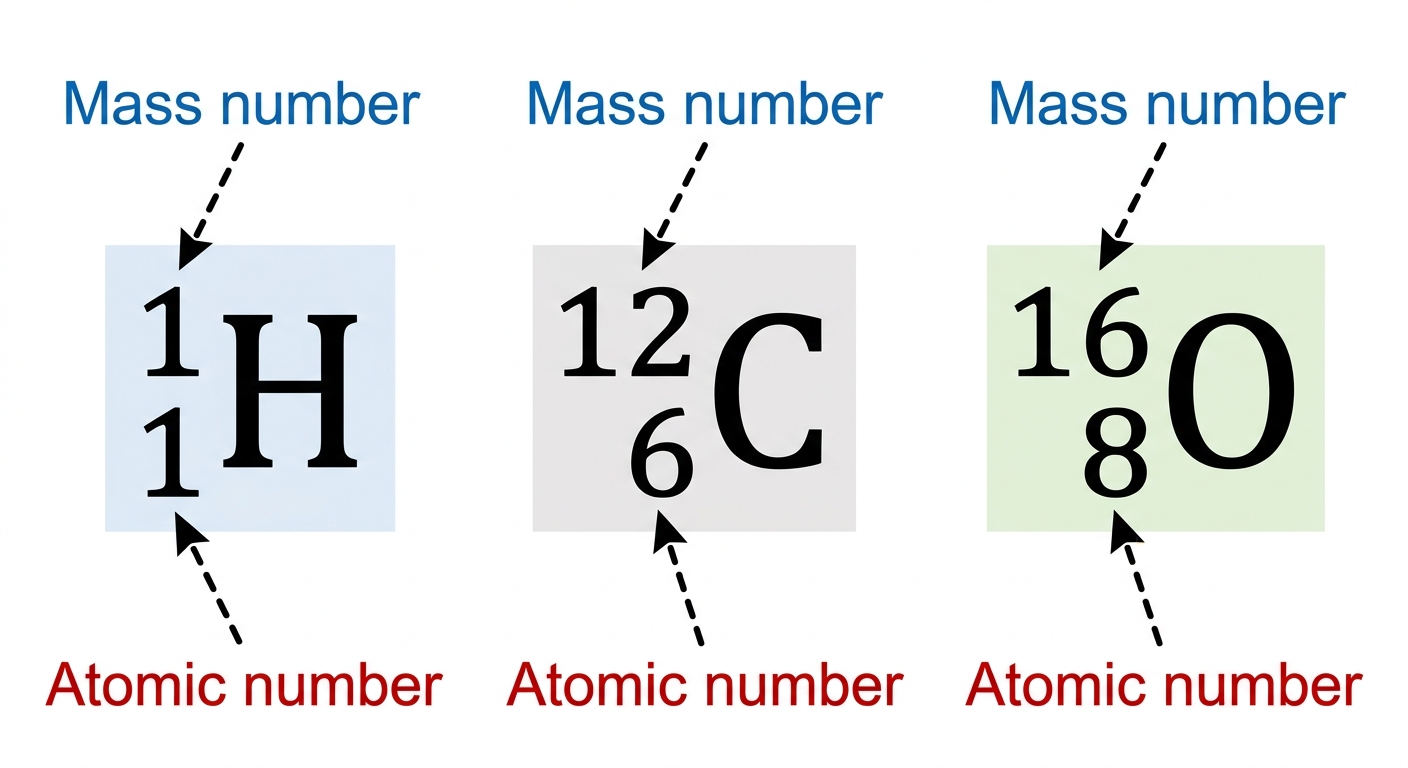
Question diagram

revisionprep.com

Summary Answer

Not available for this question.

Model Answer

Not available for this question.

Marking Scheme

Not available for this question.

Examiner Insights

Not available for this question.

Question 2Criterion A · Band 1-4 · Easy · 4 marksrevisionprep.com

Development of atomic models: Dalton to Bohr
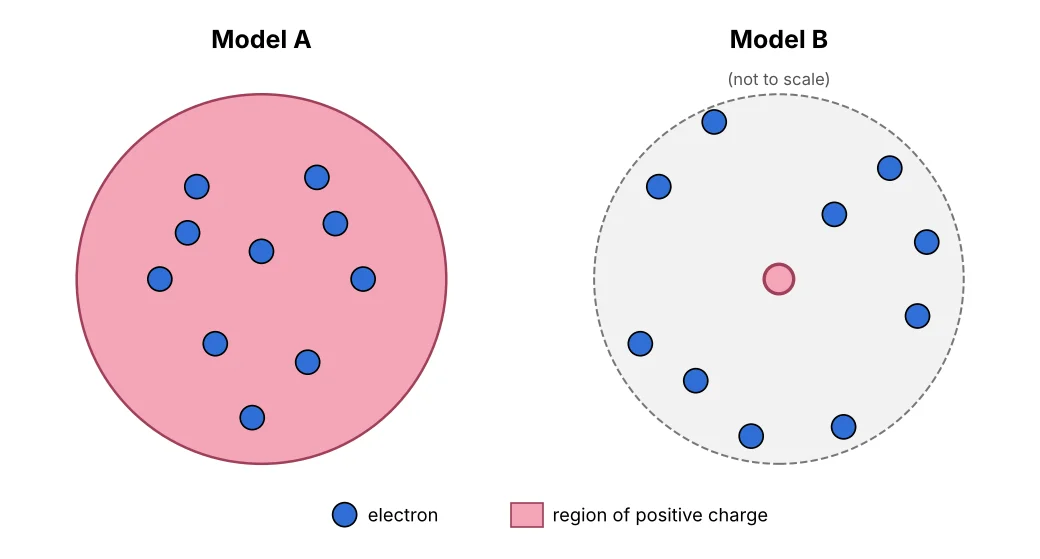
The diagram shows two models of the atom, Model A and Model B.
Question diagram
(a)
Identify the scientist associated with each model. [1]Criterion A (i) · Level 1-2
(b)
Describe how the positive charge is arranged differently in the two models. [2]Criterion A (i) · Level 3-4
(c)
Identify the experiment whose results led to Model B replacing Model A. [1]Criterion A (i) · Level 1-2

revisionprep.com

Summary Answer

Not available for this question.

Model Answer

Not available for this question.

Marking Scheme

Not available for this question.

Examiner Insights

Not available for this question.

Question 3Criterion B · Band 3-6 · Medium · 8 marksrevisionprep.com

Atomic number, mass number and nuclear symbol

The relative atomic mass of chlorine in the periodic table is 35.45. A student wonders whether chlorine from different natural sources has the same relative atomic mass. Samples are available from sea salt, rock salt and chlorine compounds in volcanic gas, and a school can send samples to a university mass spectrometer.
(a)
Write a research question for the investigation. [1]Criterion B (i) · Level 3-4
(b)
Formulate a testable hypothesis and explain it using what you know about isotopes. [2]Criterion B (ii) · Level 5-6
(c)
Explain how the variables will be controlled so that any difference is caused only by the source. [3]Criterion B (iii) · Level 5-6
(d)
Explain how sufficient, relevant data will be collected and processed. [2]Criterion B (iii) · Level 5-6

revisionprep.com

Summary Answer

Not available for this question.

Model Answer

Not available for this question.

Marking Scheme

Not available for this question.

Examiner Insights

Not available for this question.

Question 4Criterion C + A · Band 3-6 · Medium · 5 marksrevisionprep.com

Charge and mass of subatomic particles

Relative masses: proton 1, neutron 1, electron 11836\frac{1}{1836}.

A scientist claims that in an atom of gold, 79197Au^{197}_{79}\text{Au}, the electrons make up less than 0.1% of the atom's mass.
(a)
Calculate the total relative mass of the electrons in a gold atom. [2]Criterion A (ii) · Level 3-4
(b)
Calculate the percentage of the atom's mass that comes from electrons, and evaluate the scientist's claim. [3]Criterion C (ii), C (iii) · Level 5-6

revisionprep.com

Summary Answer

Not available for this question.

Model Answer

Not available for this question.

Marking Scheme

Not available for this question.

Examiner Insights

Not available for this question.

Question 5Criterion D + A · Band 3-8 · Challenge · 7 marksrevisionprep.com

Subatomic particles: protons, neutrons and electrons
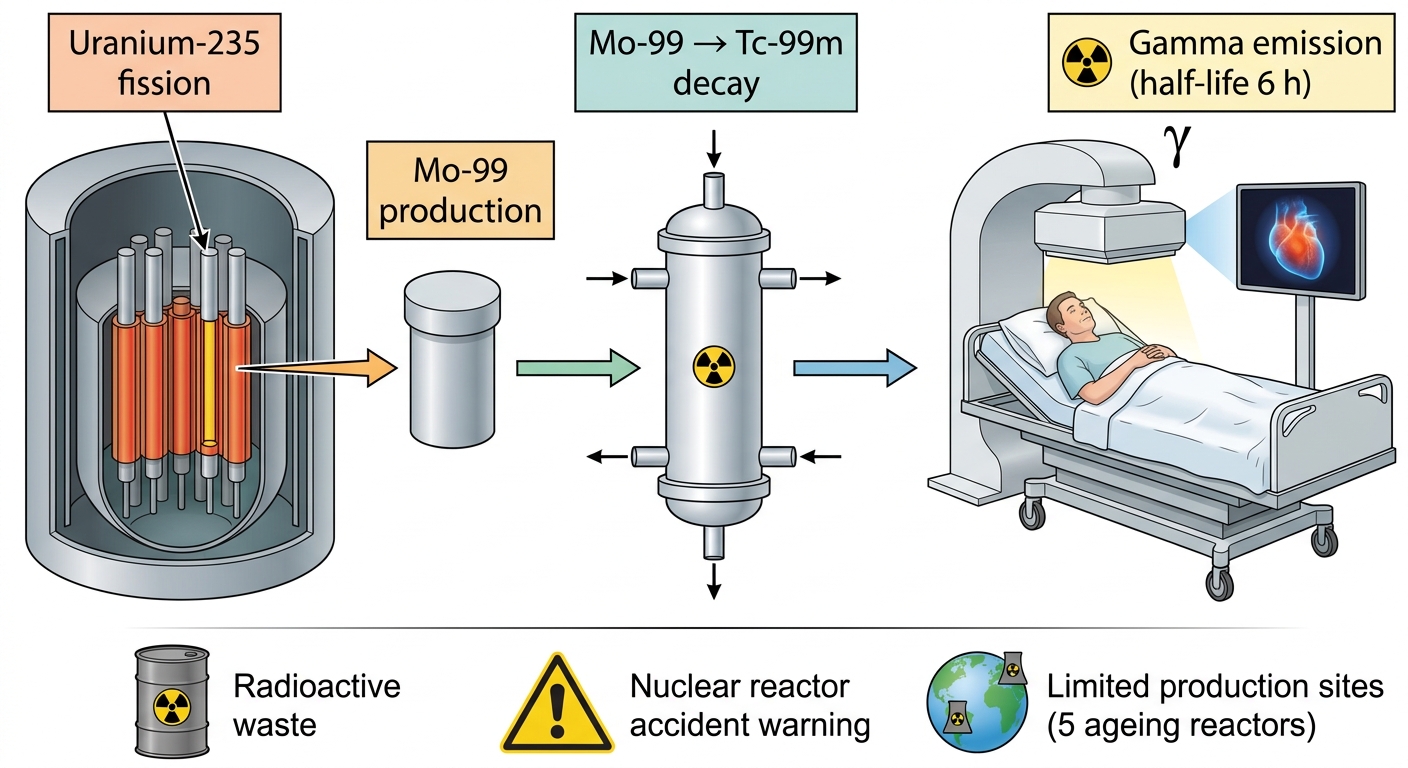
Technetium-99m (99mTc^{99m}\text{Tc}) is used in hospital scans. It is made from molybdenum-99, produced in a small number of ageing nuclear reactors. It gives out gamma radiation and its activity halves every 6 hours, so it cannot be stored for long. Technetium has atomic number 43.
Question diagram
(a)
Deduce the number of protons and neutrons in an atom of technetium-99m. [1]Criterion A (ii) · Level 3-4
(b)
Explain why a short half-life is an advantage for a substance injected into a patient. [2]Criterion D (i) · Level 5-6
(c)
Discuss the implications of relying on a few ageing reactors to supply technetium-99m, considering two different perspectives. [4]Criterion D (ii) · Level 7-8

revisionprep.com

Summary Answer

Not available for this question.

Model Answer

Not available for this question.

Marking Scheme

Not available for this question.

Examiner Insights

Not available for this question.

Question 6Criterion A + D · Band 3-8 · Challenge · 8 marksrevisionprep.com

Structure of the nucleus and electron shells
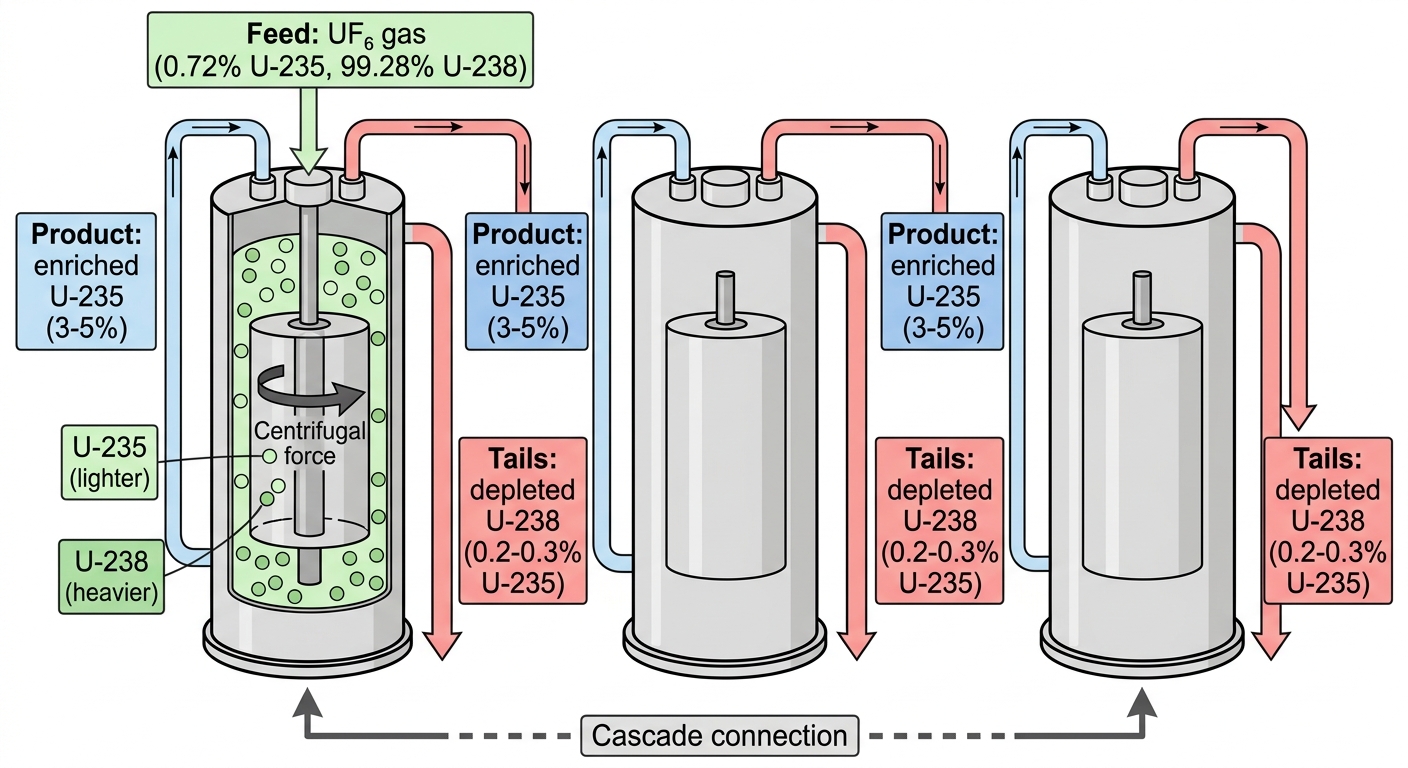
The diagram shows a cascade of gas centrifuges used to enrich uranium. Natural uranium contains 0.72% uranium-235; the rest is uranium-238. The uranium is turned into uranium hexafluoride gas, UF6_6. Nuclear power stations need 3-5% uranium-235; nuclear weapons need more than 90%. Uranium has atomic number 92.
Question diagram
(a)
Deduce the number of protons and neutrons in an atom of each isotope. [2]Criterion A (ii) · Level 3-4
(b)
Explain why the two isotopes cannot be separated by a chemical reaction but can be separated in a centrifuge. [3]Criterion A (i), A (ii) · Level 5-6
(c)
Discuss why the international community monitors countries that build centrifuge cascades, considering two perspectives. [3]Criterion D (ii) · Level 7-8

revisionprep.com

Summary Answer

Not available for this question.

Model Answer

Not available for this question.

Marking Scheme

Not available for this question.

Examiner Insights

Not available for this question.

That's every free question here — 6 of 84.

+78 more questions, plus Mock Papers & Worksheets, are waiting in Premium.

Upgrade