You're viewing free preview questions — 4 questions previewing here — subscribe to unlock 92 more, plus the Full Question Bank, Mock Papers & Worksheets.Upgrade
Fractional Distilation of crude oil — Free MYP5 Chemistry Practice Questions

1QuestionEnvironmental impacts like Fossil fuels, Pollution, Climate changeConcept Practice
4 marks~6 minCriterion A
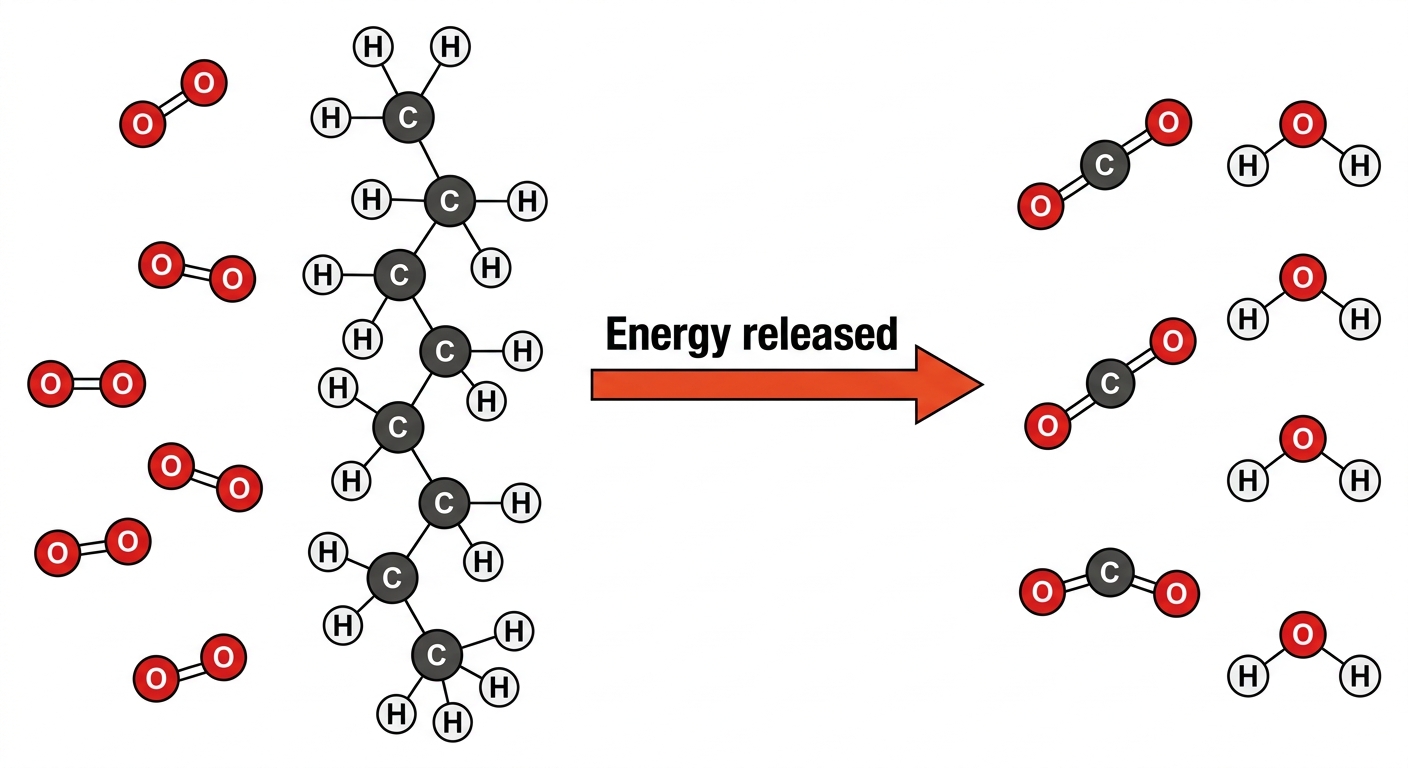
During the combustion of octane (), bonds in the reactants are broken and new bonds are formed in the products, as shown in the diagram.
a
State what happens to energy during bond breaking and during bond forming. [1]
b
Identify the bonds broken in the reactants and the bonds formed in the products during this combustion reaction. [1]
c
Explain why the combustion of octane releases a net amount of energy, referring to the relative energy changes involved in breaking and forming the bonds identified in part (b). [2]

Solutions
2QuestionViscosity and flammability trendsAssessment Practice
5 marks~8 minCriterion C
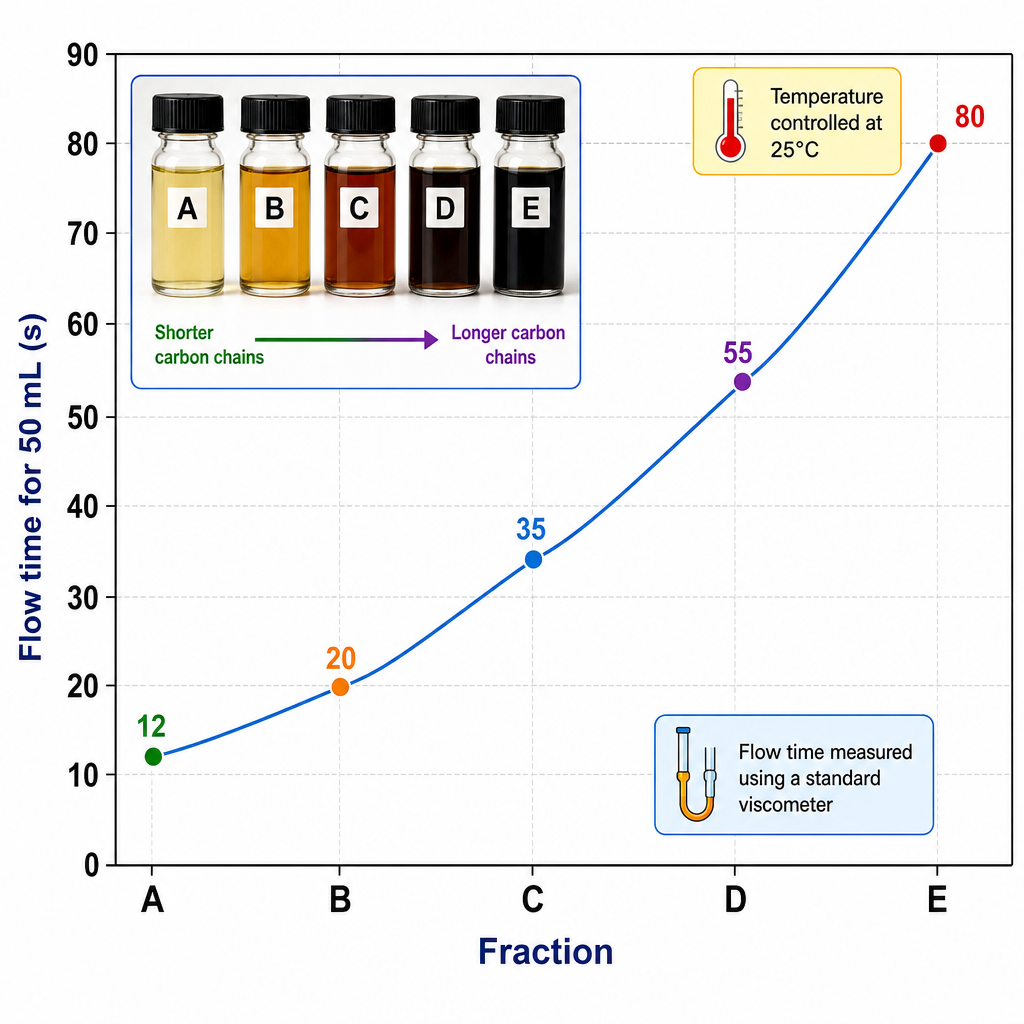
A student hypothesises that viscosity of crude oil fractions increases with carbon chain length. Five fractions (A–E) are collected by fractional distillation and tested at 25 °C using a standard viscometer. Flow time for 50 mL of each fraction is recorded below.
Fractions are ordered from lightest (A) to heaviest (E), corresponding to increasing carbon chain length.
| Fraction | A | B | C | D | E |
|---|---|---|---|---|---|
| Flow time (s) | 12 | 20 | 35 | 55 | 80 |
Fractions are ordered from lightest (A) to heaviest (E), corresponding to increasing carbon chain length.
a
Identify the trend in flow time across fractions A to E and state what this indicates about viscosity. [1]
b
Explain how intermolecular forces account for the trend observed in part (a). [2]
c
Evaluate whether the experimental evidence supports the student's hypothesis, discussing at least two limitations that affect confidence in the conclusion. [2]
Solutions
3QuestionEnvironmental impacts like Fossil fuels, Pollution, Climate changeAssessment Practice
6 marks~9 minCriterion D
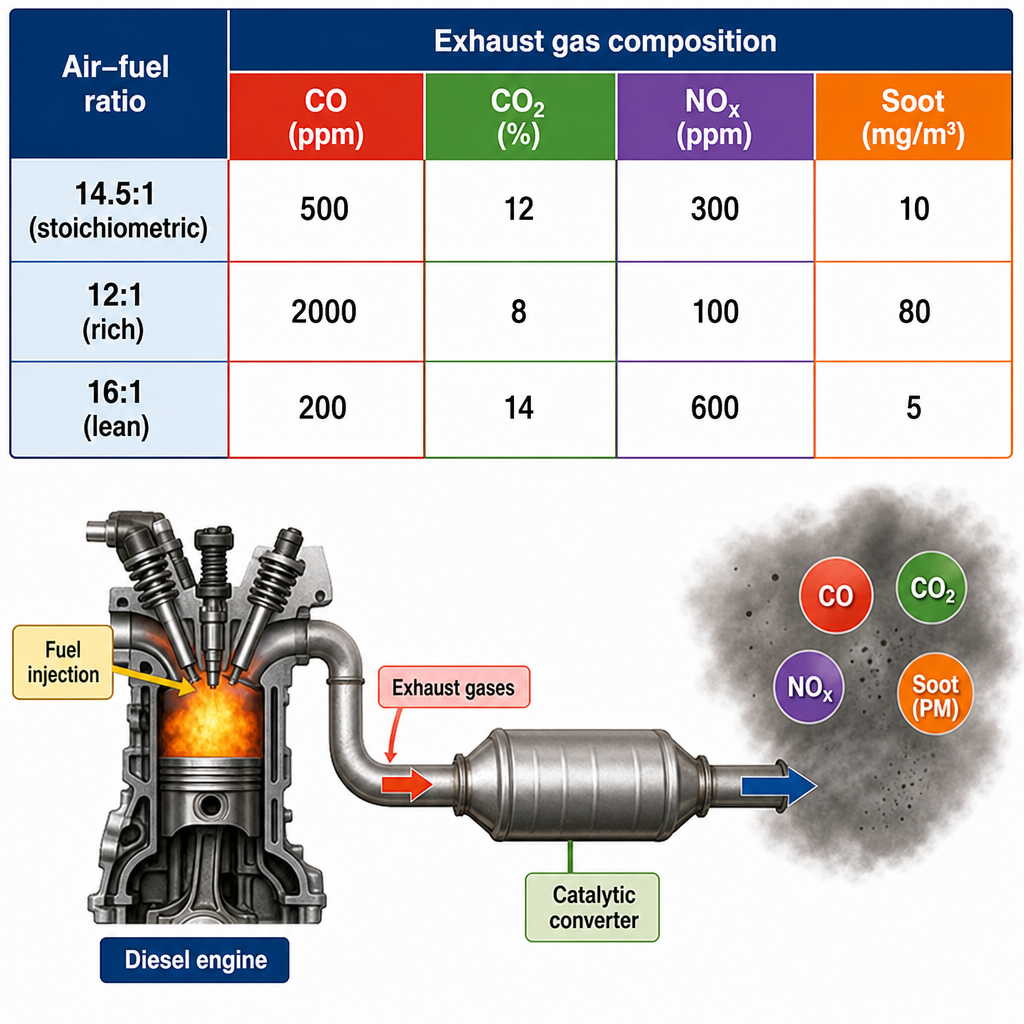
Diesel engines burn hydrocarbons obtained from the fractional distillation of crude oil. The table below shows exhaust gas composition at three air-fuel ratios.
| Air-fuel ratio | 14.5:1 (stoichiometric) | 12:1 (rich) | 16:1 (lean) |
|---|---|---|---|
| (ppm) | 500 | 2000 | 200 |
| (%) | 12 | 8 | 14 |
| (ppm) | 300 | 100 | 600 |
| Soot (mg/m³) | 10 | 80 | 5 |
a
Describe what happens during incomplete combustion in a rich air-fuel mixture, and identify two pollutants produced. [2]
b
Explain how and each cause a different type of harm — one to human health and one to the environment. [2]
c
Using the data, discuss whether switching from a rich to a lean air-fuel ratio is an effective overall solution to reducing diesel engine pollution. [2]
Solutions
4QuestionChain length vs boiling pointAssessment Practice
6 marks~9 minCriterion B
The table below shows the molecular formula and boiling point of five straight-chain alkanes.
| Alkane | Methane | Ethane | Propane | Butane | Pentane |
|---|---|---|---|---|---|
| Molecular formula | |||||
| Boiling point (°C) | −162 | −89 | −42 | −1 | 36 |
a
Explain the relationship between carbon chain length and boiling point for these alkanes. [2]
b
Deduce the boiling point of hexane (), justifying your value using the pattern in the data. [2]
c
A student claims that atmospheric pressure is the most important variable to control when measuring boiling points experimentally. Evaluate this claim, identifying one other variable that must be controlled and explaining why each affects the measurement. [2]
Solutions
That's every free question here — 4 of 96.
+92 more questions, plus Mock Papers & Worksheets, are waiting in Premium.