You're viewing free preview questions — 6 questions previewing here — subscribe to unlock 104 more, plus the Full Question Bank, Mock Papers & Worksheets.Upgrade
Back

Homologous series and functional groups — Free MYP5 Chemistry Practice Questions

Free questions

Open in full, with answers, mark scheme and examiner insights.

Question 1Criterion C · Band 1-2 · Easy · 2 marksrevisionprep.com

Gradation in physical properties

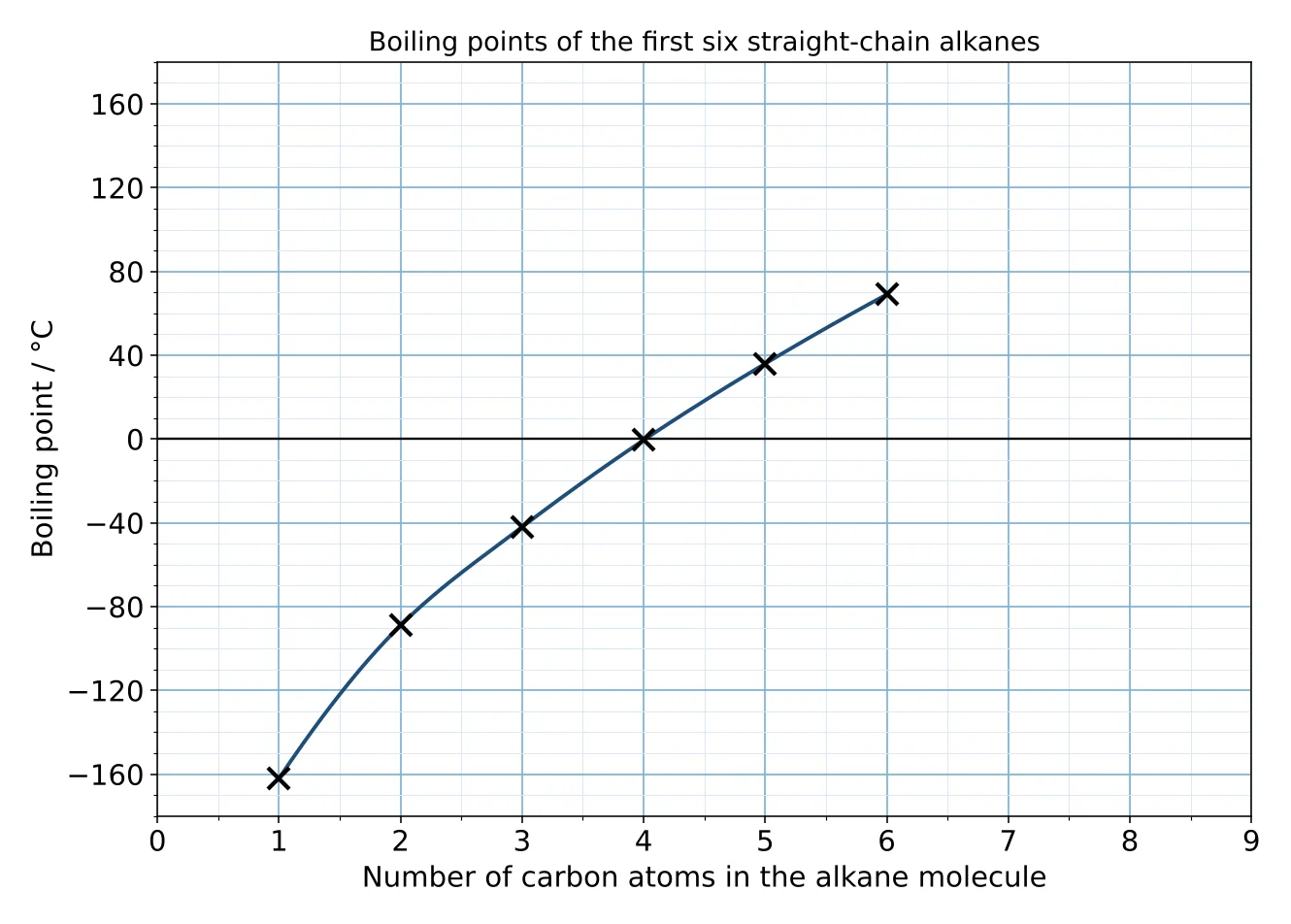
The graph shows the boiling points of the first six straight-chain alkanes.
Question diagram
(a)
Use the graph to state the boiling point of propane. [1]Criterion C (ii) · Level 1-2
(b)
Identify the alkanes shown that are gases at 25 °C. [1]Criterion C (ii) · Level 1-2

revisionprep.com

Summary Answer

Not available for this question.

Model Answer

Not available for this question.

Marking Scheme

Not available for this question.

Examiner Insights

Not available for this question.

Question 2Criterion A · Band 1-4 · Easy · 5 marksrevisionprep.com

Common functional groups: alkene, alcohol, carboxylic acid, ester
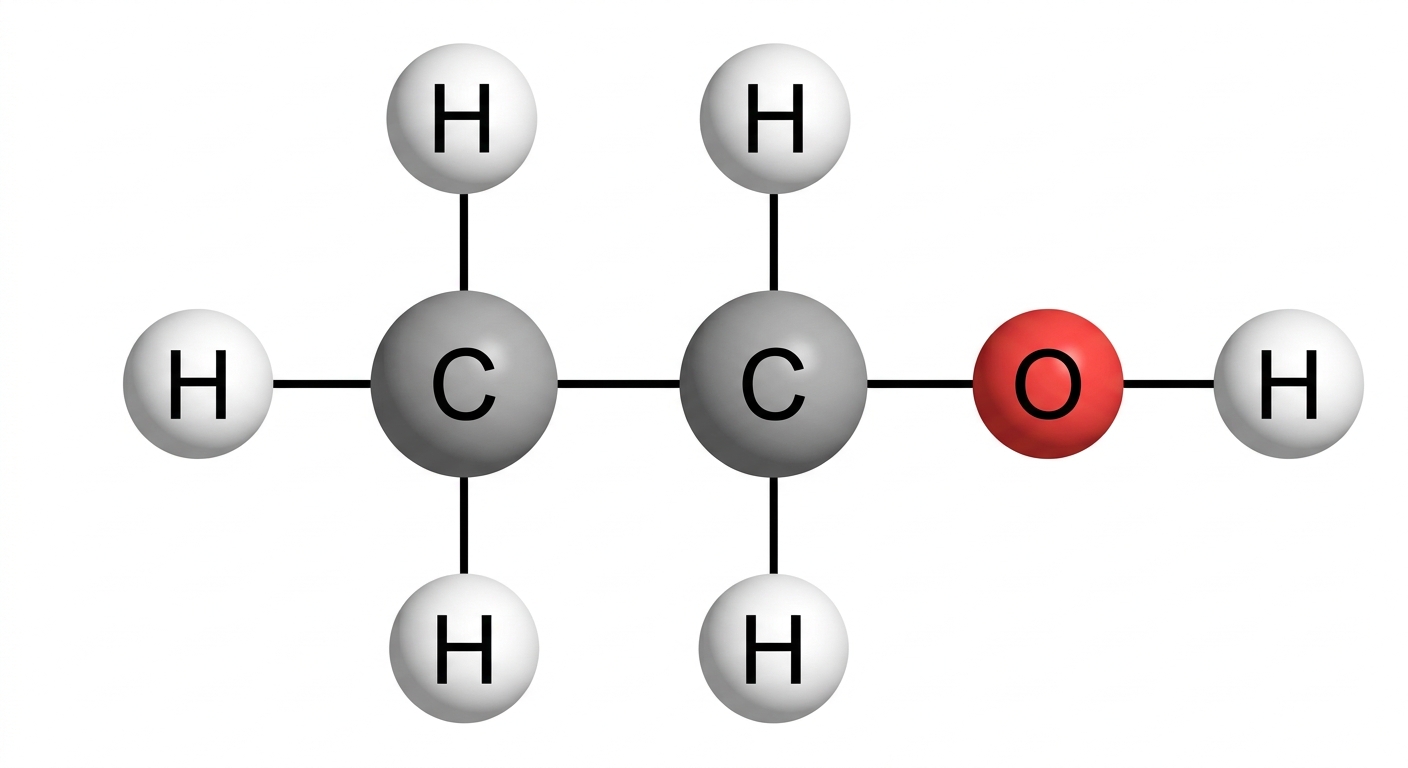
The diagram shows a model of a molecule with two carbon atoms.
Question diagram
(a)
Identify the functional group and name the compound. [1]Criterion A (ii) · Level 1-2
(b)
The molecule contains oxygen but is not a carboxylic acid. Explain why. [1]Criterion A (iii) · Level 3-4
(c)
Write the condensed structural formula of the member of the same homologous series with three carbon atoms, with the functional group at the end of the chain. [1]Criterion A (ii) · Level 3-4
(d)
Write the balanced equation, with state symbols, for the complete combustion of the compound shown. [2]Criterion A (ii) · Level 3-4

revisionprep.com

Summary Answer

Not available for this question.

Model Answer

Not available for this question.

Marking Scheme

Not available for this question.

Examiner Insights

Not available for this question.

Question 3Criterion A · Band 3-6 · Medium · 4 marksrevisionprep.com

Functional groups: definition

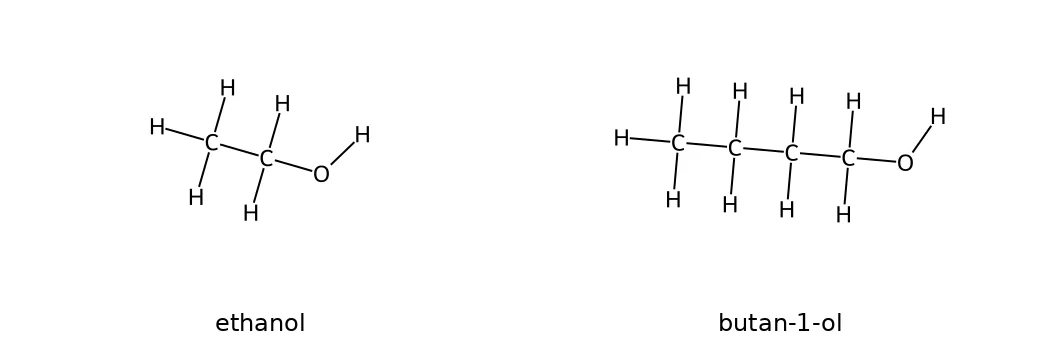
Ethanol, CH3CH2OH\mathrm{CH_{3}CH_{2}OH}, and butan-1-ol, CH3CH2CH2CH2OH\mathrm{CH_{3}CH_{2}CH_{2}CH_{2}OH}, are both alcohols.

The structures are shown in the diagram.
Question diagram
(a)
Define the term functional group. [1]Criterion A (i) · Level 3-4
(b)
Ethanol burns in air, reacts with sodium to release hydrogen, and is oxidised to ethanoic acid by acidified potassium dichromate(VI). Predict, with a reason, whether butan-1-ol undergoes the same reactions. [2]Criterion A (ii) · Level 5-6
(c)
Name the carboxylic acid formed when butan-1-ol is oxidised. [1]Criterion A (ii) · Level 5-6

revisionprep.com

Summary Answer

Not available for this question.

Model Answer

Not available for this question.

Marking Scheme

Not available for this question.

Examiner Insights

Not available for this question.

Question 4Criterion D + A · Band 1-6 · Medium · 7 marksrevisionprep.com

Functional groups and physical properties
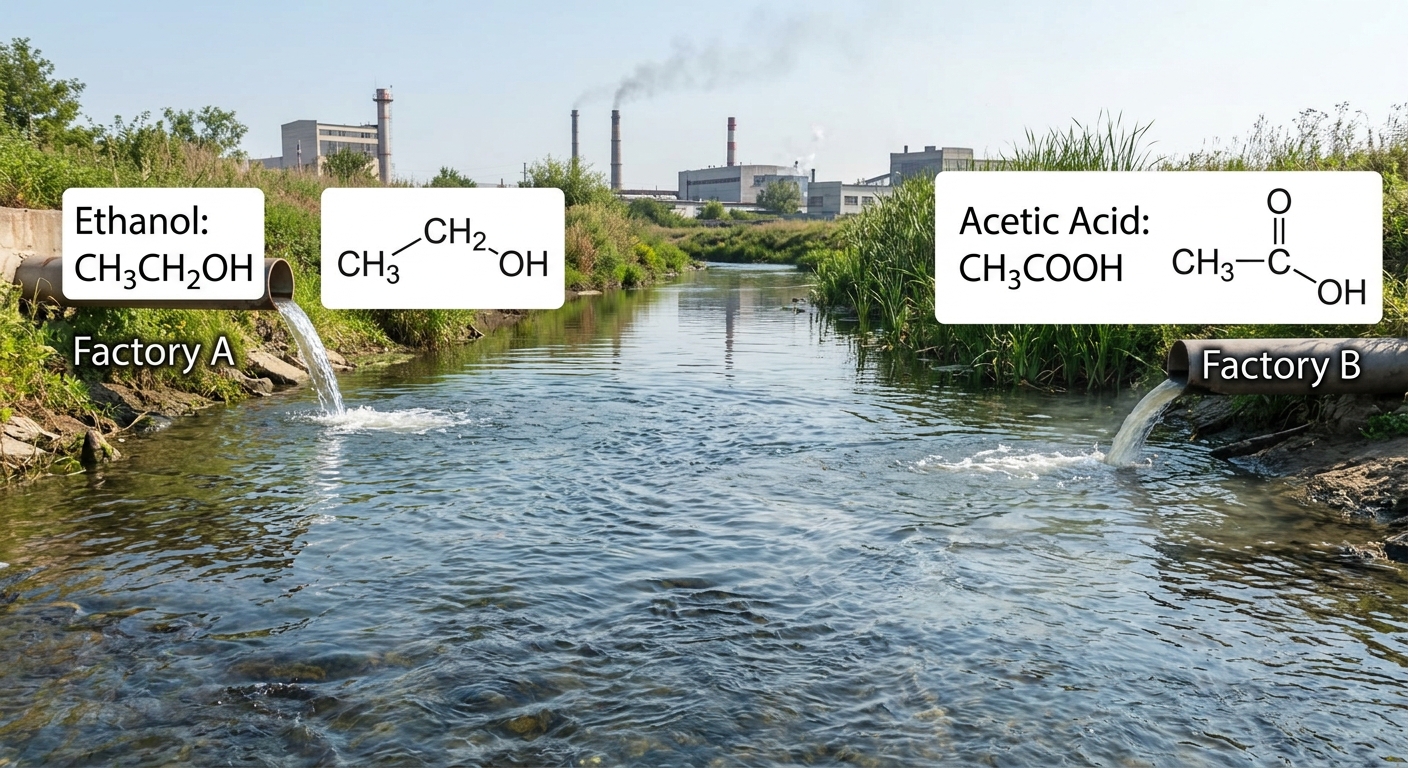
The photograph shows two factories releasing waste into a river. Factory A releases ethanol and Factory B releases ethanoic acid.
Question diagram
(a)
Identify the functional group in each pollutant. [1]Criterion A (i) · Level 1-2
(b)
Predict which pollutant lowers the pH of the river, and explain why. [2]Criterion D (i) · Level 3-4
(c)
Bacteria in the river break down both pollutants using dissolved oxygen. Explain how this can kill fish even when the pollutants themselves are not toxic at that concentration. [2]Criterion D (i) · Level 5-6
(d)
Factory B neutralises its waste with powdered limestone (calcium carbonate) before releasing it. Write the balanced equation and suggest one advantage of using limestone rather than sodium hydroxide. [2]Criterion D (i) · Level 5-6

revisionprep.com

Summary Answer

Not available for this question.

Model Answer

Not available for this question.

Marking Scheme

Not available for this question.

Examiner Insights

Not available for this question.

Question 5Criterion B · Band 3-8 · Challenge · 10 marksrevisionprep.com

Homologous series: definition and characteristics

Lucia wants to investigate how the number of carbon atoms in an alkane affects its viscosity (how thick and slow-flowing the liquid is). She has hexane (C6H14\mathrm{C_{6}H_{14}}), octane (C8H18\mathrm{C_{8}H_{18}}), decane (C10H22\mathrm{C_{10}H_{22}}) and dodecane (C12H26\mathrm{C_{12}H_{26}}), a 50 cm³ burette, a stopwatch and a thermometer.
(a)
Formulate a testable hypothesis and explain it using scientific reasoning. [4]Criterion B (ii) · Level 7-8
(b)
Identify the independent and dependent variables, and explain how the dependent variable will be measured with this apparatus. [3]Criterion B (iii) · Level 5-6
(c)
Explain why two other variables must be controlled. [2]Criterion B (iii) · Level 5-6
(d)
State one safety precaution specific to these liquids. [1]Criterion B (iv) · Level 3-4

revisionprep.com

Summary Answer

Not available for this question.

Model Answer

Not available for this question.

Marking Scheme

Not available for this question.

Examiner Insights

Not available for this question.

Question 6Criterion A · Band 3-8 · Challenge · 6 marksrevisionprep.com

Identifying functional groups in structures
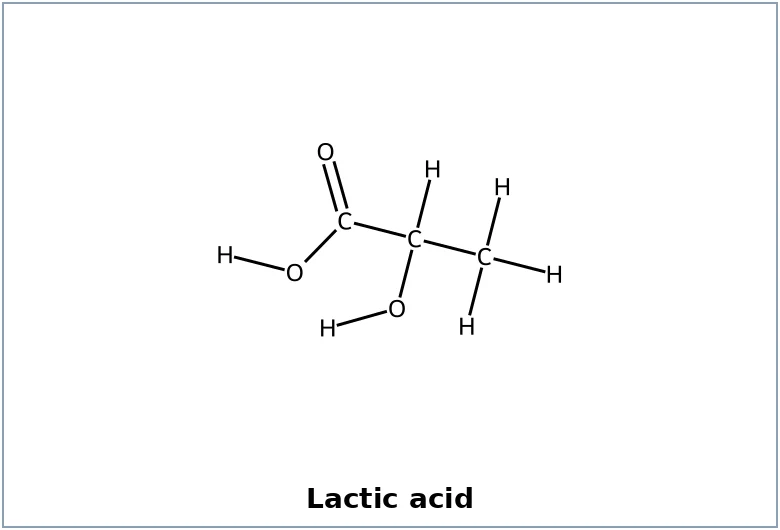
Lactic acid forms when milk turns sour and in muscles during hard exercise. Its displayed formula is shown.
Question diagram
(a)
Identify the two functional groups in lactic acid. [2]Criterion A (ii) · Level 3-4
(b)
Write the molecular formula of lactic acid. [1]Criterion A (ii) · Level 3-4
(c)
Predict what is observed when lactic acid is added to sodium carbonate solution, and identify the functional group responsible. [2]Criterion A (ii) · Level 5-6
(d)
Lactic acid molecules can join together to form esters with each other. Explain how this is possible. [1]Criterion A (iii) · Level 7-8

revisionprep.com

Summary Answer

Not available for this question.

Model Answer

Not available for this question.

Marking Scheme

Not available for this question.

Examiner Insights

Not available for this question.

That's every free question here — 6 of 110.

+104 more questions, plus Mock Papers & Worksheets, are waiting in Premium.

Upgrade