You're viewing free preview questions — 4 questions previewing here — subscribe to unlock 157 more, plus the Full Question Bank, Mock Papers & Worksheets.Upgrade
Hydrocarbons — Free MYP5 Chemistry Practice Questions

1QuestionSaturated vs unsaturated hydrocarbonsConcept Practice
4 marks~6 minCriterion A
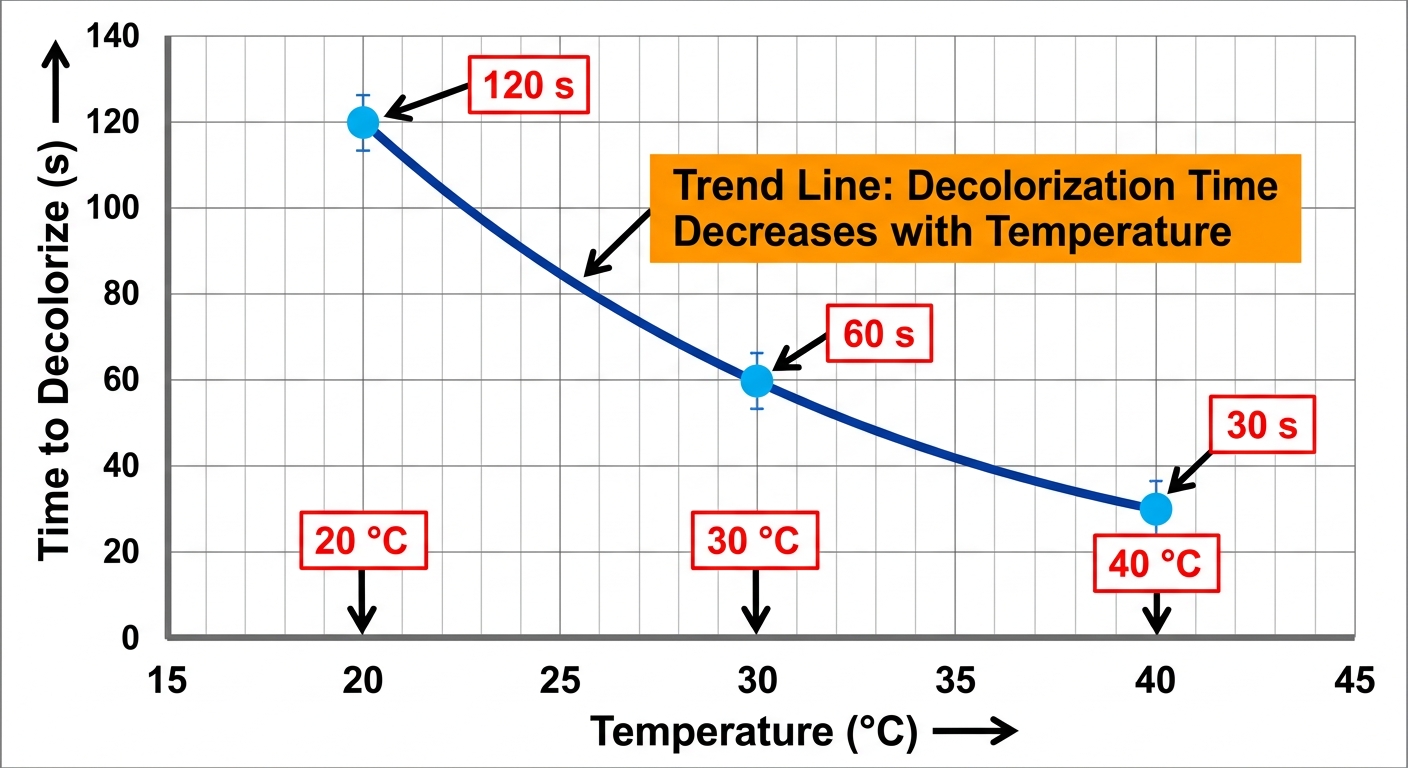
When ethene (C2H4) reacts with bromine water, the time for complete decolourisation was recorded at three temperatures.
Use the relationship throughout.
| Temperature (°C) | 20 | 30 | 40 |
|---|---|---|---|
| Time (s) | 120 | 60 | 30 |
Use the relationship throughout.
a
Calculate the reaction rate at 20°C. [1]
b
Calculate the reaction rates at 30°C and 40°C. Present all three rates in the format:
| Temperature (°C) | 20 | 30 | 40 |
|---|---|---|---|
| Reaction rate (s) | ___ | ___ | ___ [1] |
c
The time halves with each 10°C rise. Explain, using collision theory, why increasing temperature increases the reaction rate of ethene with bromine water. [2]

Solutions
2QuestionAlkenes Reactivity compared to alkanesAssessment Practice
4 marks~6 minCriterion C
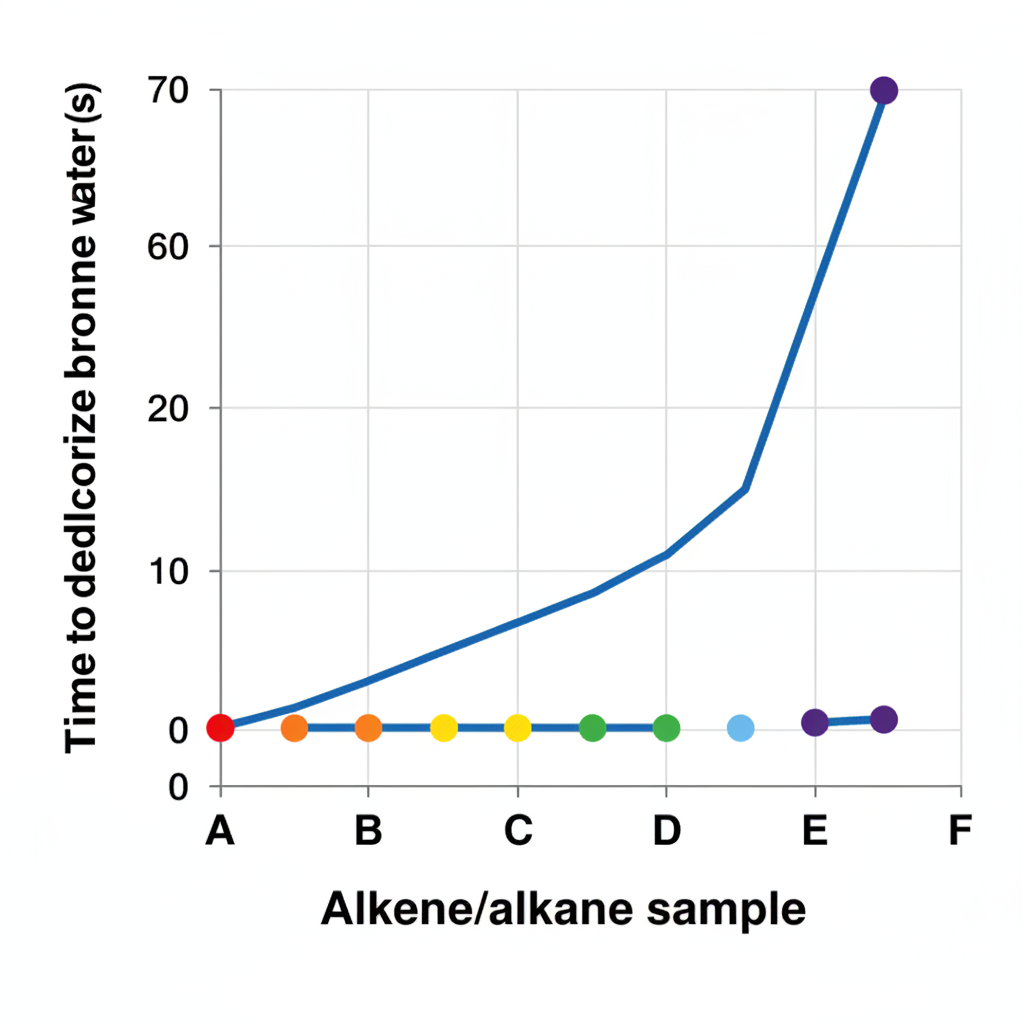
The graph below shows the time taken for bromine water to decolorize when added to five different alkenes (A–E) and one alkane (F) under the same conditions.
Interpret the graph and answer the following questions.
Interpret the graph and answer the following questions.
a
Describe the overall trend shown in the graph regarding the reactivity of alkenes compared to the alkane.
b
Identify which alkene data point is an anomaly and explain why it is considered an anomaly.
c
State a conclusion about the role of the carbon-carbon double bond in the reactivity of alkenes, referencing the graph data.
d
Suggest one reason why the anomalous alkene might react more slowly than expected.
Solutions
3QuestionUses of hydrocarbons (fuels, plastics)Assessment Practice
4 marks~6 minCriterion B
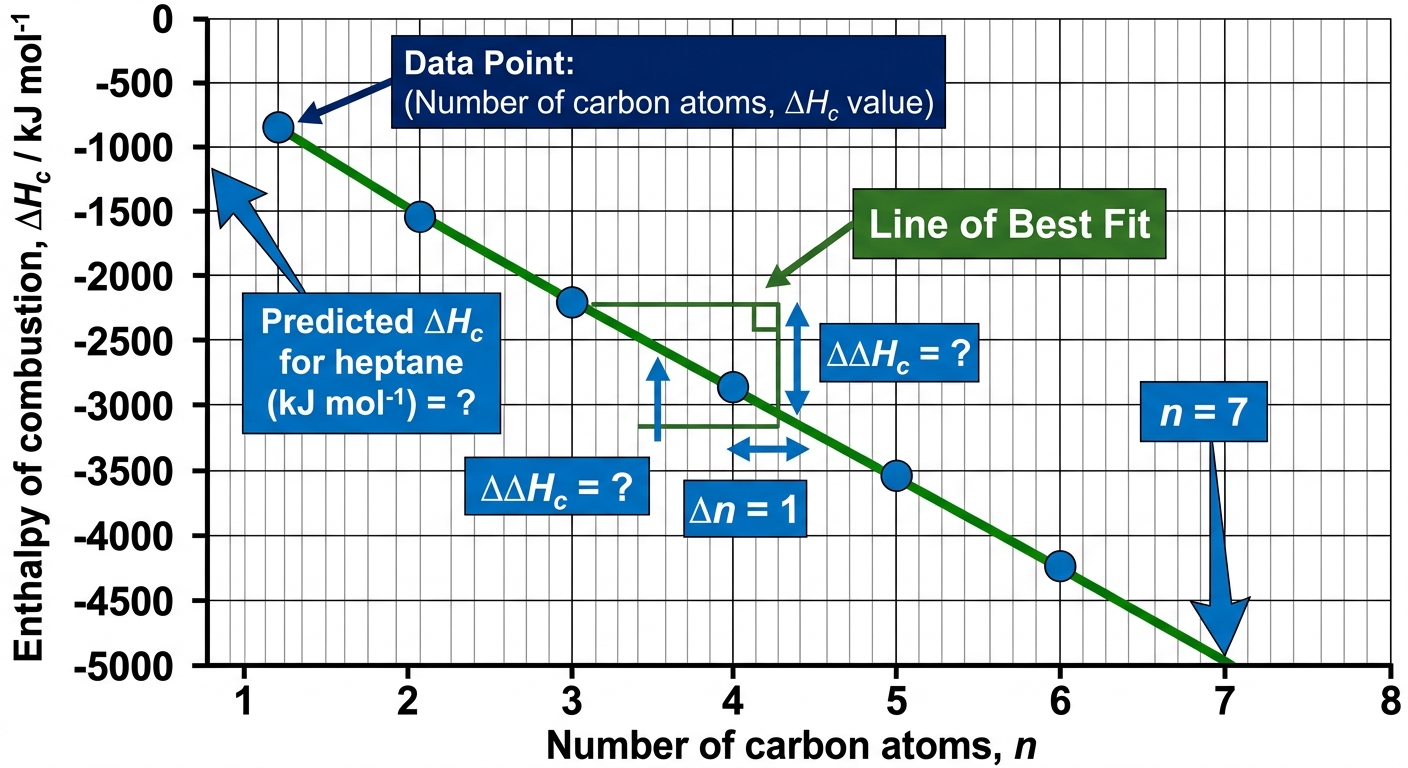
The table below shows the standard enthalpy of combustion () for six consecutive alkanes.
| Alkane | methane | ethane | propane | butane | pentane | hexane |
|---|---|---|---|---|---|---|
| Number of carbon atoms () | 1 | 2 | 3 | 4 | 5 | 6 |
| (kJ mol) | −890 | −1560 | −2220 | −2877 | −3536 | −4194 |
a
Construct a graph of (kJ mol) against . Describe the relationship shown. [2]
b
Deduce the average increase in per additional group. Use this value to predict for heptane (). Show your working. [1]
c
Justify why becomes more negative as chain length increases, with reference to the bonds broken and bonds formed during combustion. [1]
Solutions
4QuestionAlkenes Double bonds / General formula (CₙH₂ₙ)Assessment Practice
6 marks~9 minCriterion D
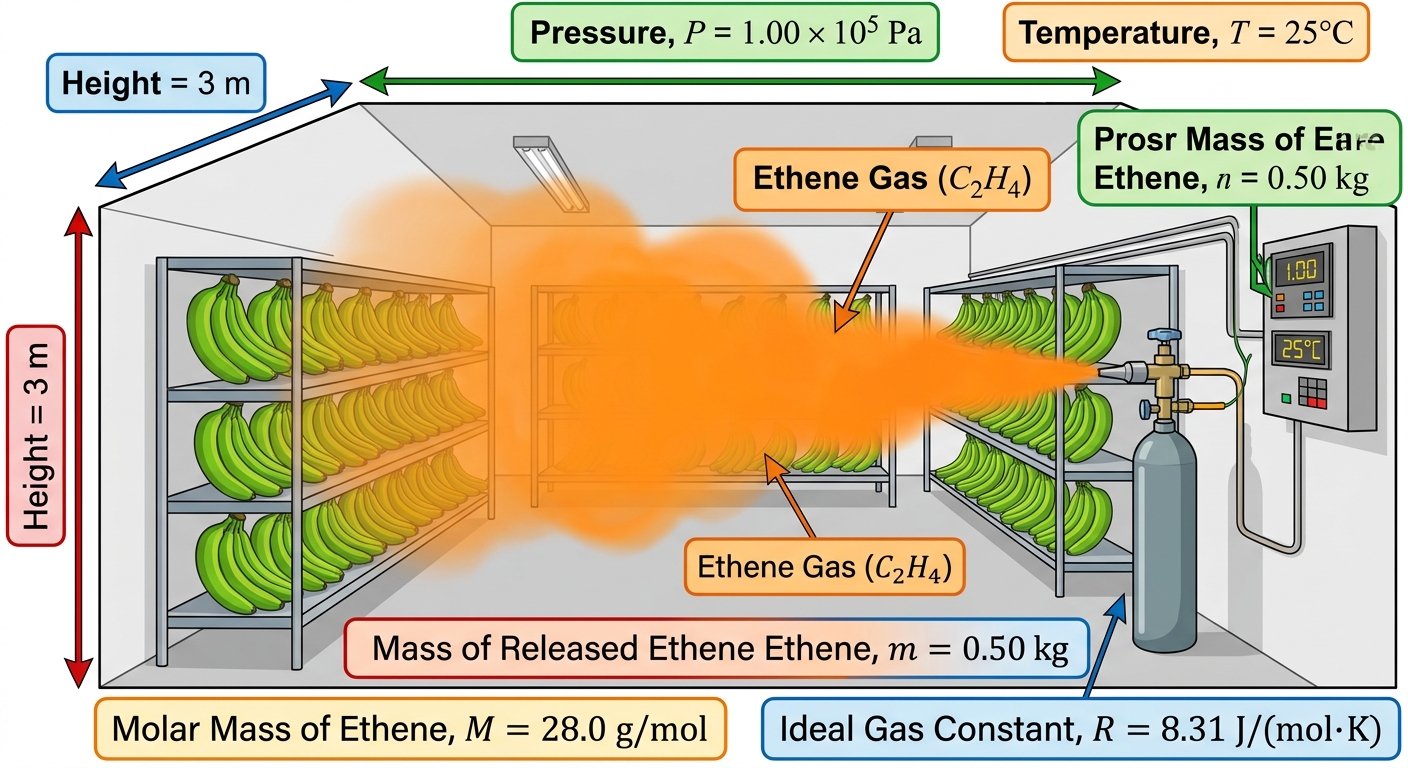
A fruit-ripening facility uses ethene () gas to accelerate banana ripening. The room measures . In a controlled process, of ethene is released. Assume ideal gas behaviour, room temperature , and atmospheric pressure .
Molar mass of ethene: ; ; room volume: .
Molar mass of ethene: ; ; room volume: .
a
Calculate the volume of ethene released under these conditions. [2]
b
Show that the ethene occupies less than 1% of the room volume, and explain what this suggests about oxygen availability for workers. [2]
c
Evaluate the reliability of the ideal gas law for predicting safe ethene concentration levels in this facility. [2]
Solutions
That's every free question here — 4 of 161.
+157 more questions, plus Mock Papers & Worksheets, are waiting in Premium.