You're viewing free preview questions — 4 questions previewing here — subscribe to unlock 117 more, plus the Full Question Bank, Mock Papers & Worksheets.Upgrade
Polymers — Free MYP5 Chemistry Practice Questions

1QuestionMonomers and polymerizationConcept Practice
2 marks~3 minCriterion A
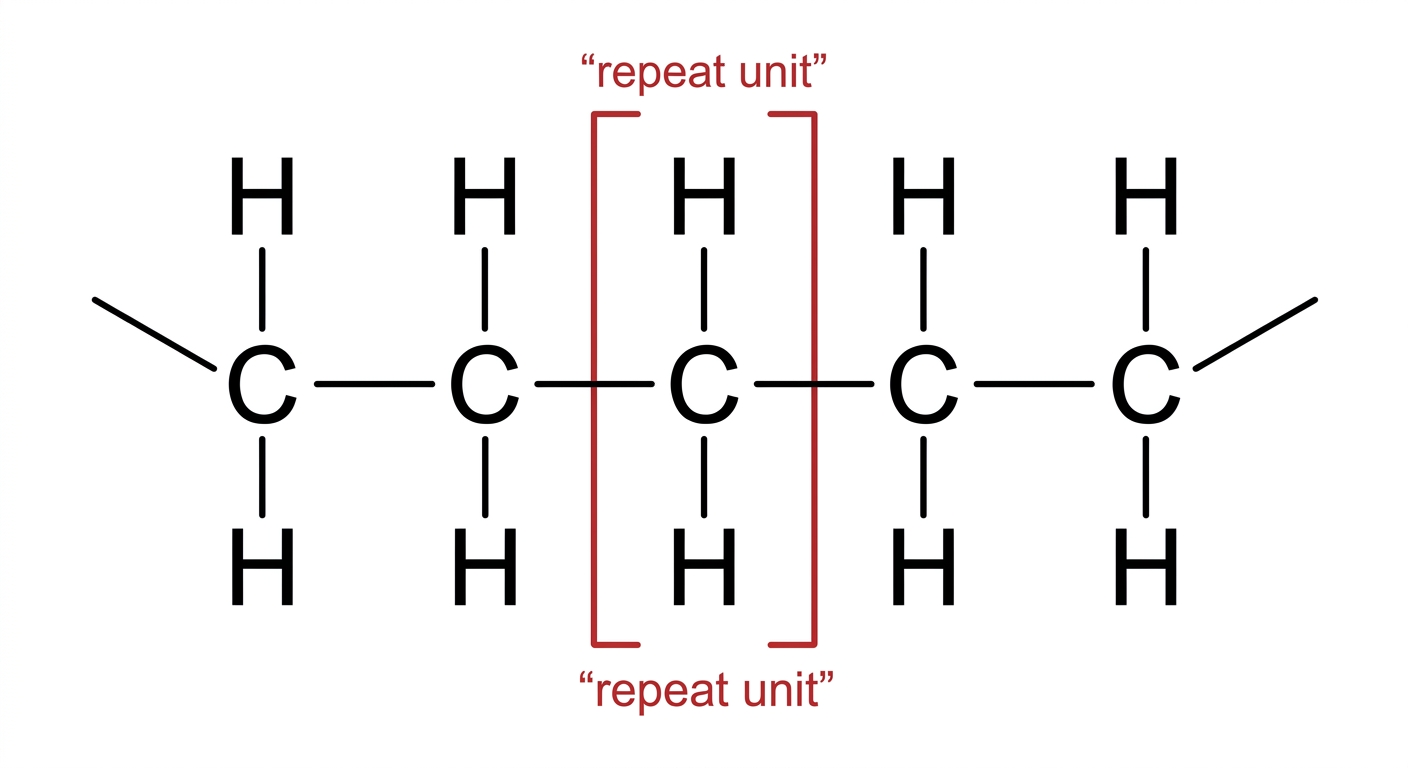
The diagram below shows a section of the addition polymer polyethene. The repeat unit is indicated by the brackets.
a
State the name and molecular formula of the monomer used to produce polyethene. [1]
b
Explain why the monomer's structure differs from the repeat unit shown in the diagram. [1]

Solutions
2QuestionBiodegradable polymers (basic idea)Assessment Practice
3 marks~5 minCriterion D
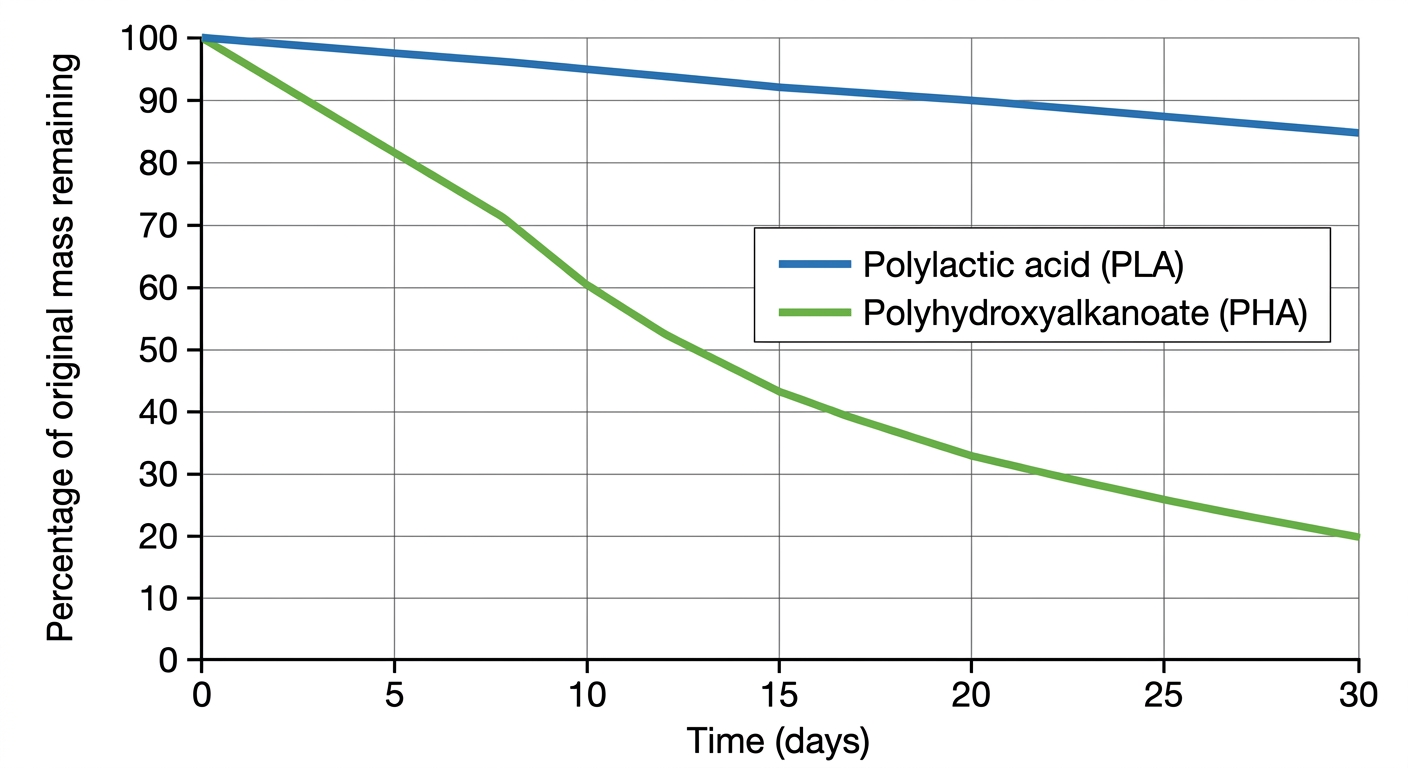
The graph below shows the percentage of original mass remaining over 30 days for two biodegradable polymers — polylactic acid (PLA) and polyhydroxyalkanoate (PHA) — composted at 58°C. Both polymers begin at 100% mass at day 0. By day 30, PLA retains approximately 85% of its original mass, while PHA retains approximately 20%.
a
Describe the trend in mass loss shown by each polymer over the 30-day period. [1]
b
Identify which polymer biodegrades faster and calculate the percentage of mass lost by each polymer over the 30-day period. [1]
c
Explain what the difference in mass loss between PLA and PHA suggests about their suitability for use in single-use packaging that must break down quickly in industrial compost facilities. [1]
Solutions
3QuestionNatural vs synthetic polymersAssessment Practice
4 marks~6 minCriterion C
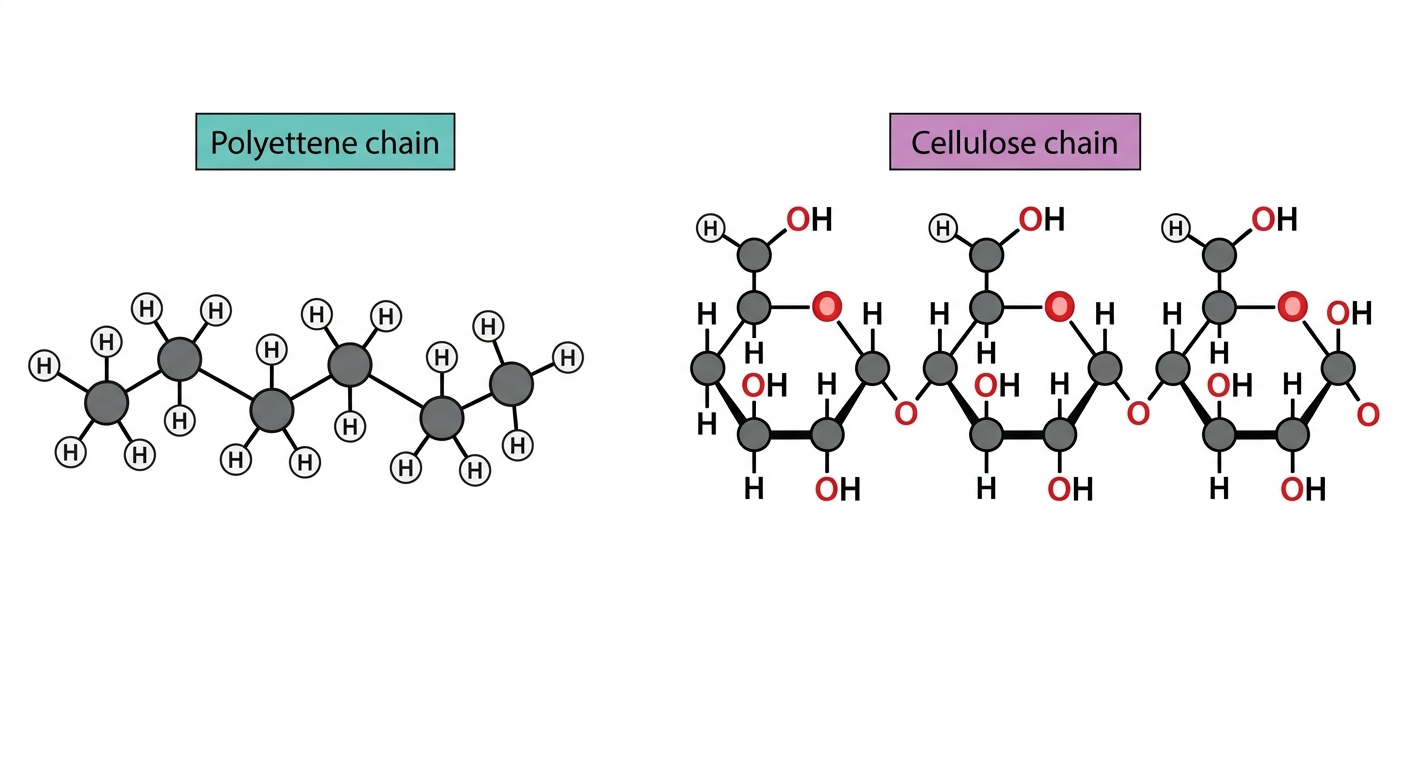
The diagram below shows a section of a polyethene chain and a section of a cellulose chain.
Polyethene repeating unit: connected by C–C single bonds.
Cellulose repeating unit: glucose monomers linked by glycosidic (C–O–C) bonds.
Polyethene repeating unit: connected by C–C single bonds.
Cellulose repeating unit: glucose monomers linked by glycosidic (C–O–C) bonds.
a
State the type of bond found in the backbone of each polymer. [1]
b
Explain why C–C bonds in polyethene resist attack by enzymes in the environment. [1]
c
Discuss how the bond type in cellulose makes it susceptible to enzymatic breakdown, and evaluate why this difference in bond type means polyethene persists in ecosystems while cellulose does not. [2]
Solutions
4QuestionNatural vs synthetic polymersAssessment Practice
4 marks~6 minCriterion B
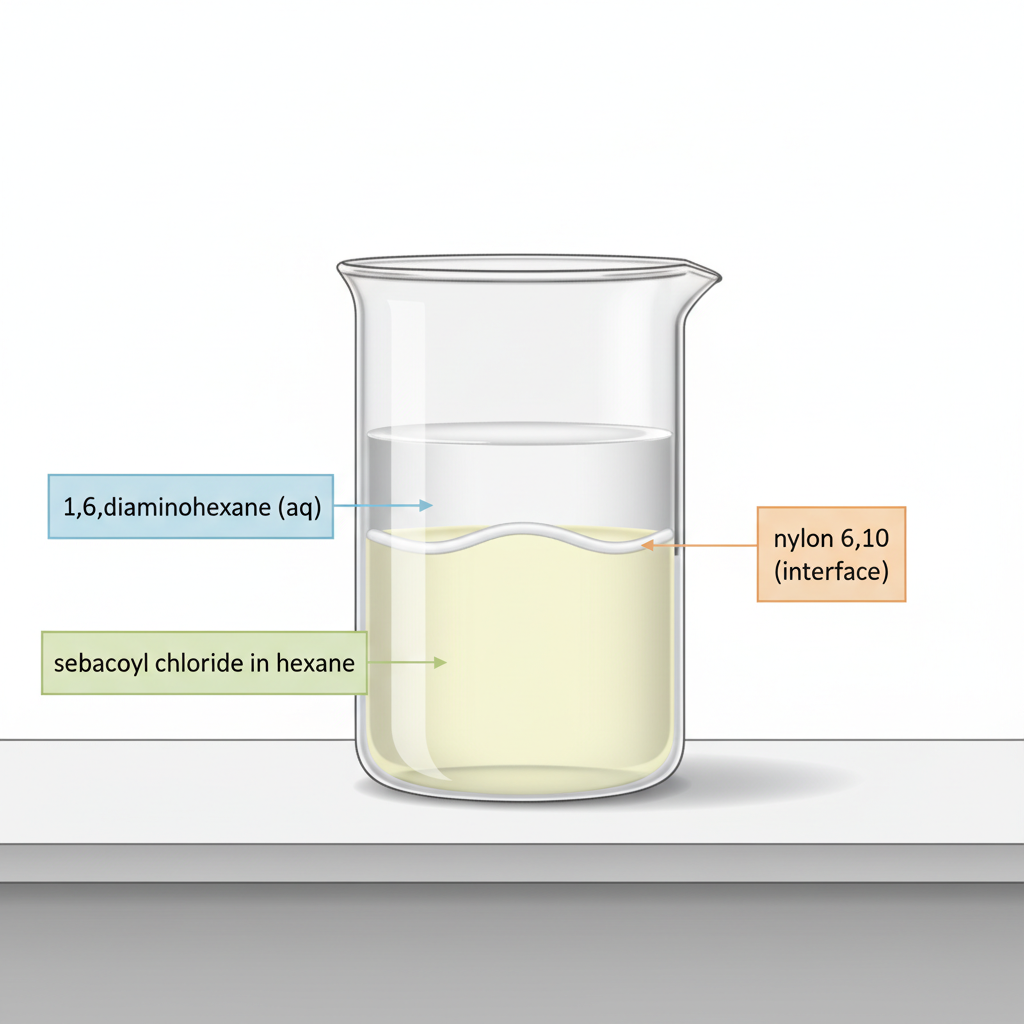
A diagram shows the setup for synthesizing nylon 6,10: a beaker contains two immiscible layers—an aqueous solution of 1,6-diaminohexane (top) and a hexane solution of sebacoyl chloride (bottom). At the interface, nylon 6,10 forms. The polymer chains are long because each monomer has a 6-carbon or 10-carbon chain. In a modified experiment, the 1,6-diaminohexane is replaced with 1,2-diaminoethane (which has only a 2-carbon chain). All other conditions remain the same.
a
[2 marks] Predict how the chain length of the nylon produced in the modified experiment would compare to that of nylon 6,10.
b
[2 marks] Predict how the flexibility and tensile strength of the modified nylon would compare to those of nylon 6,10. Justify your prediction by referring to intermolecular forces and chain packing.
Solutions
That's every free question here — 4 of 121.
+117 more questions, plus Mock Papers & Worksheets, are waiting in Premium.