You're viewing free preview questions — 4 questions previewing here — subscribe to unlock 116 more, plus the Full Question Bank, Mock Papers & Worksheets.Upgrade
Sturtural Formula, Condensed Formula and Isomerism — Free MYP5 Chemistry Practice Questions

1QuestionIdentifying isomers from formulasConcept Practice
4 marks~6 minCriterion A
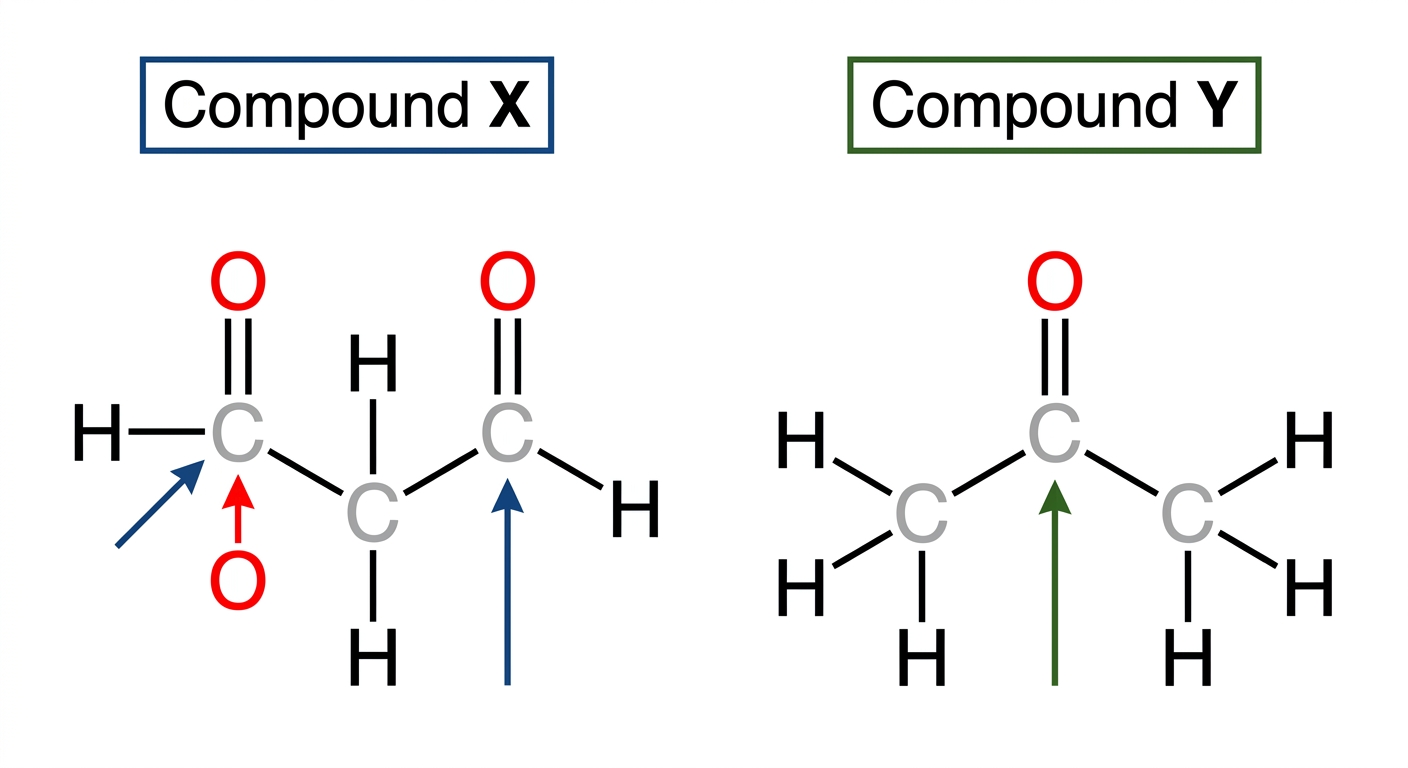
Two organic compounds, both with molecular formula , are shown below.
Compound X:
Compound Y:
Compound X:
Compound Y:
a
Identify which compound is an aldehyde and which is a ketone. [1]
b
Explain the difference in the bonding arrangement of the carbonyl carbon that distinguishes an aldehyde from a ketone. [2]
c
A student claims that Compounds X and Y are isomers. Evaluate this claim using evidence from their molecular and structural formulas. [1]

Solutions
2QuestionDrawing displayed structuresAssessment Practice
5 marks~8 minCriterion C
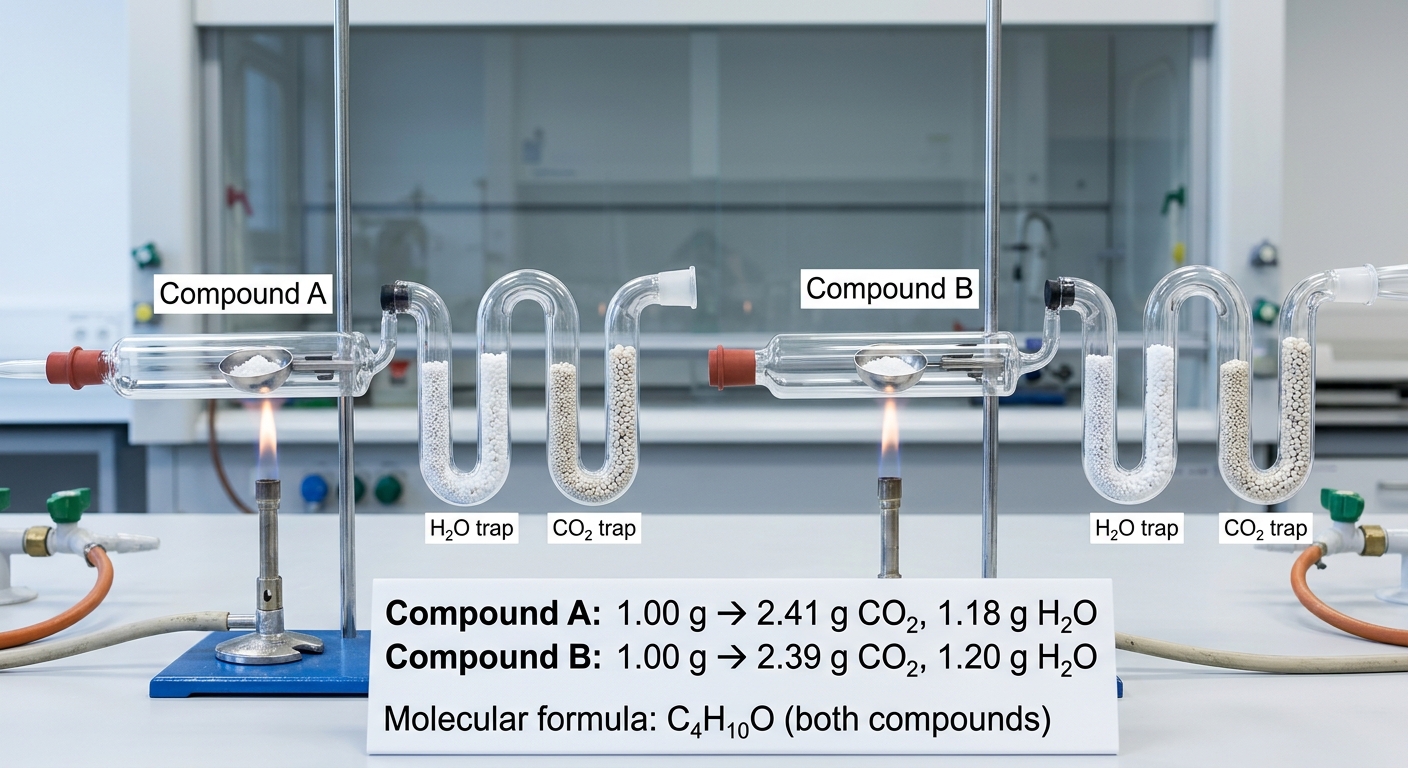
A chemist hypothesises that two compounds with molecular formula are structural isomers. Combustion of 1.00 g of each compound gives:
Compound A: 2.41 g and 1.18 g
Compound B: 2.39 g and 1.20 g
The chemist identifies Compound A as butan-1-ol and Compound B as diethyl ether.
Compound A: 2.41 g and 1.18 g
Compound B: 2.39 g and 1.20 g
The chemist identifies Compound A as butan-1-ol and Compound B as diethyl ether.
a
Deduce the empirical formula of each compound from the combustion data. Show all working. [2]
b
Draw the displayed structure of each compound. [1]
c
Evaluate whether the experimental data supports the hypothesis that Compound A and Compound B are structural isomers. In your answer, consider the significance of any differences in the combustion data. [2]
Solutions
3QuestionInterpreting skeletal diagramsAssessment Practice
6 marks~9 minCriterion D
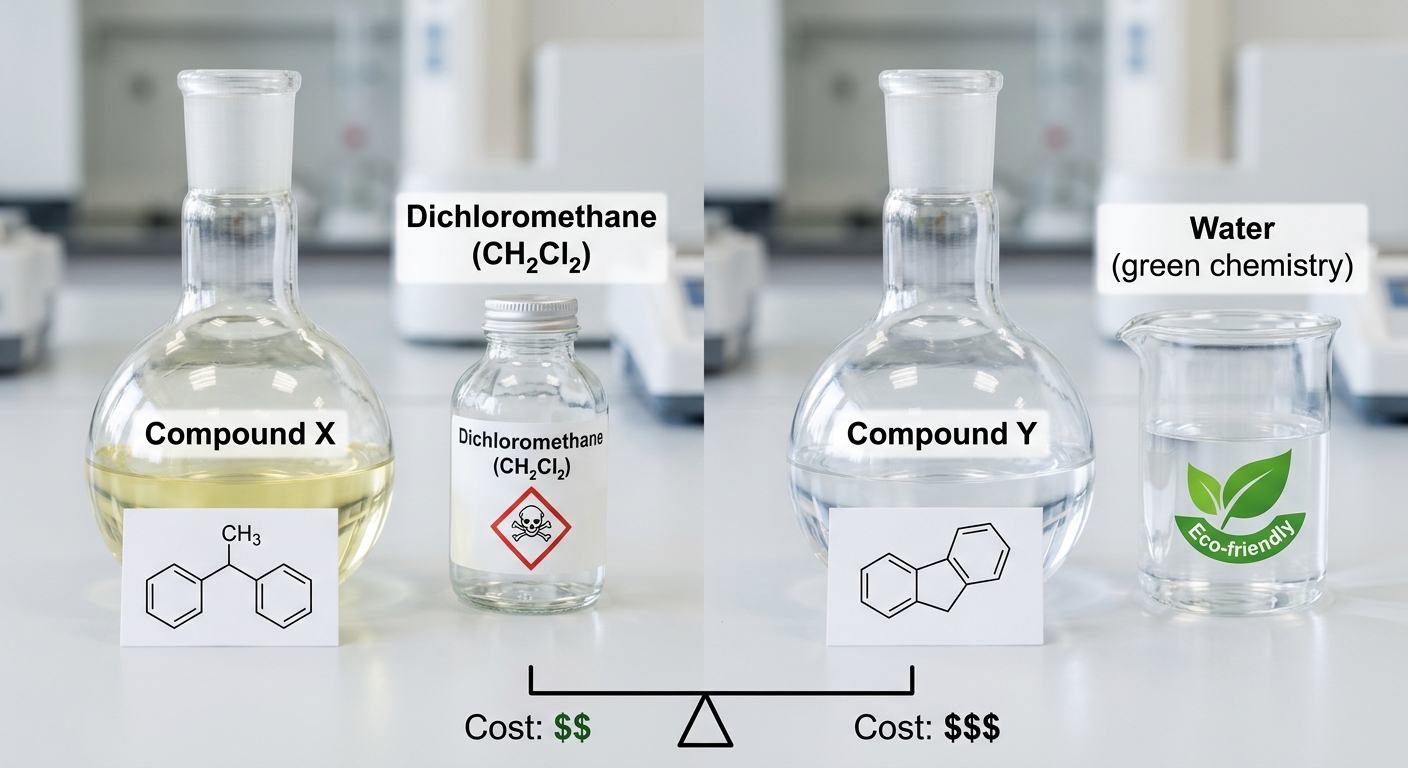
A pharmaceutical company identifies two skeletal isomers of a painkiller: Compound X and Compound Y. Both bind identically to pain receptors, providing equal therapeutic efficacy. Compound X is synthesised using dichloromethane (), a chlorinated solvent toxic to aquatic organisms that persists in the environment. Compound Y is synthesised via a water-based green chemistry route producing no toxic by-products, but costs 50% more to manufacture than Compound X.
a
Identify the immediate societal benefit provided by both compounds. [1]
b
Analyse the environmental impact of using dichloromethane in the synthesis of Compound X compared to the green chemistry route used for Compound Y. [3]
c
Evaluate the trade-offs a regulatory agency must consider when selecting one compound for commercial production, including the economic implications and the limitations of comparing only these two synthesis routes. [2]
Solutions
4QuestionDefinition of isomers / PropertiesAssessment Practice
3 marks~5 minCriterion B
The boiling points of three structural isomers of are given below.
Isomer: pentane, 2-methylbutane, 2,2-dimethylpropane
Boiling point (°C): 36, 28, 9
Isomer: pentane, 2-methylbutane, 2,2-dimethylpropane
Boiling point (°C): 36, 28, 9
a
State the trend in boiling point as branching increases among these three isomers. [1]
b
Identify the type of intermolecular force present in all three isomers and explain why only this type is present. [1]
c
Explain how increasing branching affects the strength of these intermolecular forces and, therefore, the boiling point. [1]
Solutions
That's every free question here — 4 of 120.
+116 more questions, plus Mock Papers & Worksheets, are waiting in Premium.