You're viewing free preview questions — 6 questions previewing here — subscribe to unlock 76 more, plus the Full Question Bank, Mock Papers & Worksheets.Upgrade
Back

Chromatography and its applications — Free MYP5 Chemistry Practice Questions

Free questions

Open in full, with answers, mark scheme and examiner insights.

Question 1Criterion A · Band 1-2 · Easy · 2 marksrevisionprep.com

Basic principle of chromatography (mobile vs stationary phase)
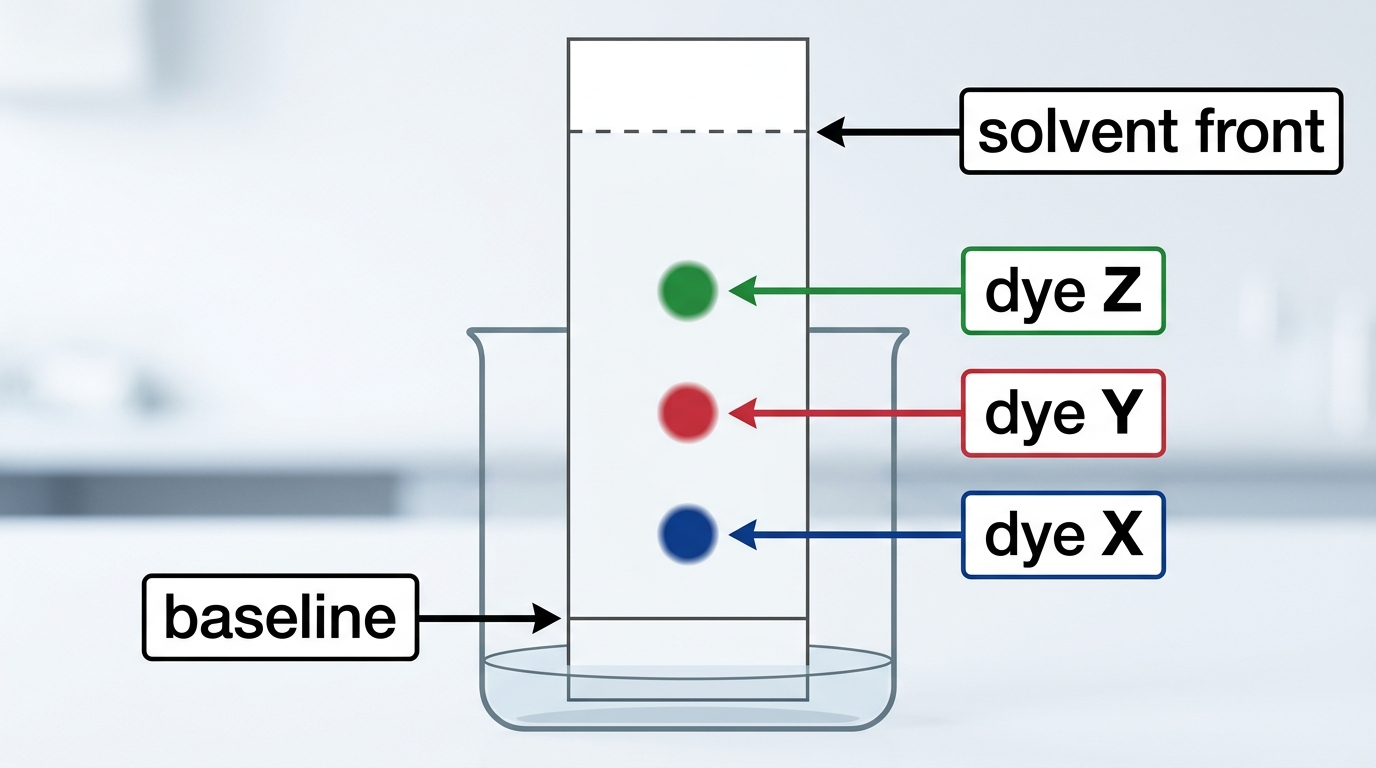
The diagram shows a paper chromatogram of a mixture of three dyes, X, Y and Z, after the solvent has been allowed to rise.
Question diagram
(a)
Identify the dye with the strongest attraction to the stationary phase. [1]Criterion A (ii) · Level 1-2
(b)
Identify the dye that is most soluble in the mobile phase. [1]Criterion A (ii) · Level 1-2

revisionprep.com

Summary Answer

Not available for this question.

Model Answer

Not available for this question.

Marking Scheme

Not available for this question.

Examiner Insights

Not available for this question.

Question 2Criterion A + C · Band 3-4 · Easy · 5 marksrevisionprep.com

Interpreting chromatograms (Rf values – basic idea)

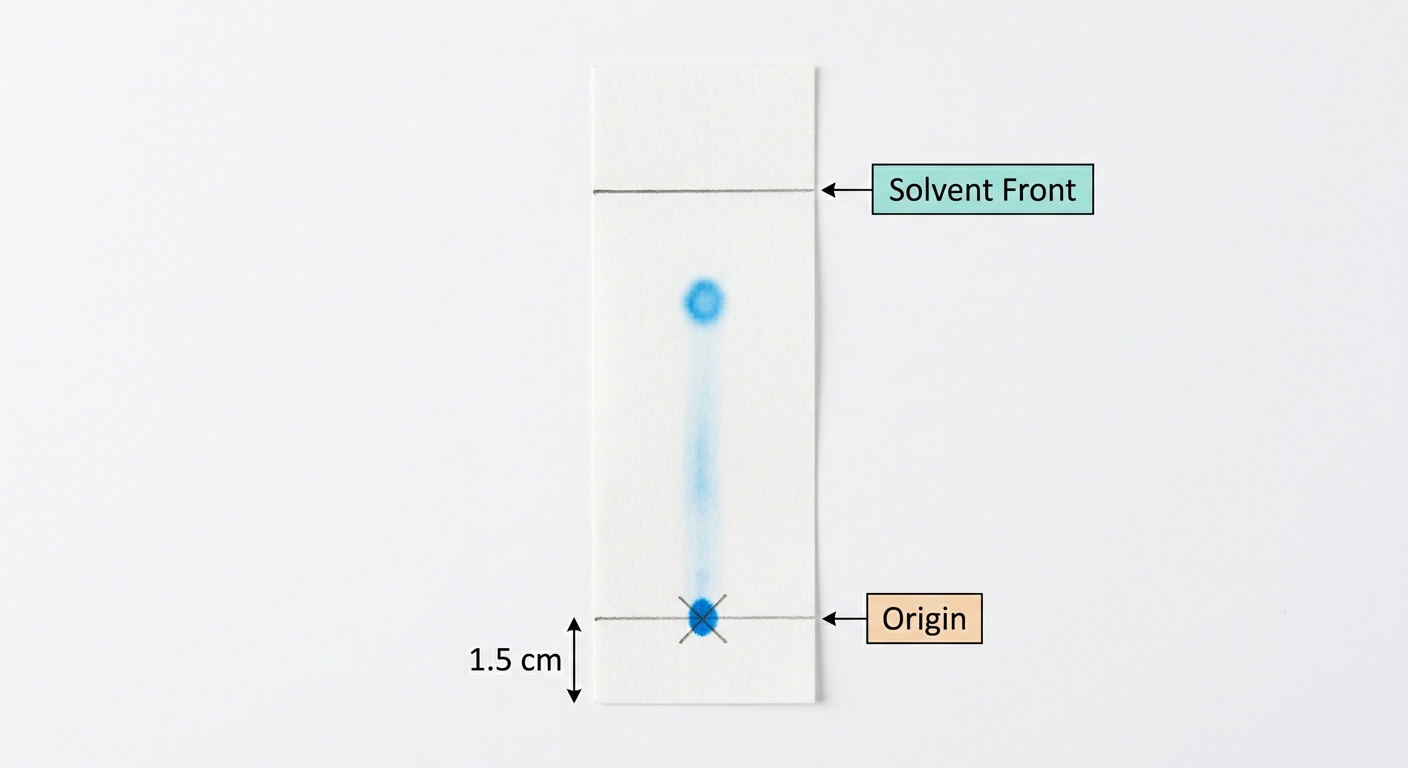
The photograph shows a chromatogram of a blue ink. The solvent front travelled 8.0 cm from the origin and the main blue spot travelled 5.2 cm. A faint blue streak runs from the origin up to the spot.

Reference RfR_f values for blue dyes: dye A 0.45, dye B 0.65, dye C 0.78, dye D 0.52
Question diagram
(a)
Calculate the RfR_f value of the blue spot. [2]Criterion A (ii) · Level 3-4
(b)
Identify the dye in the ink. [1]Criterion A (ii) · Level 3-4
(c)
Suggest a cause of the streak and explain how it could affect the reliability of the identification. [2]Criterion C (iv) · Level 3-4

revisionprep.com

Summary Answer

Not available for this question.

Model Answer

Not available for this question.

Marking Scheme

Not available for this question.

Examiner Insights

Not available for this question.

Question 3Criterion B · Band 3-6 · Medium · 8 marksrevisionprep.com

Separation based on solubility and adsorption
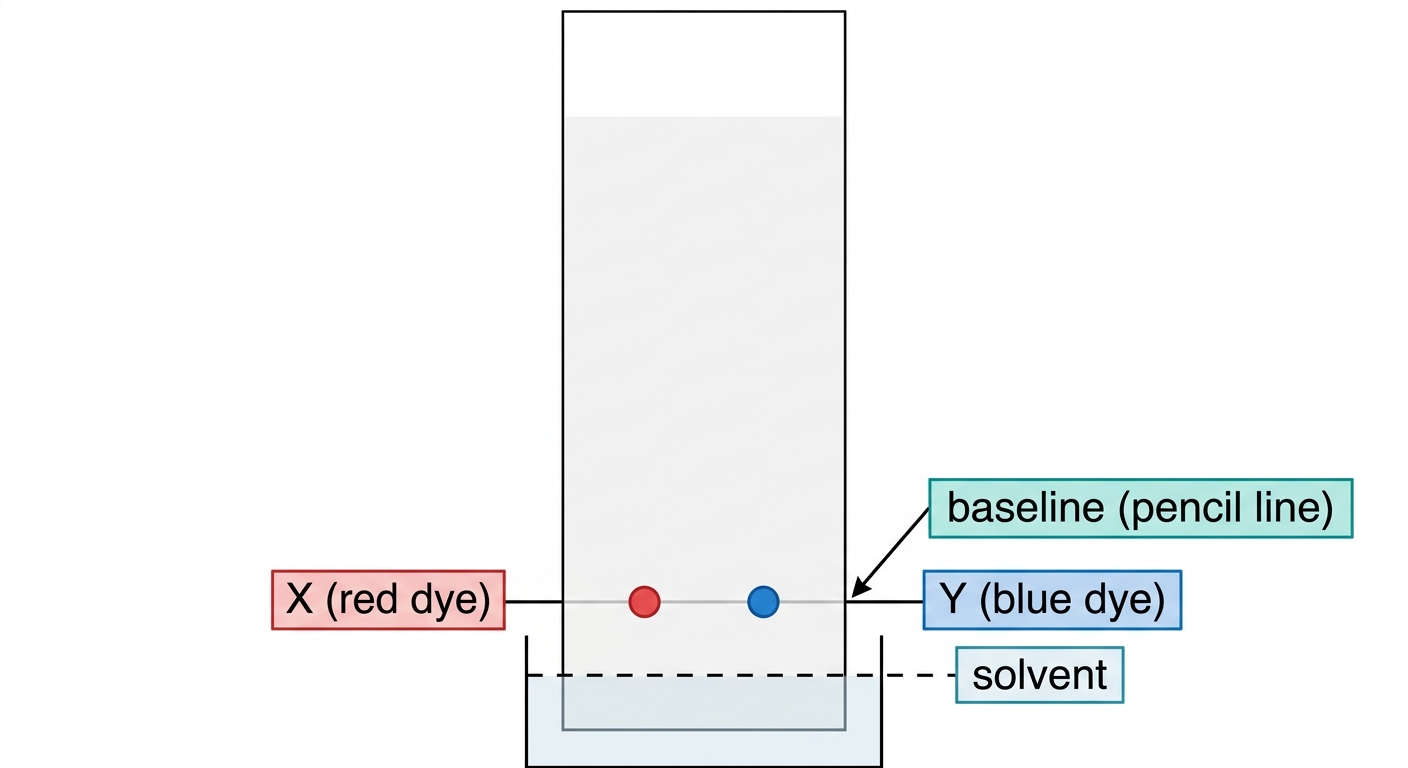
The diagram shows a chromatogram set up with a red dye X and a blue dye Y on a pencil baseline. Amara wants to find out which solvent separates X and Y most clearly. She can use water, ethanol, a 50:50 ethanol-water mixture and salt water.
Question diagram
(a)
State a research question for Amara's investigation. [1]Criterion B (i) · Level 3-4
(b)
Formulate a hypothesis and explain it using scientific reasoning. [2]Criterion B (ii) · Level 5-6
(c)
Identify the independent variable and explain how Amara could measure how clearly the dyes are separated. [2]Criterion B (iii) · Level 5-6
(d)
Explain how two control variables would be kept constant. [2]

(e) Describe one safety precaution needed in this investigation. [1]
Criterion B (iii) · Level 5-6

revisionprep.com

Summary Answer

Not available for this question.

Model Answer

Not available for this question.

Marking Scheme

Not available for this question.

Examiner Insights

Not available for this question.

Question 4Criterion C · Band 3-6 · Medium · 5 marksrevisionprep.com

Paper chromatography process and setup
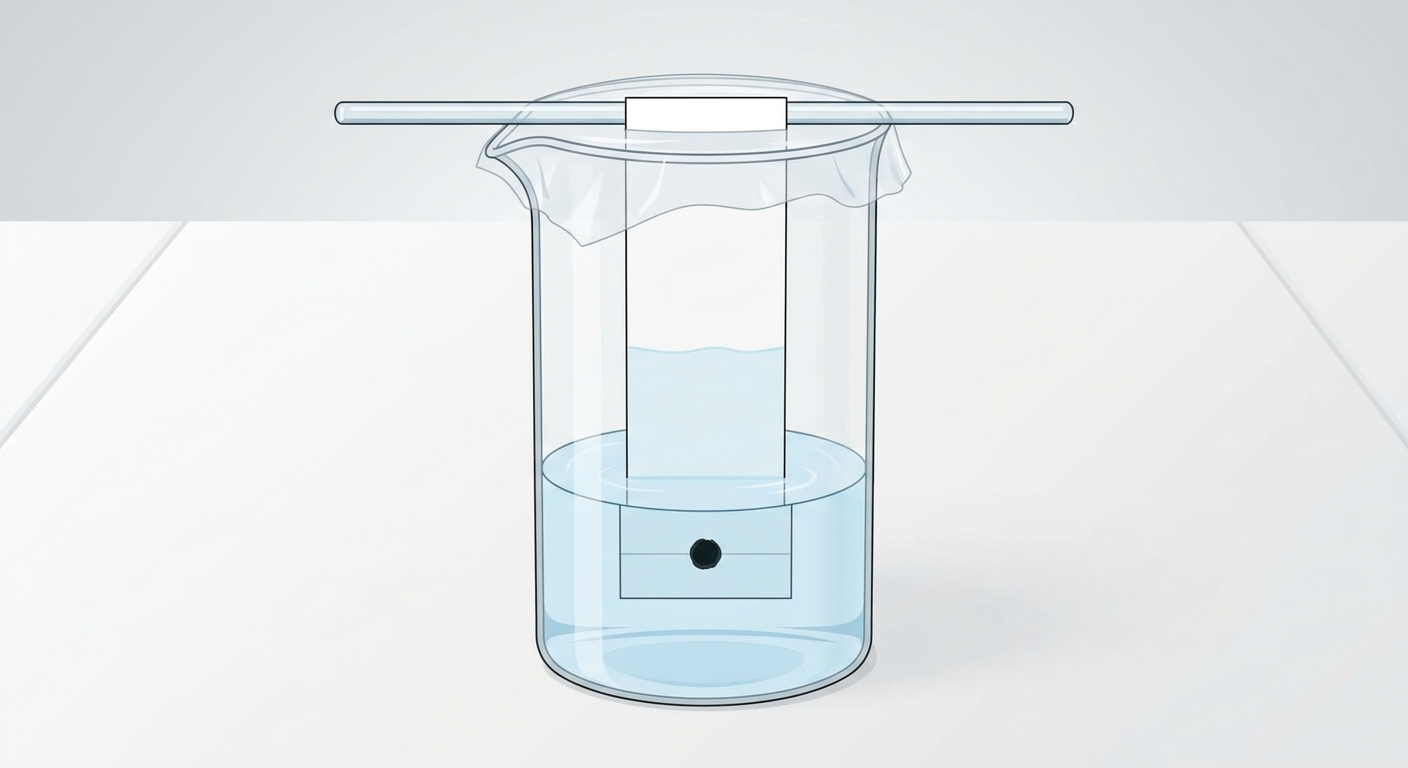
The diagram shows how a student set up a paper chromatography experiment to separate the dyes in a black ink.
Question diagram
(a)
Identify the mistake in the student's set-up. [1]Criterion C (iv) · Level 3-4
(b)
Explain how this mistake would affect the results. [2]Criterion C (iv) · Level 5-6
(c)
Suggest how the student should correct the mistake, and suggest one other improvement to the set-up. [2]Criterion C (v) · Level 5-6

revisionprep.com

Summary Answer

Not available for this question.

Model Answer

Not available for this question.

Marking Scheme

Not available for this question.

Examiner Insights

Not available for this question.

Question 5Criterion D · Band 3-8 · Challenge · 8 marksrevisionprep.com

Basic principle of chromatography (mobile vs stationary phase)
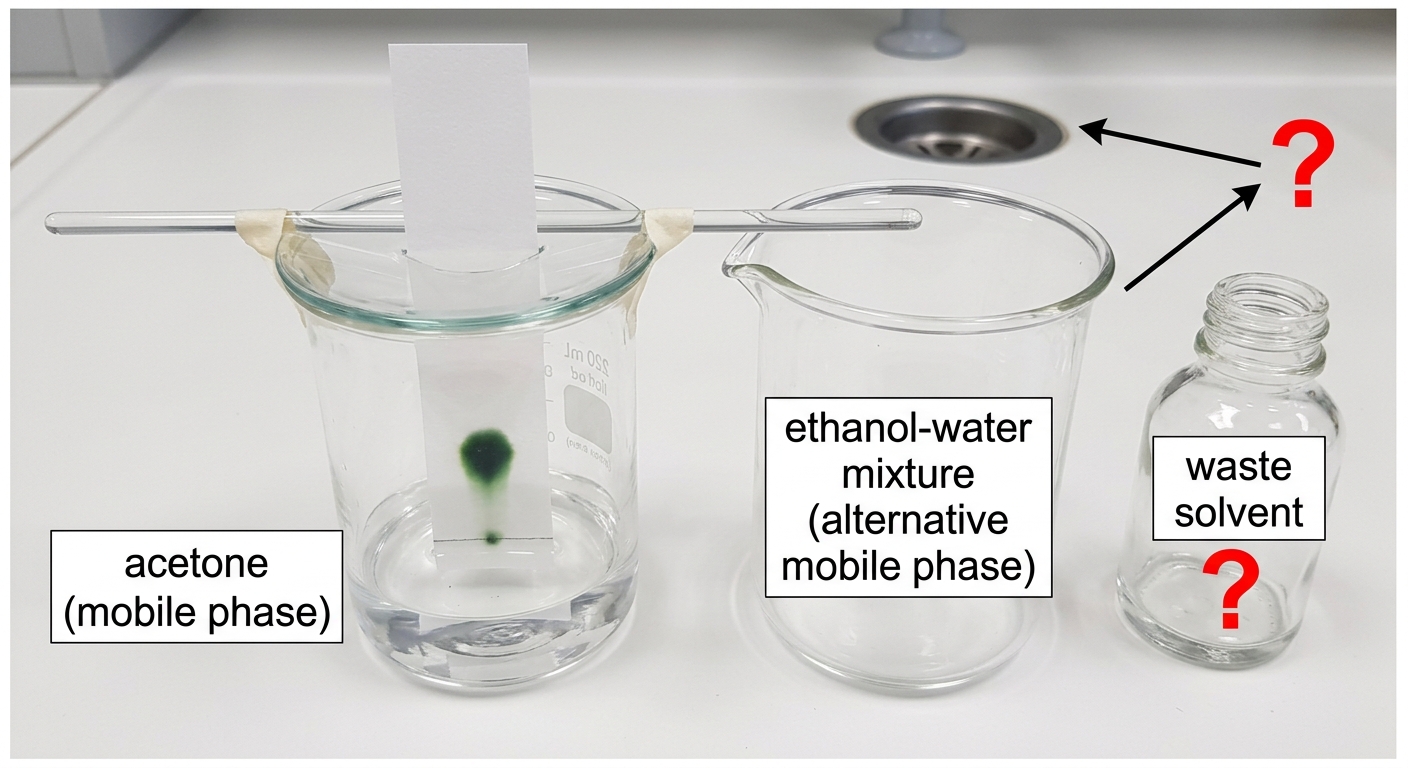
The photograph shows a technician's bench. Leaf pigments are separated using acetone (propanone) as the mobile phase, and the used acetone has been poured into the sink. Acetone is highly flammable and its vapour irritates the eyes and lungs. The laboratory manager suggests changing to an ethanol-water mixture, which evaporates more slowly but separates some of the pigments less clearly.
Question diagram
(a)
Outline two reasons why used acetone should not be poured into the sink. [2]Criterion D (i) · Level 3-4
(b)
Describe a safer way of dealing with the used solvent. [2]Criterion D (i) · Level 3-4
(c)
Discuss whether the laboratory should change to the ethanol-water mixture. Consider safety, environmental and scientific factors. [4]Criterion D (ii), D (iii) · Level 7-8

revisionprep.com

Summary Answer

Not available for this question.

Model Answer

Not available for this question.

Marking Scheme

Not available for this question.

Examiner Insights

Not available for this question.

Question 6Criterion A + D · Band 3-8 · Challenge · 8 marksrevisionprep.com

Applications (forensics, food testing, drug analysis)
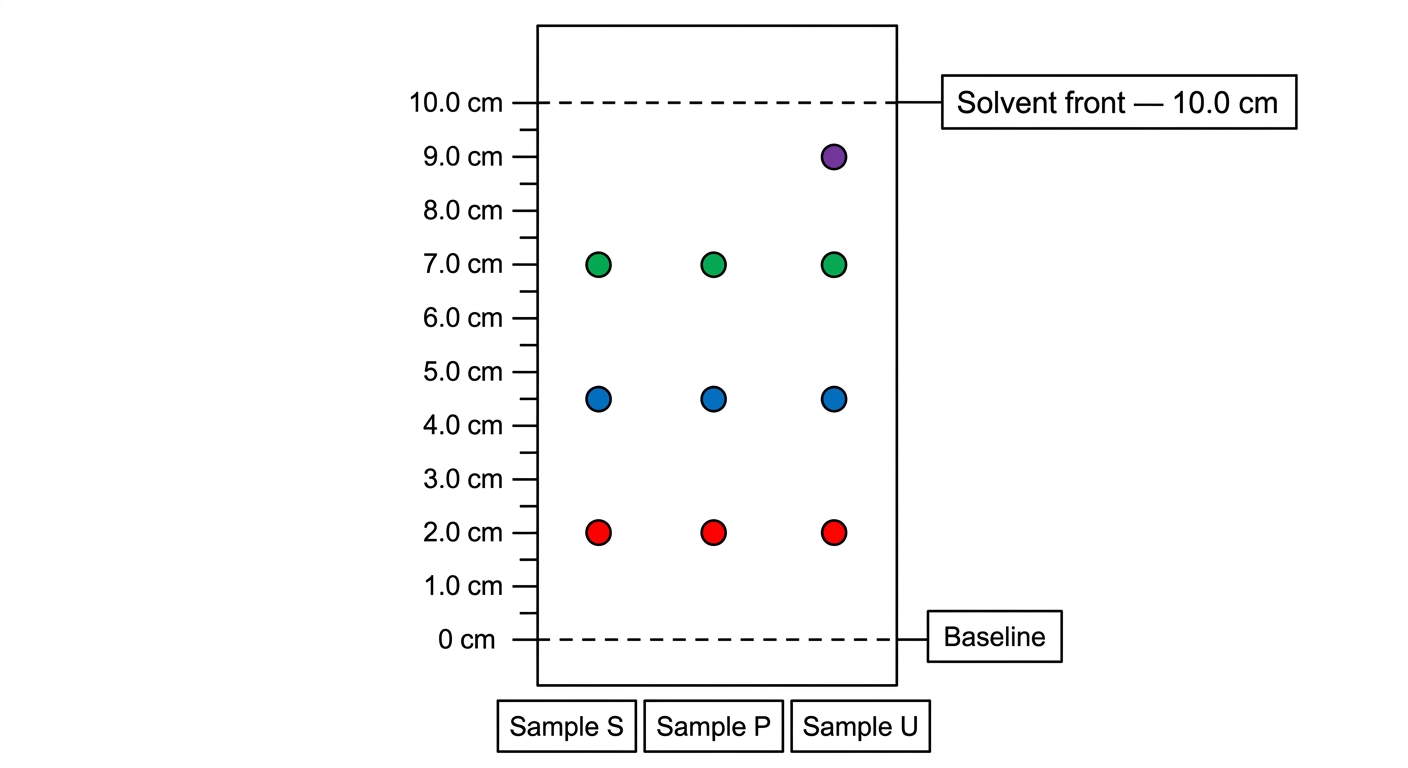
In an arson investigation, a forensic chemist ran three inks on one chromatogram: ink from a note written by the suspect (S), ink from a pen found at the scene (P), and an unknown ink found near the fire (U). The diagram shows the results. The solvent front travelled 10.0 cm.
Question diagram
(a)
Calculate the RfR_f values of the three spots in sample S. [2]Criterion A (ii) · Level 3-4
(b)
Deduce whether inks S and P could have the same composition. [1]Criterion A (ii) · Level 3-4
(c)
State what the extra spot in sample U shows. [1]Criterion A (ii) · Level 3-4
(d)
Discuss how a court should use chromatography evidence like this. [4]Criterion D (ii) · Level 7-8

revisionprep.com

Summary Answer

Not available for this question.

Model Answer

Not available for this question.

Marking Scheme

Not available for this question.

Examiner Insights

Not available for this question.

That's every free question here — 6 of 82.

+76 more questions, plus Mock Papers & Worksheets, are waiting in Premium.

Upgrade