You're viewing free preview questions — 4 questions previewing here — subscribe to unlock 75 more, plus the Full Question Bank, Mock Papers & Worksheets.Upgrade
Pure and Impure Substances — Free MYP5 Chemistry Practice Questions

1QuestionCharacteristics of pure substances (fixed melting/boiling points)Concept Practice
2 marks~3 minCriterion A
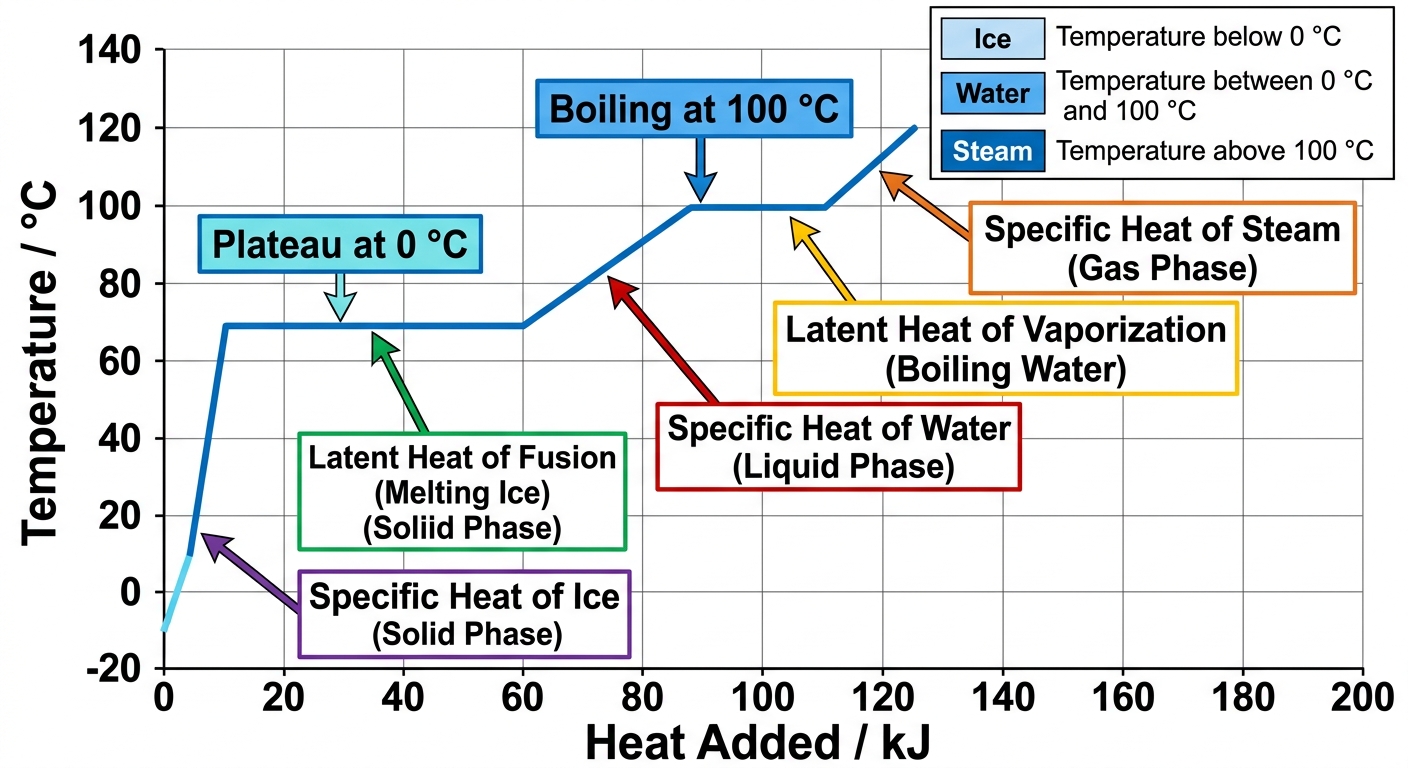
The heating curve below shows a sample of pure water heated from to . A flat plateau is observed at .
a
Identify what the plateau at represents, and state what this fixed temperature indicates about the purity of the sample. [1]
b
Explain why the temperature remains constant during this plateau, referring to energy transfer and particle behaviour. [1]

Solutions
2QuestionCharacteristics of pure substances (fixed melting/boiling points)Assessment Practice
2 marks~3 minCriterion D
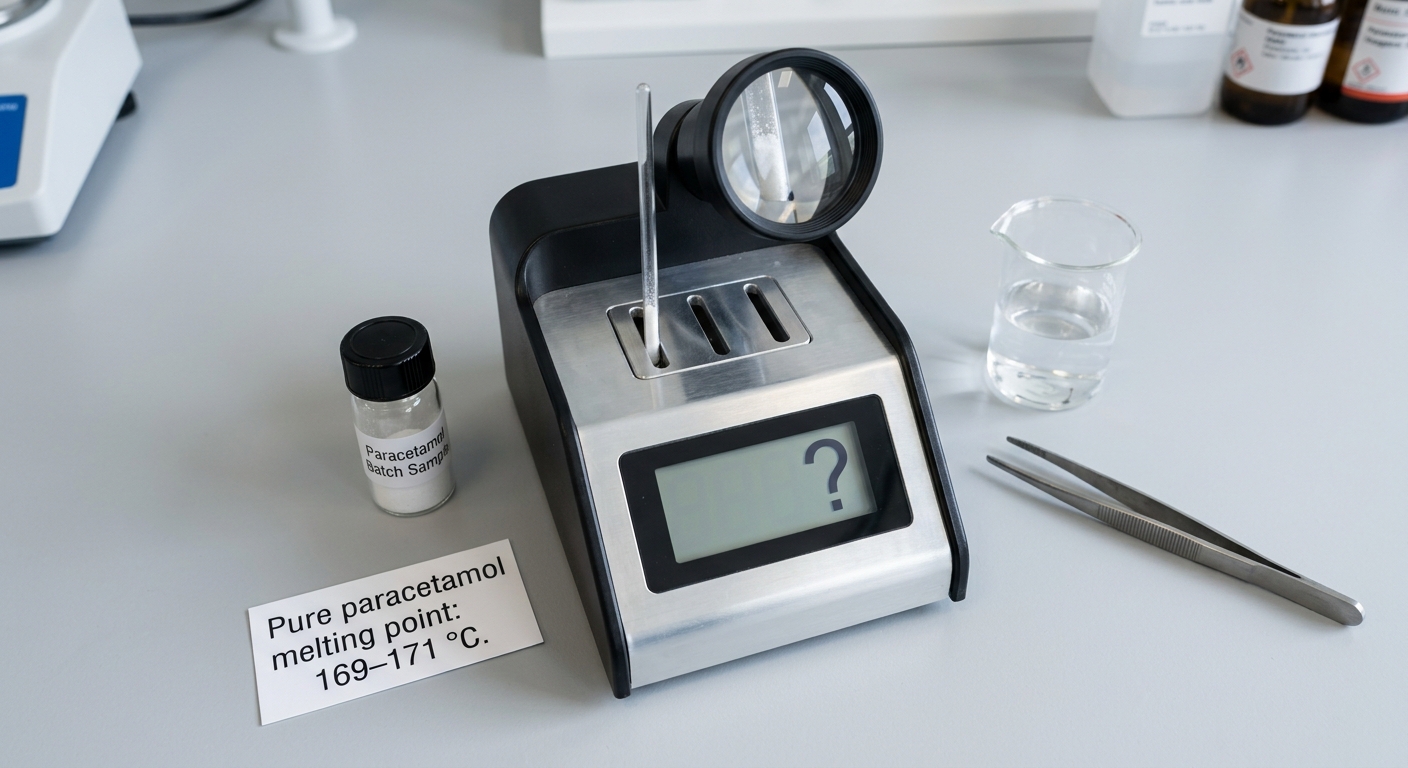
A pharmaceutical company tests a batch of paracetamol for purity. Pure paracetamol has a melting point range of to .
a
Describe how the company could use melting point data to assess whether the batch is pure. [1]
b
The measured melting point of the batch is . Evaluate one health risk this result poses to a patient taking the tablets. [1]
Solutions
3QuestionCharacteristics of pure substances (fixed melting/boiling points)Assessment Practice
3 marks~5 minCriterion C
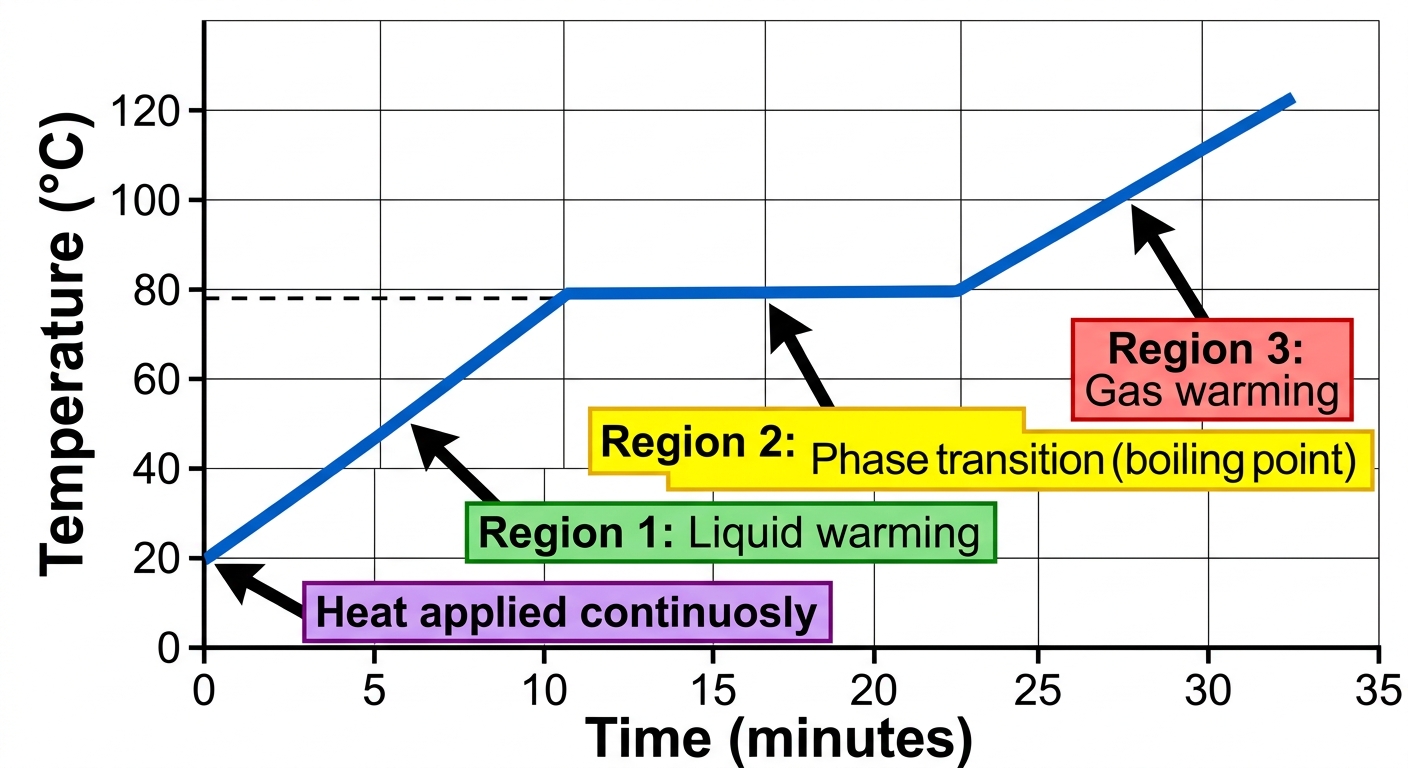
A student heats a liquid sample and records its temperature every minute. The temperature rises steadily until it reaches , where it remains constant for several minutes before rising again.
a
Identify the phase change occurring at . [1]
b
Explain why a pure substance produces a plateau at a single fixed temperature rather than boiling over a temperature range. [1]
c
A second liquid sample boils between and with no clear plateau. Evaluate what this difference reveals about the purity of each sample. [1]
Solutions
4QuestionDefinition of mixtures and types (homogeneous vs heterogeneous)Assessment Practice
3 marks~5 minCriterion B
Four mixtures are analysed in a food-science laboratory. Their properties are recorded below.
Mixture — Salt water / Sand in water / Air / Oil and vinegar
Particle size — Molecular / Visible grains / Molecular / Visible droplets
Mixture — Salt water / Sand in water / Air / Oil and vinegar
| Appearance | Clear / Cloudy / Clear / Two distinct layers |
|---|---|
| Number of phases | 1 / 2 / 1 / 2 |
Particle size — Molecular / Visible grains / Molecular / Visible droplets
a
State the classification (homogeneous or heterogeneous) of each mixture. [1]
b
Deduce the relationship between the number of phases observed and the type of mixture. [1]
c
Evaluate whether the number of phases alone is a sufficient criterion for classifying a mixture, using evidence from the data above to support your reasoning. [1]
Solutions
That's every free question here — 4 of 79.
+75 more questions, plus Mock Papers & Worksheets, are waiting in Premium.