You're viewing free preview questions — 4 questions previewing here — subscribe to unlock 87 more, plus the Full Question Bank, Mock Papers & Worksheets.Upgrade
Financial Mathematics — Free MYP5 Mathematics (Extended) Practice Questions

1QuestionCurrency Conversion and Exchange RatesConcept Practice
4 marks~6 minCriterion A
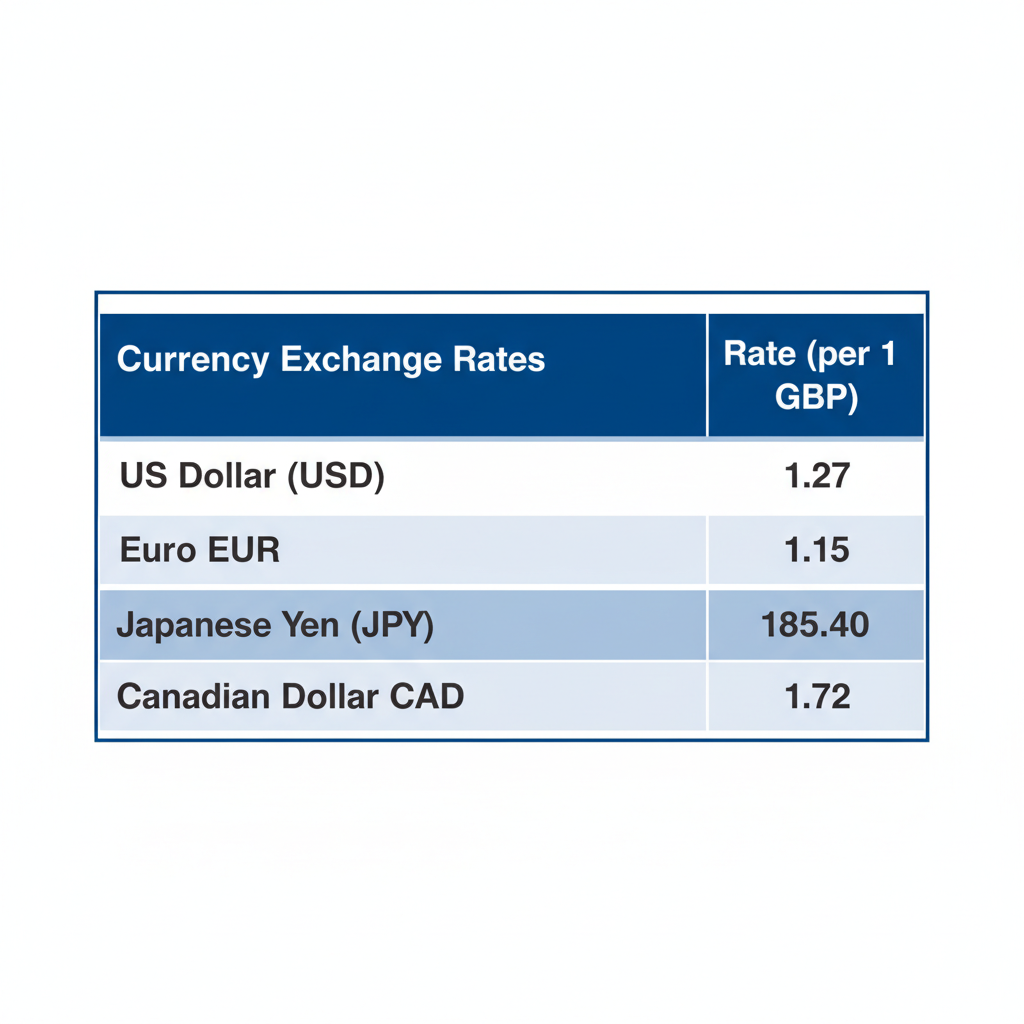
A tourist exchanges British pounds (GBP) at a currency kiosk displaying the following rates:
a
State the exchange rate from GBP to USD. [1]
b
Calculate the number of USD the tourist receives for 350 GBP. [1]
c
The tourist plans to travel to both the United States and the eurozone. She decides to exchange all 350 GBP into whichever single currency gives more foreign currency units. Justify which currency she should choose, supporting your answer with calculations. [2]

Solutions
2QuestionSolving Real-World Finance ProblemsAssessment Practice
4 marks~6 minCriterion C
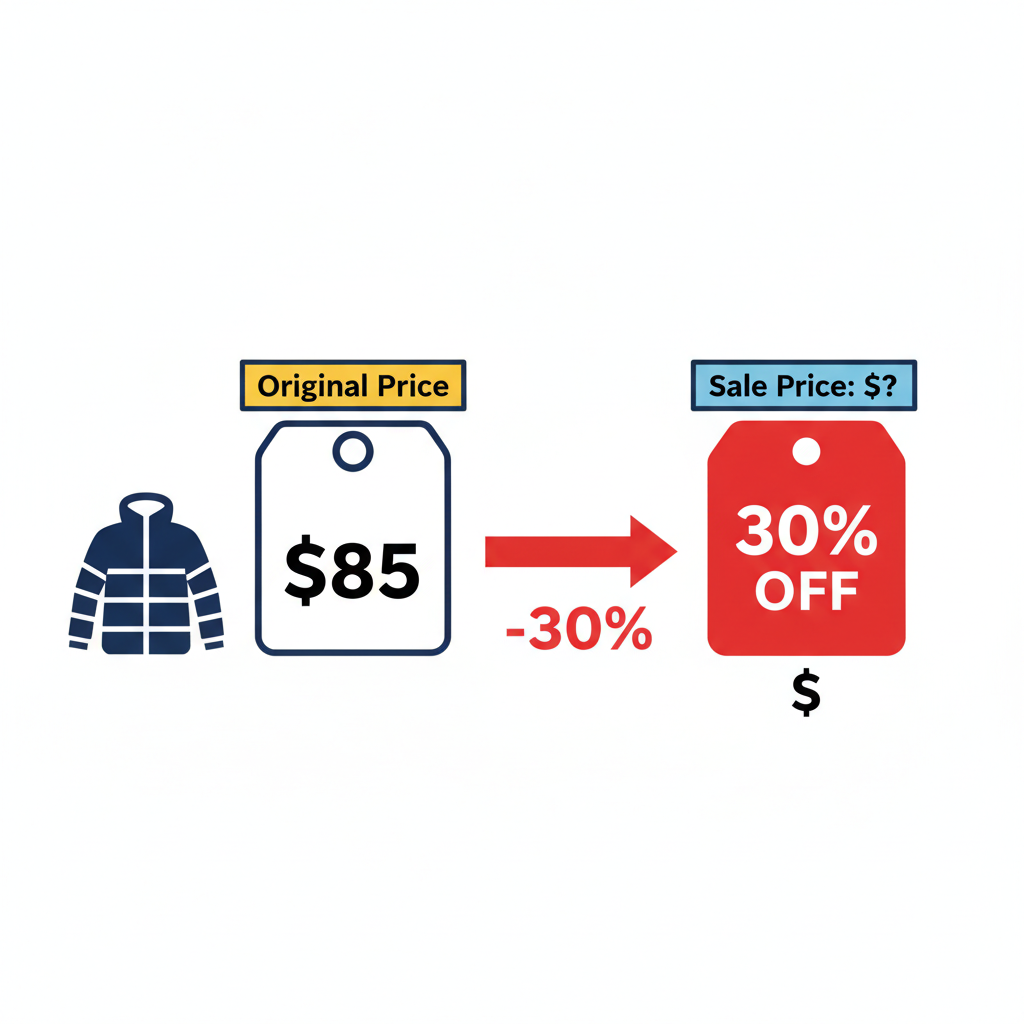
A clothing store sells a jacket for 85 dollars. During a sale, the store offers a 30% discount.
a
Calculate the discount amount in dollars. [1]
b
Calculate the sale price of the jacket after the 30% discount is applied. [1]
c
A customer claims that applying an additional 10% discount to the sale price is equivalent to receiving a single 40% discount off the original price. Justify whether the customer's claim is correct, and explain what this means for the customer in terms of the price they actually pay. [2]
Solutions
3QuestionProfit Loss and Discount CalculationsConcept Practice
2 marks~3 minCriterion B
A retailer offers a bulk-purchase discount scheme:
| Number of items purchased | 1 | 2 | 3 |
|---|---|---|---|
| Discount applied |
a
Deduce the general rule for the discount percentage when items are purchased. [1]
b
A customer needs a discount of at least to stay within budget. Justify whether purchasing 4 items meets this requirement, using your rule from part (a). [1]
Solutions
4QuestionProfit Loss and Discount CalculationsAssessment Practice
8 marks~12 minCriterion D
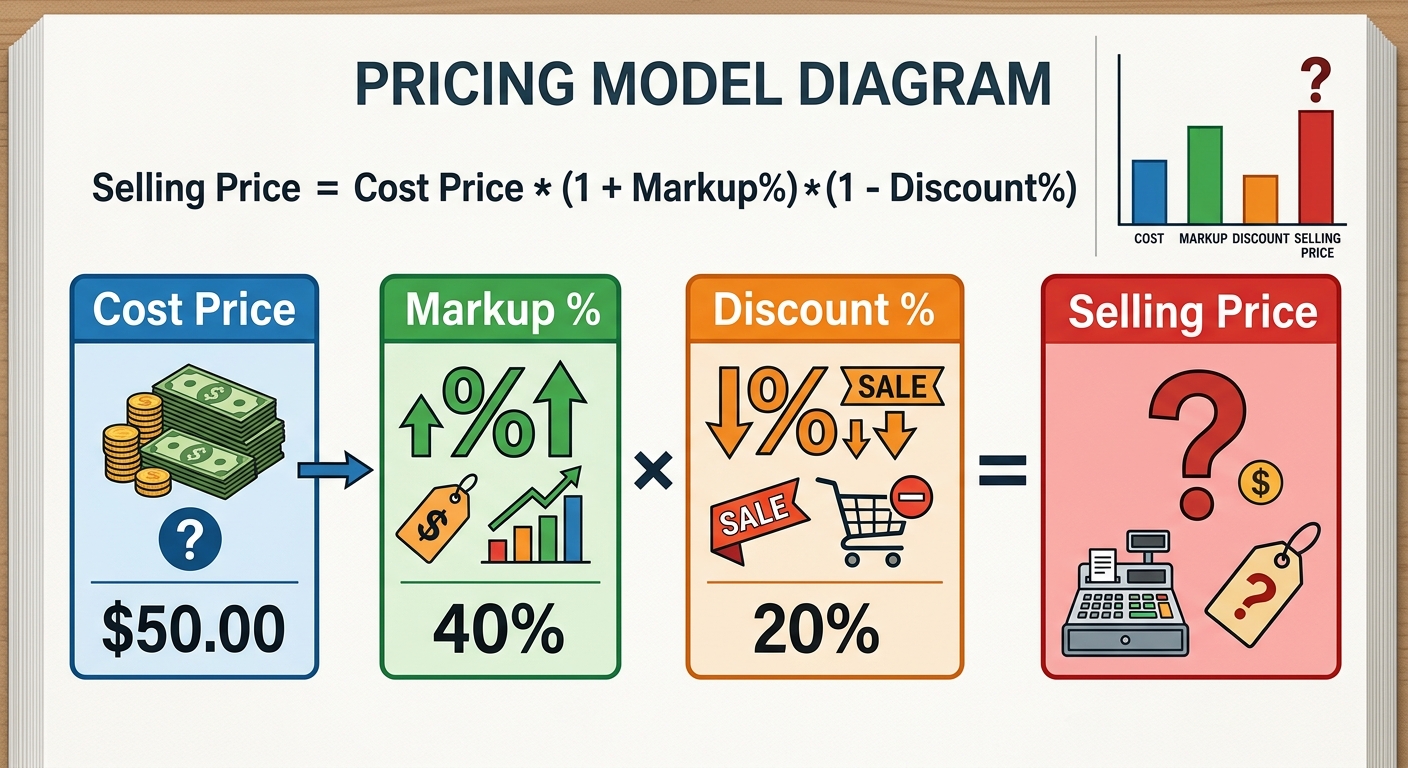
A small business owner uses the following pricing model for her products:
where Markup and Discount are expressed as decimals. For a jacket with a cost price of 50 dollars, she applies a markup of 40% and then offers a discount of 20%.
where Markup and Discount are expressed as decimals. For a jacket with a cost price of 50 dollars, she applies a markup of 40% and then offers a discount of 20%.
a
Calculate the final selling price of the jacket. [2]
b
The owner's minimum acceptable selling price is 54 dollars. Justify whether this pricing model, with the given markup and discount, is suitable for the jacket. [2]
c
Analyse two limitations of this pricing model that could affect the business in a real market. [4]
Solutions
That's every free question here — 4 of 91.
+87 more questions, plus Mock Papers & Worksheets, are waiting in Premium.