You're viewing free preview questions — 5 questions previewing here — subscribe to unlock 218 more, plus the Full Question Bank, Mock Papers & Worksheets.Upgrade
Radioactivity Nuclear and decay — Free MYP5 Physics Practice Questions

1QuestionActivity and count rate (basic idea)Concept Practice
2 marks~3 minCriterion A
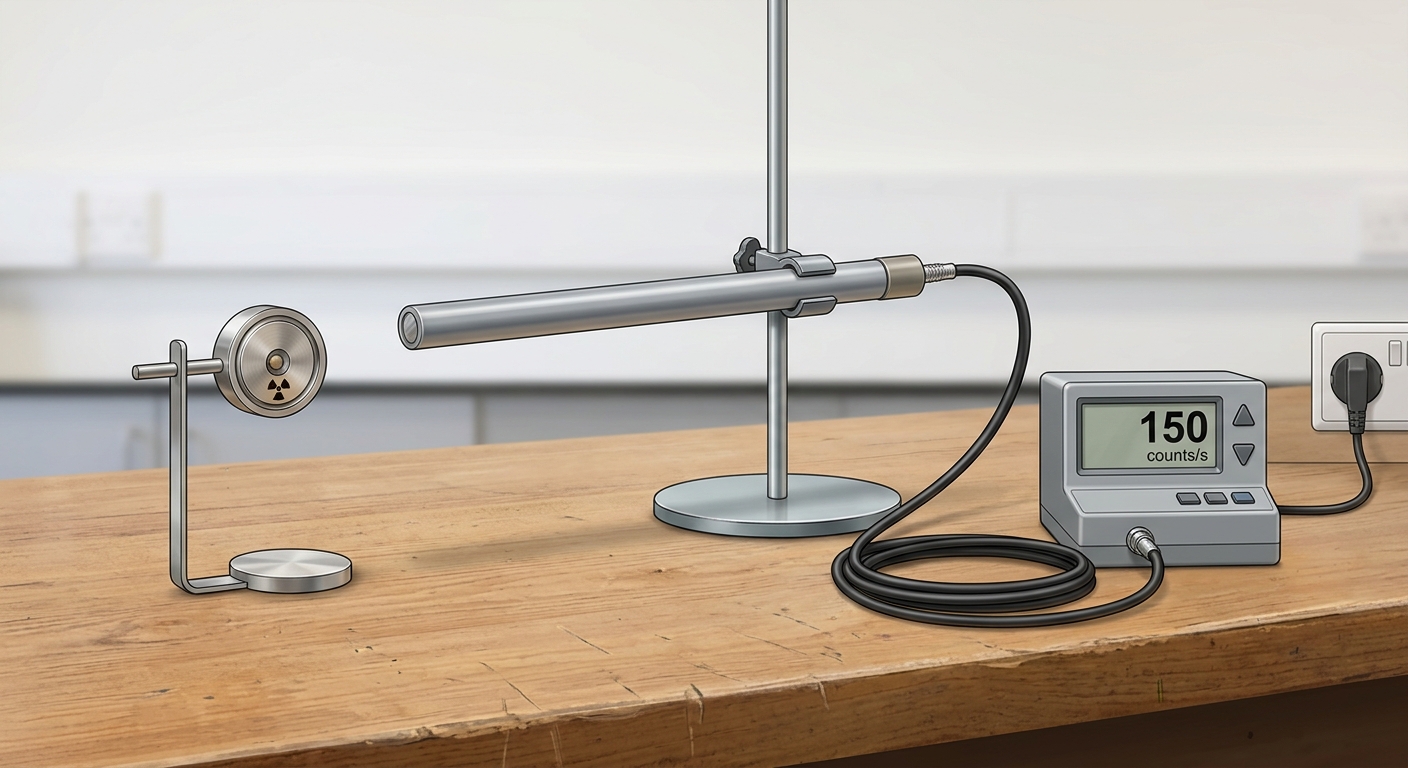
A Geiger–Müller (GM) tube is connected to a counter and placed close to a radioactive source. The counter displays 150 counts per second.
a
Identify the physical quantity measured by this GM tube setup. [1]
b
State the value and unit of this quantity as shown by the counter. [1]

Solutions
2QuestionDecay series (basic idea)Assessment Practice
4 marks~6 minCriterion A
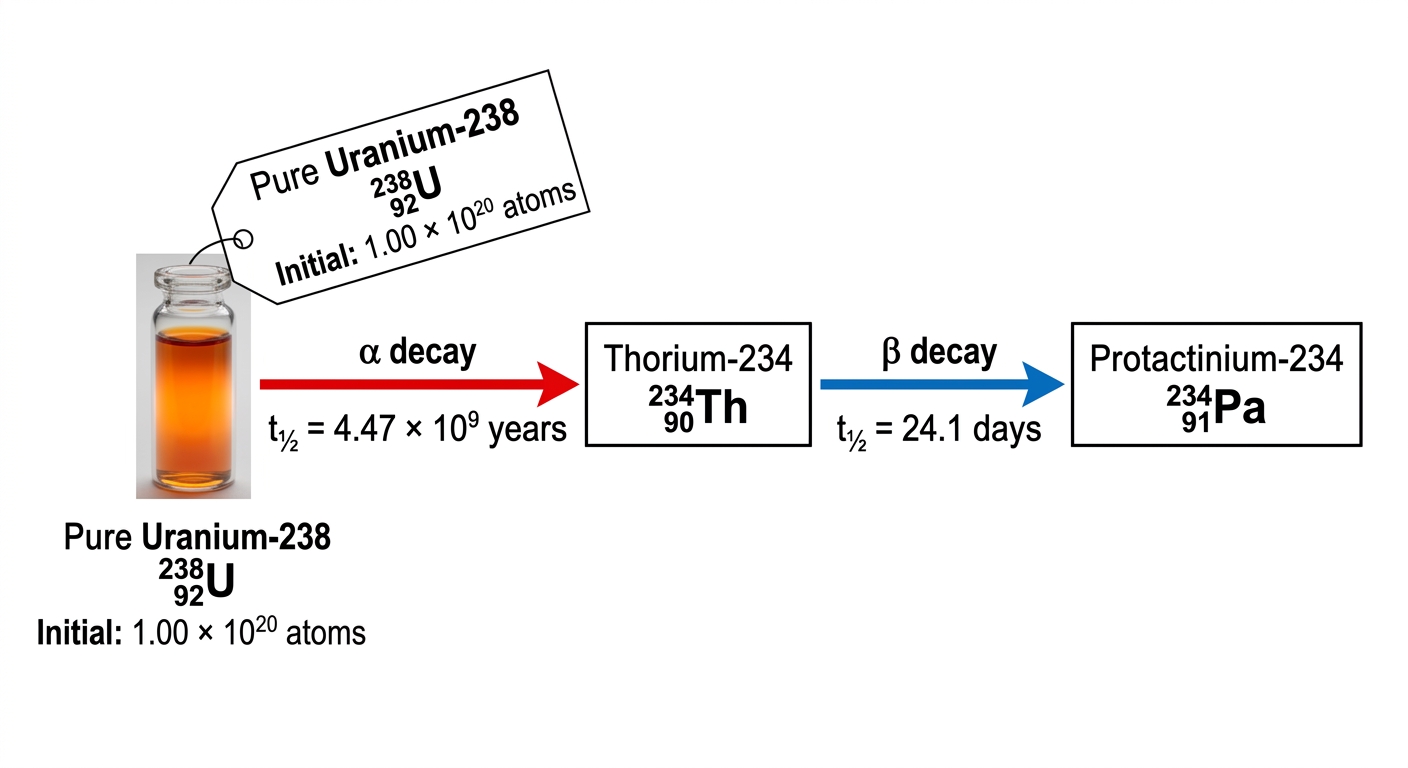
A sample initially contains atoms of pure Uranium-238 (U). Uranium-238 undergoes alpha decay to Thorium-234 (Th) with a half-life of years. Thorium-234 then undergoes beta decay to Protactinium-234 (Pa) with a half-life of 24.1 days. Assume every Thorium-234 atom decays to Protactinium-234 before any further decay occurs.
a
Construct the nuclear equation for the alpha decay of Uranium-238 to Thorium-234. [1]
b
Calculate the number of Uranium-238 atoms remaining after years. [1]
c
After years, a scientist claims that the number of Protactinium-234 atoms present equals the number of Uranium-238 atoms that have decayed. Justify this claim, and state the number of Protactinium-234 atoms present. [2]
Solutions
3QuestionDefinition of radioactivityConcept Practice
2 marks~3 minCriterion D
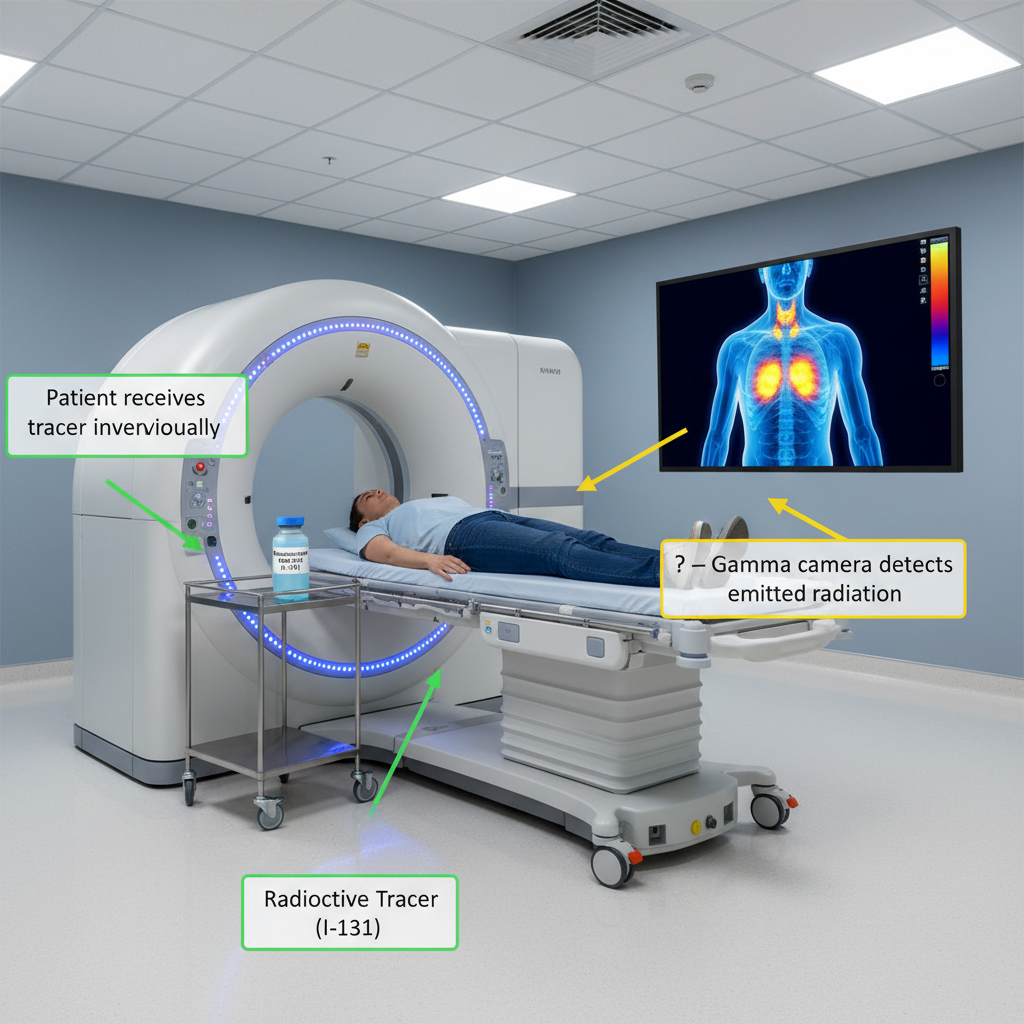
Technetium-99m (Tc) is a radioactive isotope widely used in hospitals. It emits gamma radiation and has a half-life of approximately 6 hours.
a
Outline how Tc is used in medical imaging to diagnose organ function. [1]
b
Evaluate one societal benefit or limitation of using radioactive isotopes such as Tc in medicine. [1]
Solutions
4QuestionDefinition of radioactivityAssessment Practice
5 marks~8 minCriterion C
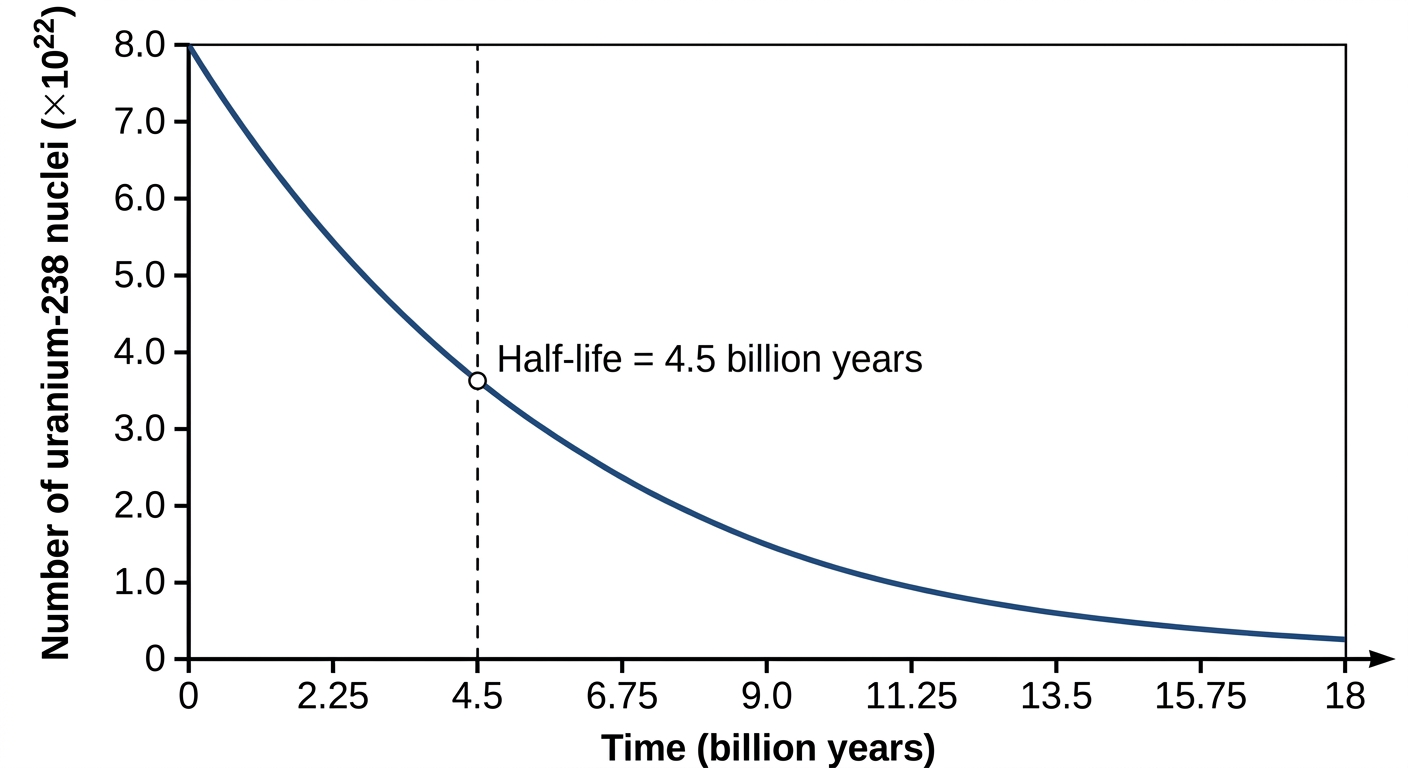
The graph shows the number of uranium-238 nuclei remaining in a sample over time. The half-life of uranium-238 is 4.5 billion years. The sample initially contains nuclei. Uranium-238 decays through a series of steps, ultimately producing one lead-206 nucleus per uranium-238 nucleus.
a
Using the graph, deduce the number of uranium-238 nuclei remaining after 9.0 billion years. [1]
b
Calculate the number of uranium-238 nuclei that have decayed after 9.0 billion years, and explain how the concept of half-life supports your answer. [2]
c
A student claims that lead-206 nuclei have formed after 9.0 billion years. Evaluate this claim, using the definition of radioactivity and the structure of the uranium-238 decay series in your reasoning. [2]
Solutions
5QuestionActivity and count rate (basic idea)Assessment Practice
7 marks~11 minCriterion D
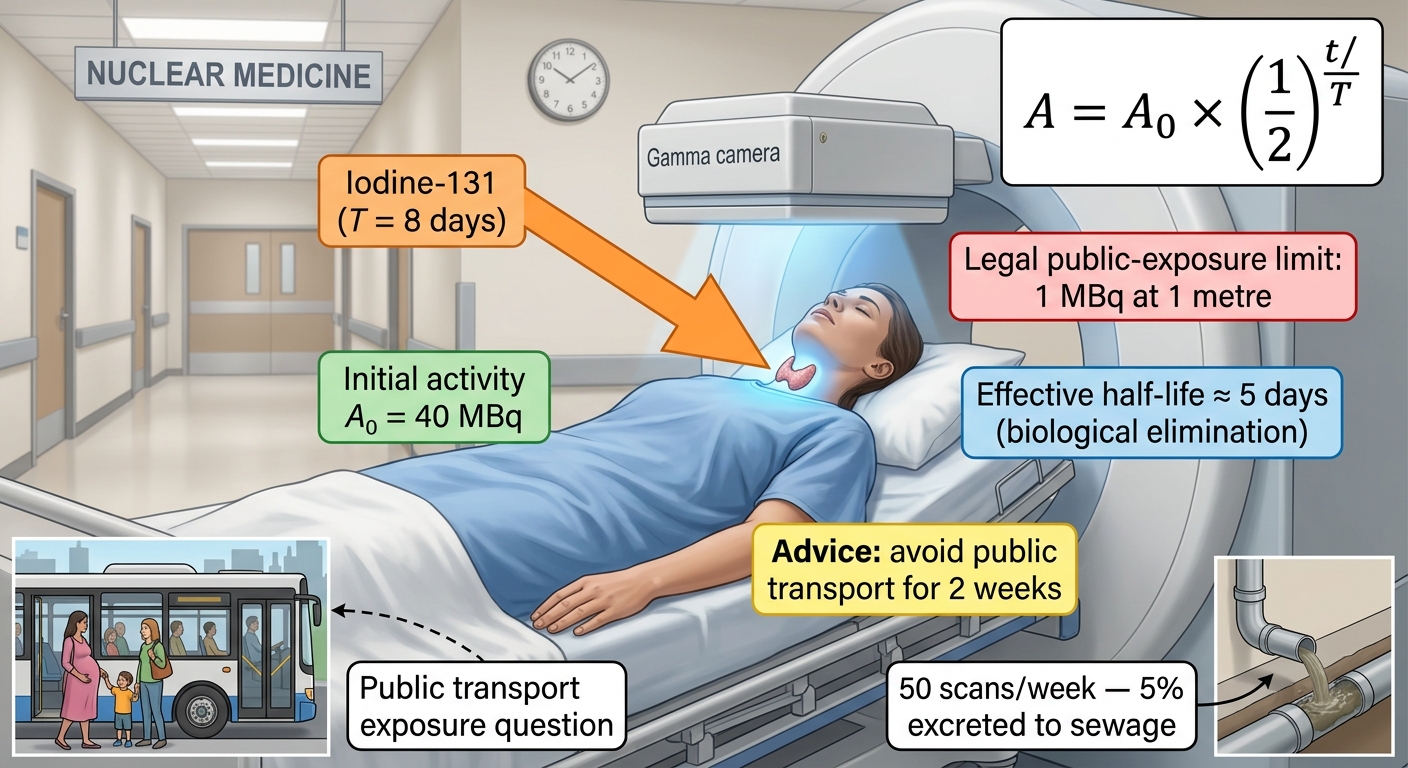
A hospital uses iodine-131 (half-life days) for thyroid scans. A patient receives an initial activity MBq. The legal public-exposure limit is 1 MBq at 1 metre. Patients are advised to avoid public transport for 2 weeks after treatment. Biological elimination reduces the effective half-life to approximately 5 days. The hospital performs 50 scans per week; each patient excretes 5% of their initial dose into the sewage system during the first week.
a
Using the decay formula above, deduce the number of days after treatment at which the patient's activity falls to the legal limit of 1 MBq. Use the physical half-life of 8 days. [2]
b
Using your answer to (a) and the effective half-life of 5 days, evaluate whether the 2-week guideline provides sufficient protection for pregnant women and children travelling on public transport. [3]
c
Calculate the total activity released into the sewage system by the hospital per week, then evaluate whether this poses a significant environmental risk. [2]
Solutions
That's every free question here — 5 of 223.
+218 more questions, plus Mock Papers & Worksheets, are waiting in Premium.