You're viewing free preview questions — 5 questions previewing here — subscribe to unlock 36 more, plus the Full Question Bank, Mock Papers & Worksheets.Upgrade
Circular Motion — Free MYP5 Physics Practice Questions

1QuestionCentripetal and Centrifugal ForcesConcept Practice
2 marks~3 minCriterion A
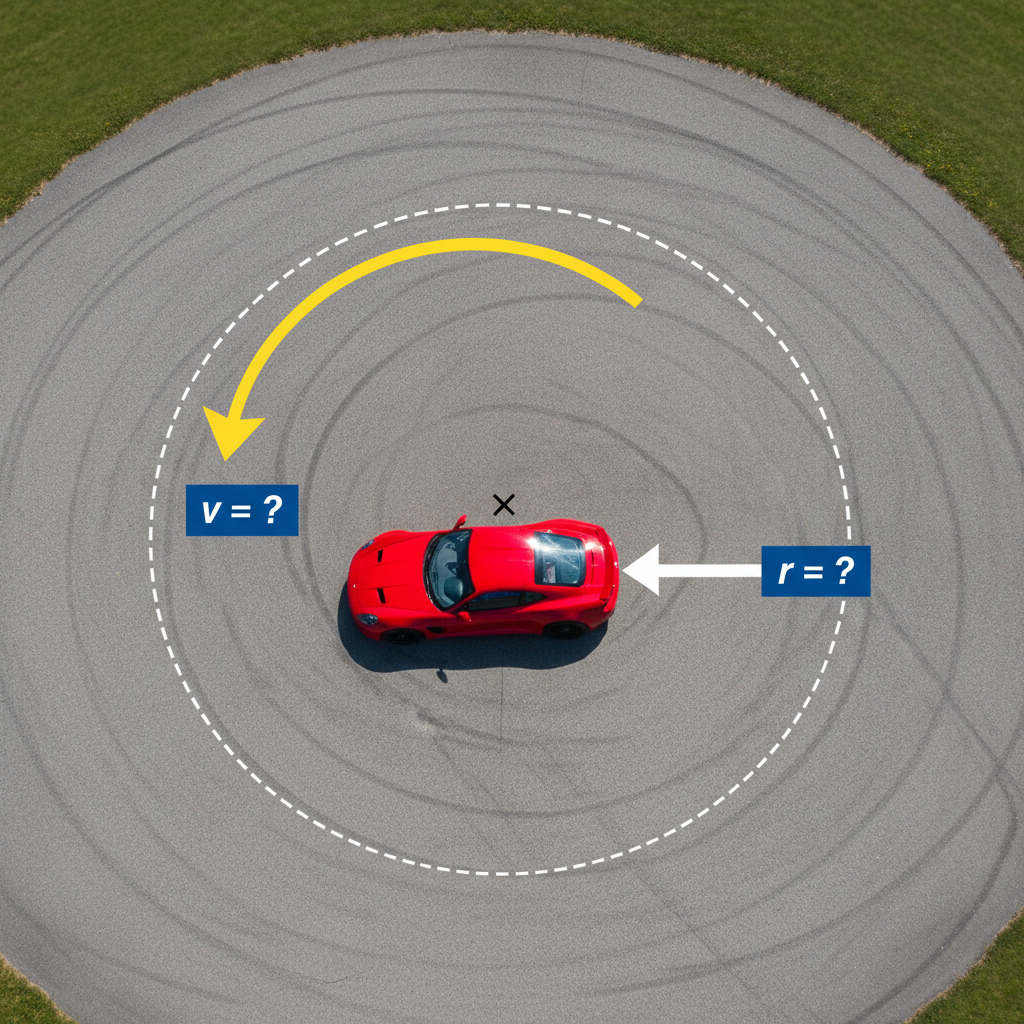
A car travels at constant speed around a flat, circular track of radius 45 m. The only horizontal force acting on the car is the contact force between the tyres and the road surface.
a
Identify the specific type of horizontal force that acts on the car and state the direction in which it acts. [1]
b
The car's mass is 1200 kg and its speed is 15 m s. Calculate the magnitude of this force. [1]

Solutions
2QuestionCircular Motions ExamplesAssessment Practice
4 marks~6 minCriterion C
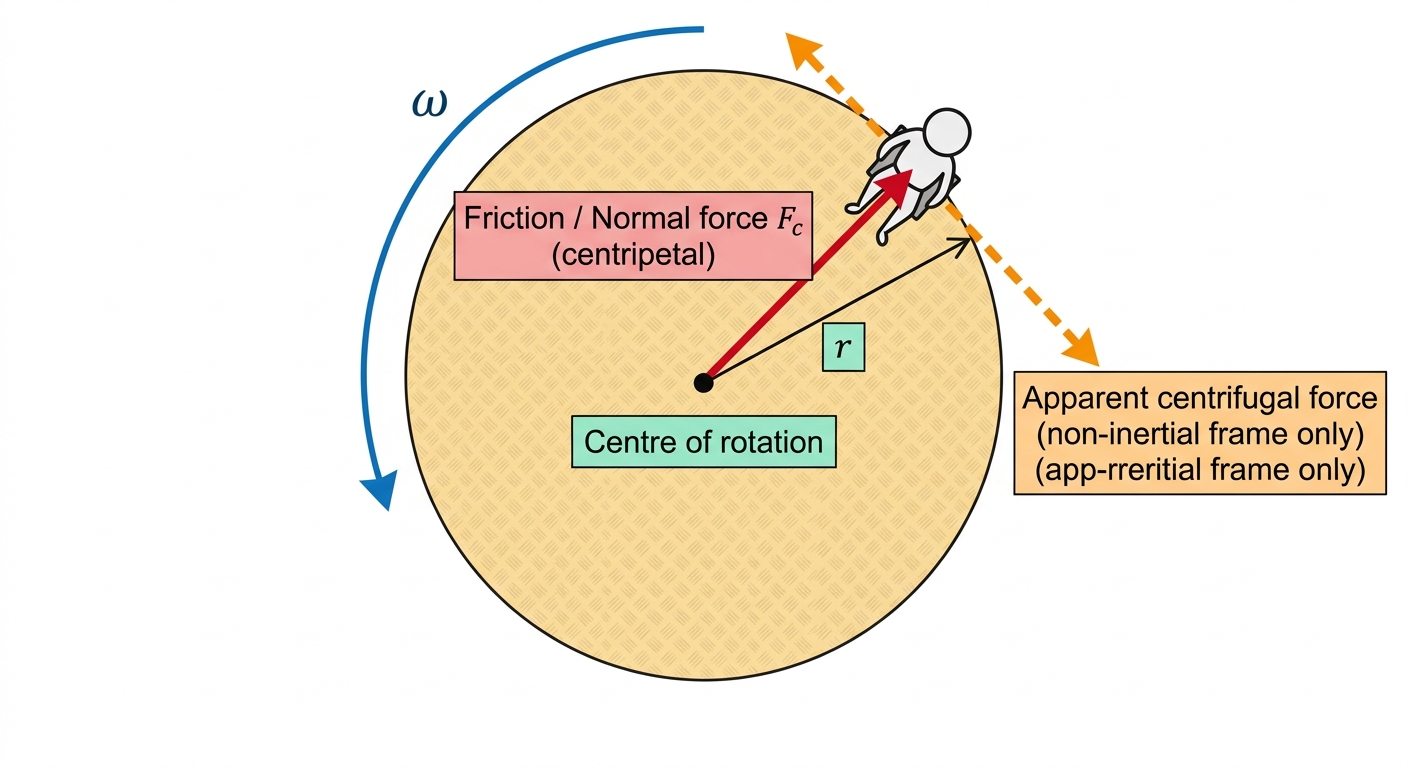
A passenger sits on the outer edge of a rotating fairground ride. At one instant, the ride completes a full circle of radius 4.0 m every 3.2 s. The passenger remains stationary relative to the seat throughout the ride.
a
Identify the force acting on the passenger that is directed toward the centre of rotation. [1]
b
The passenger reports feeling "pushed outward" during the ride. Explain which actual force is responsible for keeping the passenger in circular motion, and link this to the sensation described. [2]
c
Evaluate whether the centrifugal force experienced by the passenger is a real force. Justify your answer using the concept of an inertial reference frame. [1]
Solutions
3QuestionCentripetal and Centrifugal ForcesAssessment Practice
4 marks~6 minCriterion A
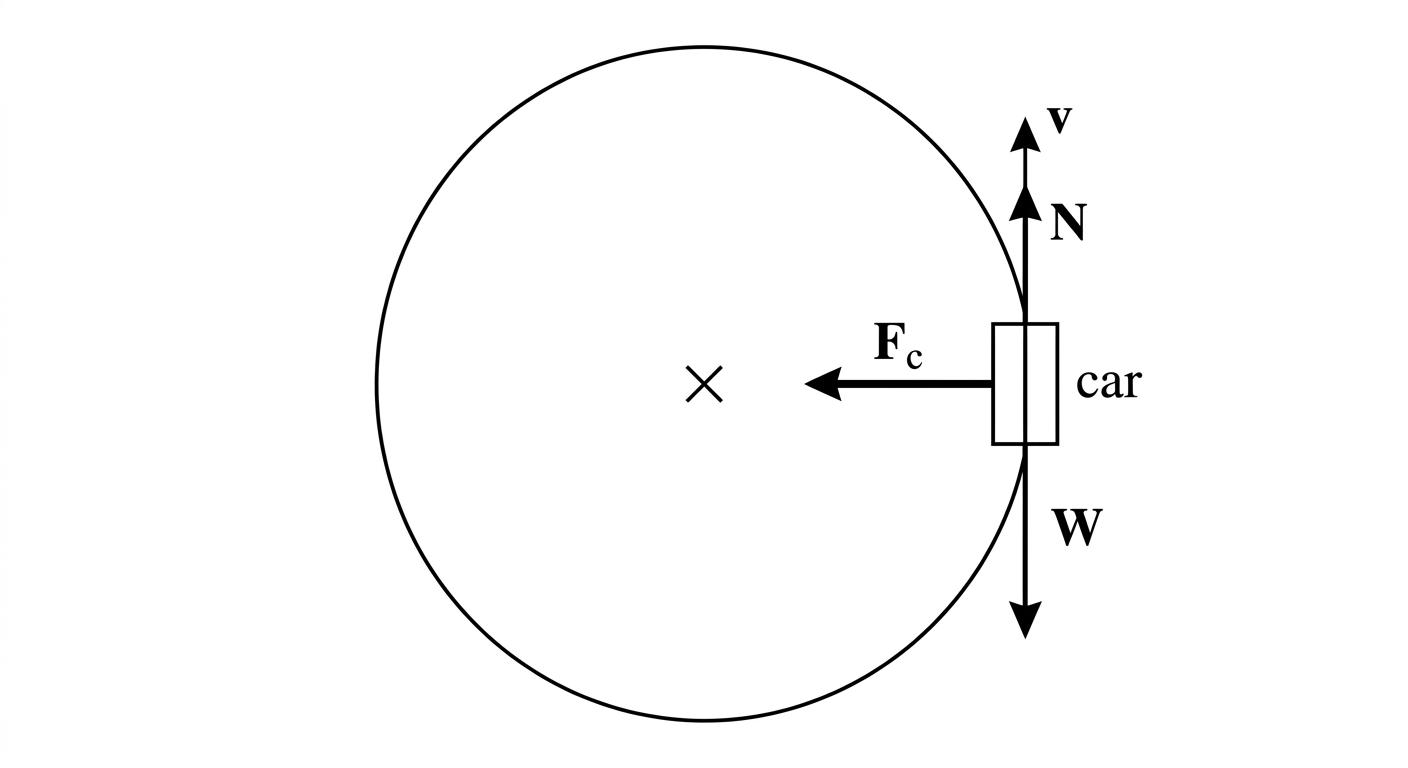
A car of mass travels at constant speed around a circular track of radius . A free body diagram showing the forces acting on the car is provided.
a
State the direction of the centripetal force acting on the car. [1]
b
The speed of the car is doubled while remains constant. Deduce the new magnitude of the centripetal force in terms of the original force . [1]
c
Analyse why centripetal force is necessary for circular motion, and explain what happens to the car's motion if this force is suddenly removed. [2]
Solutions
4QuestionCircular Motions ExamplesAssessment Practice
12 marks~18 minCriterion D
Gas centrifuges spin uranium hexafluoride () at extremely high rotational speeds to separate from by mass difference. For nuclear power reactors, must be enriched from its natural abundance of 0.7% to approximately 3–5%. The same centrifuge technology can, however, enrich beyond 90% for weapons-grade material.
a
Explain why enriched uranium is necessary for sustaining a fission chain reaction in a commercial nuclear power reactor. [2]
b
Analyse the ethical concerns raised by the dual-use nature of gas centrifuge technology, considering both its role in civilian energy production and its potential for nuclear weapons development. [4]
c
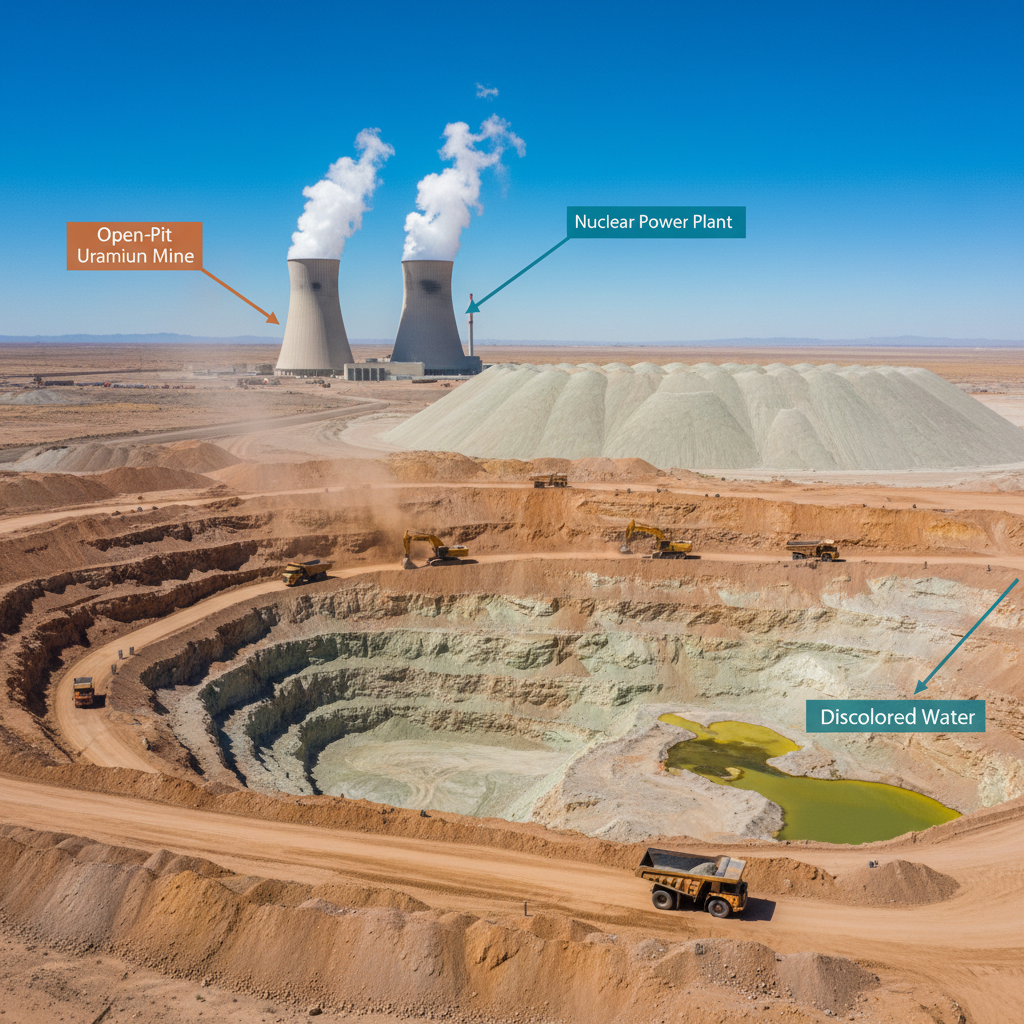
Evaluate the environmental and long-term health risks associated with the full uranium fuel cycle — from mining through to radioactive waste disposal — and justify whether these risks make nuclear power an unacceptable energy source in the context of global climate change. [6]
Solutions
5QuestionCentripetal and Centrifugal ForcesAssessment Practice
12 marks~18 minCriterion D
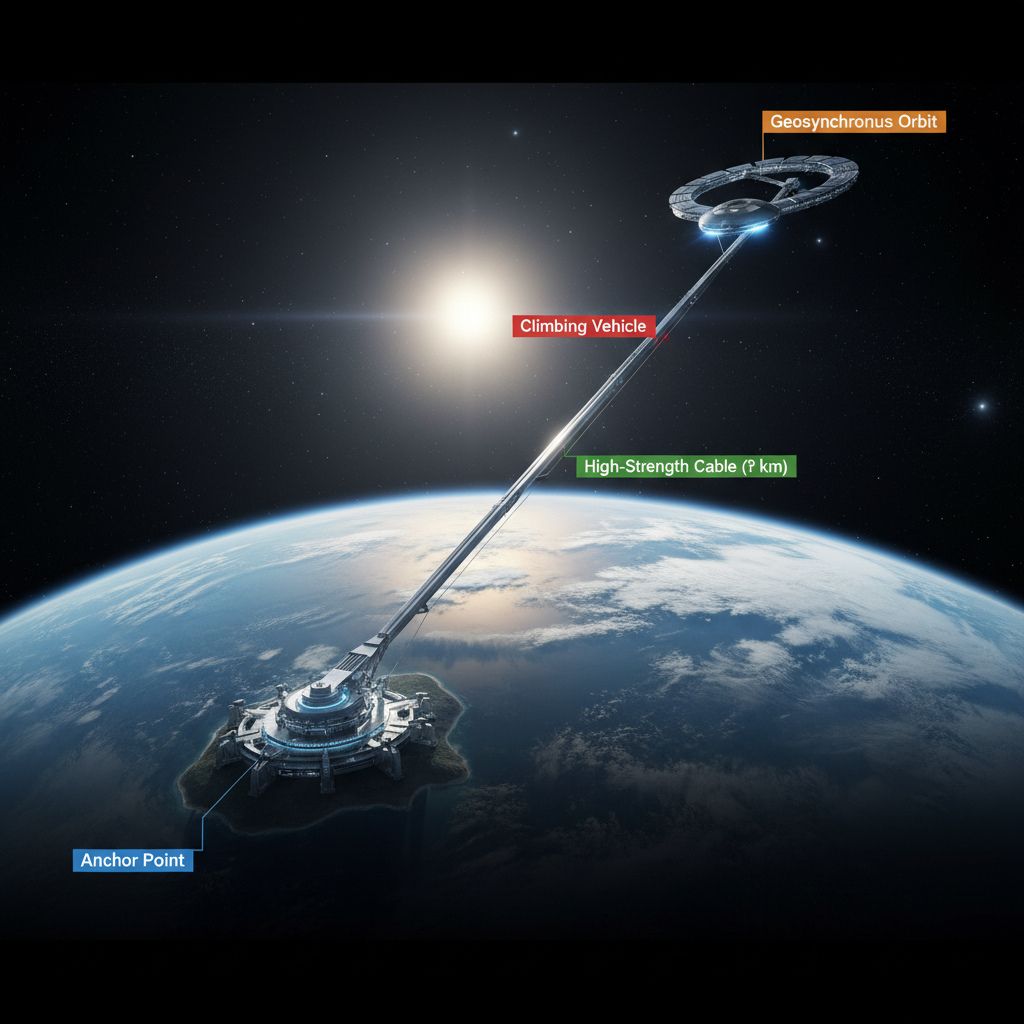
A space elevator is a proposed structure that would transport cargo from Earth's surface to geostationary orbit. A cable, anchored at the equator and held taut by Earth's rotation, would allow electric climbing vehicles to ascend to orbit. The cable must withstand enormous tension and would be made from ultra-high-strength materials such as carbon nanotubes. The structure would reach approximately 36 000 km, passing through the troposphere, stratosphere, and mesosphere before reaching geostationary orbit.
a
Explain the environmental costs associated with extracting and processing the large quantities of carbon nanotube material required for the cable. [3]
b
Analyse how the choice of energy source for the climbing vehicles affects the overall environmental impact of operating the space elevator. [4]
c
Evaluate the environmental consequences of a catastrophic cable failure, considering the physical behaviour of the falling cable, the regions of the atmosphere it would pass through, and the long-term ecological effects. [5]
Solutions
That's every free question here — 5 of 41.
+36 more questions, plus Mock Papers & Worksheets, are waiting in Premium.