You're viewing free preview questions — 6 questions previewing here — subscribe to unlock 117 more, plus the Full Question Bank, Mock Papers & Worksheets.Upgrade
Back

Mass, weight and gravity — Free MYP5 Physics Practice Questions

Free questions

Open in full, with answers, mark scheme and examiner insights.

Question 1Criterion A + C · Band 1-4 · Easy · 4 marksrevisionprep.com

Calculating Weight Using W = mg

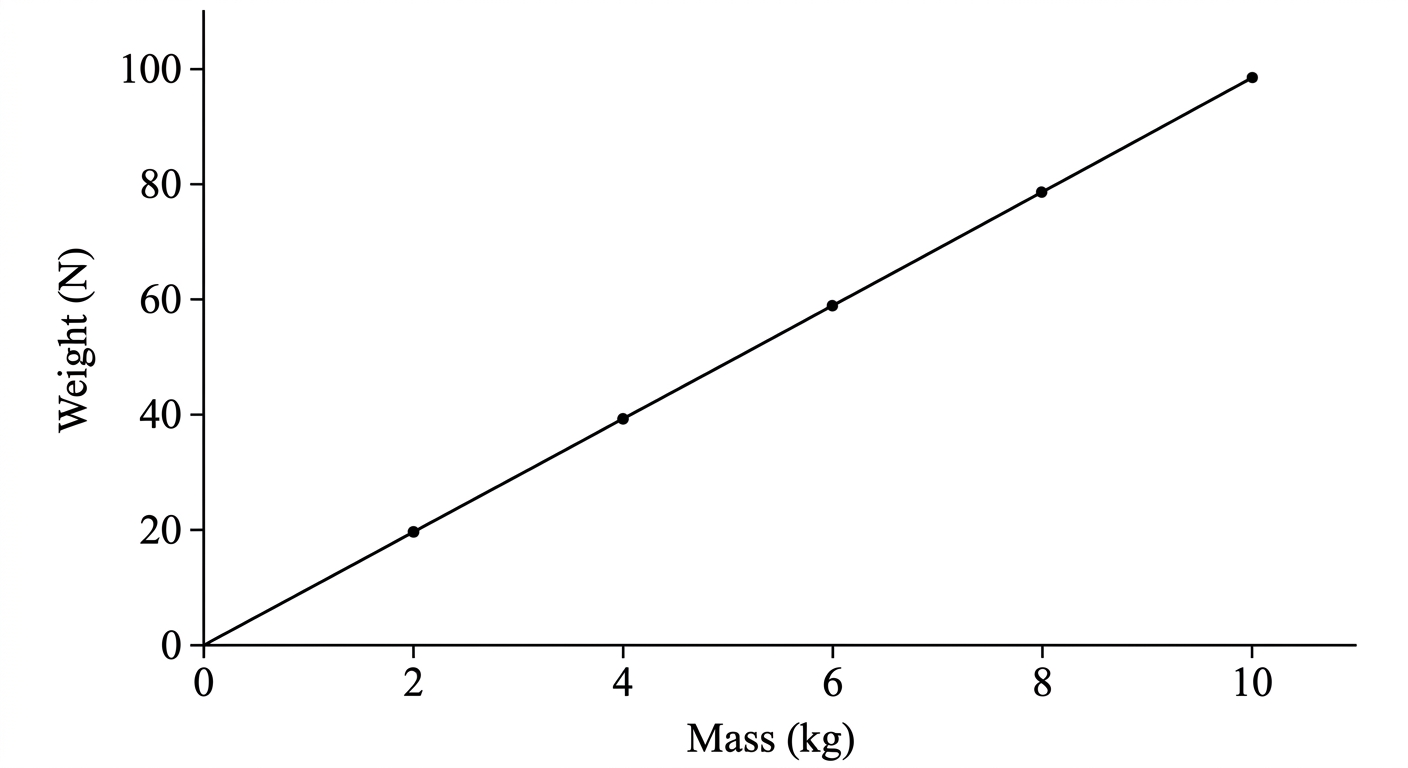
A student measured the weight of several objects on Earth and plotted weight W against mass m. The graph shows the results.
Question diagram
(a)
Determine the gradient of the graph. [2]Criterion C (ii) · Level 3-4
(b)
State what physical quantity the gradient represents. [1]Criterion A (i) · Level 1-2
(c)
Use the graph to estimate the mass of an object that weighs 50 N. [1]Criterion A (ii) · Level 3-4

revisionprep.com

Summary Answer

Not available for this question.

Model Answer

Not available for this question.

Marking Scheme

Not available for this question.

Examiner Insights

Not available for this question.

Question 2Criterion A · Band 1-4 · Easy · 3 marksrevisionprep.com

Weightlessness and Orbiting Objects

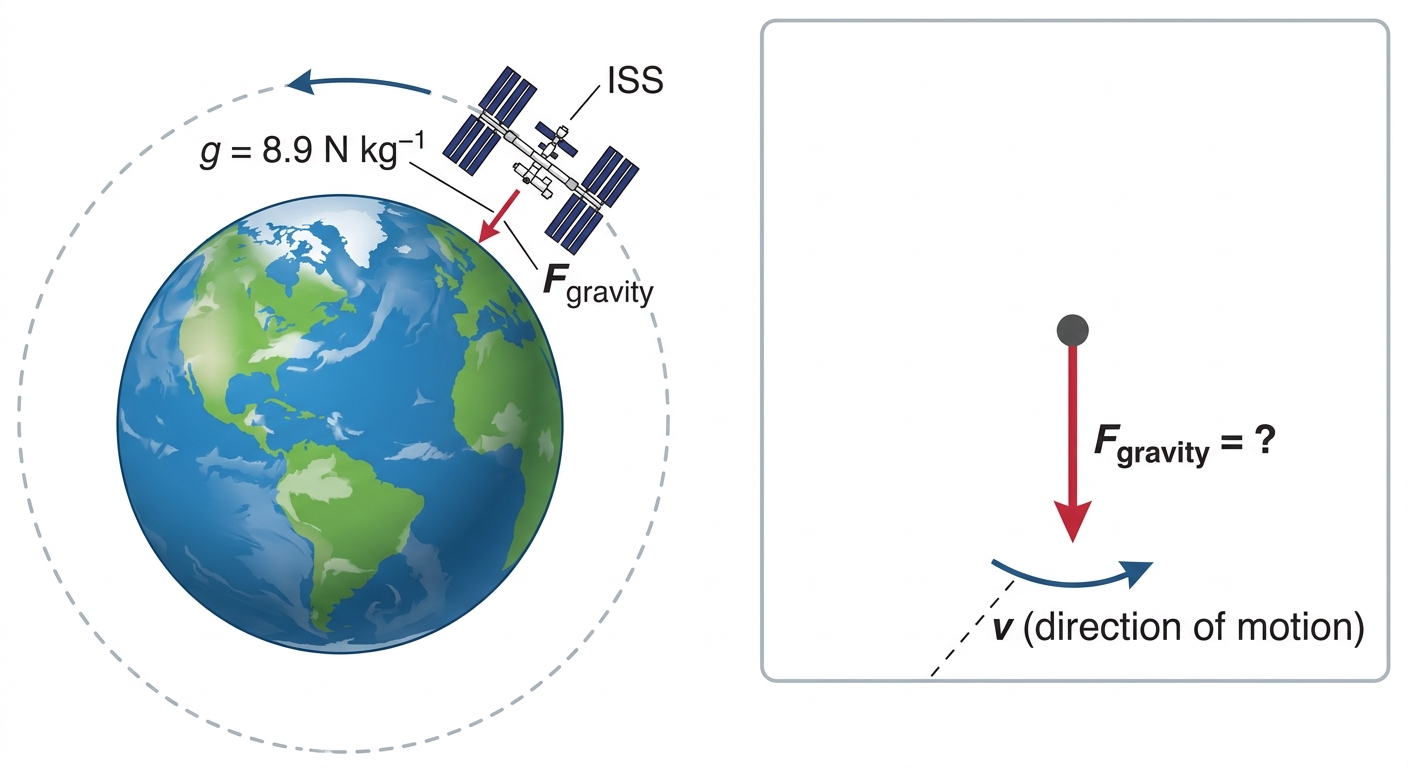
The diagram shows the International Space Station (ISS) in orbit, where g = 8.9 N kg⁻¹, with the gravitational force on it and the direction of its motion. The mass of the ISS is 420 000 kg.
Question diagram
(a)
State what provides the force that keeps the ISS in orbit. [1]Criterion A (i) · Level 1-2
(b)
Calculate the size of this force. [2]Criterion A (ii) · Level 3-4

revisionprep.com

Summary Answer

Not available for this question.

Model Answer

Not available for this question.

Marking Scheme

Not available for this question.

Examiner Insights

Not available for this question.

Question 3Criterion C · Band 3-6 · Medium · 7 marksrevisionprep.com

Distinguishing Mass from Weight

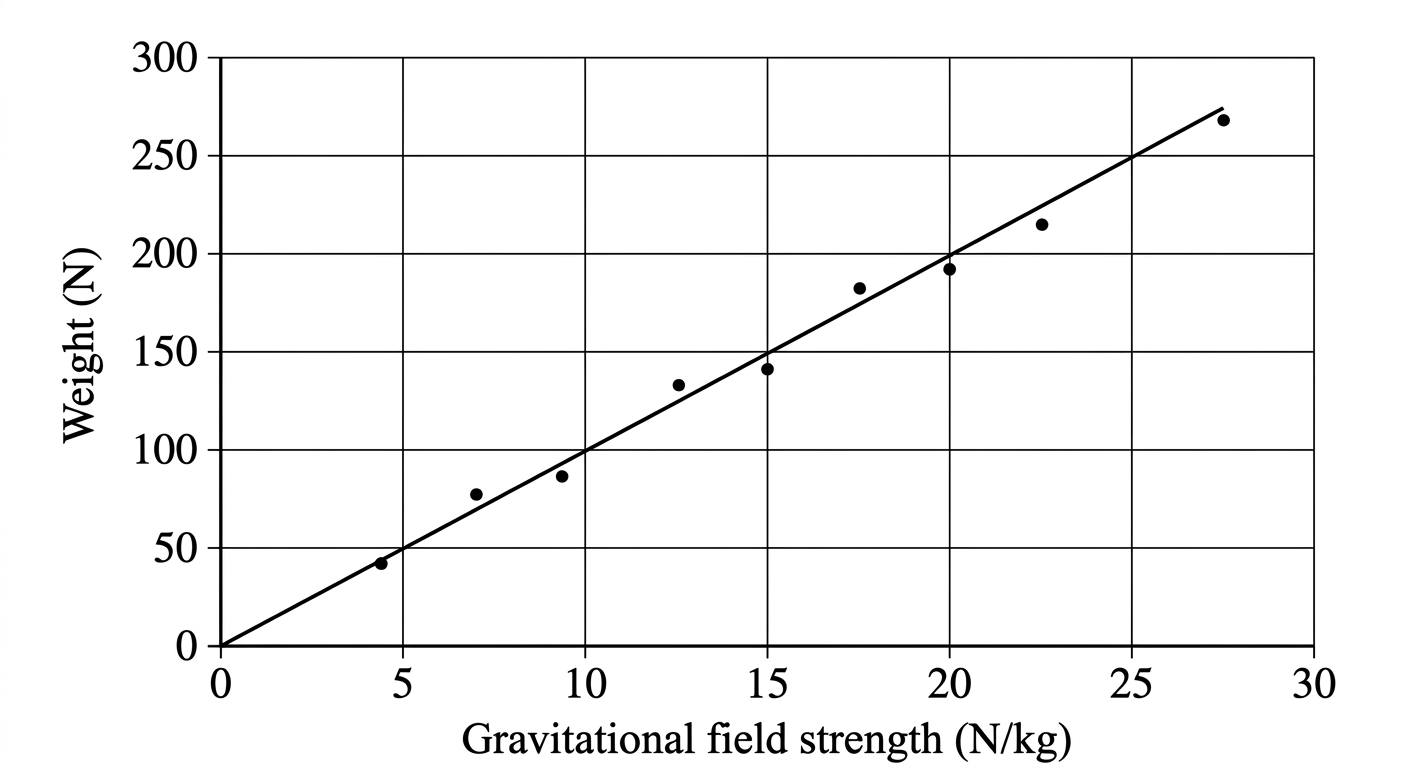
A student used a computer simulation to measure the weight W of one object on planets with different gravitational field strengths g. The graph shows her results and a line of best fit.
Question diagram
(a)
Describe the relationship between W and g shown by the graph. [2]Criterion C (ii) · Level 3-4
(b)
Determine the gradient of the line of best fit. [2]Criterion C (ii) · Level 5-6
(c)
Hence state the mass of the object, with its unit. [1]Criterion C (ii) · Level 5-6
(d)
Suggest why the plotted points do not all lie on the line, and one way the student could make her value for the mass more reliable. [2]Criterion C (iv), C (v) · Level 5-6

revisionprep.com

Summary Answer

Not available for this question.

Model Answer

Not available for this question.

Marking Scheme

Not available for this question.

Examiner Insights

Not available for this question.

Question 4Criterion D + A · Band 3-6 · Medium · 8 marksrevisionprep.com

Gravitational Field Strength on Earth and Other Planets
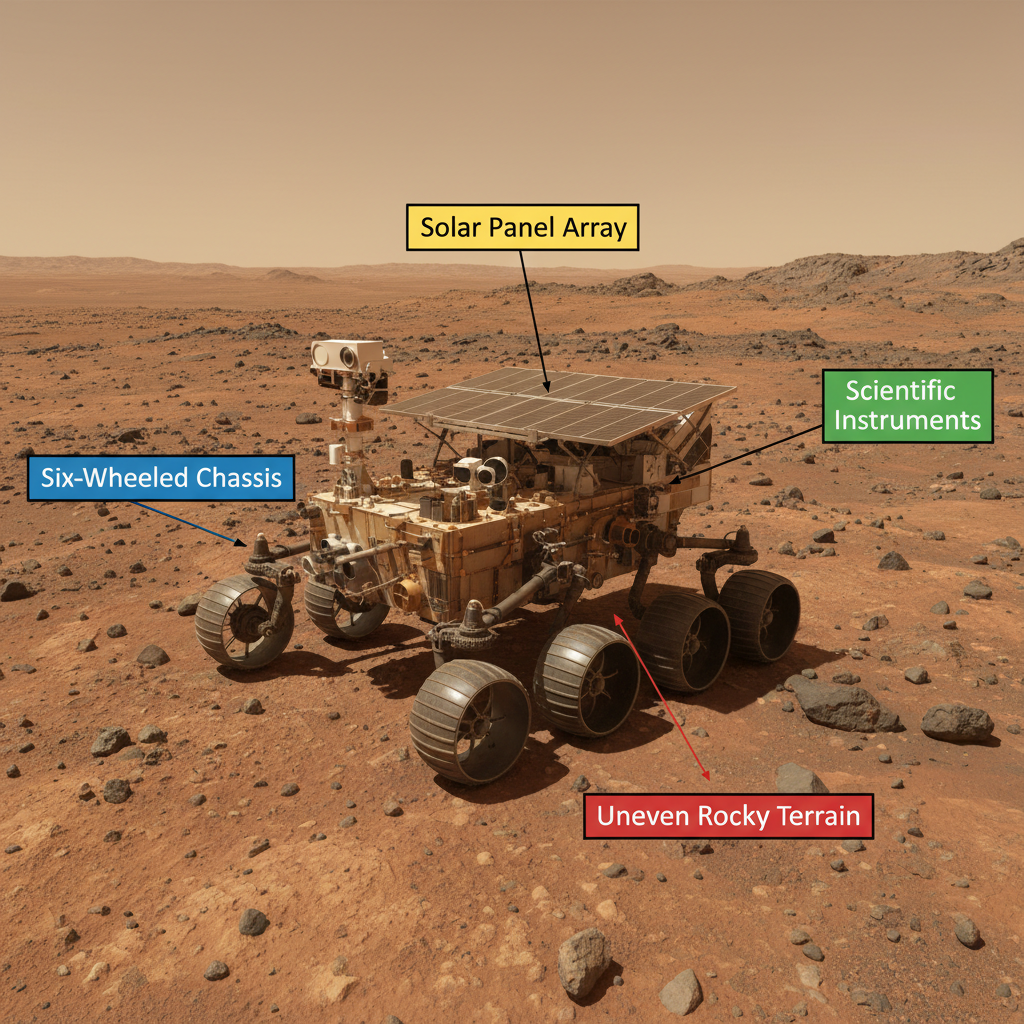
The photograph shows a Mars rover of mass 1025 kg. On Mars g = 3.7 N kg⁻¹; on Earth g = 9.8 N kg⁻¹.
Question diagram
(a)
Calculate the weight of the rover on Mars. [2]Criterion A (ii) · Level 3-4
(b)
Explain one way in which the lower gravitational field strength on Mars affects the design of the rover's wheels or suspension. [2]Criterion D (i) · Level 5-6
(c)
Discuss the advantages and disadvantages of Mars's lower gravitational field strength for a rover mission. [4]Criterion D (ii), D (iii) · Level 5-6

revisionprep.com

Summary Answer

Not available for this question.

Model Answer

Not available for this question.

Marking Scheme

Not available for this question.

Examiner Insights

Not available for this question.

Question 5Criterion B + C · Band 3-8 · Challenge · 10 marksrevisionprep.com

Distinguishing Mass from Weight

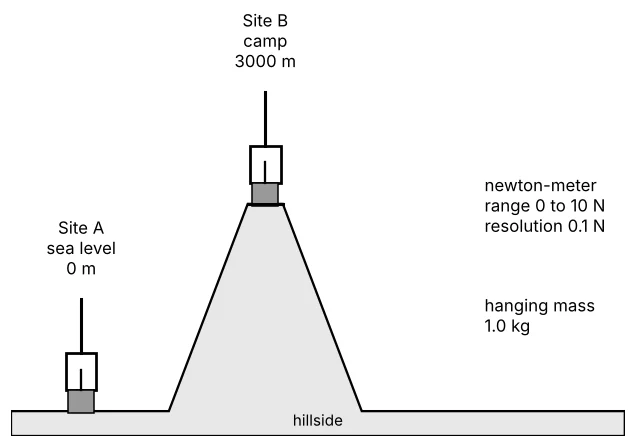
A student claims: "An object weighs less at the top of a mountain than at sea level." She plans to test this with the newton-meter in the diagram, hanging a 1.0 kg mass from it at Site A (sea level) and at Site B (a camp at 3000 m). A data book says that g falls by about 0.0031 N kg⁻¹ for every 1000 m climbed, from 9.80 N kg⁻¹ at sea level.
Question diagram
(a)
Identify the independent variable and the dependent variable, and name two variables that the student must control. [2]Criterion B (iii) · Level 3-4
(b)
Calculate the expected decrease in the weight of the 1.0 kg mass between Site A and Site B. [2]Criterion B (iii) · Level 5-6
(c)
Use your answer to (b) to explain why her plan cannot test the claim. Suggest two changes to the equipment or method that would make the test possible. [3]Criterion B (iv) · Level 5-6
(d)
She uses a force sensor with a resolution of 0.001 N and takes five readings at each site. The mean reading at Site A is 9.801 N and at Site B is 9.792 N. Evaluate whether these results support her claim, using your answer to (b). [3]Criterion C (iii), C (iv) · Level 7-8

revisionprep.com

Summary Answer

Not available for this question.

Model Answer

Not available for this question.

Marking Scheme

Not available for this question.

Examiner Insights

Not available for this question.

Question 6Criterion A + B · Band 3-8 · Challenge · 10 marksrevisionprep.com

Free Fall and the Effect of Gravity

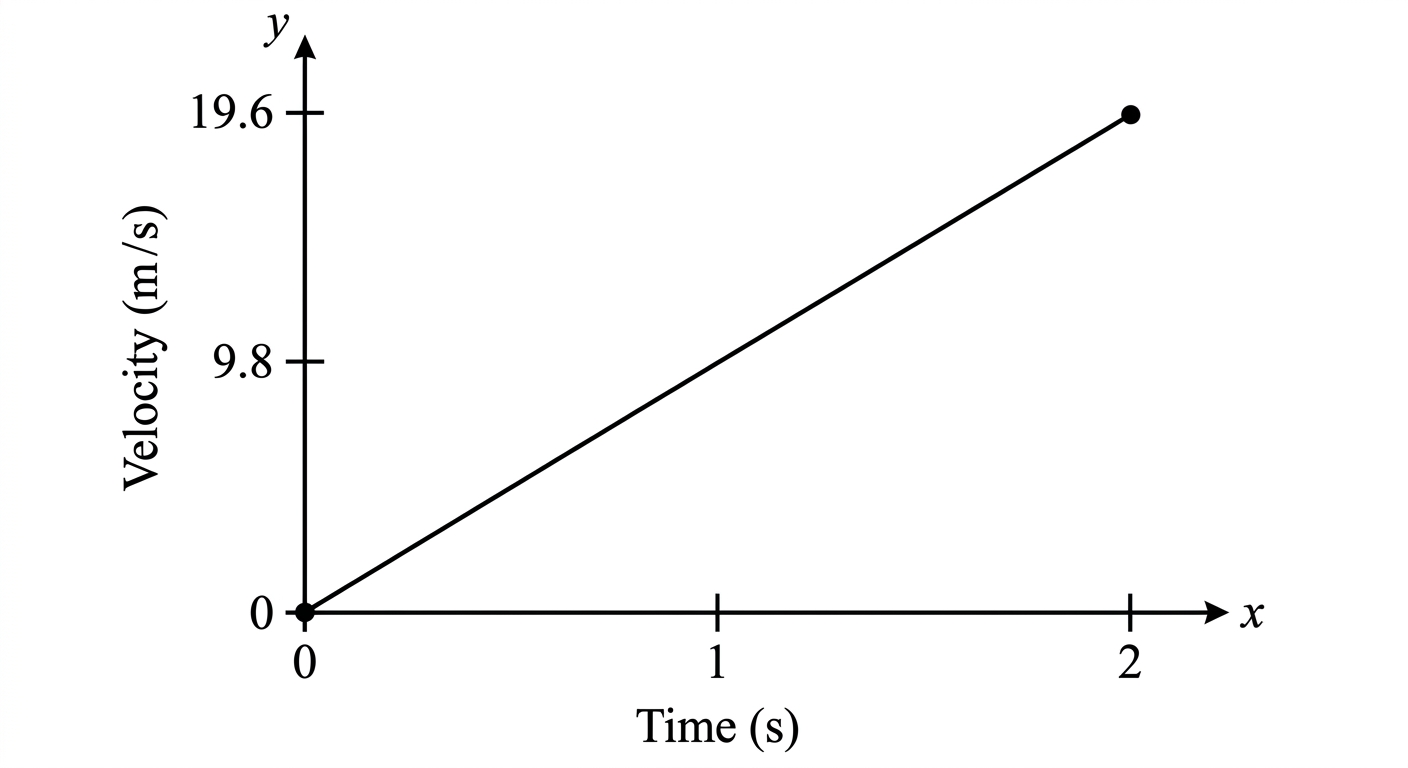
A 0.5 kg ball is released from rest and falls in a vacuum near the Earth's surface. The graph shows its velocity for the first 2 s of the fall.
Question diagram
(a)
Determine the gradient of the graph and state what it represents. [2]Criterion A (ii) · Level 3-4
(b)
Determine the distance the ball falls in the first 2.0 s. [2]Criterion A (ii) · Level 3-4
(c)
Explain why the graph is a straight line. [2]Criterion A (iii) · Level 5-6
(d)
A student wants to find out whether the mass of a falling ball changes the time it takes to fall 2.0 m in air. Design an investigation, stating your hypothesis, the variables and how you would obtain reliable data. [4]Criterion B (ii), B (iii) · Level 7-8

revisionprep.com

Summary Answer

Not available for this question.

Model Answer

Not available for this question.

Marking Scheme

Not available for this question.

Examiner Insights

Not available for this question.

That's every free question here — 6 of 123.

+117 more questions, plus Mock Papers & Worksheets, are waiting in Premium.

Upgrade