You're viewing free preview questions — 5 questions previewing here — subscribe to unlock 159 more, plus the Full Question Bank, Mock Papers & Worksheets.Upgrade
Reflection and Refraction of Light — Free MYP5 Physics Practice Questions

1QuestionLenses Converging and Diverging IntroductoryConcept Practice
2 marks~3 minCriterion A
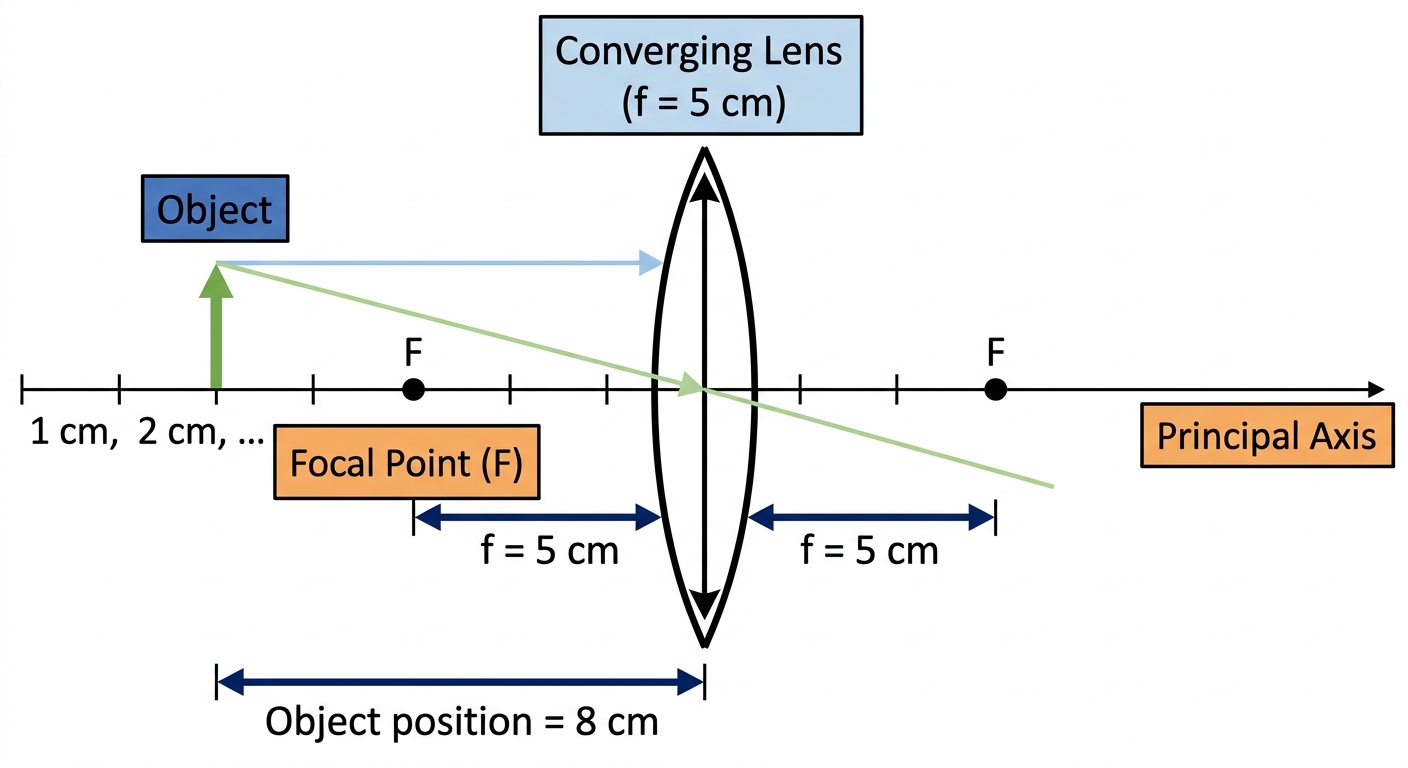
A converging lens has a focal length of . An object is placed from the lens along the principal axis.
a
Construct the three principal rays for this converging lens, describing each ray's path before and after refraction. [1]
b
Using the lens equation , calculate the image distance and state two characteristics of the image formed. [1]

Solutions
2QuestionLenses Converging and Diverging IntroductoryAssessment Practice
4 marks~6 minCriterion A
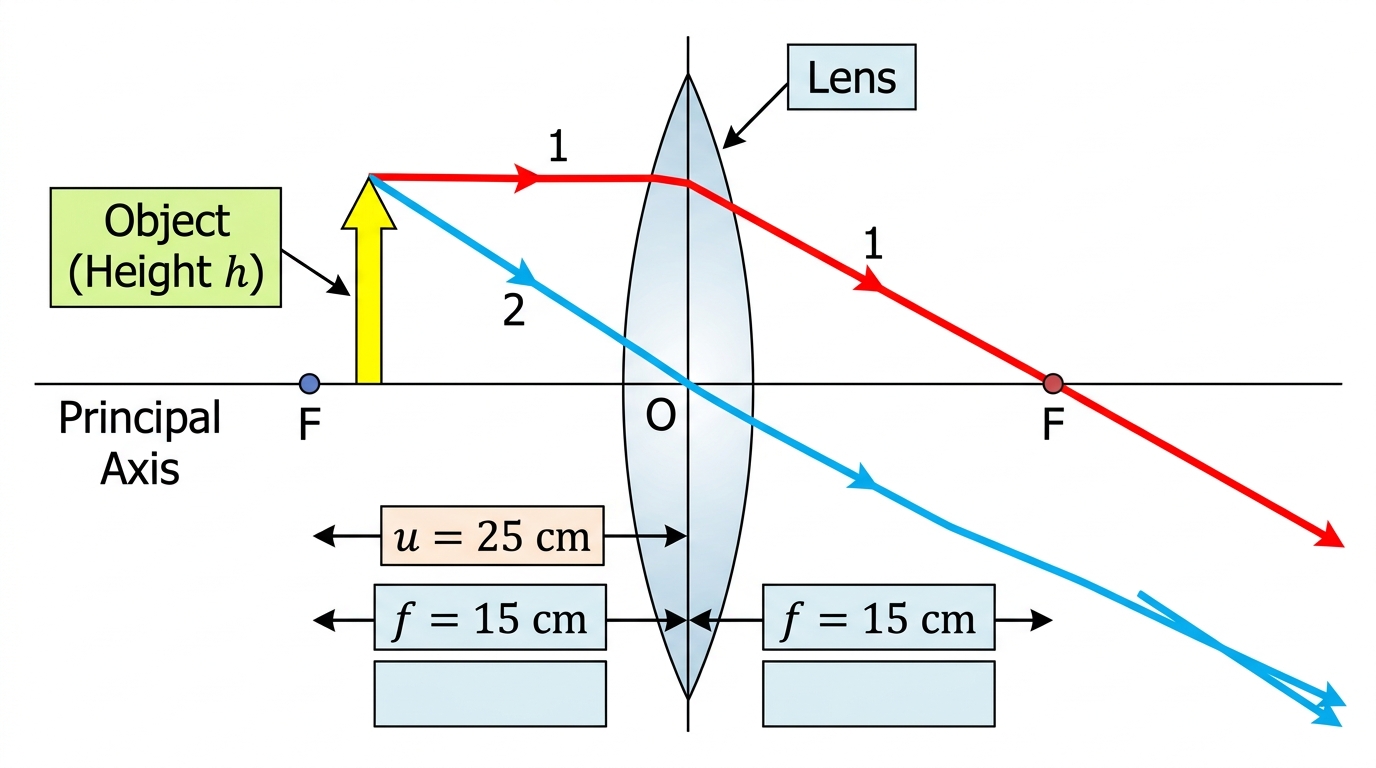
A camera lens used in portrait photography is a converging lens with focal length cm. A subject stands cm from the lens.
a
Calculate the image distance . [2]
b
Deduce whether the image is real or virtual, and state on which side of the lens it forms. [1]
c
Explain why a converging lens cannot form a real image when the object is placed closer to the lens than its focal point. [1]
Solutions
3QuestionLenses Converging and Diverging IntroductoryAssessment Practice
5 marks~8 minCriterion C
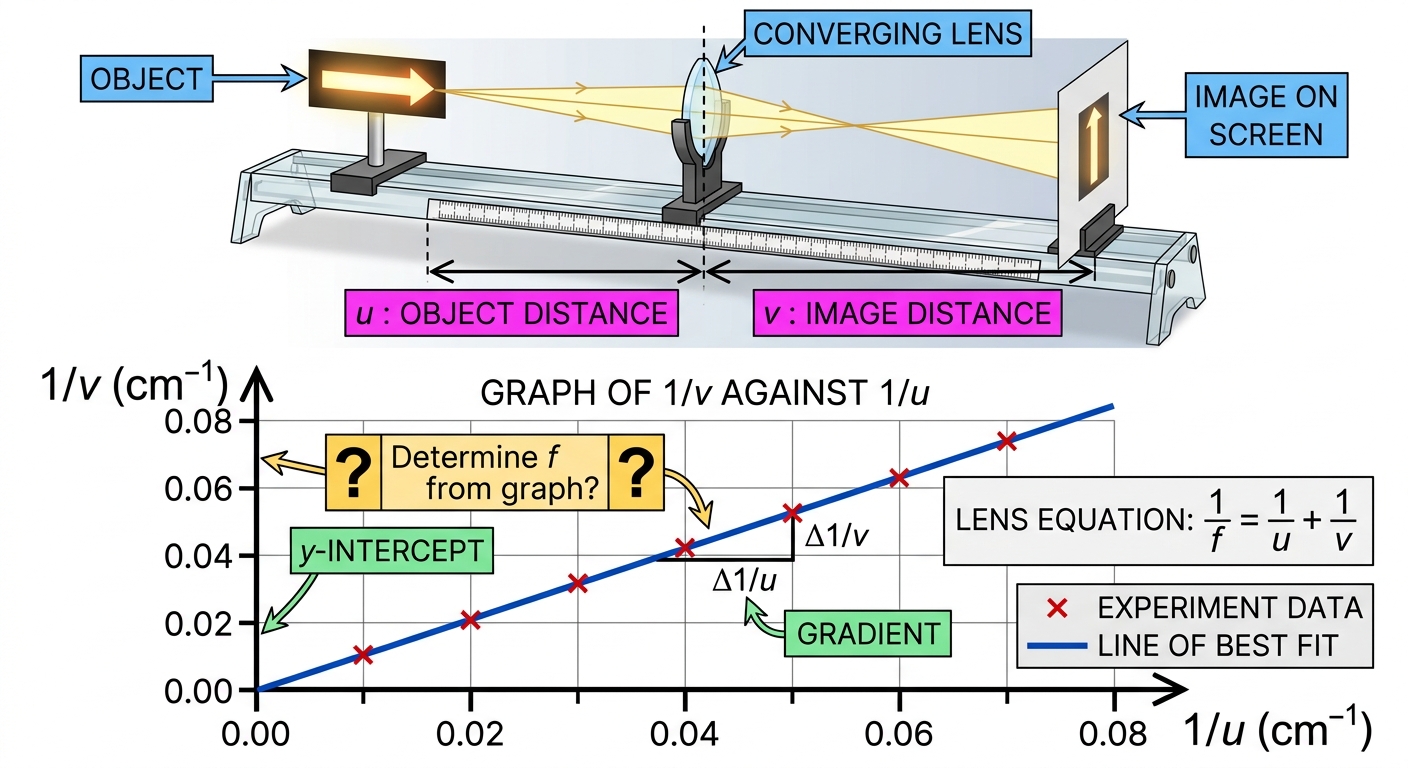
A student investigates a converging lens by placing an object at several distances and recording the corresponding image distances. The results are plotted as a graph of (y-axis) against (x-axis). The line of best fit has a gradient of and a y-intercept of .
The thin lens equation is:
The thin lens equation is:
a
Deduce the focal length of the lens using the y-intercept. [2]
b
Explain how the gradient of is consistent with the thin lens equation. [1]
c
Analyse what a measured gradient of instead of would suggest about the reliability of the experimental data. [2]
Solutions
4QuestionLenses Converging and Diverging IntroductoryAssessment Practice
6 marks~9 minCriterion D
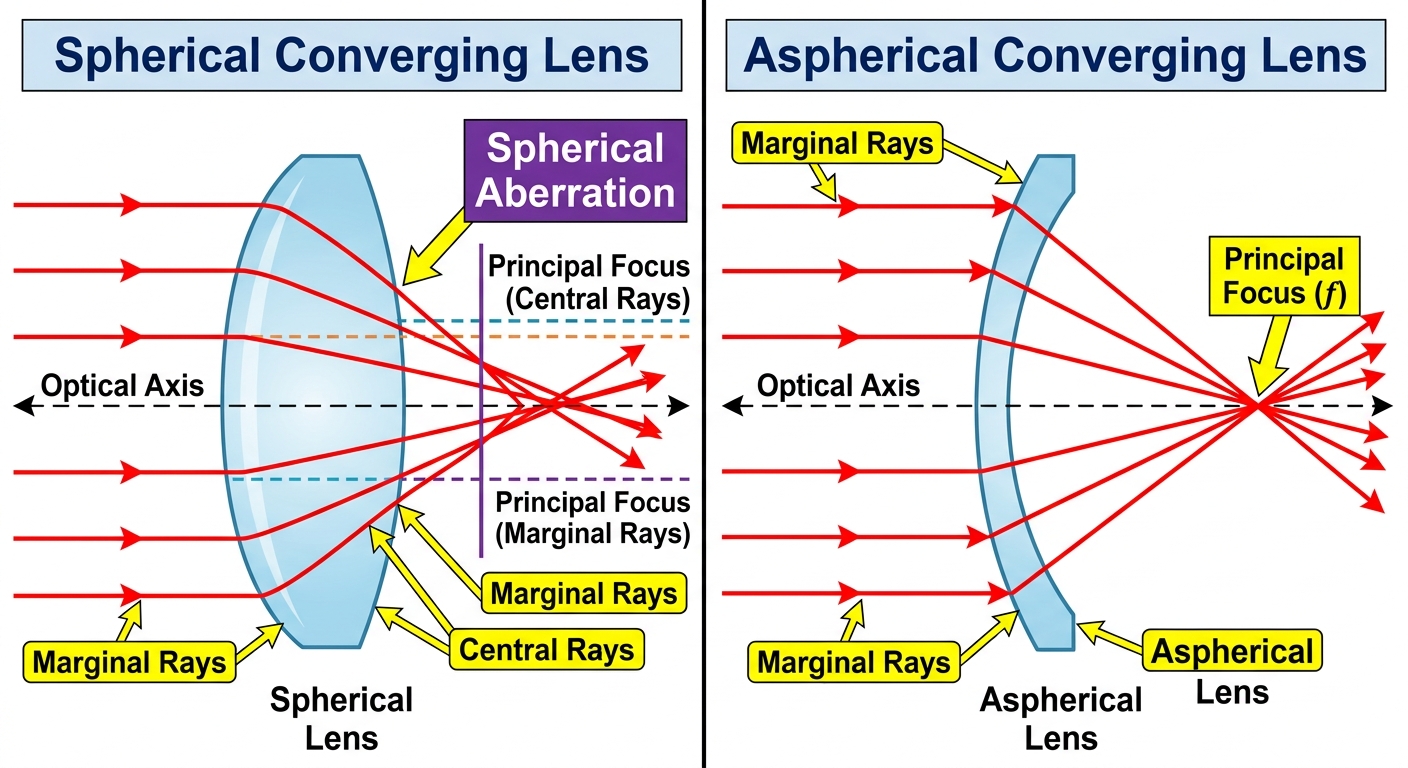
A student notices that inexpensive reading glasses produce blurry images at the lens edges, while premium eyeglasses remain sharp across the entire lens. Investigation reveals that inexpensive glasses use spherical converging lenses and premium glasses use aspherical converging lenses.
a
Construct ray diagrams for a spherical converging lens and an aspherical converging lens. For each, show at least three parallel rays from a distant object converging toward a focal point. Label the focal point(s) and indicate where spherical aberration occurs in the spherical lens. [2]
b
Explain one advantage of aspherical lenses for a person who wears reading glasses. [2]
c
Evaluate whether aspherical lenses are always the better choice for eyeglass users, considering manufacturing cost and individual visual requirements. [2]
Solutions
5QuestionLenses Converging and Diverging IntroductoryAssessment Practice
6 marks~9 minCriterion D
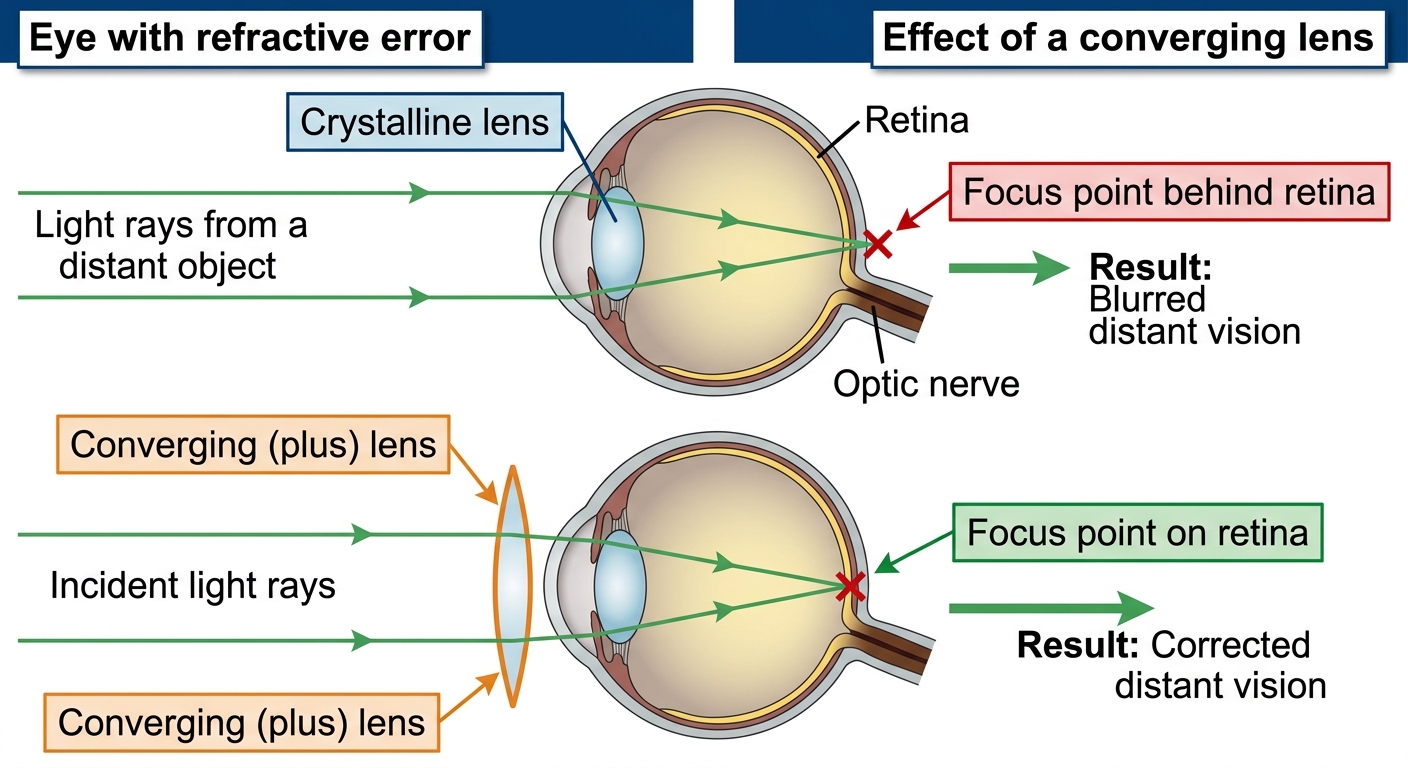
Uncorrected myopia affects an estimated 2.5 billion people globally, with the highest burden in low-income regions where converging lens eyeglasses remain inaccessible to many.
a
State what a converging lens does to parallel rays of light and identify the lens property that determines the strength of correction needed for myopia. [1]
b
The thin lens equation is . A patient's near point is 1.0 m and their far point is 0.25 m. Calculate the focal length of the corrective lens required so that an object at infinity is focused at the patient's far point. [2]
c
Evaluate the extent to which the thin lens model and economic or infrastructural barriers together limit the effectiveness of converging lens eyeglasses as a global solution to myopia. [3]
Solutions
That's every free question here — 5 of 164.
+159 more questions, plus Mock Papers & Worksheets, are waiting in Premium.