You're viewing free preview questions — 4 questions previewing here — subscribe to unlock 44 more, plus the Full Question Bank, Mock Papers & Worksheets.Upgrade
Reactivity and Chemical Properties — Free MYP1 Sciences Practice Questions

1QuestionDefinition of ReactivityConcept Practice
2 marks~3 minCriterion A
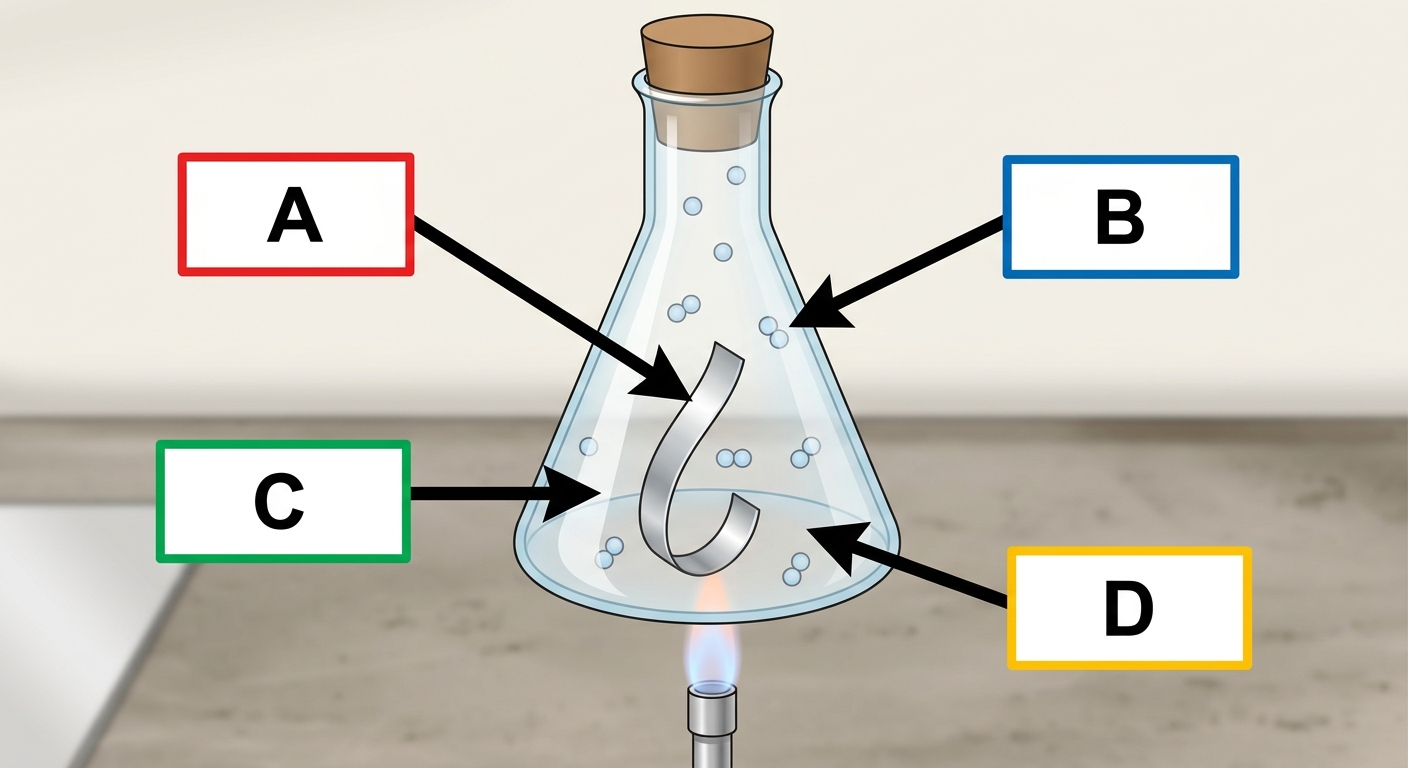
The diagram shows magnesium reacting with oxygen. Label A = magnesium, Label B = oxygen, Label C = the starting substances, Label D = the substances formed.
a
Identify the label that shows the reactants. [1]
b
Describe what the word "reactants" means. [1]

Solutions
2QuestionDefinition of ReactivityConcept Practice
2 marks~3 minCriterion D
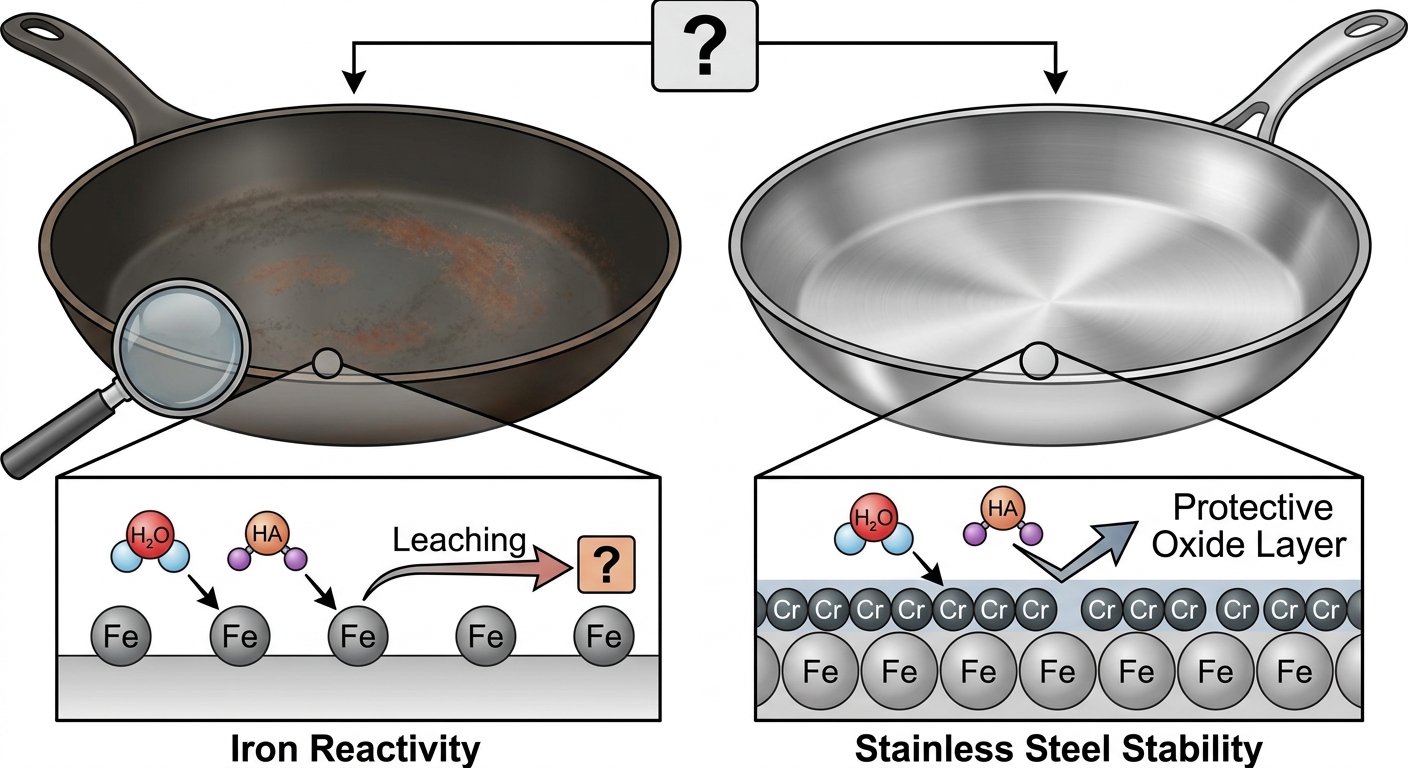
A student cooks tomato sauce in an iron pan and then in a stainless steel pan.
a
State one way the tomato sauce may change when cooked in the iron pan. [1]
b
Describe why stainless steel is a better choice than iron for cooking tomato sauce. [1]
Solutions
3QuestionDefinition of ReactivityConcept Practice
3 marks~5 minCriterion C
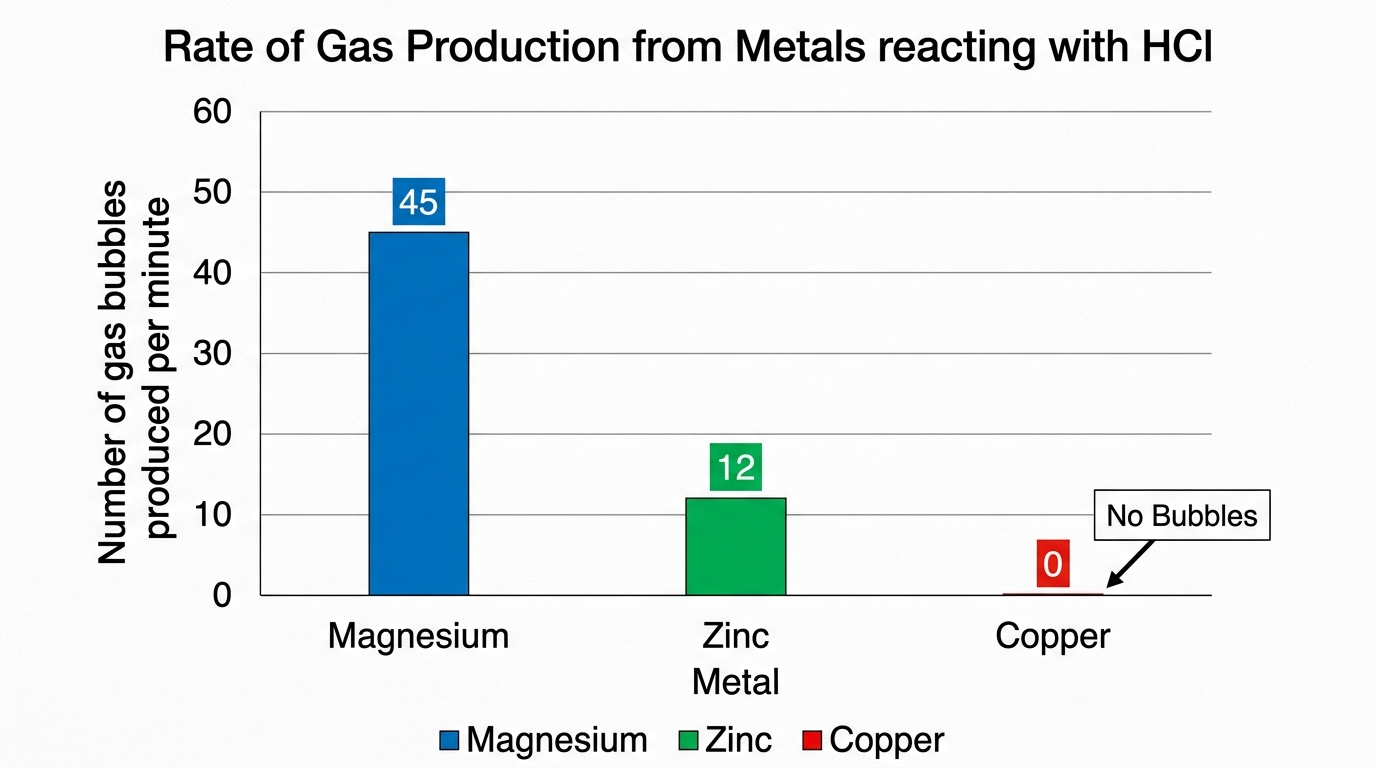
The bar chart below shows how many gas bubbles per minute are produced when three metals are added to dilute hydrochloric acid.
| Metal | Bubbles per minute: |
|---|---|
| Magnesium | 45 |
| Zinc | 12 |
| Copper | 0 |
a
Name the metal that produces the most bubbles per minute. [1]
b
Describe what the number of bubbles tells you about how fast each metal reacts. [1]
c
Using the idea of reactivity, compare magnesium and copper. [1]
Solutions
4QuestionDisplacement Reactions Between MetalsConcept Practice
3 marks~5 minCriterion B
A student placed pieces of four metals into separate test tubes of copper(II) sulfate solution. The results are shown below.
Copper — no change; blue colour stays
| Metal | Observation |
|---|---|
| Magnesium | blue colour fades quickly; bubbles form |
| Zinc | blue colour fades slowly |
| Iron | blue colour fades very slowly |
Copper — no change; blue colour stays
a
Identify the most reactive metal in the experiment. [1]
b
Describe what the observations tell us about how reactive iron is compared to zinc. [1]
c
Describe the overall trend in reactivity shown by all four metals, from most reactive to least reactive. [1]
Solutions
That's every free question here — 4 of 48.
+44 more questions, plus Mock Papers & Worksheets, are waiting in Premium.