You're viewing free preview questions — 4 questions previewing here — subscribe to unlock 77 more, plus the Full Question Bank, Mock Papers & Worksheets.Upgrade
Energy Transformations — Free MYP2 Sciences Practice Questions

1QuestionEnergy Changes in Everyday DevicesConcept Practice
2 marks~3 minCriterion A
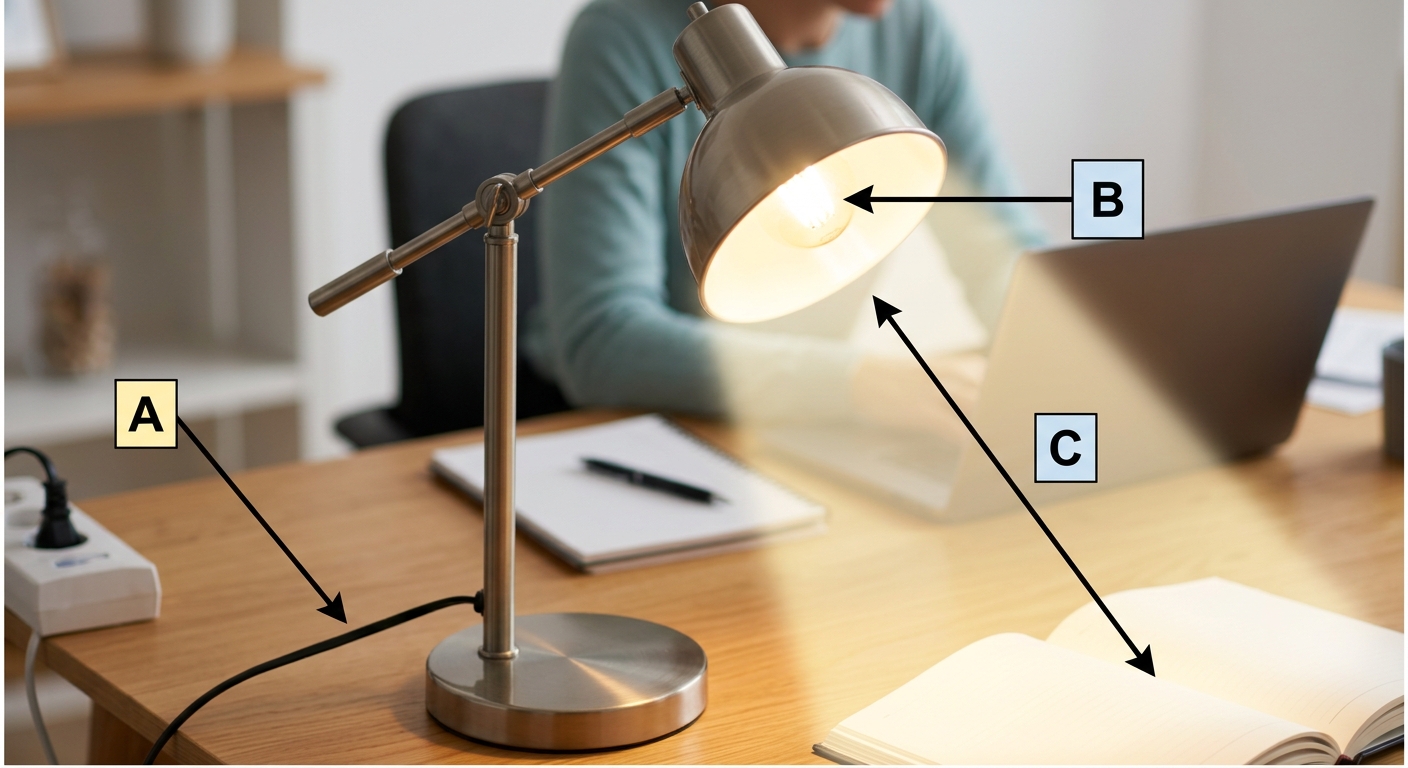
The diagram shows a desk lamp with three labeled components: A (electrical cord), B (bulb), and C (light beam).
a
Identify the component that represents the energy input. [1]
b
Identify the component that represents the useful energy output. [1]

Solutions
2QuestionEnergy Changes in Everyday DevicesAssessment Practice
5 marks~8 minCriterion C
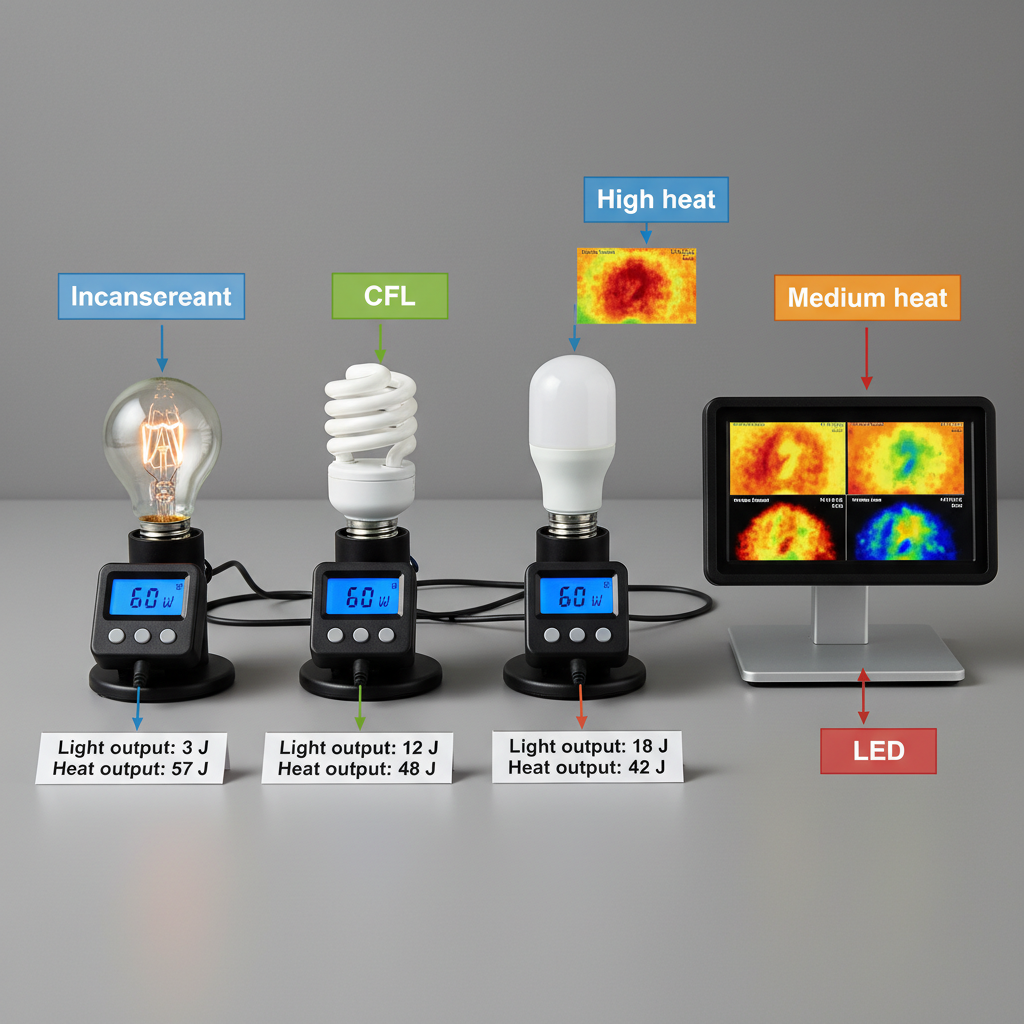
Three bulbs each receive 60 J of electrical energy. The table shows how each bulb distributes that energy.
Bulb — Light output — Heat output
Efficiency (the percentage of input energy converted to useful light) =
Bulb — Light output — Heat output
| Incandescent | 3 J | 57 J |
|---|---|---|
| CFL | 12 J | 48 J |
| LED | 18 J | 42 J |
Efficiency (the percentage of input energy converted to useful light) =
a
State which bulb produces the most light energy. [1]
b
Calculate the efficiency of each bulb. Show your working. [2]
c
Compare the three efficiencies and evaluate whether the data supports the claim: "LED bulbs are more efficient at converting electrical energy into light than CFL and incandescent bulbs." Suggest one limitation of this experiment. [2]
Solutions
3QuestionEnergy Changes in Everyday DevicesAssessment Practice
6 marks~9 minCriterion D
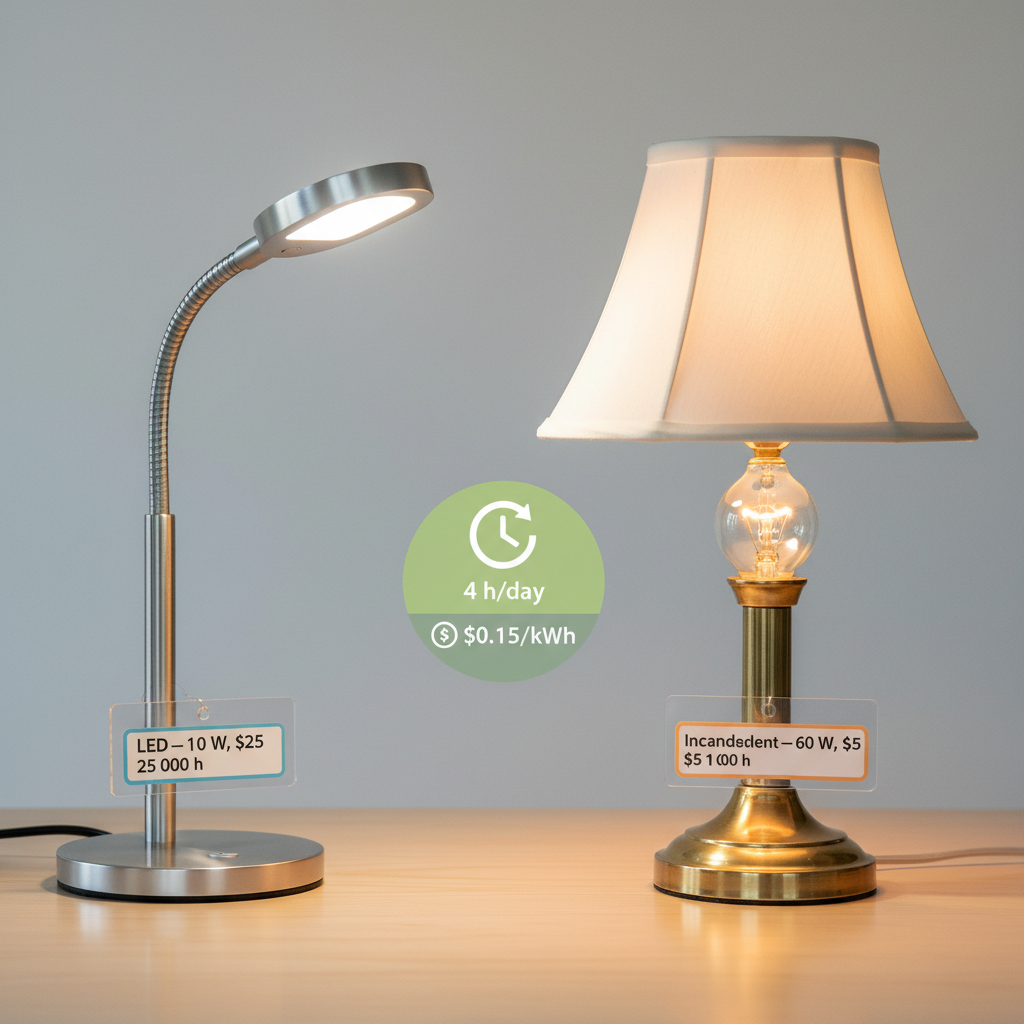
A family chooses between two lamps used for 4 hours each day. Electricity costs 0.15 dollars per kWh (kilowatt-hour, a unit of energy).
| LED lamp | 10 W power | lifespan 25 000 hours | costs 25 dollars |
|---|---|---|---|
| Incandescent lamp | 60 W power | lifespan 1 000 hours | costs 5 dollars |
a
Calculate the total electrical energy, in kWh, used by each lamp over 5 years (365 days per year). [2]
b
Calculate the total cost in dollars for each lamp over 5 years, including electricity and the cost of buying replacement lamps as needed. [2]
c
Compare the two lamps as a choice for the family's budget and for the environment. In your answer, identify one limitation of this comparison. [2]
Solutions
4QuestionEnergy Conversion from One Form to AnotherAssessment Practice
6 marks~9 minCriterion B
A student drops a ball from different heights and records the first bounce height.
| Drop height (cm) | 20 | 40 | 60 | 80 |
|---|---|---|---|---|
| Bounce height (cm) | 12 | 24 | 36 | 48 |
a
Identify the relationship between drop height and bounce height. State the rule as an equation using for bounce height and for drop height. [2]
b
Calculate the predicted bounce height when the ball is dropped from 100 cm. Show your working. [2]
c
The bounce height is always less than the drop height. Explain why, using the idea of energy conversion. [2]
Solutions
That's every free question here — 4 of 81.
+77 more questions, plus Mock Papers & Worksheets, are waiting in Premium.