You're viewing free preview questions — 4 questions previewing here — subscribe to unlock 75 more, plus the Full Question Bank, Mock Papers & Worksheets.Upgrade
Heat Transfer Conduction Convection Radiation — Free MYP2 Sciences Practice Questions

1QuestionComparing the Three Modes of Heat TransferConcept Practice
2 marks~3 minCriterion A
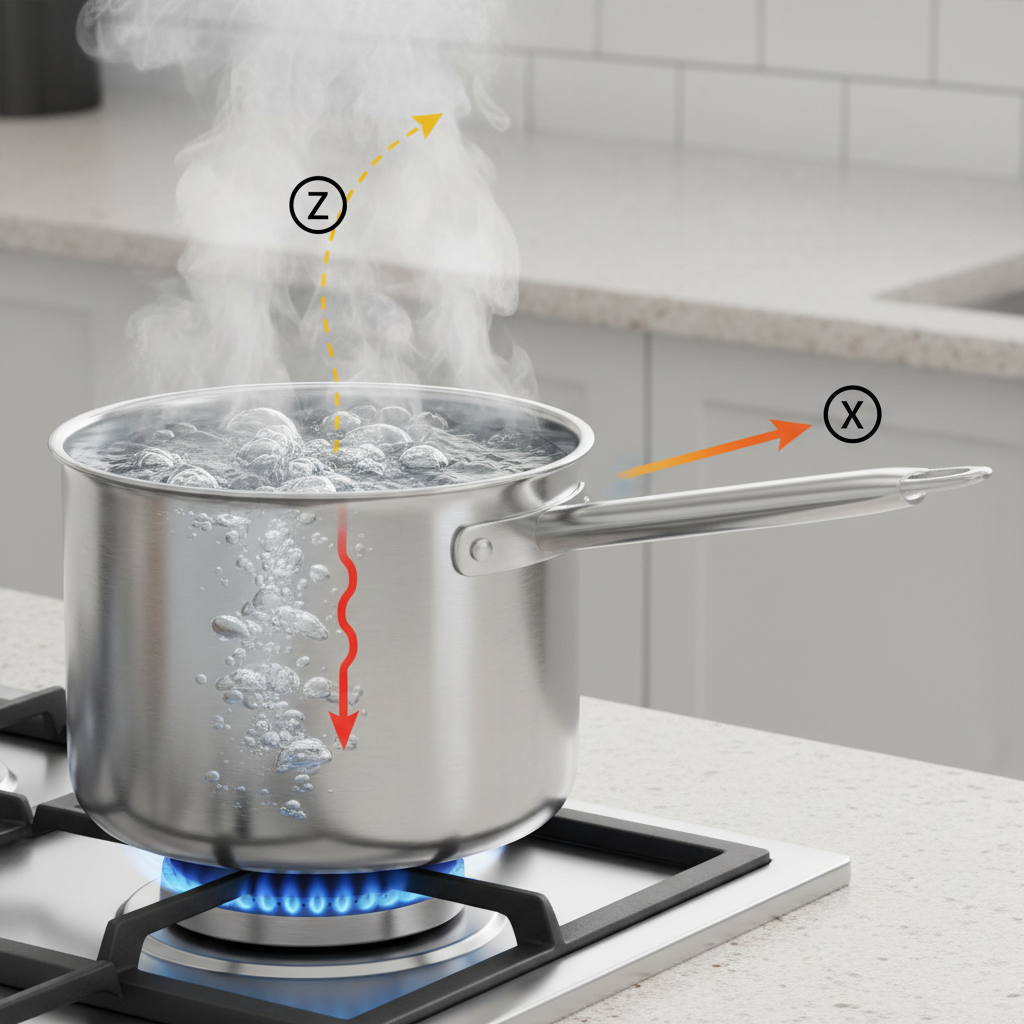
The diagram shows a pot of water boiling on a stove. Three arrows indicate heat transfer in different parts of the system.
- Arrow X: through the metal handle of the pot
- Arrow Y: through the water inside the pot
- Arrow Z: away from the surface of the water into the air above
- Arrow X: through the metal handle of the pot
- Arrow Y: through the water inside the pot
- Arrow Z: away from the surface of the water into the air above
a
Identify the mode of heat transfer shown by each arrow. [1]
X: ___
Y: ___
Z: ___
X: ___
Y: ___
Z: ___
b
Explain why Arrow Y cannot represent conduction. [1]

Solutions
2QuestionDefinition and Examples of RadiationAssessment Practice
4 marks~6 minCriterion B
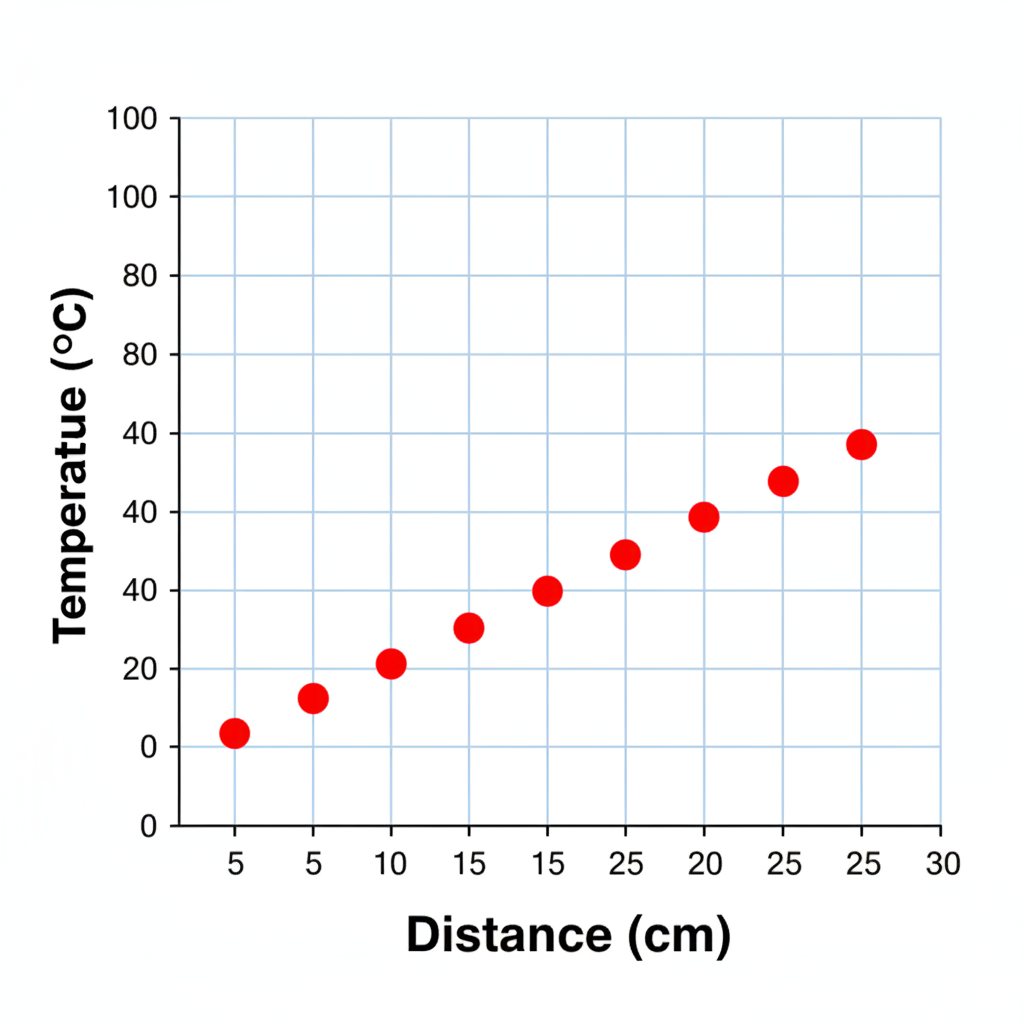
A thermal sensor is placed at different distances from an electric heater that emits radiation (energy transferred by electromagnetic waves) in all directions.
| Distance (cm) | 5 | 10 | 15 | 20 | 25 |
|---|---|---|---|---|---|
| Temperature (°C) | 80 | 40 | 27 | 20 | 16 |
a
Describe the relationship between distance and temperature shown in the data. [1]
b
Explain why temperature decreases as the sensor moves further from the heater. Use the idea that radiation spreads outward from the source. [2]
c
Estimate the temperature at 30 cm and compare it with the value at 25 cm. Use the data to support your reasoning. [1]
Solutions
3QuestionDefinition and Examples of RadiationAssessment Practice
5 marks~8 minCriterion D
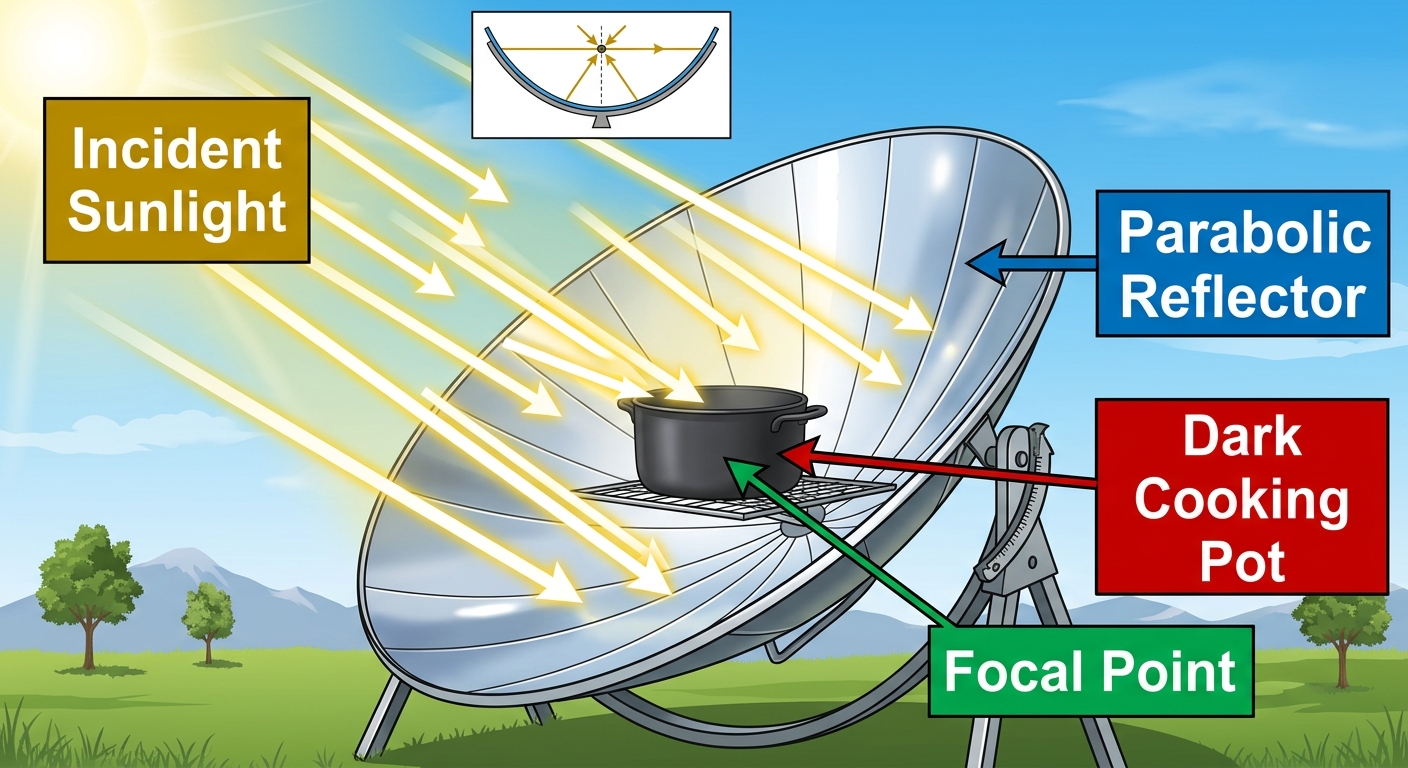
A solar cooker uses a curved, shiny surface to focus sunlight onto a dark cooking pot. The dark pot absorbs radiation and heats up.
a
Identify one advantage of using a solar cooker instead of a gas stove. [1]
b
Explain why cloudy weather makes a solar cooker unreliable for daily cooking. [2]
c
Compare the suitability of a solar cooker and a gas stove for use in the United Kingdom. [2]
Solutions
4QuestionDefinition and Examples of ConductionAssessment Practice
5 marks~8 minCriterion C
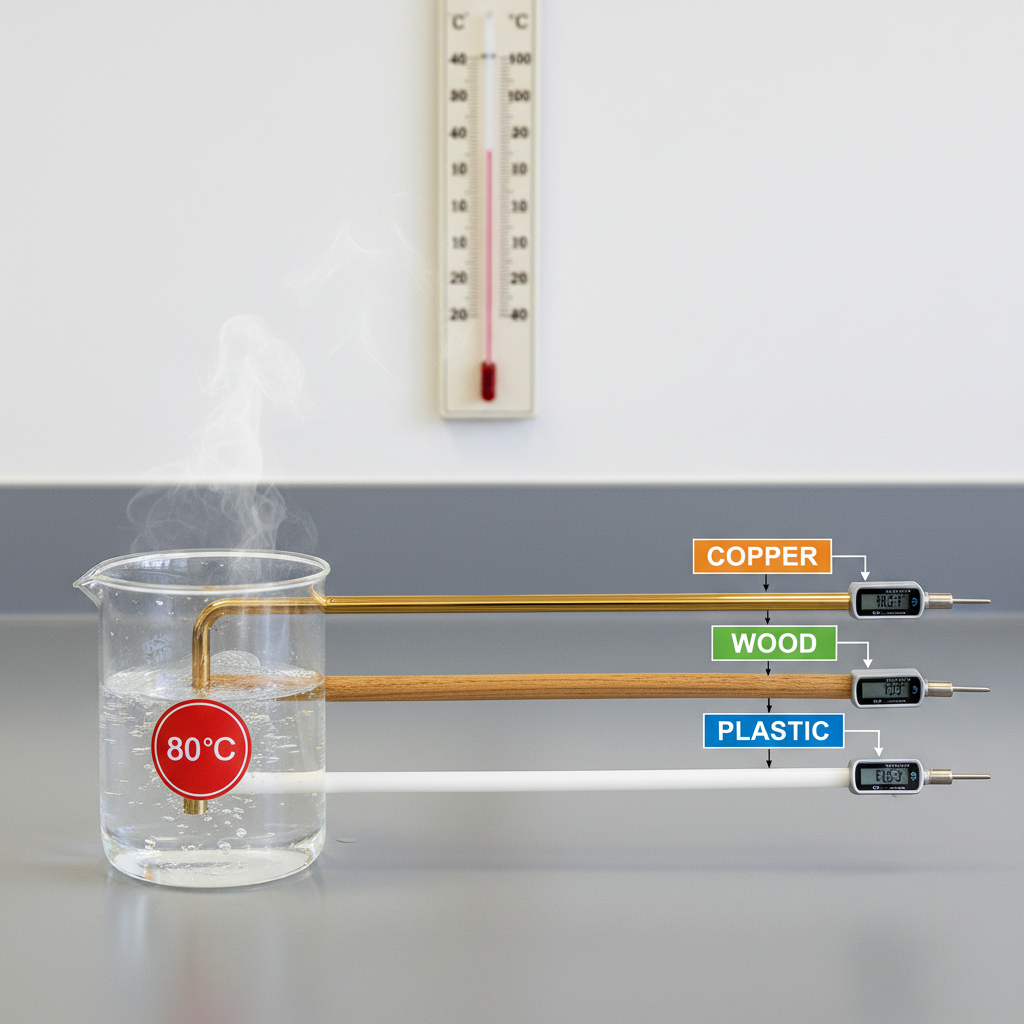
Three rods — copper, wood, and plastic — of equal length and thickness were placed with one end in water at 80°C. Room temperature was 22°C. After 5 minutes, the temperature at the far end of each rod was recorded.
Copper: 65°C Wood: 28°C Plastic: 24°C
Copper: 65°C Wood: 28°C Plastic: 24°C
a
State what conduction is. [1]
b
Identify the best conductor from the data and explain why the copper rod reached a much higher temperature than the wood or plastic rod. [2]
c
Compare the results for wood and plastic, and describe one limitation of this experiment that makes it difficult to conclude which of these two materials is the better conductor. [2]
Solutions
That's every free question here — 4 of 79.
+75 more questions, plus Mock Papers & Worksheets, are waiting in Premium.