You're viewing free preview questions — 4 questions previewing here — subscribe to unlock 74 more, plus the Full Question Bank, Mock Papers & Worksheets.Upgrade
Acids Bases and Indicators — Free MYP2 Sciences Practice Questions

1QuestionDefinition and Properties of Acids and BasesConcept Practice
3 marks~5 minCriterion A
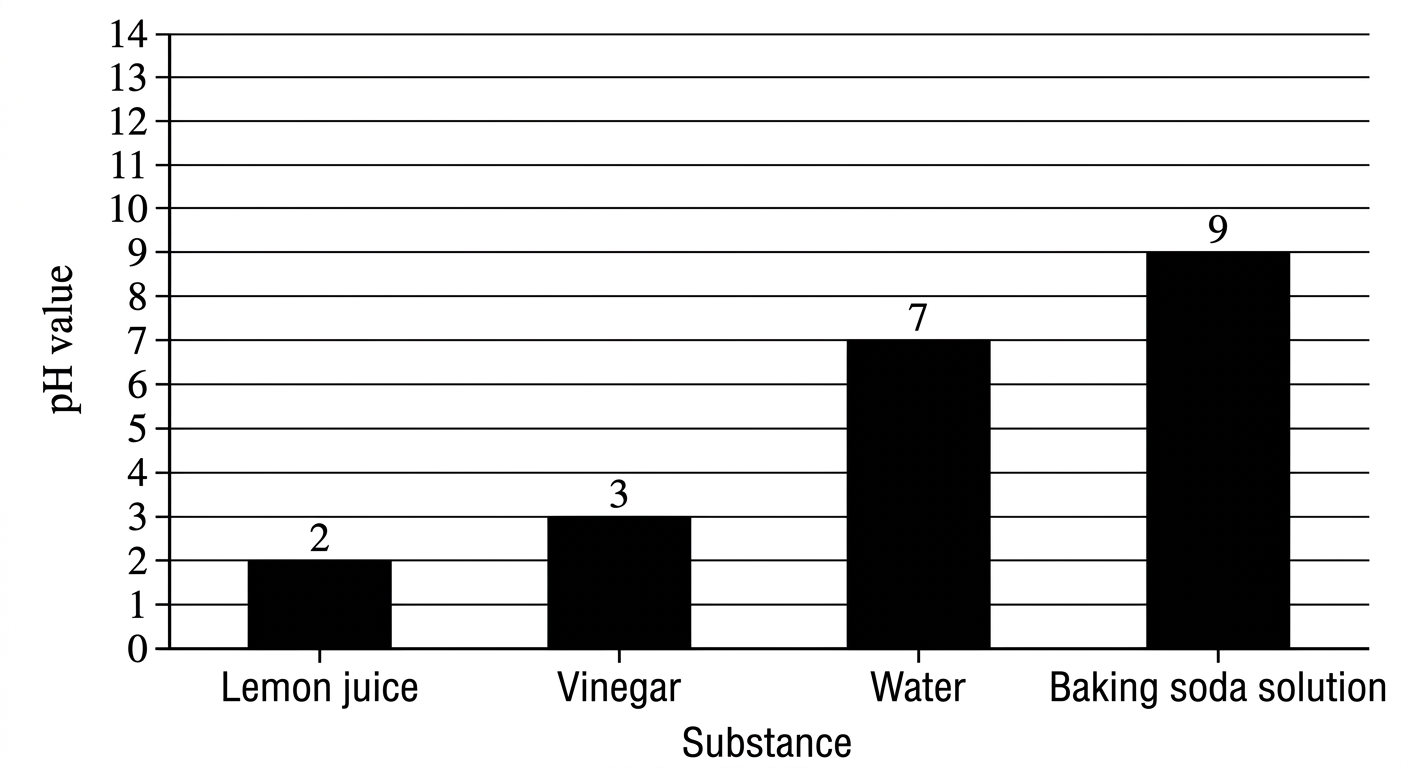
The bar graph below shows the pH values of four household substances: lemon juice (pH 2), vinegar (pH 3), water (pH 7), and baking soda solution (pH 9).
a
Identify the most acidic substance shown in the graph. [1]
b
Explain why a lower pH value means a substance is more acidic. Use the idea that acids release ions (protons) in your answer. [1]
c
Compare lemon juice and baking soda solution in terms of their pH values and ion concentrations. [1]

Solutions
2QuestionCommon Acids and Bases in Everyday LifeAssessment Practice
6 marks~9 minCriterion D
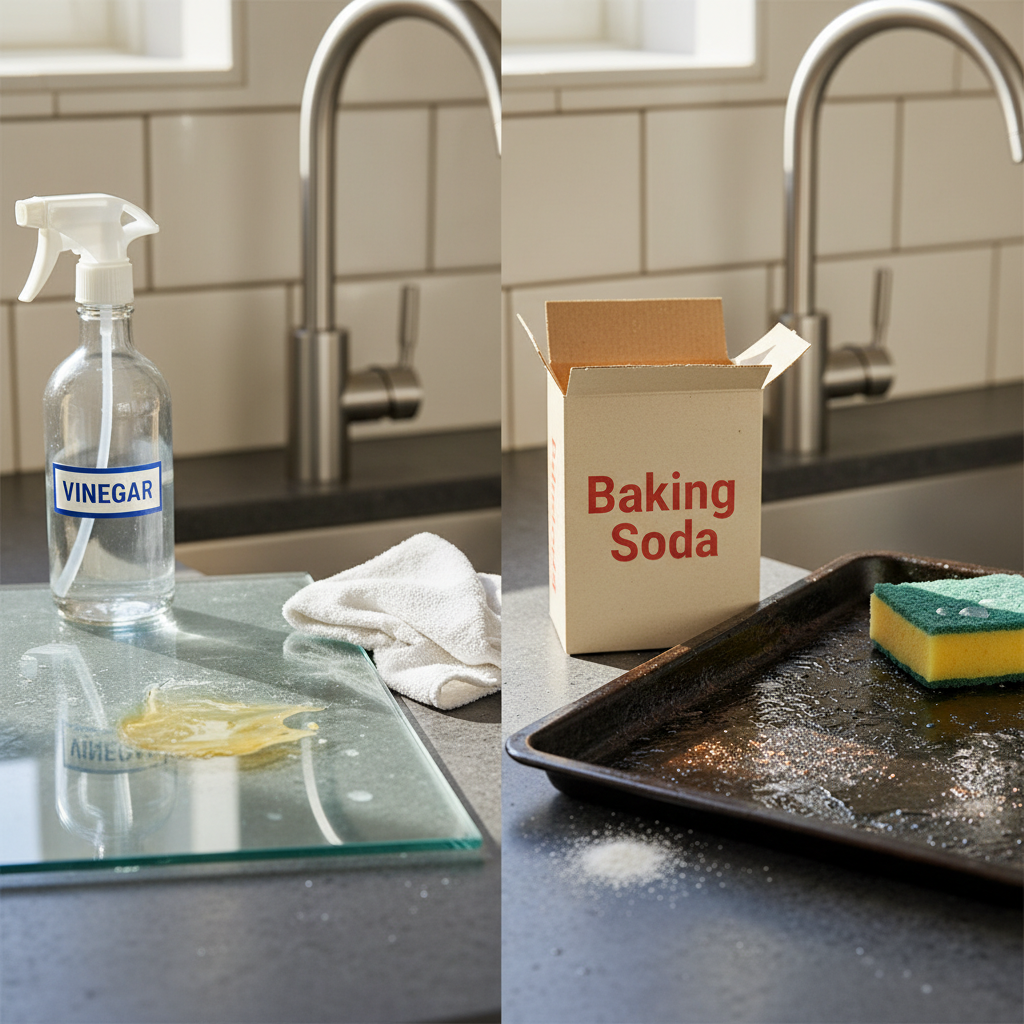
Vinegar is a weak acid used in kitchens and bathrooms. Baking soda is a base (a substance that neutralizes acids) used in cooking and cleaning.
a
Identify one specific household cleaning task for which vinegar or baking soda is effective. [1]
b
Explain why your chosen substance is effective for that task. Use the terms acid, base, and neutralization in your answer. [2]
c
Compare your chosen substance with a purpose-made cleaning product for the same task, and explain one reason why the purpose-made product may work better. [3]
Solutions
3QuestionNeutralization Reactions IntroductoryConcept Practice
2 marks~3 minCriterion B
A student adds different volumes of vinegar (an acid) to the same amount of baking soda (a base) and records the temperature change each time.
a
Identify the independent variable in this investigation. [1]
b
Identify one controlled variable and explain why it must be kept the same. [1]
Solutions
4QuestionSafety and Handling of Acids and Bases in the LabAssessment Practice
6 marks~9 minCriterion C
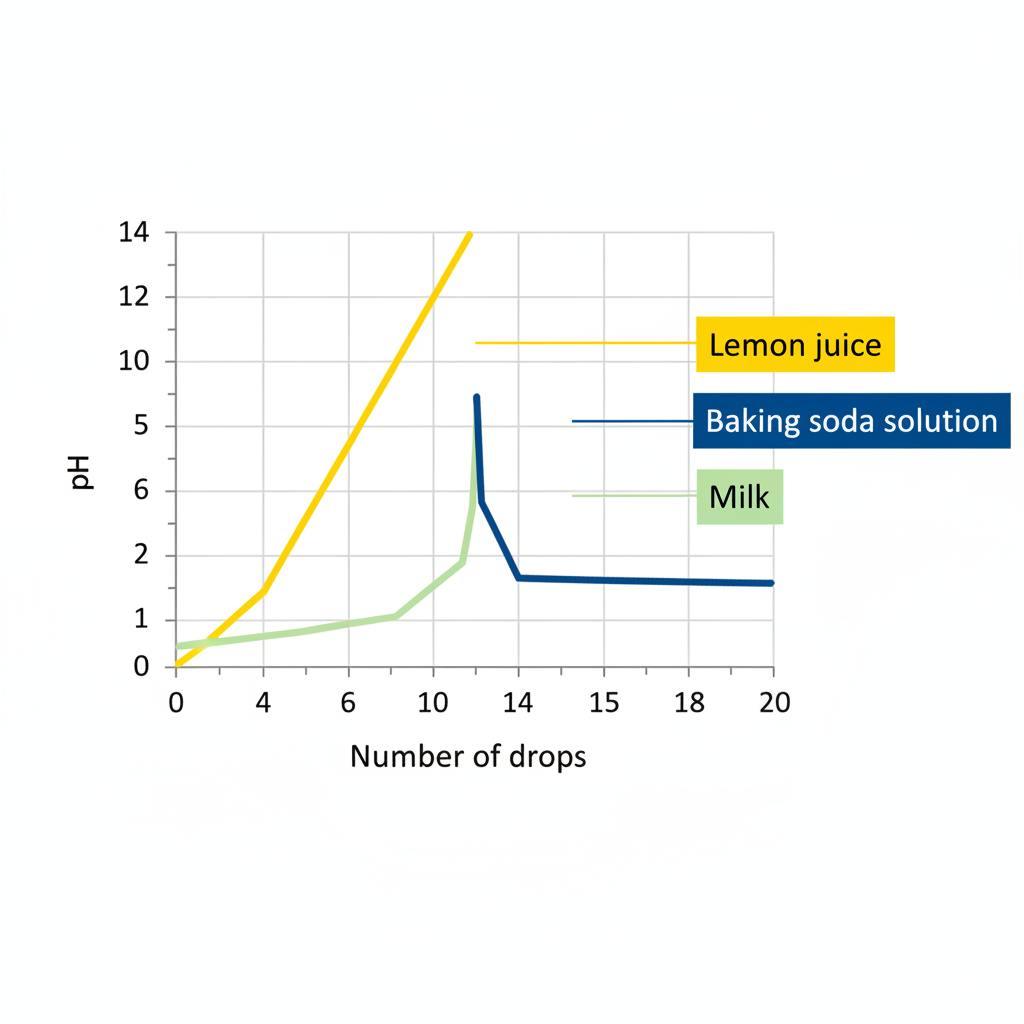
Students added drops of lemon juice, baking soda solution, and milk to separate containers of acid and recorded the pH after each drop. The graph shows their results.
pH key: 1–6 = acidic | 7 = neutral | 8–14 = basic
pH key: 1–6 = acidic | 7 = neutral | 8–14 = basic
a
Describe what the graph shows about how the pH changes when each substance is added to the acid. [2]
b
The students repeat the experiment with twice as much acid. Estimate how many drops of baking soda solution are needed to reach pH 7, and explain your reasoning using the pattern shown in the graph. [2]
c
Compare how baking soda solution and milk reduce the danger of the acid, using evidence from the graph. [2]
Solutions
That's every free question here — 4 of 78.
+74 more questions, plus Mock Papers & Worksheets, are waiting in Premium.