You're viewing free preview questions — 4 questions previewing here — subscribe to unlock 74 more, plus the Full Question Bank, Mock Papers & Worksheets.Upgrade
Atomic Structure Introductory — Free MYP2 Sciences Practice Questions

1QuestionAtomic Number and Mass Number BasicConcept Practice
4 marks~6 minCriterion A
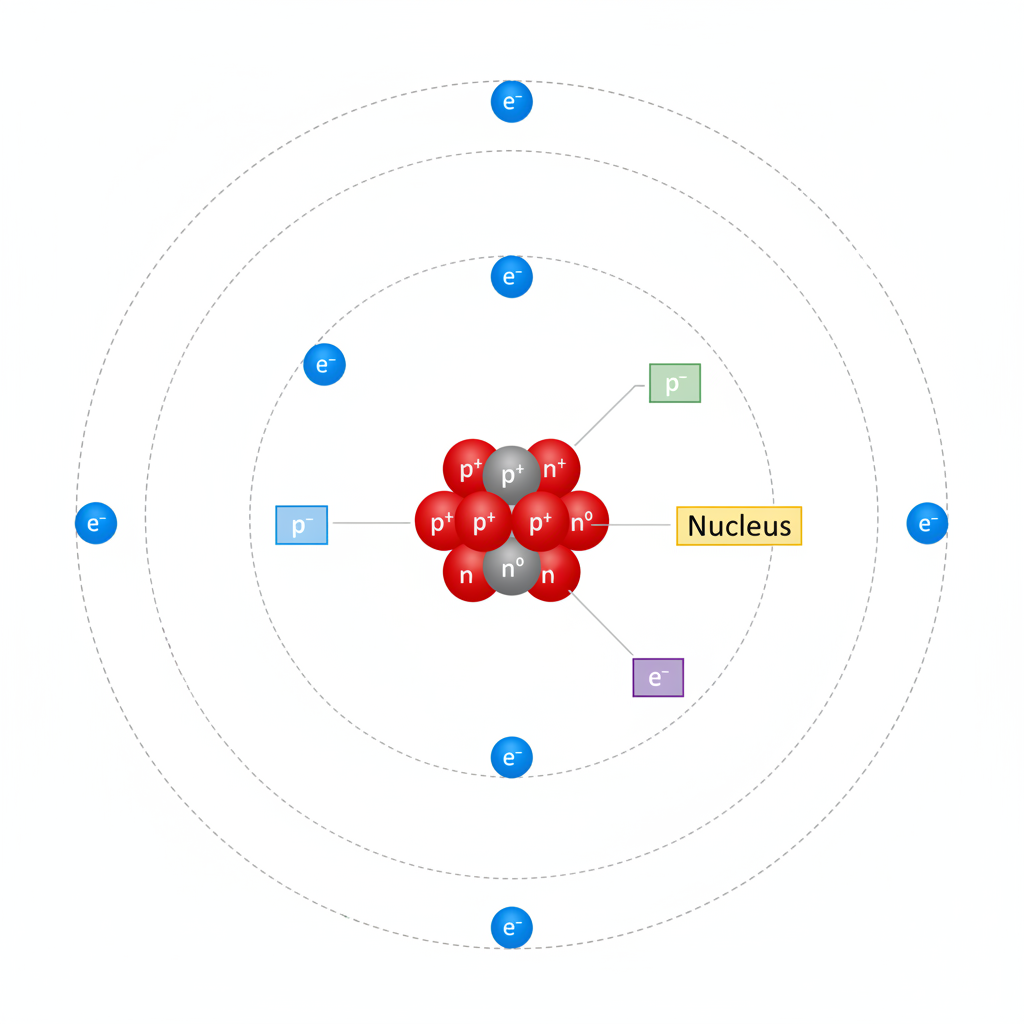
The diagram shows a carbon atom with 6 protons and 6 neutrons in its nucleus, and 6 electrons arranged in two shells.
a
State the atomic number of carbon and identify which particles determine it. [1]
b
Calculate the mass number of carbon, showing your working. [2]
c
Explain why electrons are not included when finding the mass number. [1]

Solutions
2QuestionStructure of a Simple AtomAssessment Practice
4 marks~6 minCriterion C
A school science video shows a simplified atom as a solid sphere with electrons fixed on concentric rings (circles around the centre), to explain how electricity flows through a wire.
a
Identify one benefit of using this simplified model to teach electricity to beginners. [1]
b
Explain why this benefit helps beginners learn about electricity. [1]
c
Compare what this model shows about electron movement with what actually happens in a wire, and explain how this difference could lead to a misconception. [2]

Solutions
3QuestionAtomic Number and Mass Number BasicConcept Practice
3 marks~5 minCriterion B
The table below shows data for four elements.
| Element | Helium | Lithium | Beryllium | Boron |
|---|---|---|---|---|
| Atomic number | 2 | 3 | 4 | 5 |
| Mass number | 4 | 7 | 9 | 11 |
| Neutrons | ___ | ___ | ___ | ___ |
a
Calculate the number of neutrons for each element. [1]
b
State the relationship between mass number, atomic number, and number of neutrons. [1]
c
Chlorine has an atomic number of 17 and a mass number of 35. Using the relationship you identified, calculate the number of neutrons in a chlorine atom and explain whether this follows the same pattern as the four elements above. [1]
Solutions
4QuestionIntroduction to the Concept of IonsAssessment Practice
4 marks~6 minCriterion D
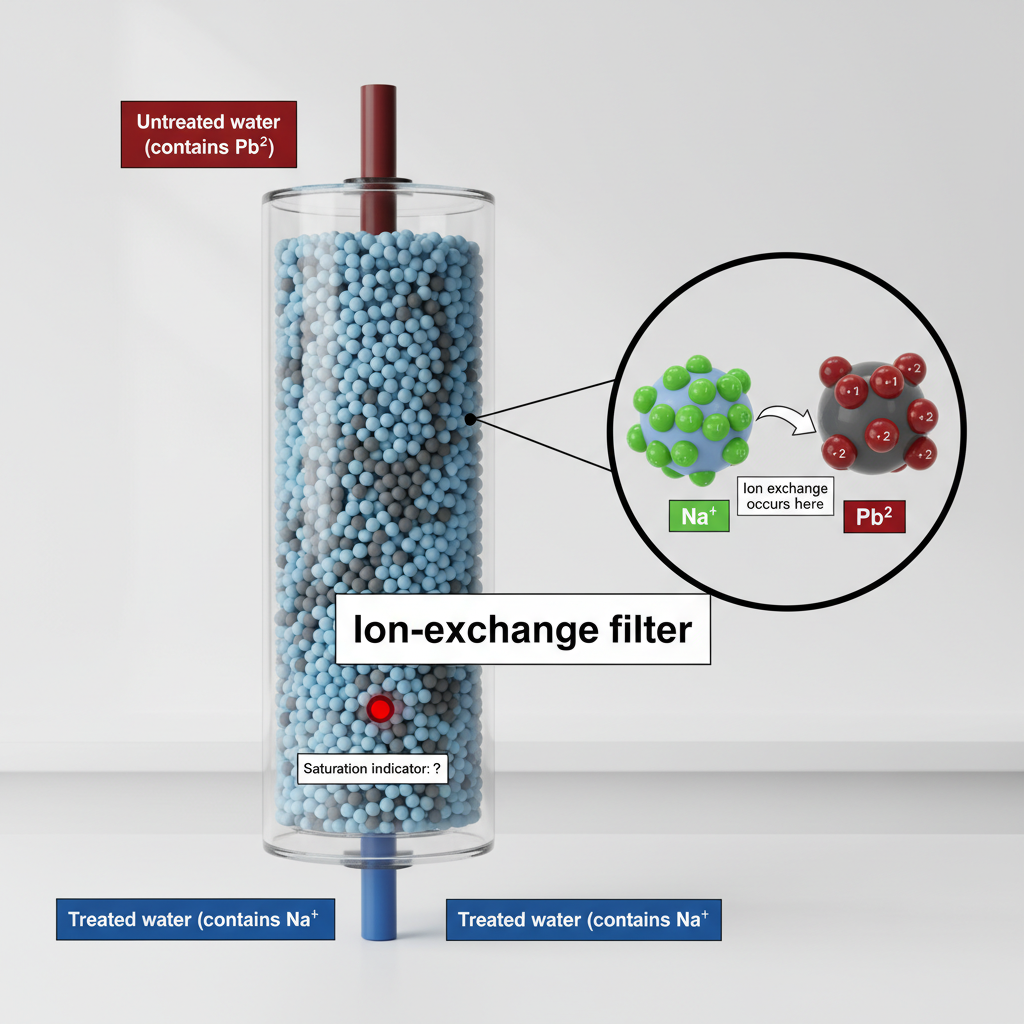
A small town uses an ion-exchange water filter to remove harmful lead ions () from its drinking water. The filter works by swapping harmless sodium ions () for lead ions. Once all the sodium ions are used up, the filter becomes saturated and stops working.
a
Identify one benefit of this filter for public health. [1]
b
Explain why a saturated filter is a risk to public health. [2]
c
A town uses two identical filters in sequence. Compare this two-filter design with the single-filter design in terms of safety and maintenance. [1]
Solutions
That's every free question here — 4 of 78.
+74 more questions, plus Mock Papers & Worksheets, are waiting in Premium.