You're viewing free preview questions — 4 questions previewing here — subscribe to unlock 80 more, plus the Full Question Bank, Mock Papers & Worksheets.Upgrade
Elements Compounds and Mixtures — Free MYP2 Sciences Practice Questions

1QuestionCompounds and Chemical FormulaeConcept Practice
2 marks~3 minCriterion A
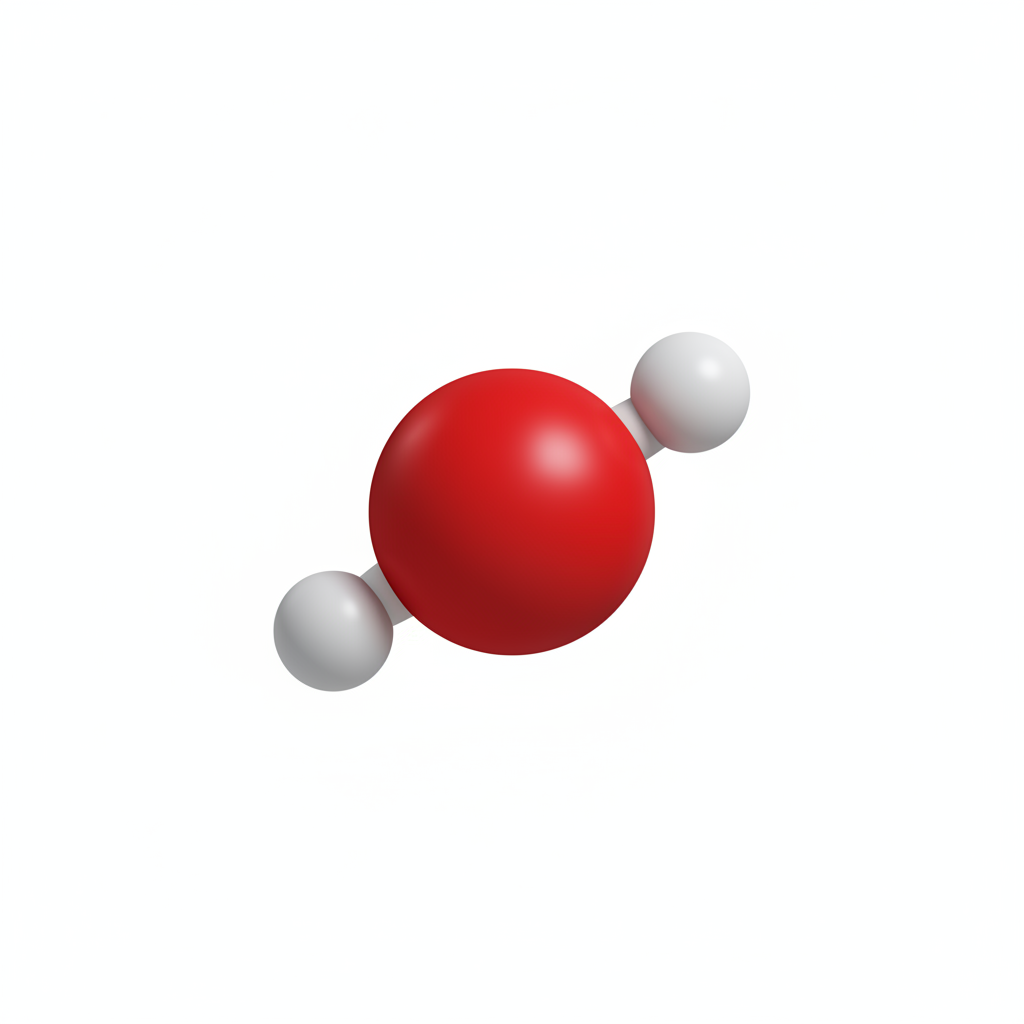
The diagram below shows a model of a water molecule (). The two small circles represent atoms of one element, and the large circle represents an atom of a different element.
a
Identify the element represented by the small circles. [1]
b
Identify the element represented by the large circle. [1]

Solutions
2QuestionCompounds and Chemical FormulaeAssessment Practice
4 marks~6 minCriterion C
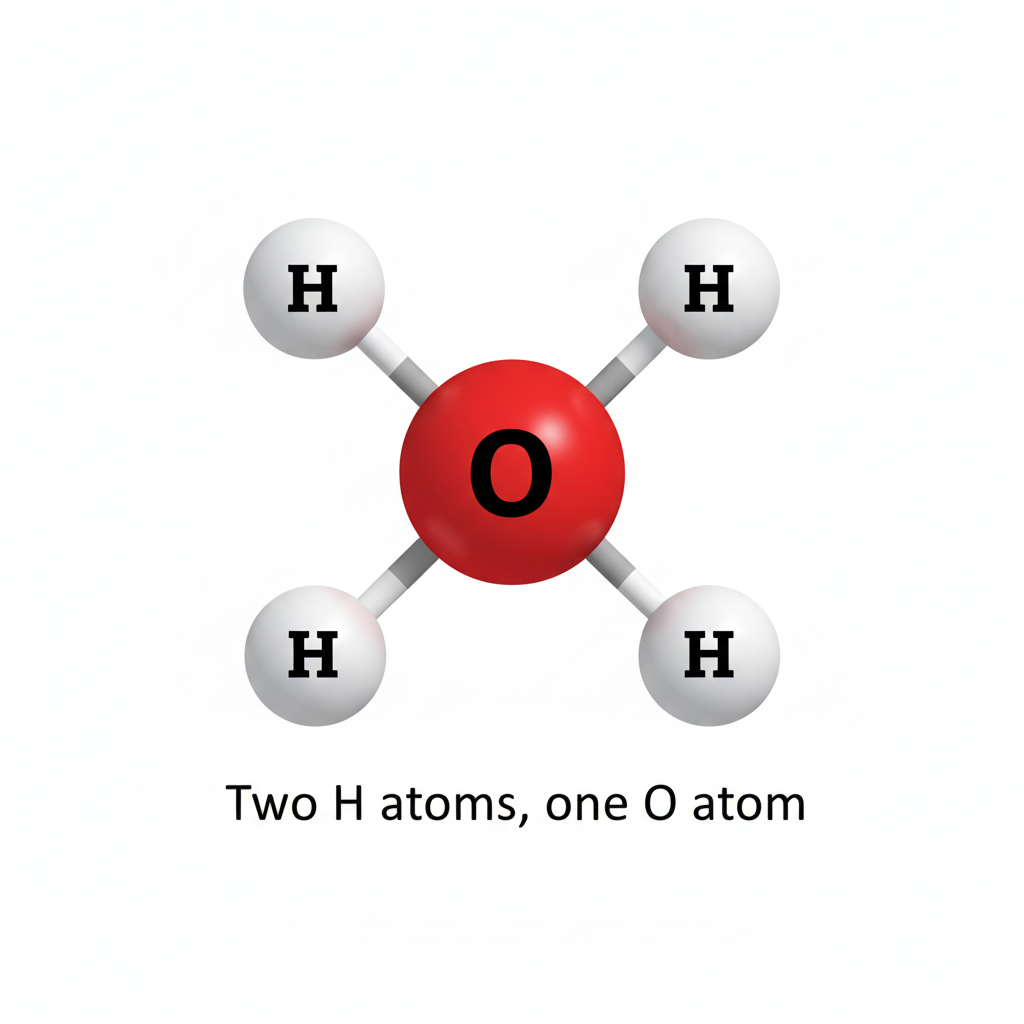
The diagram below shows a water molecule. One oxygen atom () sits in the centre, with two hydrogen atoms () attached on either side.
a
Identify the number of each type of atom shown in the diagram. [1]
b
Explain why the chemical formula for water is written as , using evidence from the diagram. [2]
c
Compare with and . Explain why neither alternative correctly represents the water molecule shown. [1]
Solutions
3QuestionDefinition of Elements and SymbolsAssessment Practice
5 marks~8 minCriterion B
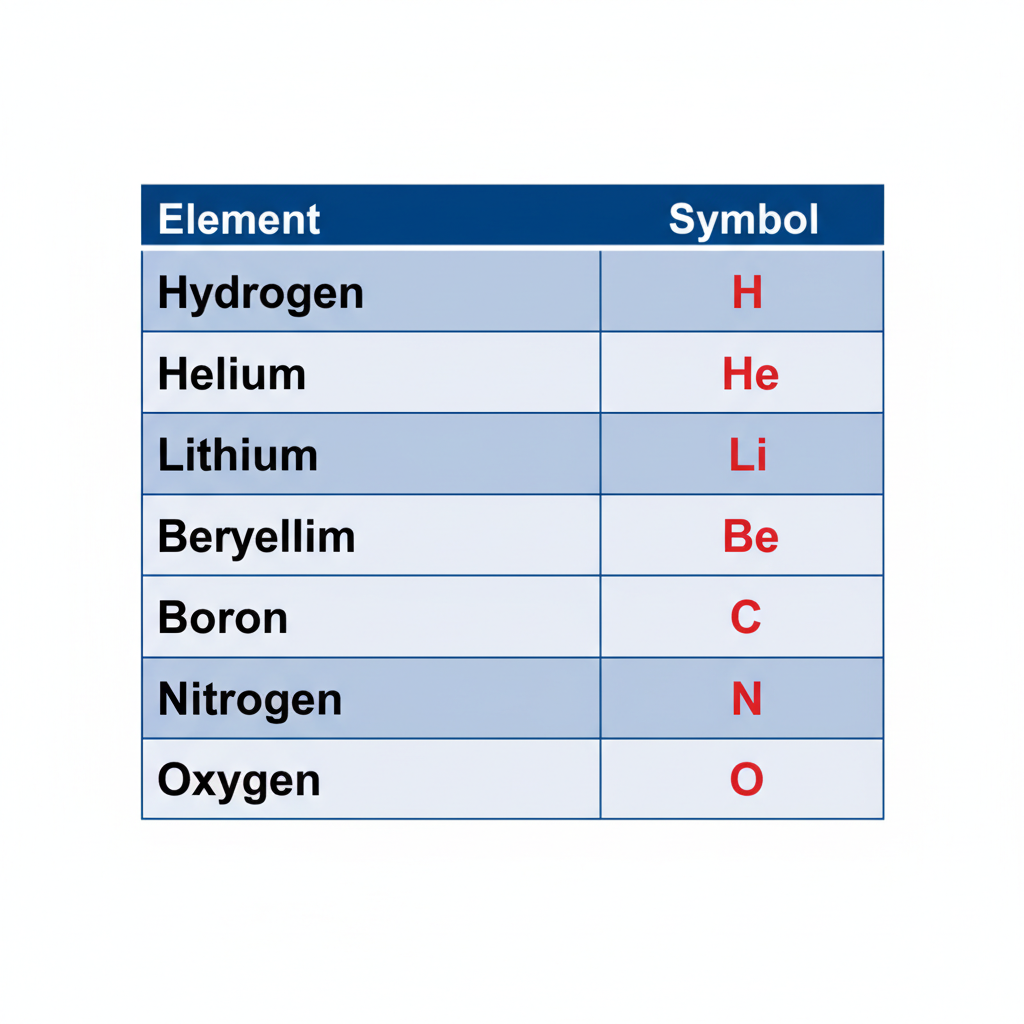
The table below shows eight elements and their symbols.
| Element: Hydrogen | Symbol: |
|---|---|
| Element: Helium | Symbol: |
| Element: Lithium | Symbol: |
| Element: Beryllium | Symbol: |
| Element: Boron | Symbol: |
| Element: Carbon | Symbol: |
| Element: Nitrogen | Symbol: |
| Element: Oxygen | Symbol: |
a
Identify the pattern used to form these symbols from the element names. [1]
b
Using your pattern, predict the symbol for Fluorine and explain your reasoning. [2]
c
Sodium has the symbol , not . Compare this with the pattern you identified and explain why the symbol differs. [2]
Solutions
4QuestionCompounds and Chemical FormulaeAssessment Practice
6 marks~9 minCriterion D
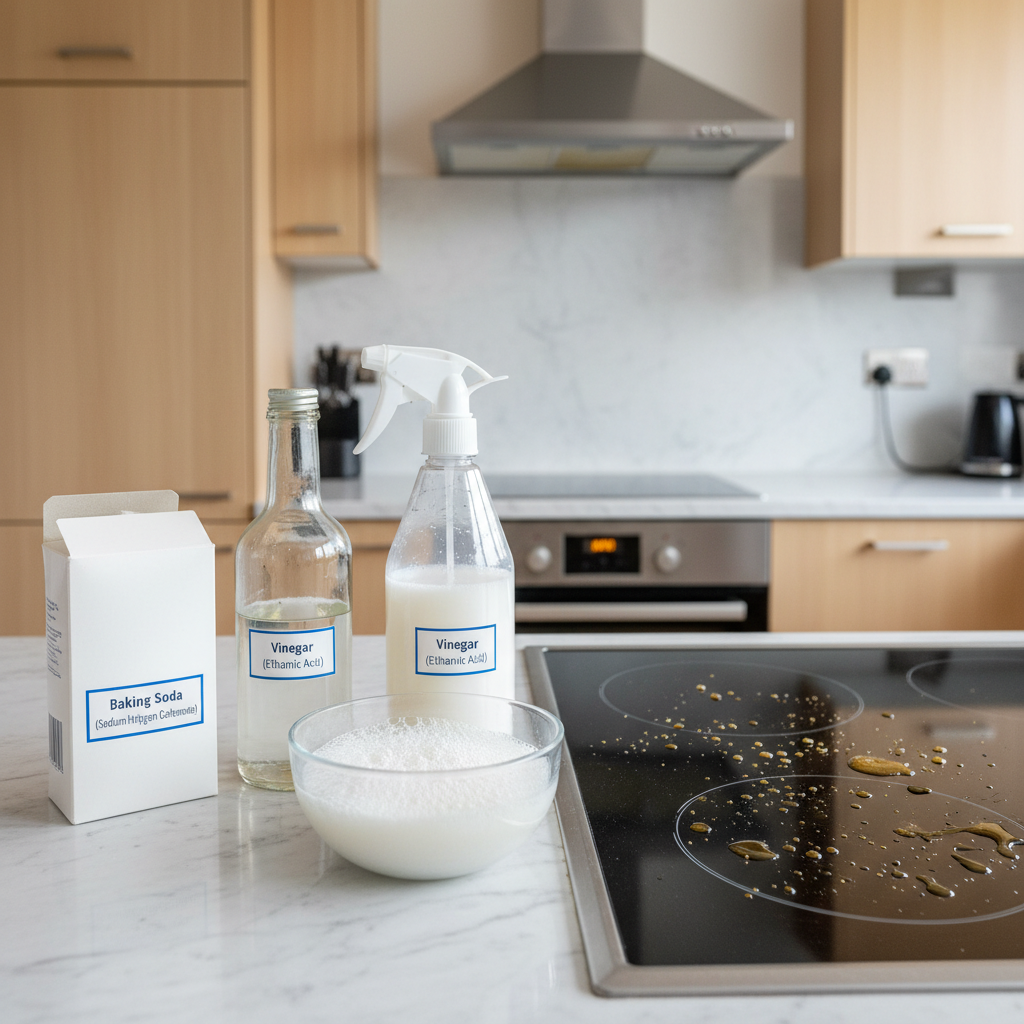
A student mixes baking soda (sodium hydrogen carbonate) and vinegar (ethanoic acid). The reaction is:
a
Identify the chemical formula of baking soda and the chemical formula of vinegar. [2]
b
Explain why bubbles form when the two substances are mixed. [2]
c
The student plans to use the mixture to clean a greasy surface. Compare the cleaning effectiveness of this mixture with that of a commercial cleaner, giving one reason based on the reaction above. [2]
Solutions
That's every free question here — 4 of 84.
+80 more questions, plus Mock Papers & Worksheets, are waiting in Premium.