You're viewing free preview questions — 4 questions previewing here — subscribe to unlock 77 more, plus the Full Question Bank, Mock Papers & Worksheets.Upgrade
Physical and Chemical Changes — Free MYP2 Sciences Practice Questions

1QuestionExamples of Reversible and Irreversible ChangesConcept Practice
2 marks~3 minCriterion A
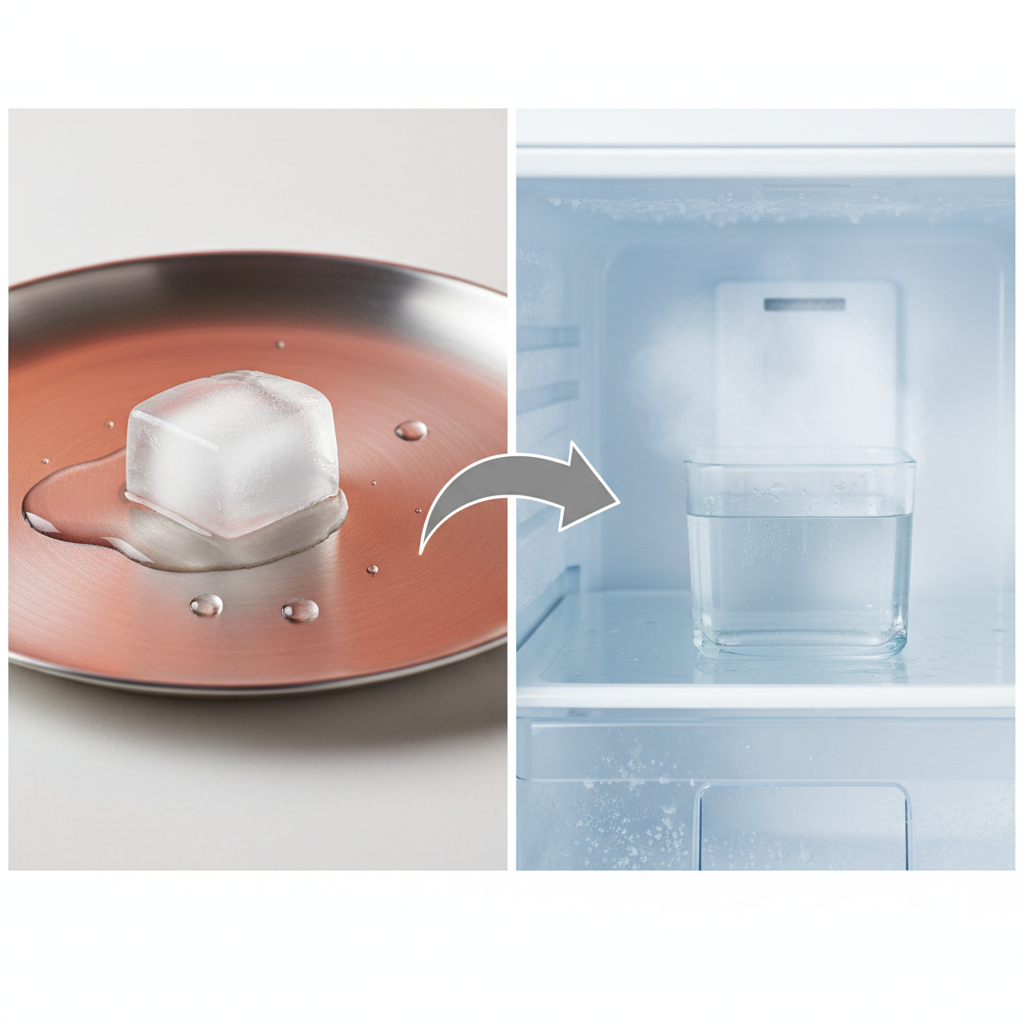
An ice cube is left on a warm plate and melts into liquid water. The water is then placed in a freezer, where it refreezes into ice.
a
Identify the two states of matter involved in this process. [1]
b
Explain why this is a reversible change, using the terms melting and freezing in your answer. [1]

Solutions
2QuestionDefinition and Comparison of Physical and Chemical ChangesAssessment Practice
2 marks~3 minCriterion D
An iron gate left outside for several months develops a flaky orange-brown coating (rust, or iron oxide). A nearby painted gate shows no such change.
Describe one real-world consequence of the rusting that occurs on the iron gate, and explain why that consequence matters. [2]
Describe one real-world consequence of the rusting that occurs on the iron gate, and explain why that consequence matters. [2]

Solutions
3QuestionDefinition and Comparison of Physical and Chemical ChangesAssessment Practice
4 marks~6 minCriterion C
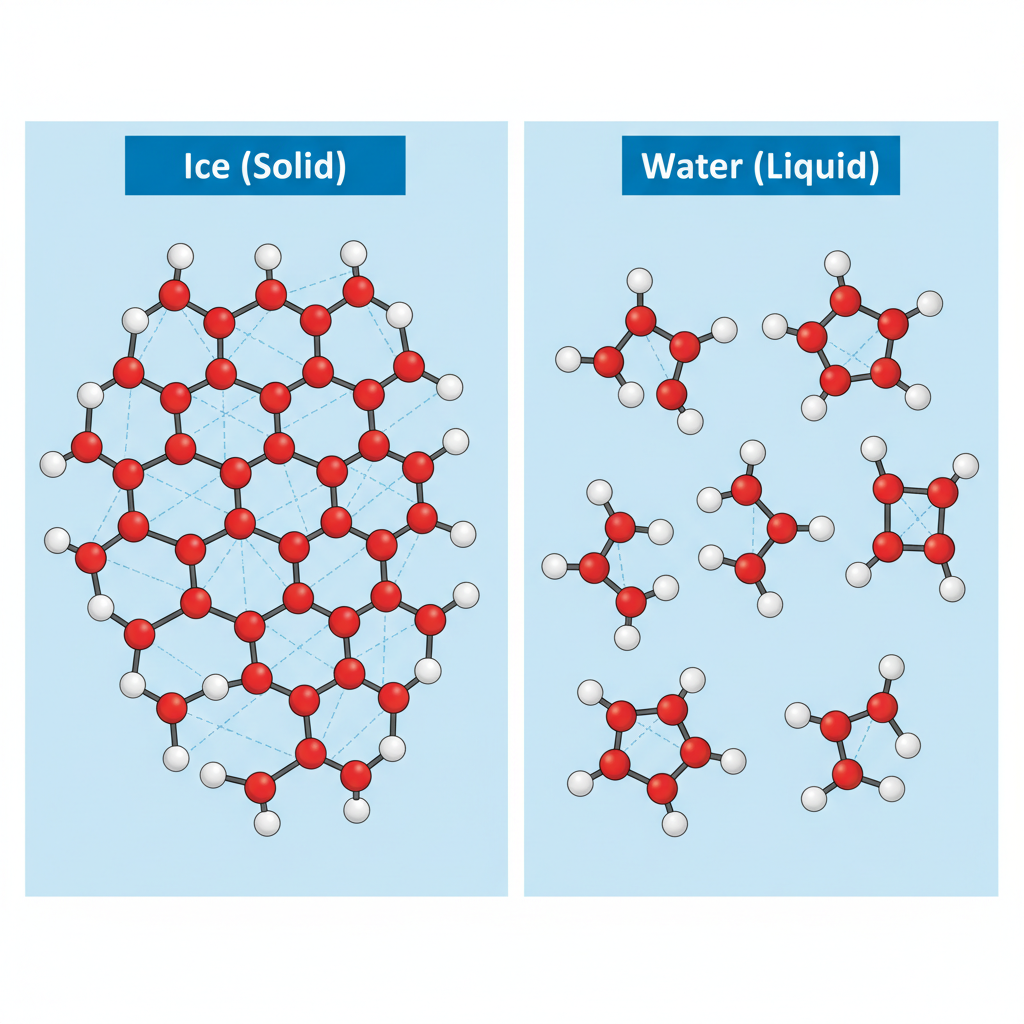
The diagram shows molecules arranged in a regular pattern (ice, left) and a more spread-out pattern (liquid water, right).
a
Identify the type of change that occurs when ice melts. [1]
b
Explain why the molecules themselves are unchanged after melting. [1]
c
Compare the arrangement of molecules in ice and in liquid water, and explain how this comparison shows that melting is not a chemical change. [2]
Solutions
4QuestionDefinition and Comparison of Physical and Chemical ChangesAssessment Practice
4 marks~6 minCriterion B
A student records results from five experiments:
| Experiment | New substance formed | Reversible |
|---|---|---|
| Tearing paper | No | Yes |
| Burning wood | Yes | No |
| Melting ice | No | Yes |
| Rusting nail | Yes | No |
| Dissolving sugar | No | Yes |
a
Identify two patterns in the data that distinguish physical changes from chemical changes. [2]
b
A student boils an egg. The egg white turns solid and cannot be made liquid again. Explain whether boiling an egg is a physical or chemical change, using both patterns from part (a). [2]
Solutions
That's every free question here — 4 of 81.
+77 more questions, plus Mock Papers & Worksheets, are waiting in Premium.