You're viewing free preview questions — 4 questions previewing here — subscribe to unlock 78 more, plus the Full Question Bank, Mock Papers & Worksheets.Upgrade
Separation Techniques — Free MYP2 Sciences Practice Questions

1QuestionChoosing Appropriate Separation MethodsConcept Practice
4 marks~6 minCriterion A
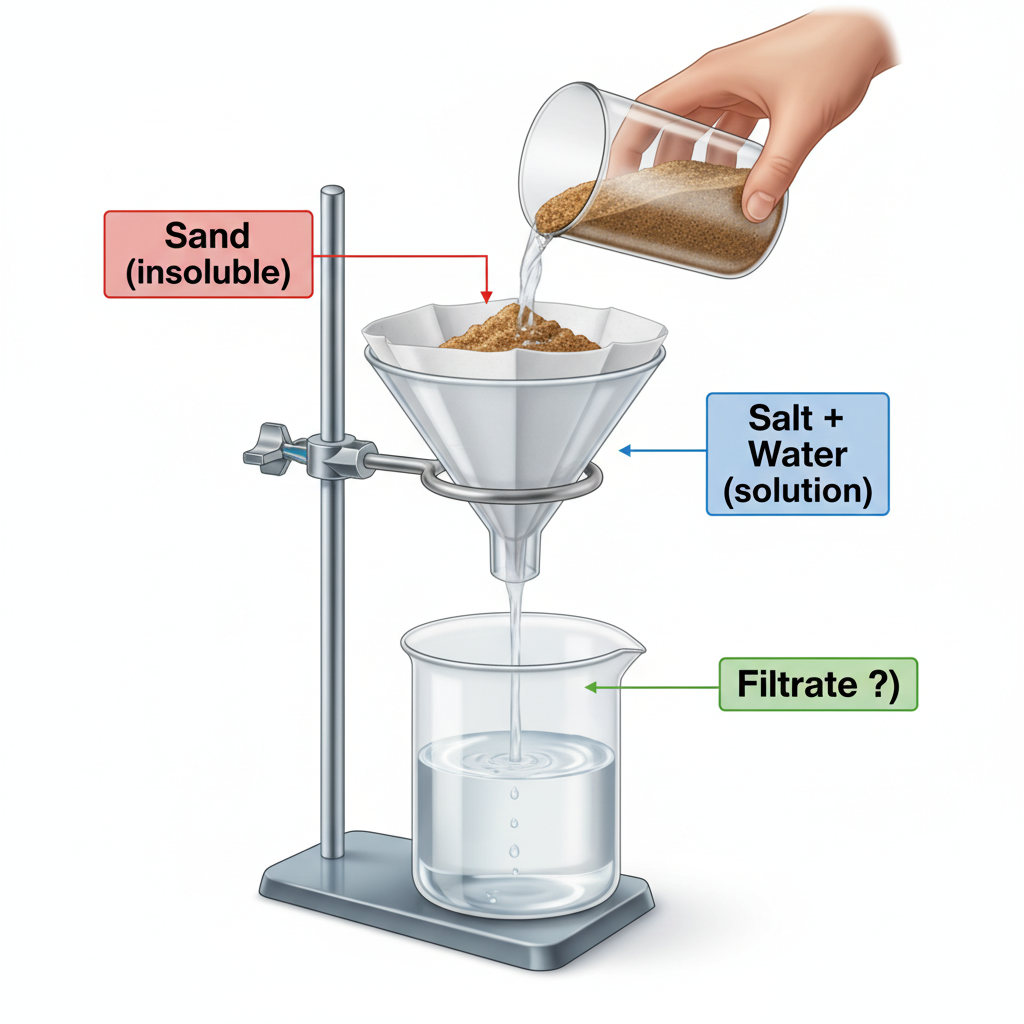
A student mixes sand, salt, and water, then pours the mixture through filter paper in a funnel. The liquid that passes through is collected in a beaker.
a
Explain why sand stays on the filter paper but salt passes through. [2]
b
Describe how the student could obtain solid salt from the liquid in the beaker, and explain why filtration alone cannot do this. [2]

Solutions
2QuestionDistillation and Chromatography IntroductoryAssessment Practice
3 marks~5 minCriterion C
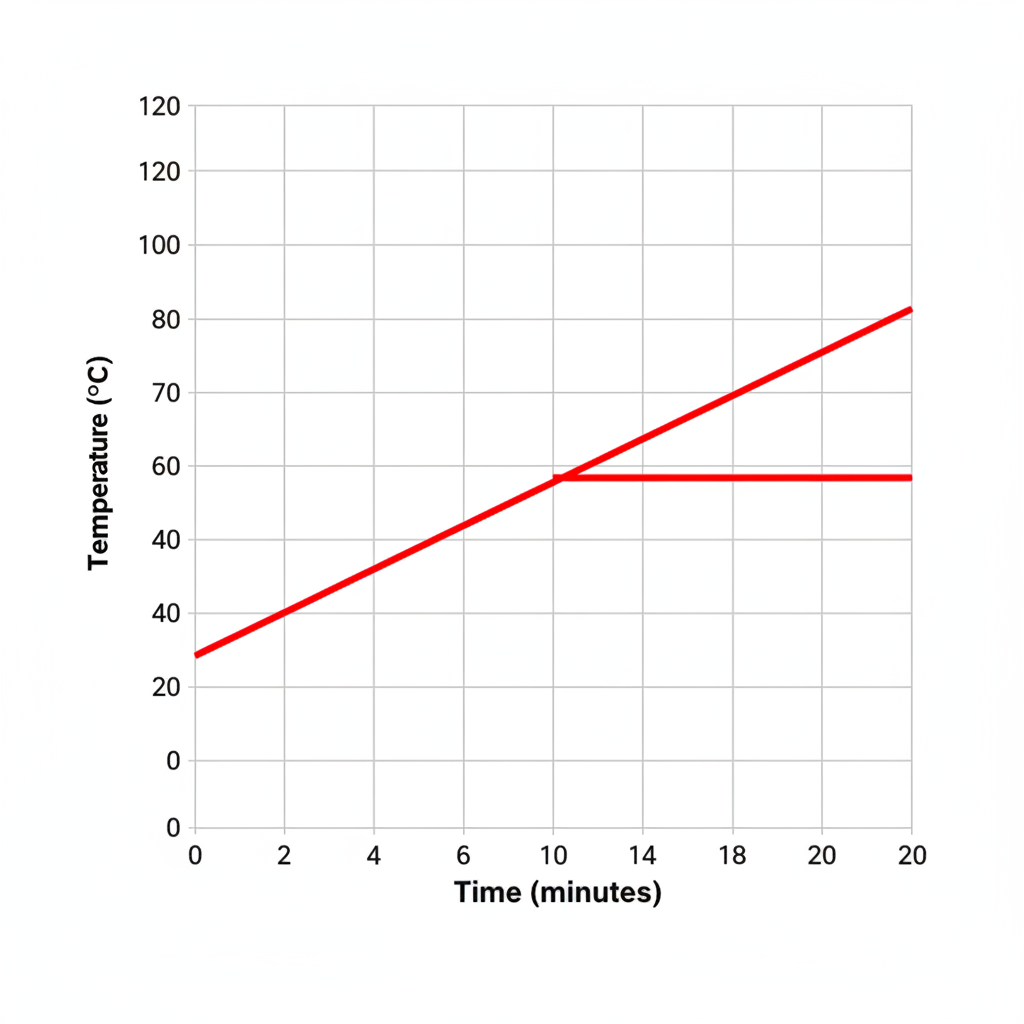
The graph below shows how temperature changes over time when a salt-water mixture is distilled.
a
Identify the temperature at which the flat region of the graph occurs. [1]
b
Explain why the temperature stays constant during this stage of distillation. [1]
c
A student says the flat region would look the same if pure water were distilled instead of salt water. Do you agree? Compare what would be the same and what would be different. [1]
Solutions
3QuestionChoosing Appropriate Separation MethodsConcept Practice
2 marks~3 minCriterion B
A student tests three filters with pore sizes of mm, mm, and mm to separate sand from water. The same volume of sand–water mixture is poured through each filter, and the time for all the water to pass through is recorded.
a
Identify the independent variable and the dependent variable in this investigation. [1]
b
Identify one controlled variable and explain why it must be kept constant. [1]
Solutions
4QuestionChoosing Appropriate Separation MethodsAssessment Practice
4 marks~6 minCriterion D
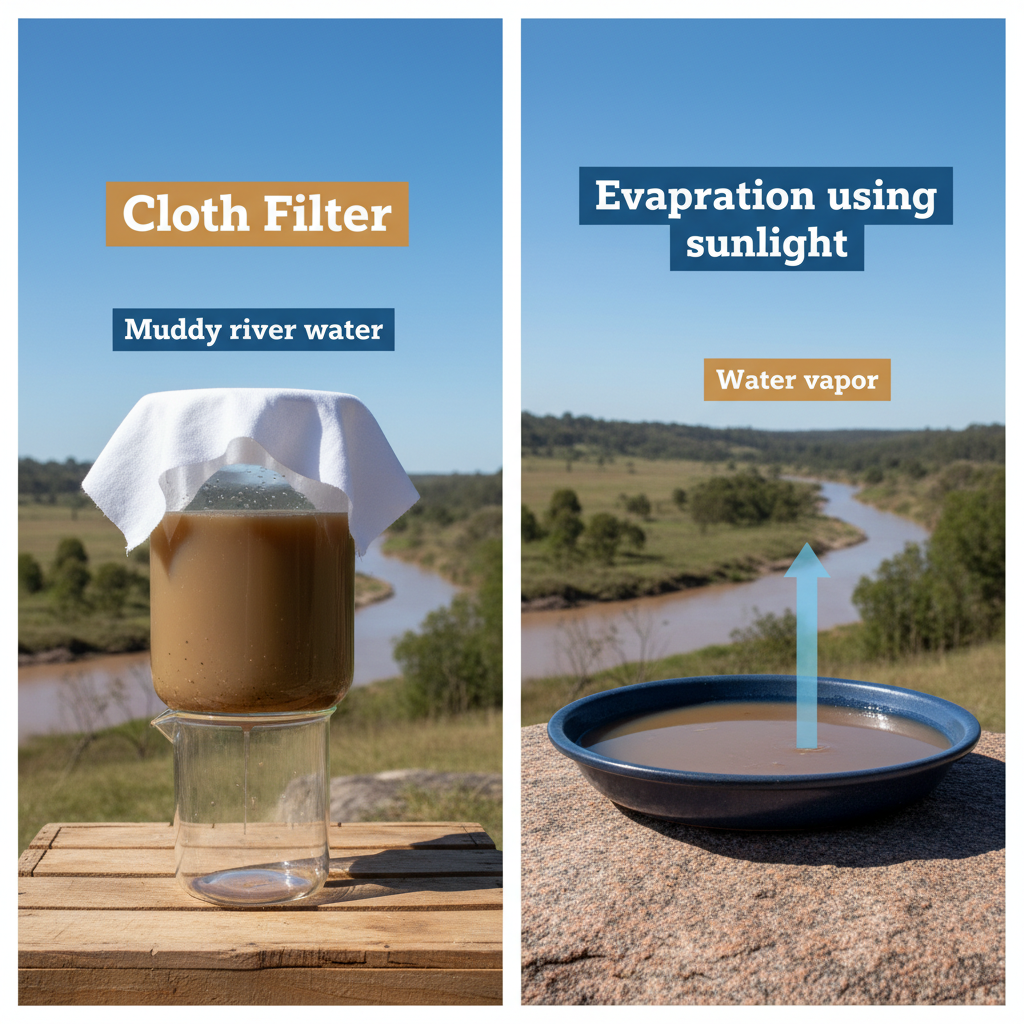
A family in a rural area collects muddy river water for drinking. They consider two methods: filtration through a cloth and evaporation using sunlight.
a
Identify which method more effectively removes visible solid particles from the water. [1]
b
Explain how the method you identified in (a) removes the solid particles. [1]
c
Explain one limitation of this method that could still make the water unsafe to drink. [2]
Solutions
That's every free question here — 4 of 82.
+78 more questions, plus Mock Papers & Worksheets, are waiting in Premium.