You're viewing free preview questions — 4 questions previewing here — subscribe to unlock 71 more, plus the Full Question Bank, Mock Papers & Worksheets.Upgrade
Metals and Non-Metals — Free MYP3 Sciences Practice Questions

1QuestionCorrosion and Its PreventionConcept Practice
2 marks~3 minCriterion A
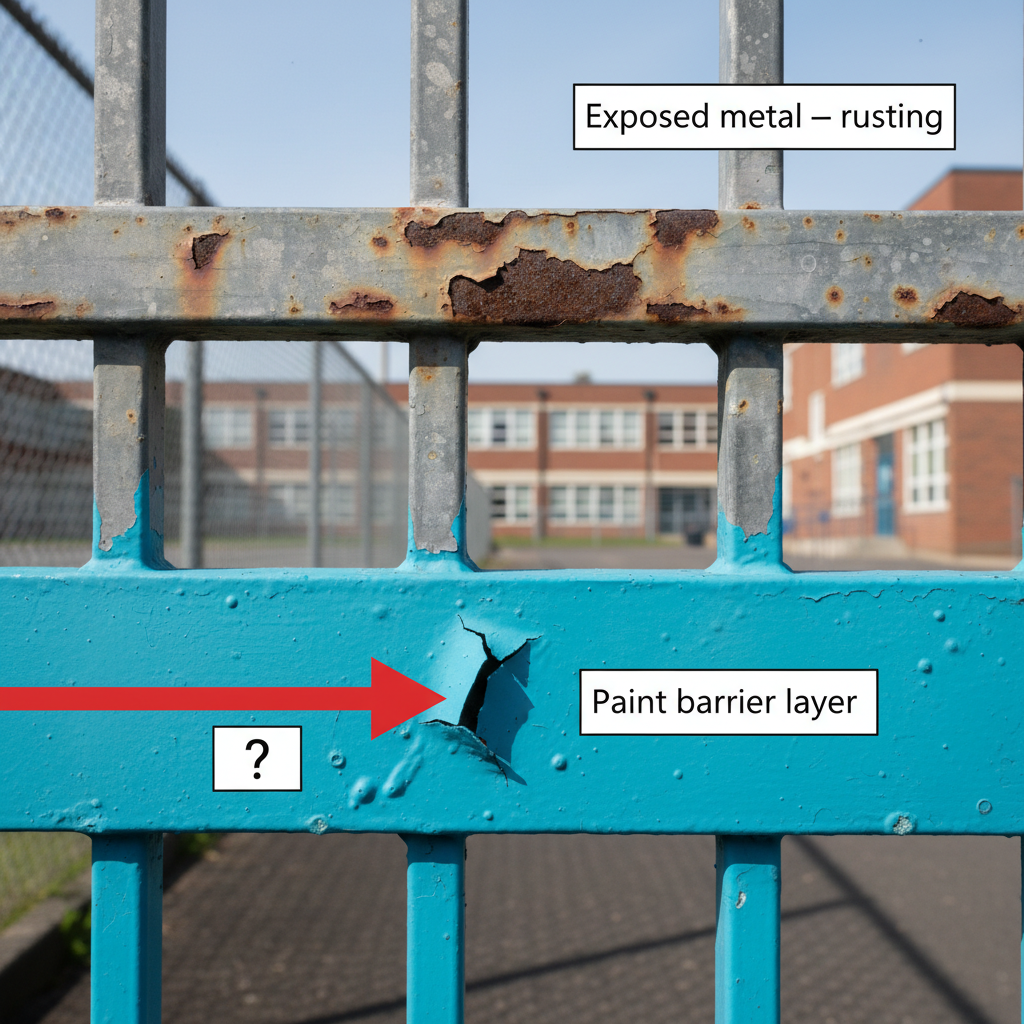
A school gate made of iron is painted to protect it from rusting.
a
Explain how painting prevents the gate from rusting. [1]
b
Identify one limitation of using paint as a method of corrosion prevention. [1]

Solutions
2QuestionCorrosion and Its PreventionAssessment Practice
4 marks~6 minCriterion D
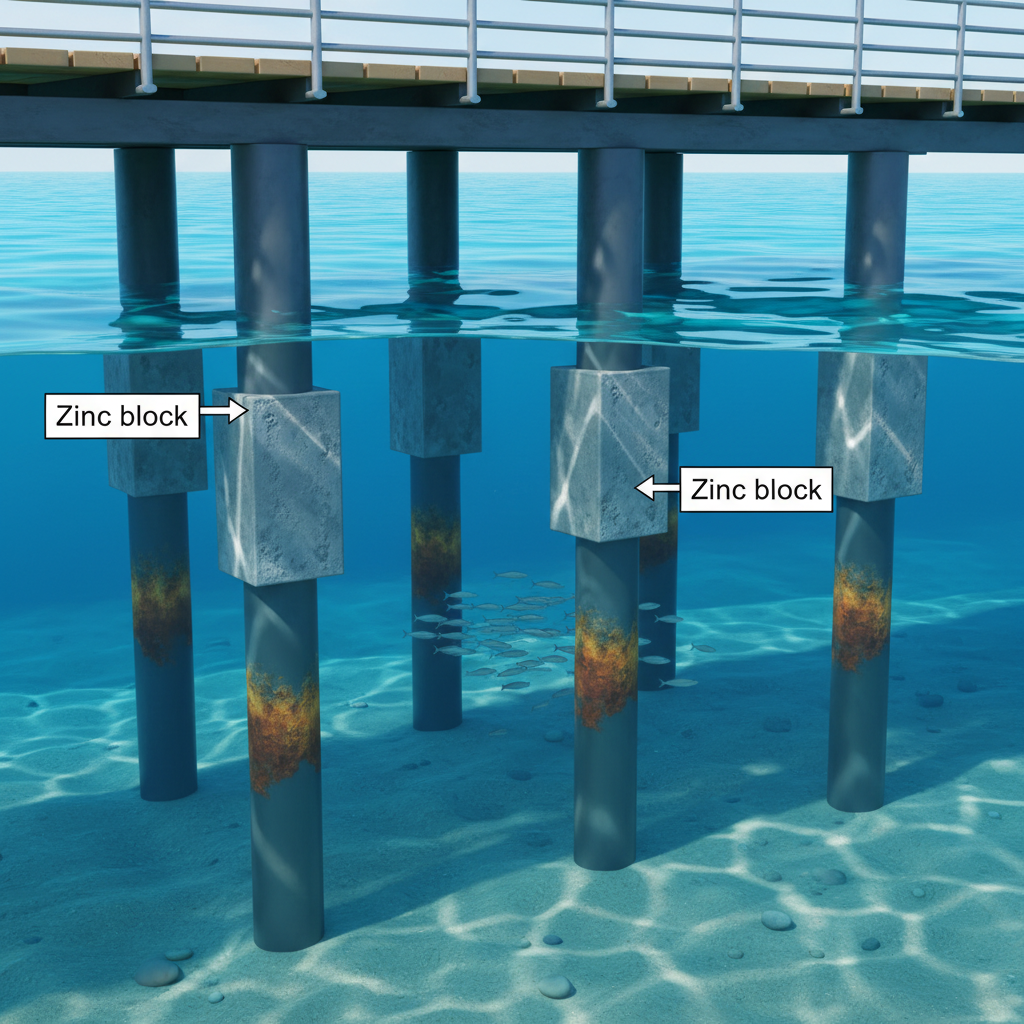
A steel pier is protected from rusting by attaching blocks of zinc to its legs. This method is called sacrificial protection. Zinc is more reactive than iron, the main component of steel.
a
Identify one real-world benefit of using sacrificial protection for the pier. [1]
b
Explain why zinc corrodes instead of the steel. [1]
c
Identify one limitation of sacrificial protection and explain the impact this limitation has on the pier's maintenance. [2]
Solutions
3QuestionProperties and Uses of MetalsConcept Practice
2 marks~3 minCriterion B
A student adds equal masses of magnesium, zinc, iron, and copper to separate beakers, each containing 50 mL of 1 mol/L hydrochloric acid at 25°C. The student counts the number of gas bubbles produced per minute for each metal.
a
Identify the independent variable and the dependent variable in this investigation. [1]
b
State one controlled variable and explain why it must be kept constant. [1]
Solutions
4QuestionCorrosion and Its PreventionAssessment Practice
6 marks~9 minCriterion C
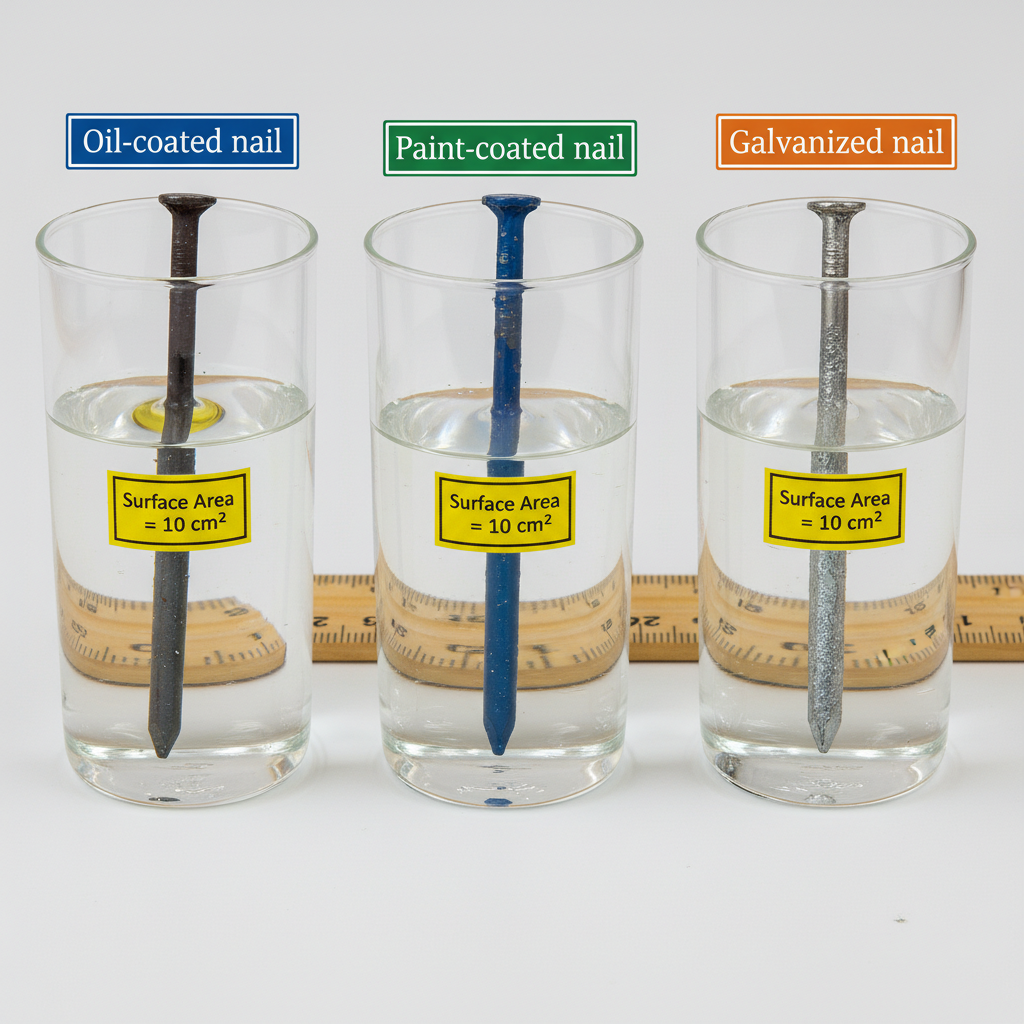
Iron nails (surface area , mass each) were coated by three methods and submerged in salt water for 168 hours. Mass and visible rust were recorded after exposure.
A student claims: "Galvanization completely prevents corrosion."
| Coating method | Mass after exposure (g) | Visible rust (\%) |
|---|---|---|
| Oil | 4.85 | 30 |
| Paint | 4.92 | 15 |
| Galvanization | 4.99 | 2 |
A student claims: "Galvanization completely prevents corrosion."
a
Calculate the corrosion rate for each coating method. Show all working. [3]
b
Explain whether the data support or contradict the student's claim. [3]
Solutions
That's every free question here — 4 of 75.
+71 more questions, plus Mock Papers & Worksheets, are waiting in Premium.