You're viewing free preview questions — 4 questions previewing here — subscribe to unlock 72 more, plus the Full Question Bank, Mock Papers & Worksheets.Upgrade
Signs of a Chemical Change — Free MYP3 Sciences Practice Questions

1QuestionFormation of PrecipitateConcept Practice
2 marks~3 minCriterion A
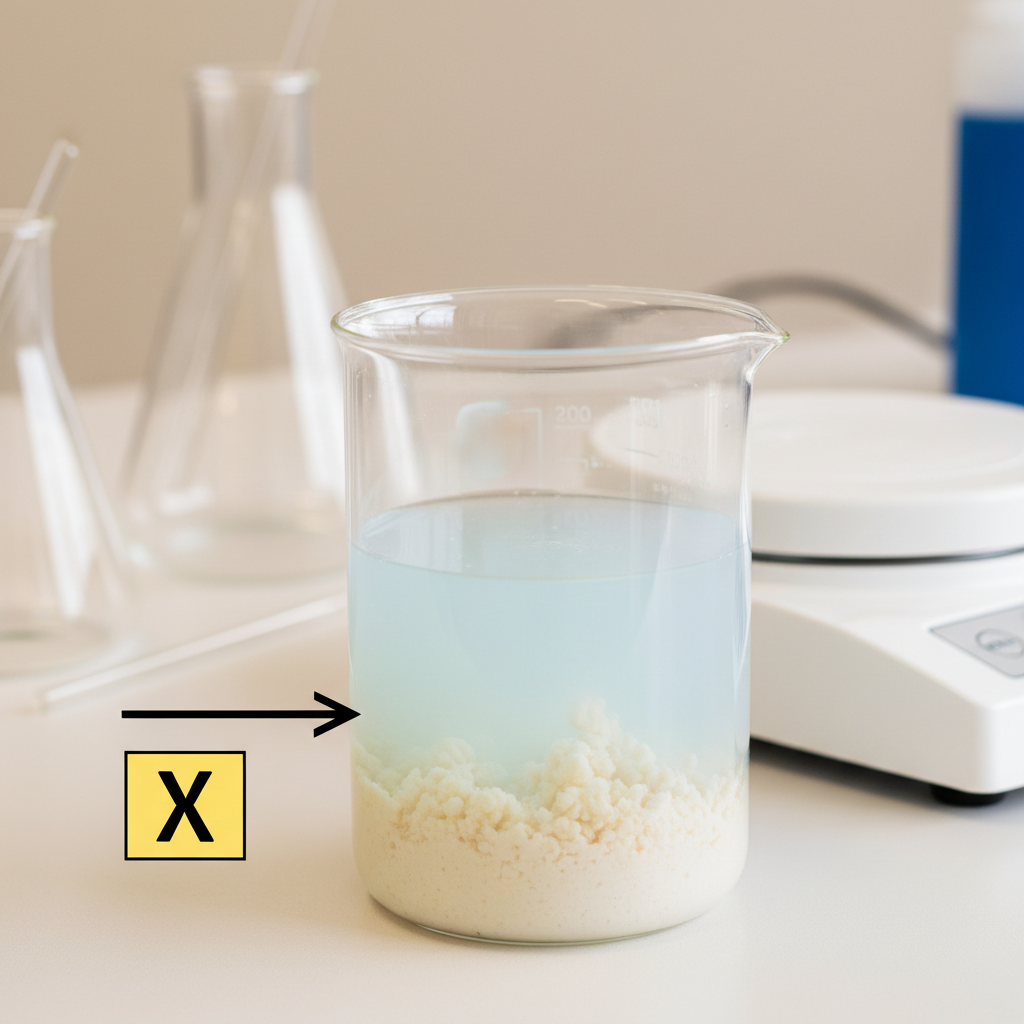
Two clear solutions are poured together in a beaker. A solid substance, labelled substance X, forms and settles at the bottom of the beaker.
a
Identify the name given to substance X. [1]
b
Explain how substance X formed in the beaker. [1]

Solutions
2QuestionColour Change and Gas FormationAssessment Practice
6 marks~9 minCriterion C
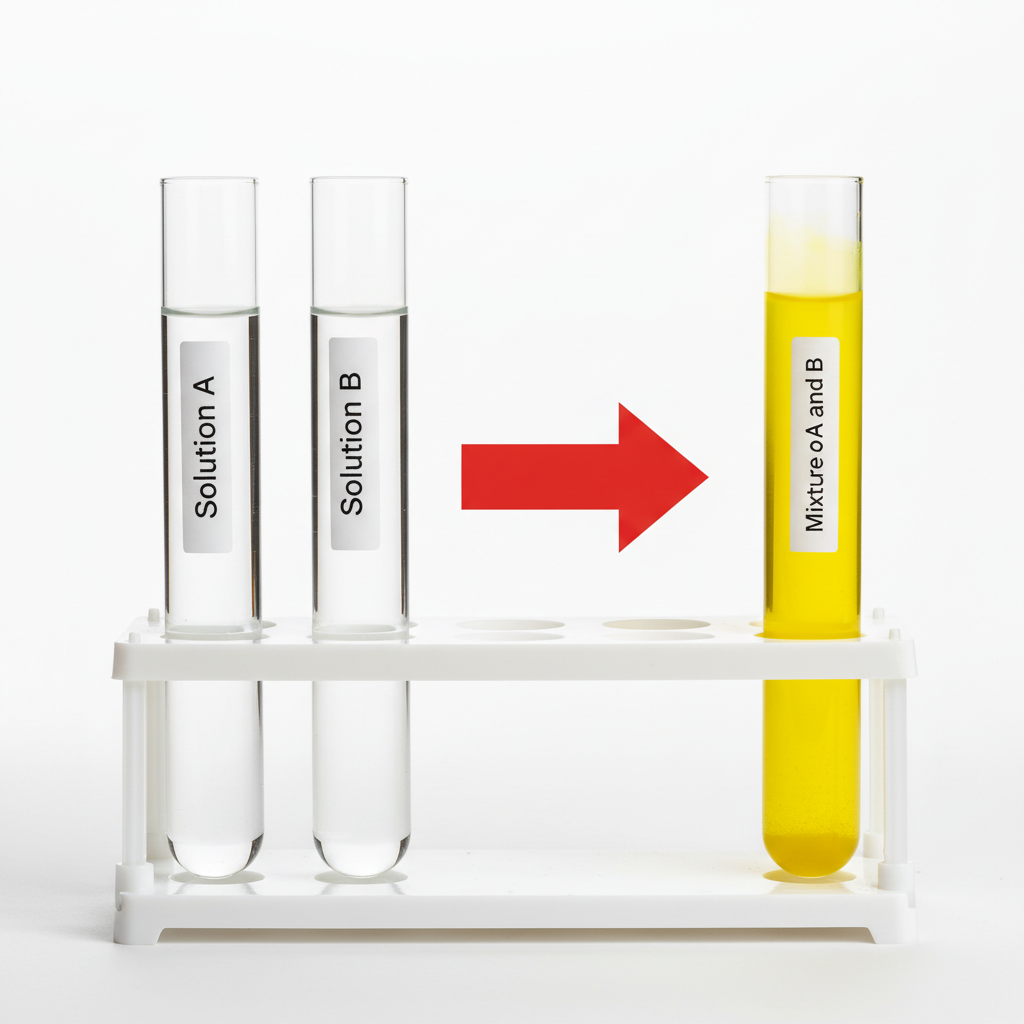
A student mixes two clear, colourless solutions in a test tube. The mixture immediately turns cloudy and yellow, and a solid collects at the bottom of the tube.
a
Identify two pieces of visual evidence from the description that suggest a chemical reaction has occurred. [2]
b
Explain why the formation of a solid in this reaction indicates a chemical change rather than a physical change. [2]
c
The table below shows observations from three different experiments.
Experiment 1: temperature of mixture rises from 21 °C to 34 °C
Experiment 2: bubbles form steadily at the surface of a solid
Experiment 3: a white powder dissolves completely in water with no change in temperature
Analyse the observations and identify which experiments show evidence of a chemical reaction. Justify your answer. [2]
Experiment 1: temperature of mixture rises from 21 °C to 34 °C
Experiment 2: bubbles form steadily at the surface of a solid
Experiment 3: a white powder dissolves completely in water with no change in temperature
Analyse the observations and identify which experiments show evidence of a chemical reaction. Justify your answer. [2]
Solutions
3QuestionColour Change and Gas FormationAssessment Practice
12 marks~18 minCriterion B
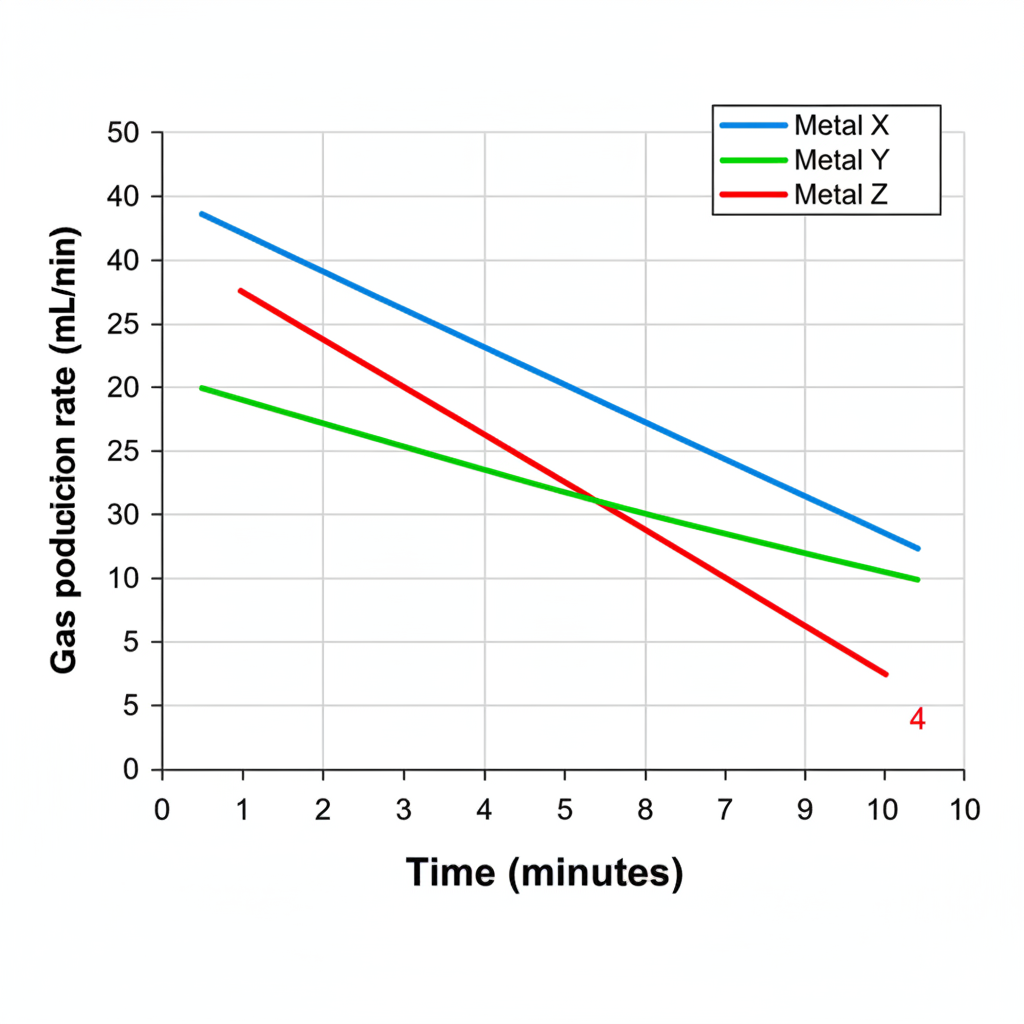
Three unknown metals, X, Y, and Z, are placed in separate beakers of hydrochloric acid (HCl). The graph below shows the rate of hydrogen gas produced (mL/min) over 10 minutes. The final colour of each solution is also recorded.
Final solution colours — Metal X: light blue | Metal Y: green | Metal Z: colourless
A fourth metal, W, is less reactive than Z but more reactive than copper.
Final solution colours — Metal X: light blue | Metal Y: green | Metal Z: colourless
A fourth metal, W, is less reactive than Z but more reactive than copper.
a
Apply your knowledge of reactivity to predict the rate of hydrogen gas production for metal W when placed in hydrochloric acid. [2]
b
Explain the likely colour of the solution after metal W reacts with hydrochloric acid, using the trend shown by metals X, Y, and Z. [4]
c
Analyse the graph and the information about metal W to rank metals W, X, Y, and Z in order from most reactive to least reactive. Justify each position in your ranking. [6]
Solutions
4QuestionColour Change and Gas FormationAssessment Practice
12 marks~18 minCriterion D
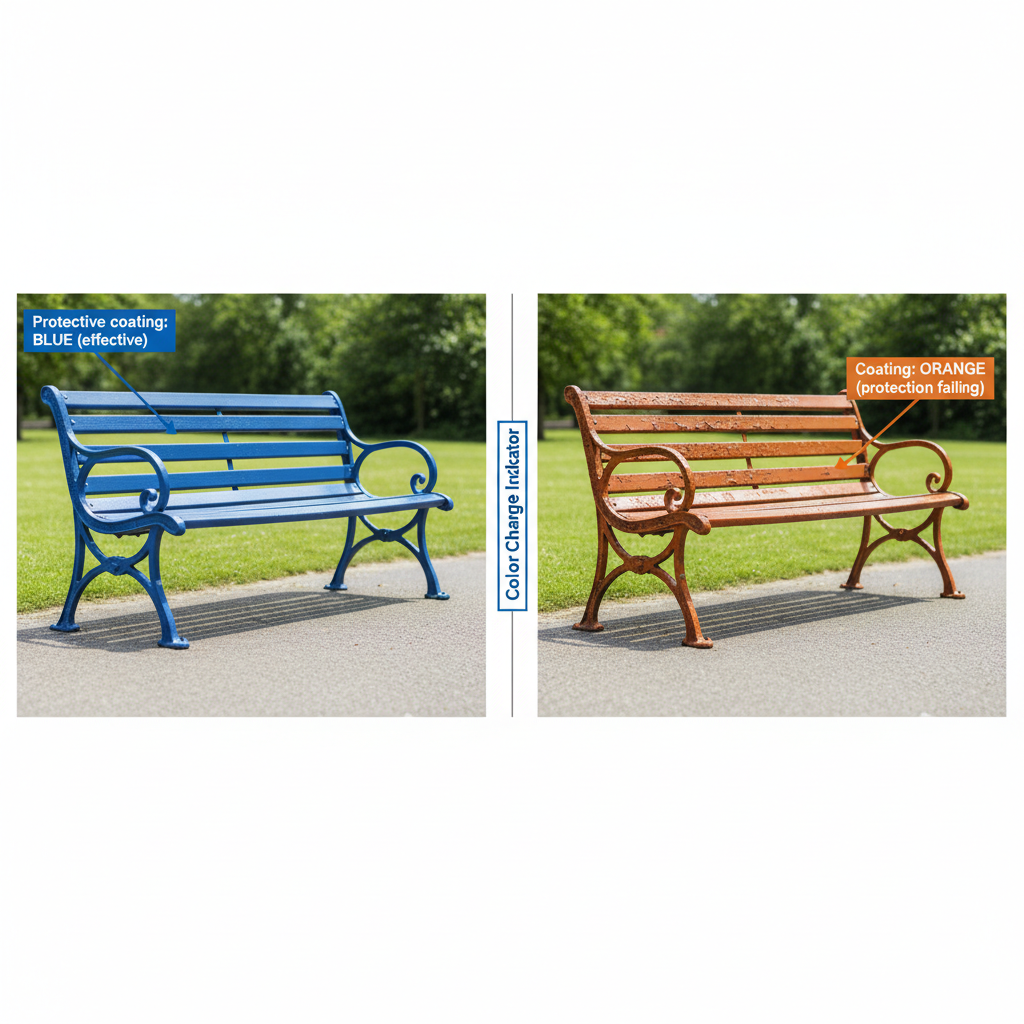
A company has developed a protective coating for iron park benches. The coating turns from blue to orange when it can no longer prevent rusting. The table below shows inspection data collected over one year.
| Season: Spring | Benches inspected: 40 | Benches showing orange coating: 4 |
|---|---|---|
| Season: Summer | Benches inspected: 40 | Benches showing orange coating: 6 |
| Season: Autumn | Benches inspected: 40 | Benches showing orange coating: 9 |
| Season: Winter | Benches inspected: 40 | Benches showing orange coating: 21 |
a
Describe what the colour change from blue to orange indicates about the condition of the protective coating. [2]
b
Explain why the maintenance team can manage their time and resources more efficiently by using this colour-change coating rather than inspecting every bench manually each week. [3]
c
The data show that far more benches display the orange colour in winter than in other seasons. Analyse two possible reasons for this pattern, and explain one limitation this creates when using colour change alone to decide when to reapply the coating. [7]
Solutions
That's every free question here — 4 of 76.
+72 more questions, plus Mock Papers & Worksheets, are waiting in Premium.