You're viewing free preview questions — 4 questions previewing here — subscribe to unlock 103 more, plus the Full Question Bank, Mock Papers & Worksheets.Upgrade
The Periodic Table Introductory — Free MYP3 Sciences Practice Questions

1QuestionStructure and Layout of the Periodic TableConcept Practice
4 marks~6 minCriterion B
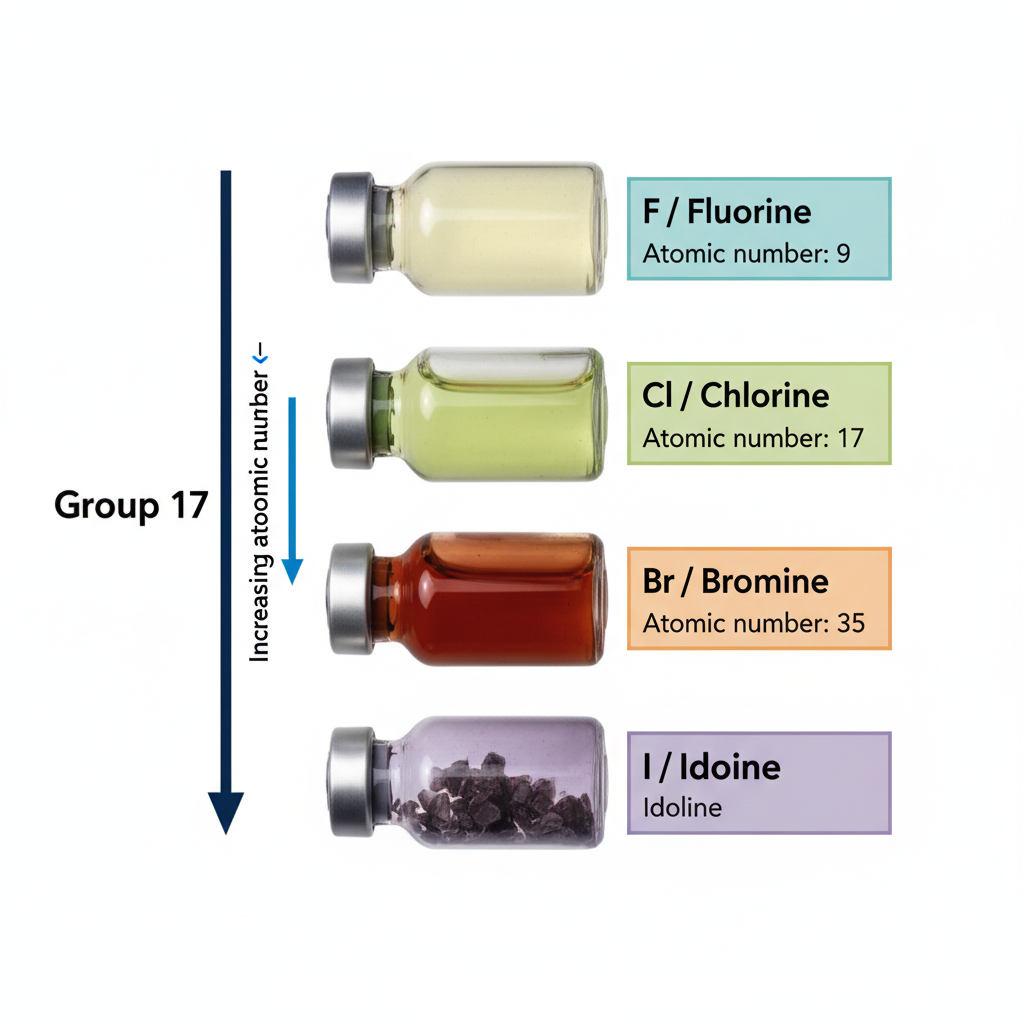
The diagram shows the halogens in Group 17 of the periodic table, with their colours and states at room temperature.
| Fluorine () | pale yellow | gas |
|---|---|---|
| Chlorine () | yellow-green | gas |
| Bromine () | orange-brown | liquid |
| Iodine () | grey-black | solid |
a
State the name given to the group of elements in Group 17. [1]
b
Explain why bromine () is classified as a liquid at room temperature rather than a gas or solid, using evidence from the diagram. [1]
c
Describe the trends in colour and state of matter shown by the halogens as you move down Group 17, using data from the diagram to support your answer. [2]

Solutions
2QuestionStructure and Layout of the Periodic TableAssessment Practice
4 marks~6 minCriterion C
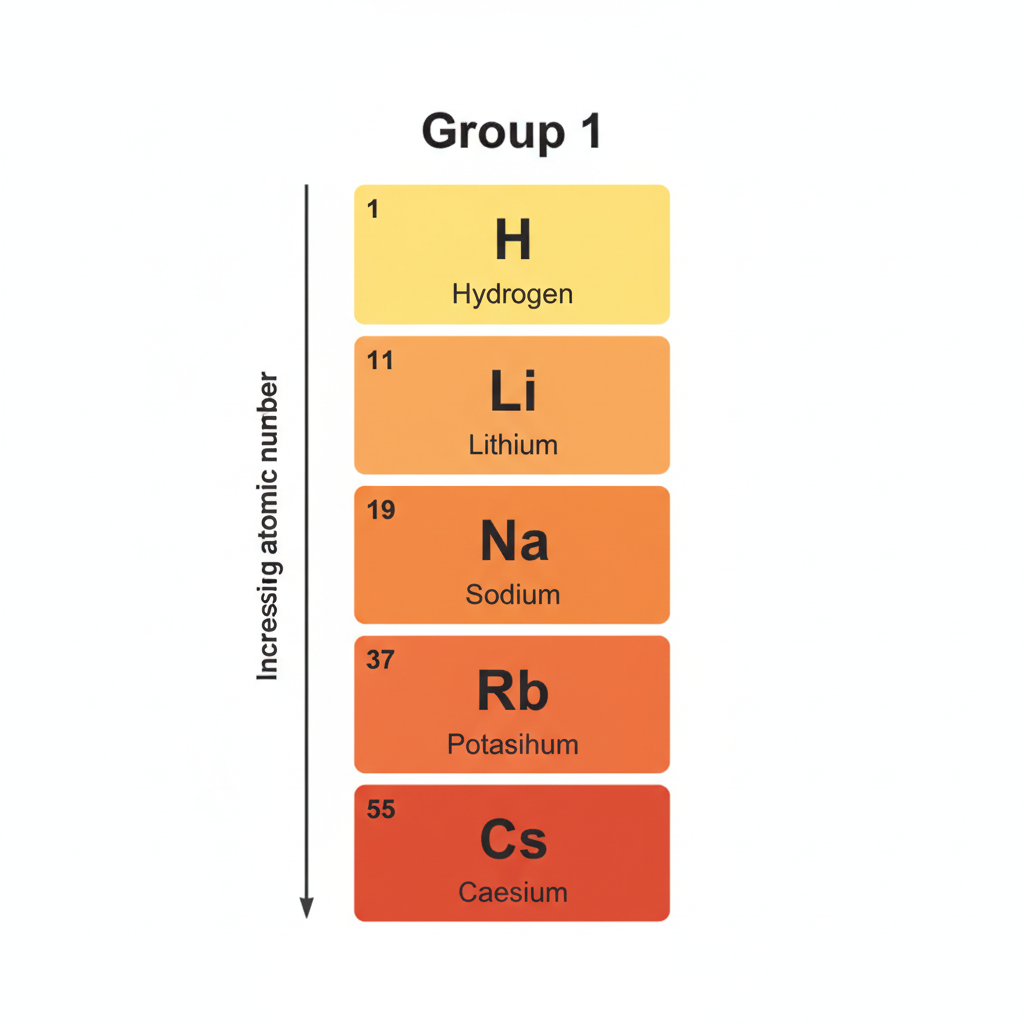
The diagram shows the first four elements of Group 1 of the periodic table, with their electron shell diagrams displayed.
a
Describe one common feature of the electron arrangement of all Group 1 elements. [1]
b
Explain why Group 1 elements react with water, referring to the outer electron in your answer. [1]
c
A student claims: "Potassium reacts more vigorously with water than lithium because potassium is a larger atom." Analyse this claim and explain whether the student's reasoning is scientifically correct. [2]
Solutions
3QuestionMetals Non-Metals and MetalloidsAssessment Practice
4 marks~6 minCriterion A
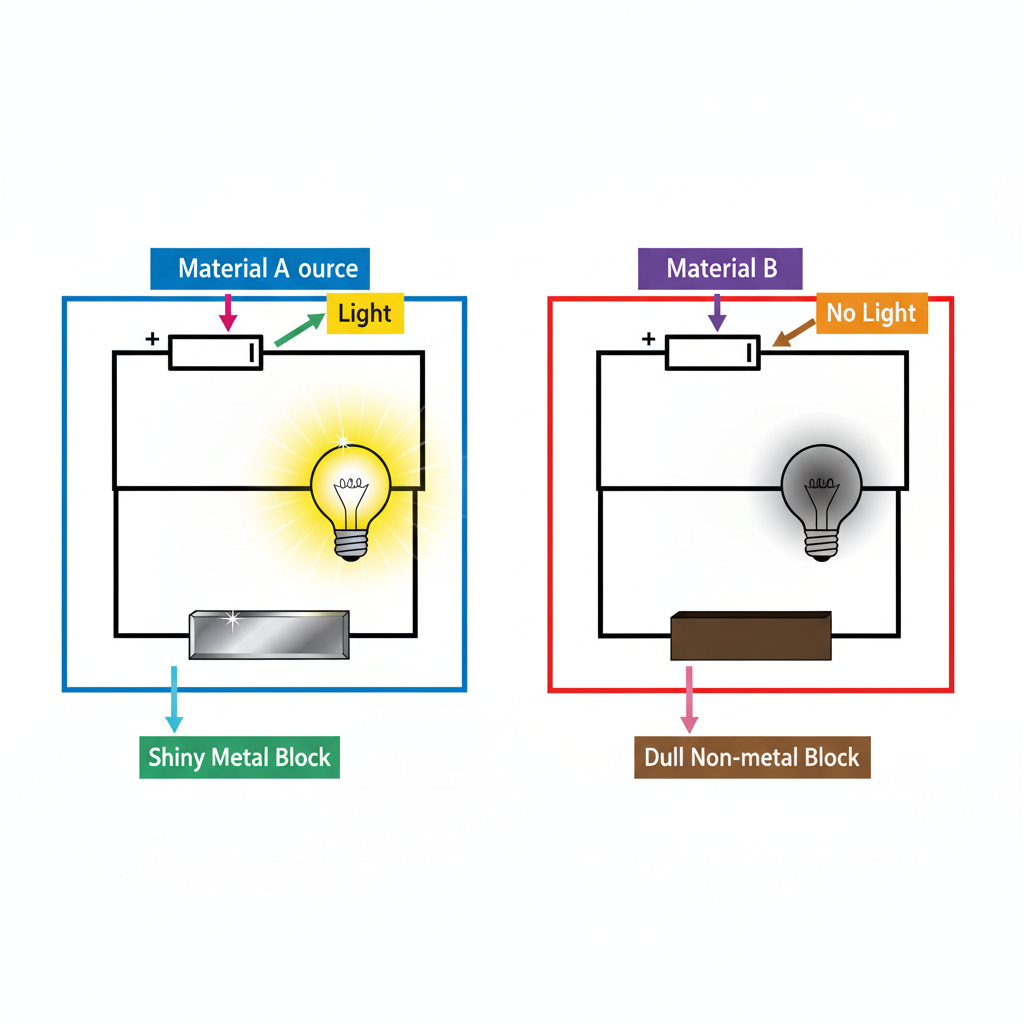
A student tests two materials using the circuit shown. Material A is shiny and metallic; when placed in the gap, the bulb lights up. Material B is dull and non-metallic; when placed in the gap, the bulb does not light up.
a
Identify the electrical property of metals demonstrated by Material A. [1]
b
Explain why Material A causes the bulb to light up but Material B does not. [2]
c
A third material, silicon, is tested in the same circuit. The bulb glows very dimly. Suggest what this tells you about silicon's classification and its ability to conduct electricity. [1]
Solutions
4QuestionGroups and Periods ExplainedAssessment Practice
12 marks~18 minCriterion D
A fireworks manufacturer uses alkali metal compounds to create colours in displays. Scientists are concerned about the environmental effects of these compounds after a display.
a
Identify two alkali metals used in fireworks and state the colour each one produces. [2]
b
Explain two environmental impacts that occur when these metal compounds are released during a fireworks display. [4]
c
A city council is deciding whether to replace traditional fireworks with an alternative that uses compounds containing no alkali metals. The alternative produces less air pollution but results in noticeably duller colours. Analyse whether the council should make this switch, using evidence from both the environmental and display-quality perspectives. [6]

Solutions
That's every free question here — 4 of 107.
+103 more questions, plus Mock Papers & Worksheets, are waiting in Premium.