You're viewing free preview questions — 4 questions previewing here — subscribe to unlock 74 more, plus the Full Question Bank, Mock Papers & Worksheets.Upgrade
Environmental Change and Pollution — Free MYP3 Sciences Practice Questions

1QuestionAir Water and Soil PollutionConcept Practice
2 marks~3 minCriterion A
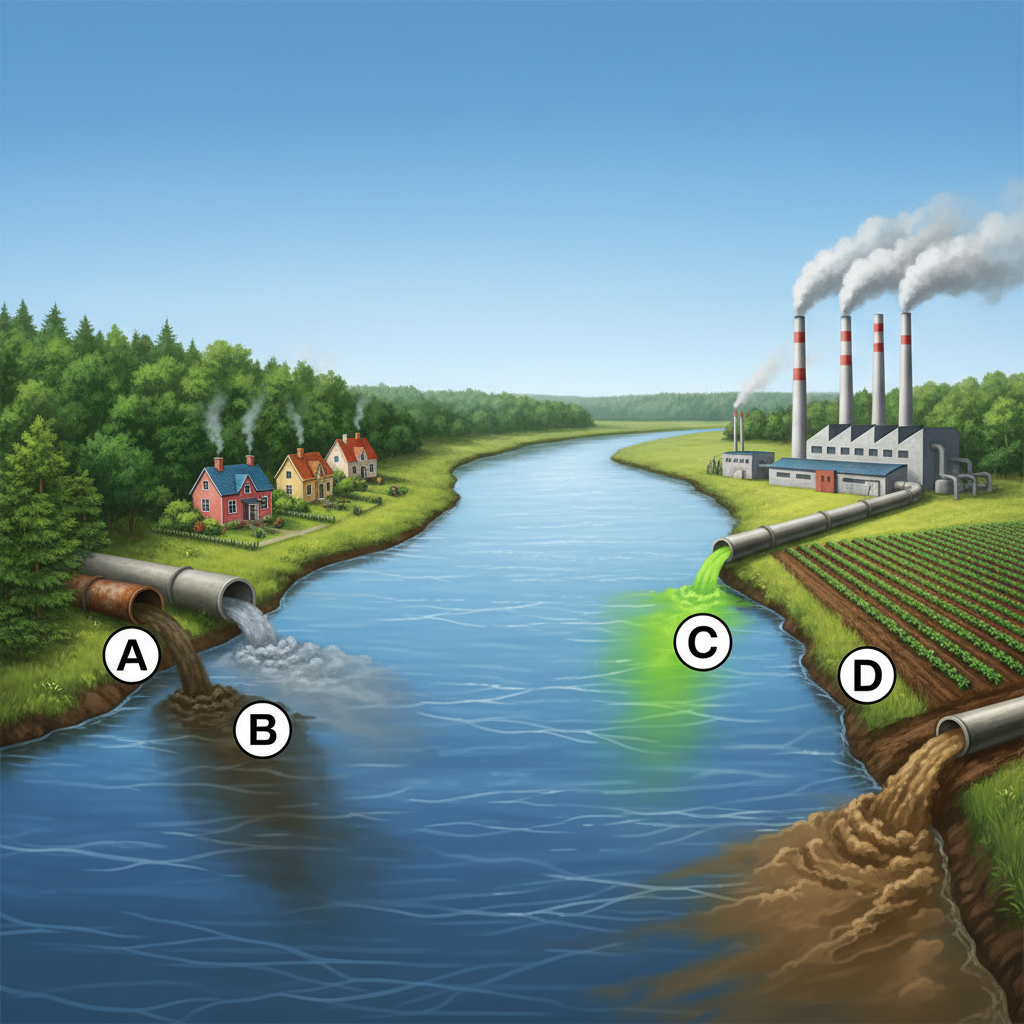
The diagram shows a river with four labeled pollution sources: A (a factory with a discharge pipe leading directly into the river), B (a farm with fertiliser runoff), C (a sewage treatment outlet), and D (a residential area with stormwater drains).
a
Identify which labeled source is most likely to release chemical pollution from industrial waste. [1]
b
Explain why that source produces chemical pollution rather than other types of pollution. [1]

Solutions
2QuestionGlobal Warming and Climate ChangeAssessment Practice
3 marks~5 minCriterion C
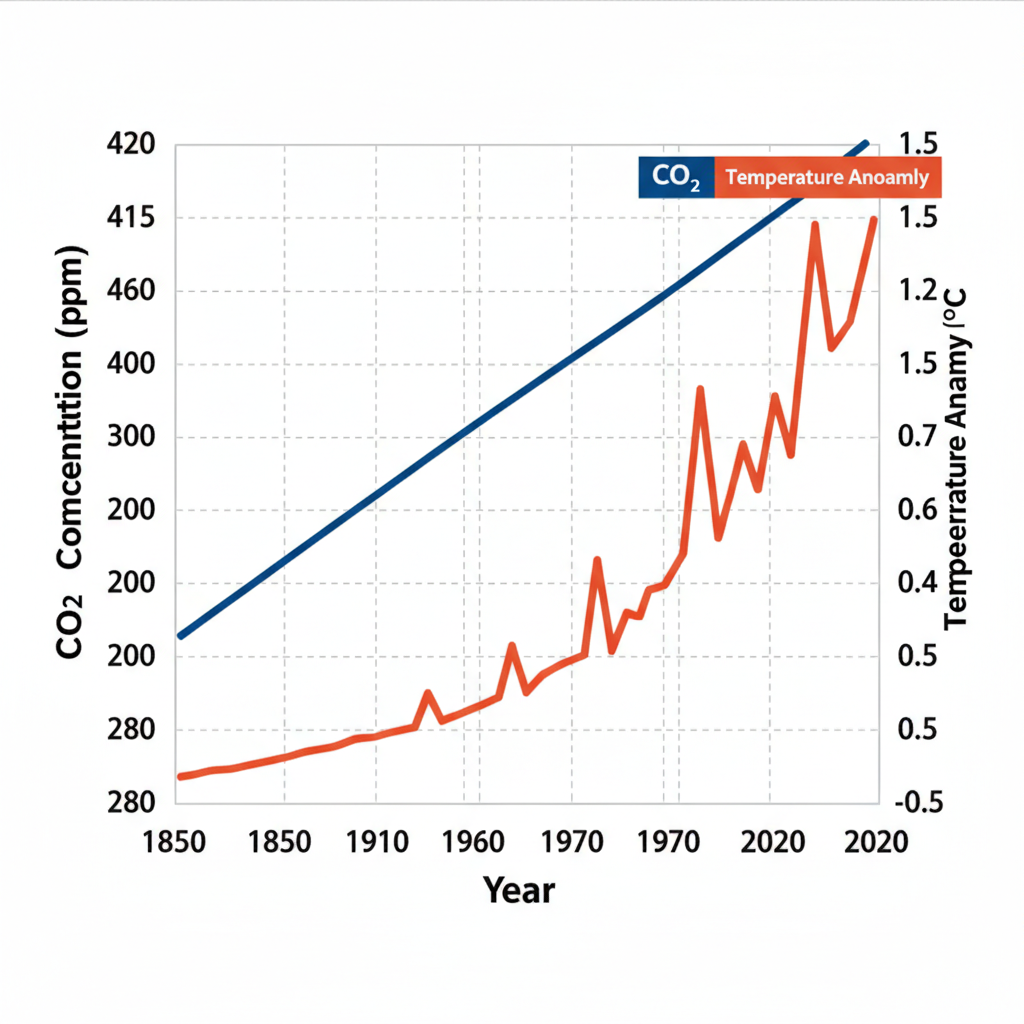
The graph below shows atmospheric CO2 concentration (ppm) and global average temperature anomaly (°C) from 1850 to 2020.
a
Describe the relationship between CO2 concentration and global temperature anomaly shown in the graph. [1]
b
Explain how increased CO2 concentration causes global temperatures to rise. [1]
c
A student claims: "The graph proves that CO2 causes temperature rise." Do you agree? Justify your answer using evidence from the graph and your scientific knowledge. [1]
Solutions
3QuestionAir Water and Soil PollutionAssessment Practice
6 marks~9 minCriterion D
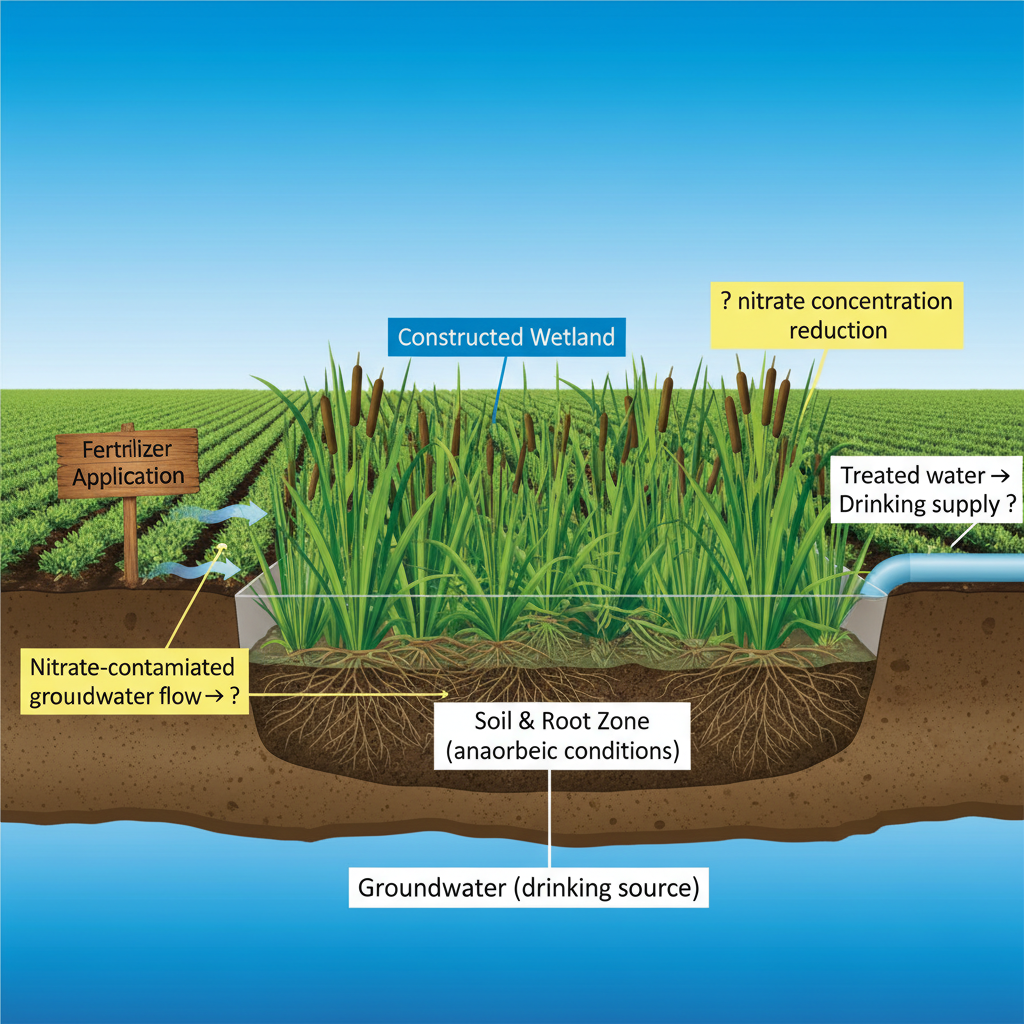
A small farming town has found that nitrates from agricultural fertilizers have contaminated its groundwater drinking supply. The town council is considering building a constructed wetland — a shallow area where water flows slowly through soil and plant roots — to filter nitrates before they reach the drinking supply.
a
Describe two ways in which a constructed wetland removes nitrates from water. Use relevant nitrogen cycle terminology in your answer. [2]
b
Explain one advantage of using a constructed wetland rather than a chemical treatment plant to remove nitrates. [2]
c
The town receives heavy snowfall for four months each year, and farmland surrounds the town on all sides. Analyse one limitation of building a constructed wetland in this town, and explain how this limitation affects the practicality of the solution. [2]
Solutions
4QuestionPollution Effects on Food Chains and WebsAssessment Practice
6 marks~9 minCriterion B
| Trophic Level | DDT Concentration (ppm) |
|---|---|
| Phytoplankton | 0.04 |
| Zooplankton | 0.5 |
| Small fish | 2.0 |
| Osprey | 25.0 |
a
Calculate the biomagnification factor between each consecutive trophic level. [2]
b
Explain how the pattern in your results from (a) shows that DDT concentration is related to trophic level. [2]
c
Analyse the data to explain why the osprey is at greatest risk from DDT compared with organisms at lower trophic levels. [2]
Solutions
That's every free question here — 4 of 78.
+74 more questions, plus Mock Papers & Worksheets, are waiting in Premium.