You're viewing free preview questions — 4 questions previewing here — subscribe to unlock 69 more, plus the Full Question Bank, Mock Papers & Worksheets.Upgrade
Food Chains and Webs — Free MYP3 Sciences Practice Questions

1QuestionConstructing and Interpreting Food ChainsConcept Practice
2 marks~3 minCriterion A
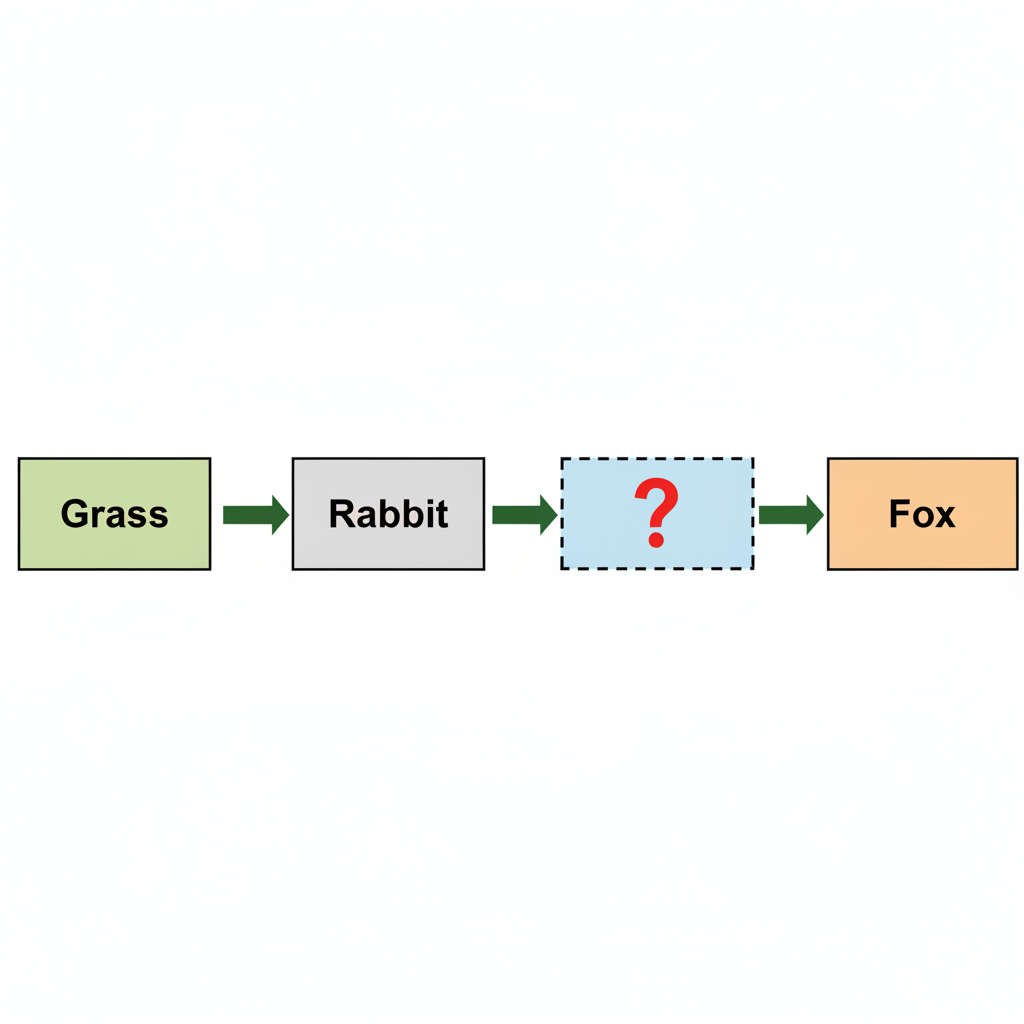
The food chain below shows the flow of energy between organisms.
Grass → Rabbit → [ ? ] → Fox
Grass → Rabbit → [ ? ] → Fox
a
Identify one organism that could fill the blank box. [1]
b
State the role of that organism in the food chain. [1]

Solutions
2QuestionConstructing and Interpreting Food ChainsAssessment Practice
6 marks~9 minCriterion C
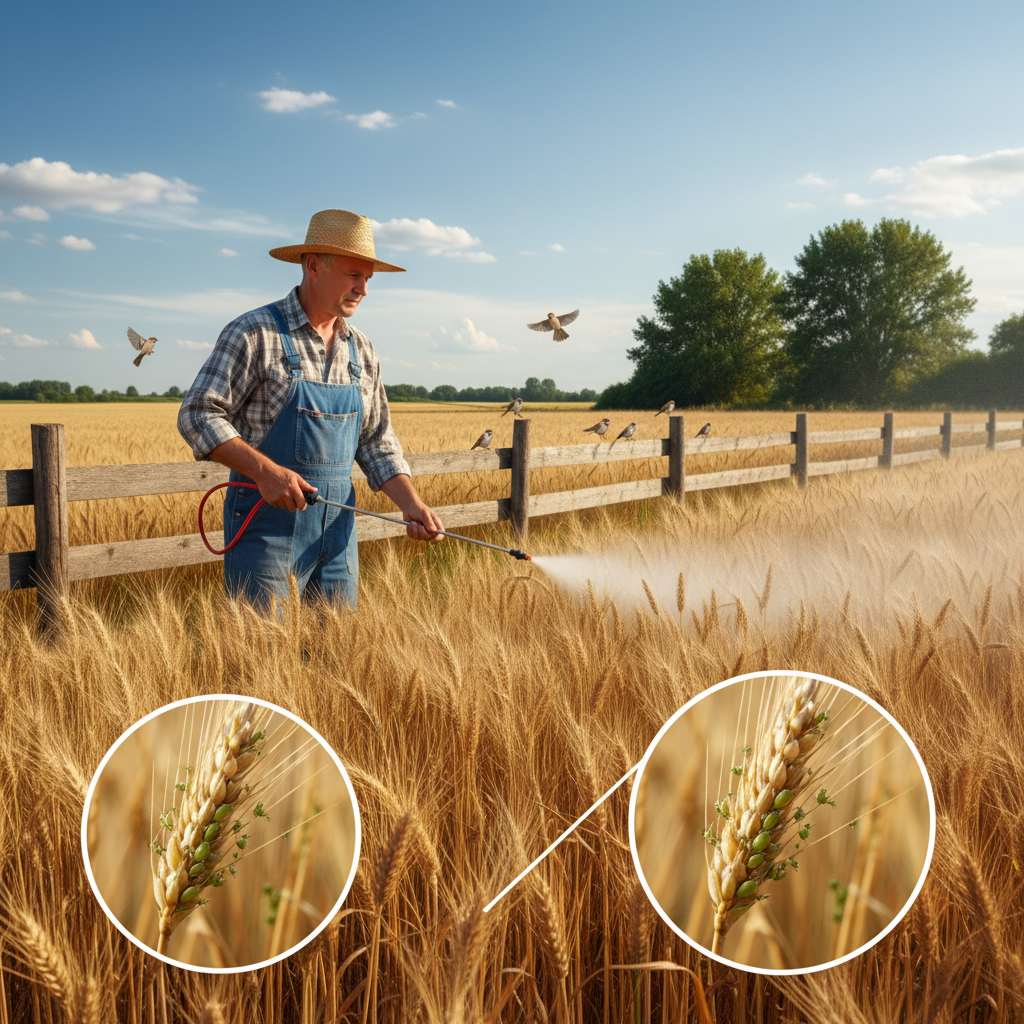
A farmer sprays insecticide on a wheat crop to eliminate aphids. After a few weeks, the bird population near the field falls sharply. A neighbour suggests that a simple food chain is not enough to understand what is happening in the ecosystem.
a
Apply your knowledge of energy flow to construct the food chain for wheat, aphids, and birds. Use arrows to show the direction of energy flow. [2]
b
Explain one consequence of the decline in the bird population for the local ecosystem. [2]
c
The neighbour says a food web would be more useful than a food chain for predicting the effects of the insecticide. Analyse one reason why a simple food chain is limited for this purpose. [2]
Solutions
3QuestionConstructing and Interpreting Food ChainsAssessment Practice
8 marks~12 minCriterion D
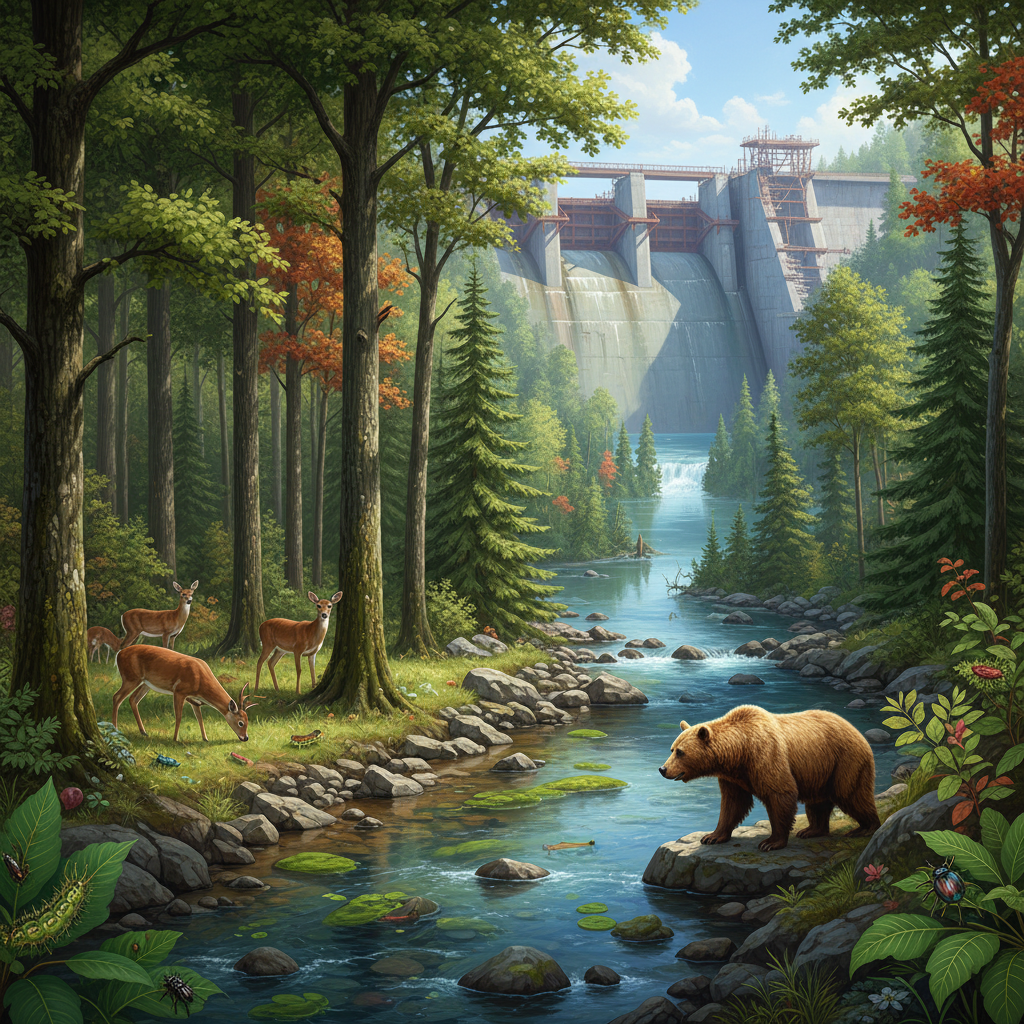
A government plans to build a large dam that will flood a forest ecosystem. The food web contains:
Secondary consumers: bears (eat deer and insects), fish (eat insects and algae)
| Producers | trees | stream algae |
|---|---|---|
| Primary consumers | deer (eat trees) | insects (eat tree leaves) |
Secondary consumers: bears (eat deer and insects), fish (eat insects and algae)
a
Construct one food chain from this web and explain why flooding would most severely disrupt it. [2]
b
Explain how removing bears from the food web would affect the populations of deer, insects, and trees. Use examples from the web in your answer. [3]
c
The dam will generate electricity for 200 000 homes and irrigate 50 000 hectares of farmland, but will permanently destroy the forest ecosystem. Analyse whether these economic benefits justify the ecological damage. In your answer, identify one limitation of predicting the long-term effects on the ecosystem. [3]
Solutions
4QuestionConstructing and Interpreting Food ChainsAssessment Practice
5 marks~8 minCriterion B
A grassland ecosystem has the following biomass at each trophic level:
Producers: 5000 kg
Primary consumers: 500 kg
Secondary consumers: 50 kg
Tertiary consumers: 5 kg
Producers: 5000 kg
Primary consumers: 500 kg
Secondary consumers: 50 kg
Tertiary consumers: 5 kg
a
Calculate the percentage of biomass transferred from producers to primary consumers. [1]
b
Calculate the percentage of biomass transferred at each of the remaining two trophic level transitions. [2]
c
Using all three of your calculated values, analyse what they suggest about the pattern of energy transfer between trophic levels in ecosystems. [2]
Solutions
That's every free question here — 4 of 73.
+69 more questions, plus Mock Papers & Worksheets, are waiting in Premium.