You're viewing free preview questions — 4 questions previewing here — subscribe to unlock 75 more, plus the Full Question Bank, Mock Papers & Worksheets.Upgrade
Electronic Configuration and Shell Model — Free MYP5 Chemistry Practice Questions

1QuestionElectron Configuration NotationConcept Practice
2 marks~3 minCriterion A
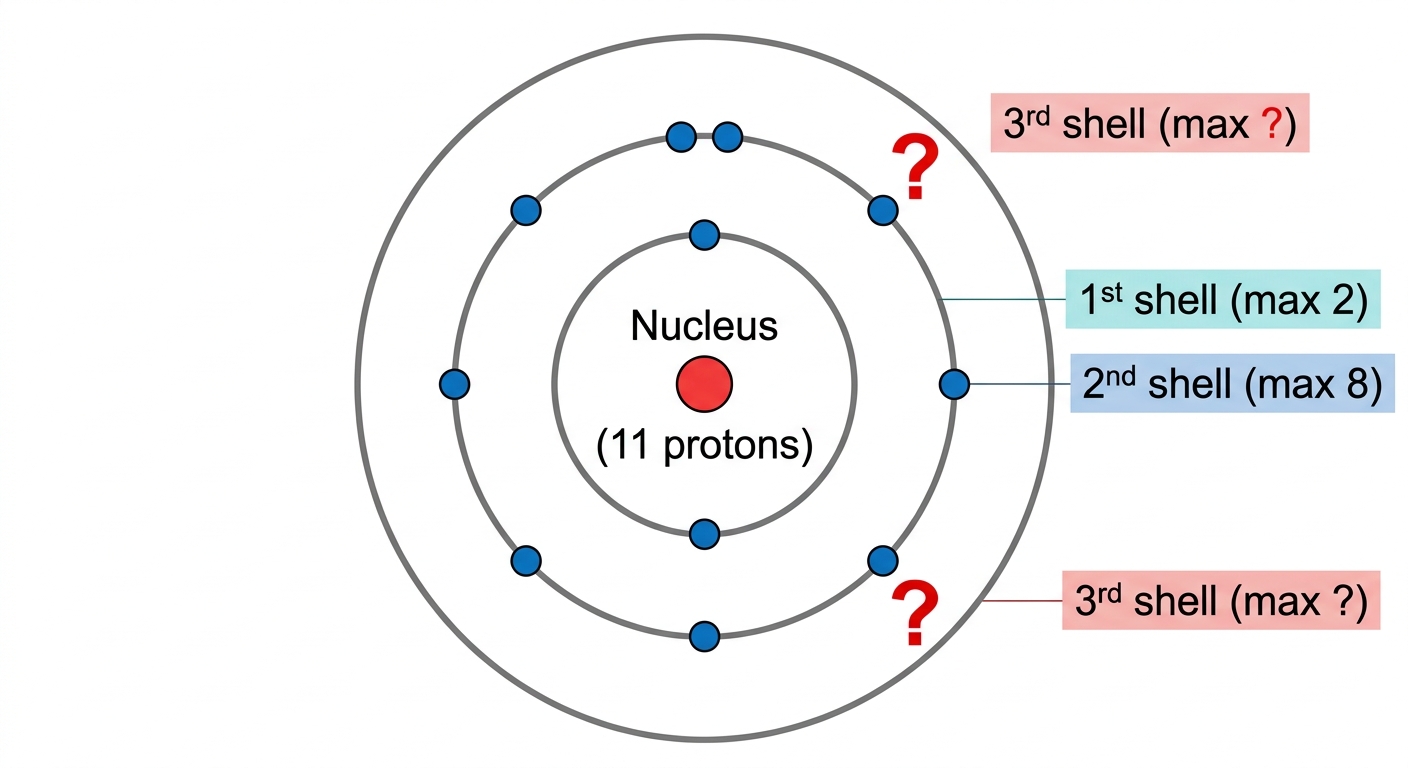
A sodium atom () has 11 protons and therefore 11 electrons. The shell model places electrons in successive shells outward from the nucleus: the first shell holds a maximum of 2 electrons, the second shell holds a maximum of 8 electrons, and any remaining electrons occupy the third shell.
a
State the number of electrons in each shell of a sodium atom. [1]
b
Deduce the complete electron configuration of sodium in the notation used for the shell model, showing shells in order from innermost to outermost. [1]

Solutions
2QuestionRelating Configuration to ReactivityAssessment Practice
5 marks~8 minCriterion D
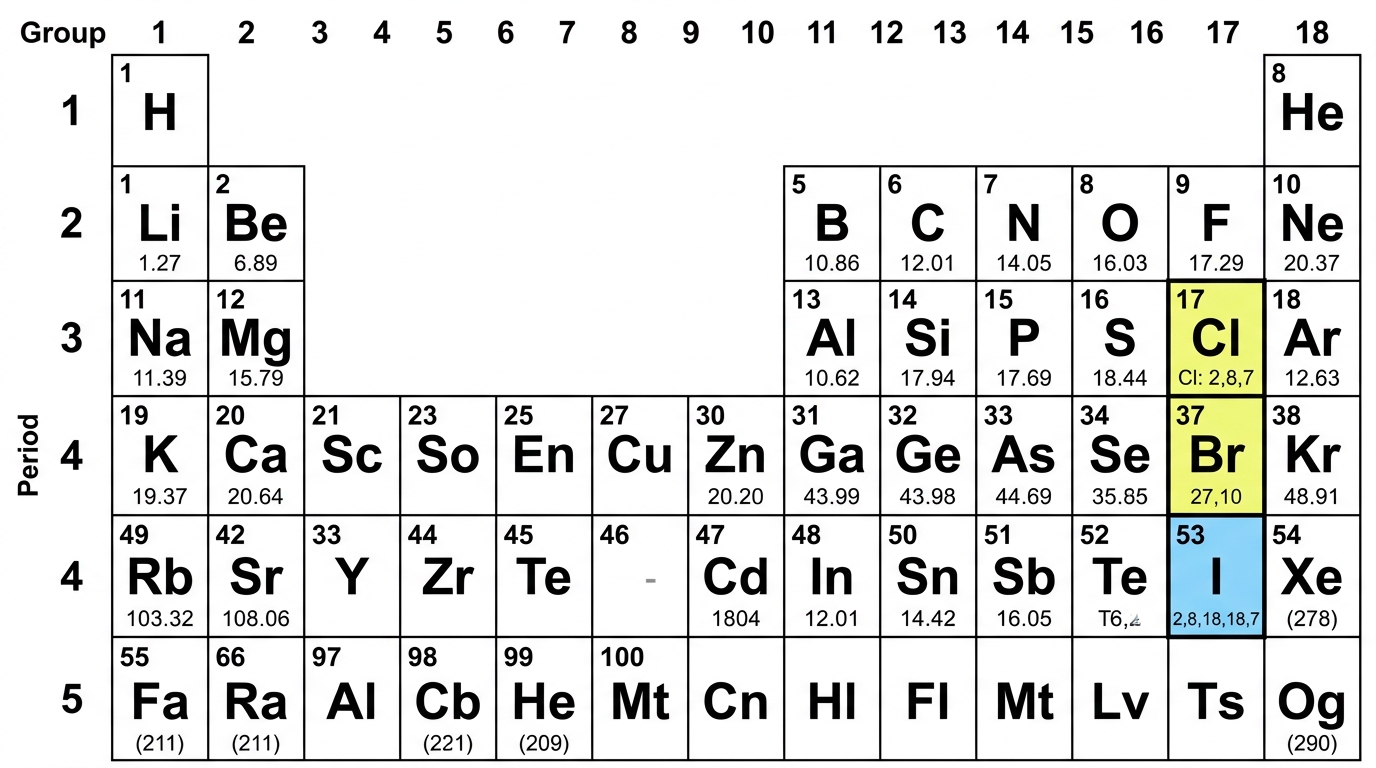
A water treatment plant disinfects drinking water using chlorine (Cl) gas. A chemist proposes switching to iodine (I) to reduce harmful by-products such as chlorinated hydrocarbons.
Electron configurations:
Cl: 2, 8, 7
I: 2, 8, 18, 18, 7
Electron configurations:
Cl: 2, 8, 7
I: 2, 8, 18, 18, 7
a
State the group and period of chlorine and iodine in the periodic table. [1]
b
Using their electron configurations, explain why iodine is less reactive than chlorine. [2]
c
Evaluate the proposal to replace chlorine with iodine for water disinfection, considering both the reduction in harmful by-products and the consequences of iodine's lower reactivity and excess iodine intake. [2]
Solutions
3QuestionElectronic Configuration of Ions IntroAssessment Practice
5 marks~8 minCriterion C
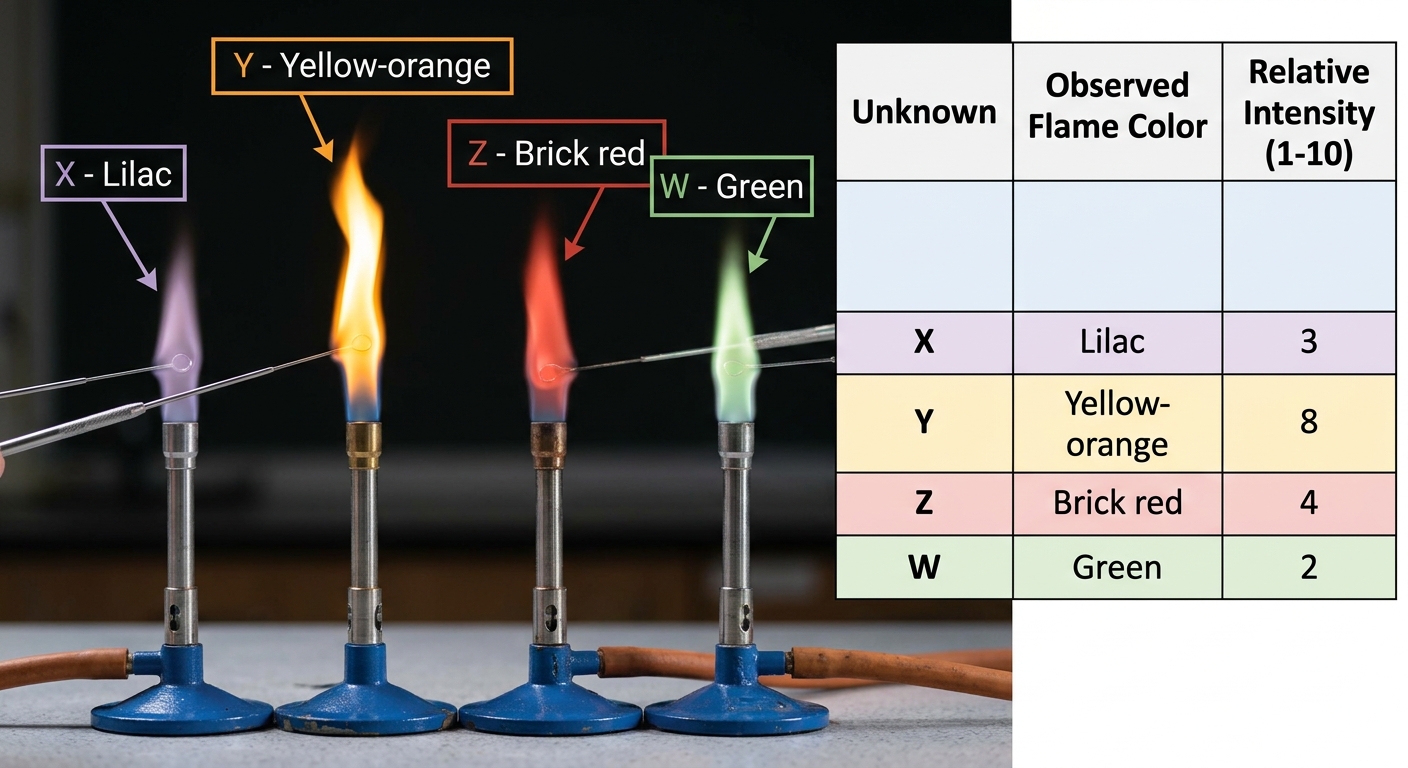
A student performs flame tests on four unknown metal compounds and records the following results:
The student hypothesises: "Ions with a +2 charge always produce more intense flame colours than +1 ions."
Electron configurations of relevant metals:
(forms )
(forms )
(forms )
| Unknown X | Lilac, intensity 3 |
|---|---|
| Unknown Y | Yellow-orange, intensity 8 |
| Unknown Z | Brick red, intensity 4 |
| Unknown W | Green, intensity 2 |
The student hypothesises: "Ions with a +2 charge always produce more intense flame colours than +1 ions."
Electron configurations of relevant metals:
(forms )
(forms )
(forms )
a
Identify the metals most likely present in unknowns X, Y, and Z, and state the ion charge each metal forms. [2]
b
Using the electron configurations provided, explain why Na and K produce different flame colours despite both forming +1 ions. [1]
c
Evaluate whether the flame test data support or contradict the student's hypothesis, using specific intensity values in your answer. [2]
Solutions
4QuestionElectron Configuration NotationAssessment Practice
6 marks~9 minCriterion B
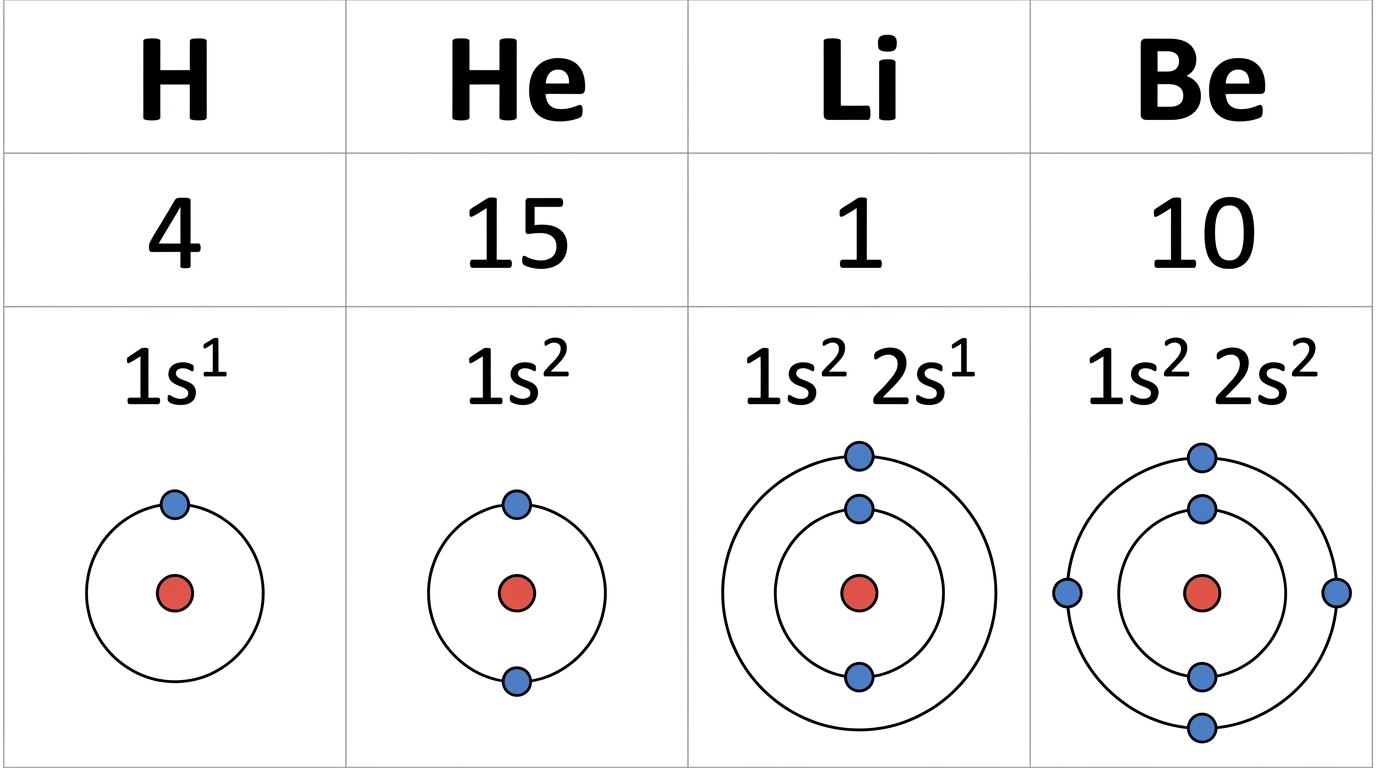
Emission spectra data for four elements are shown below.
| Element | H | He | Li | Be |
|---|---|---|---|---|
| Number of visible spectral lines | 4 | 15 | 1 | 10 |
| Electron configuration |
a
Analyse the data to identify the relationship between the number of visible spectral lines and the number of valence electrons for these four elements. [2]
b
The emission spectrum of boron (B) shows 5 visible spectral lines. Deduce the full electron configuration of boron, using the pattern you identified in (a). [2]
c
Explain, with reference to the shell model of the atom, why more valence electrons in the same principal energy level do not always produce more visible spectral lines than elements in a lower principal energy level. [2]
Solutions
That's every free question here — 4 of 79.
+75 more questions, plus Mock Papers & Worksheets, are waiting in Premium.