You're viewing free preview questions — 4 questions previewing here — subscribe to unlock 76 more, plus the Full Question Bank, Mock Papers & Worksheets.Upgrade
Periodic Table Groups and Periods — Free MYP5 Chemistry Practice Questions

1QuestionGroup 17 Halogens and Group 18 Noble GasesConcept Practice
2 marks~3 minCriterion A
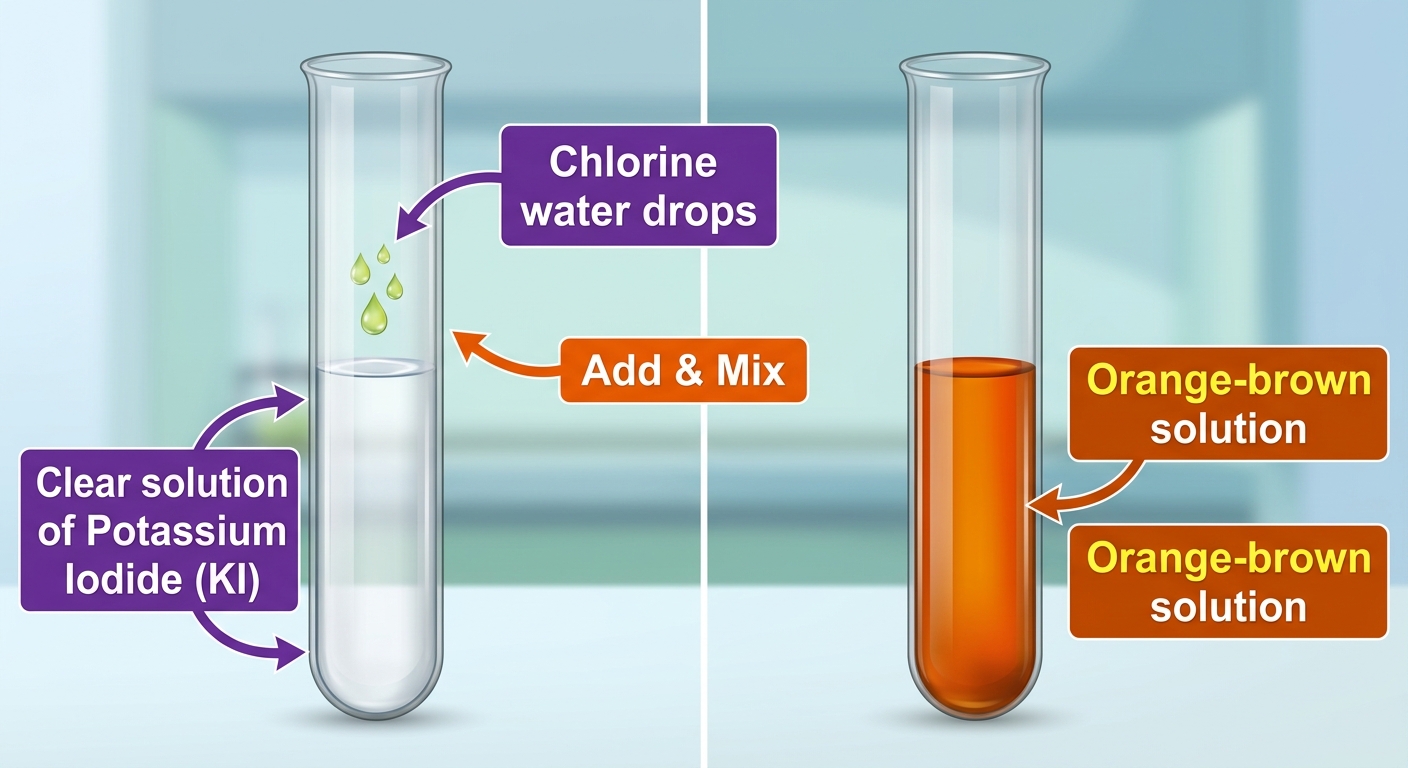
A test tube contains a colourless aqueous solution of potassium iodide (). A few drops of chlorine water are added. The solution turns orange-brown.
a
Identify the halogen produced in this reaction. [1]
b
Explain why chlorine is able to displace iodide ions from the potassium iodide solution. [1]

Solutions
2QuestionGroup 1 Alkali MetalsAssessment Practice
3 marks~5 minCriterion B
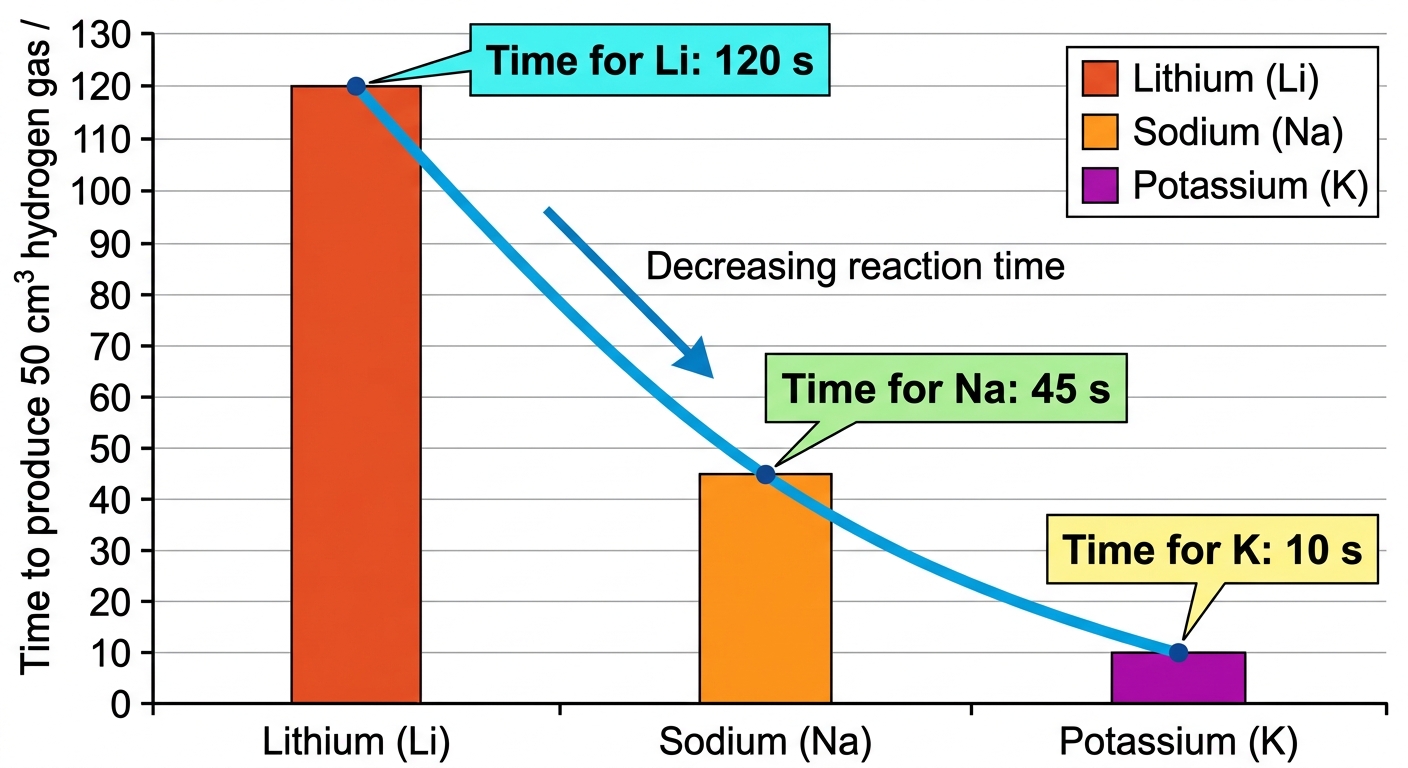
The bar chart below shows the time required to collect of hydrogen gas when lithium (Li), sodium (Na), and potassium (K) each react separately with excess water.
Time to collect of :
Li: 120 s — Na: 45 s — K: 10 s
The reaction for each metal M is:
Time to collect of :
Li: 120 s — Na: 45 s — K: 10 s
The reaction for each metal M is:
a
State the trend in reaction rate shown by the data. [1]
b
Explain how atomic structure changes down Group 1 affect the ease of losing the outer electron. [1]
c
Analyse why potassium reacts significantly faster than lithium, using both the data and your understanding of electron loss. [1]
Solutions
3QuestionIdentifying Groups Periods and Atomic NumberAssessment Practice
5 marks~8 minCriterion C
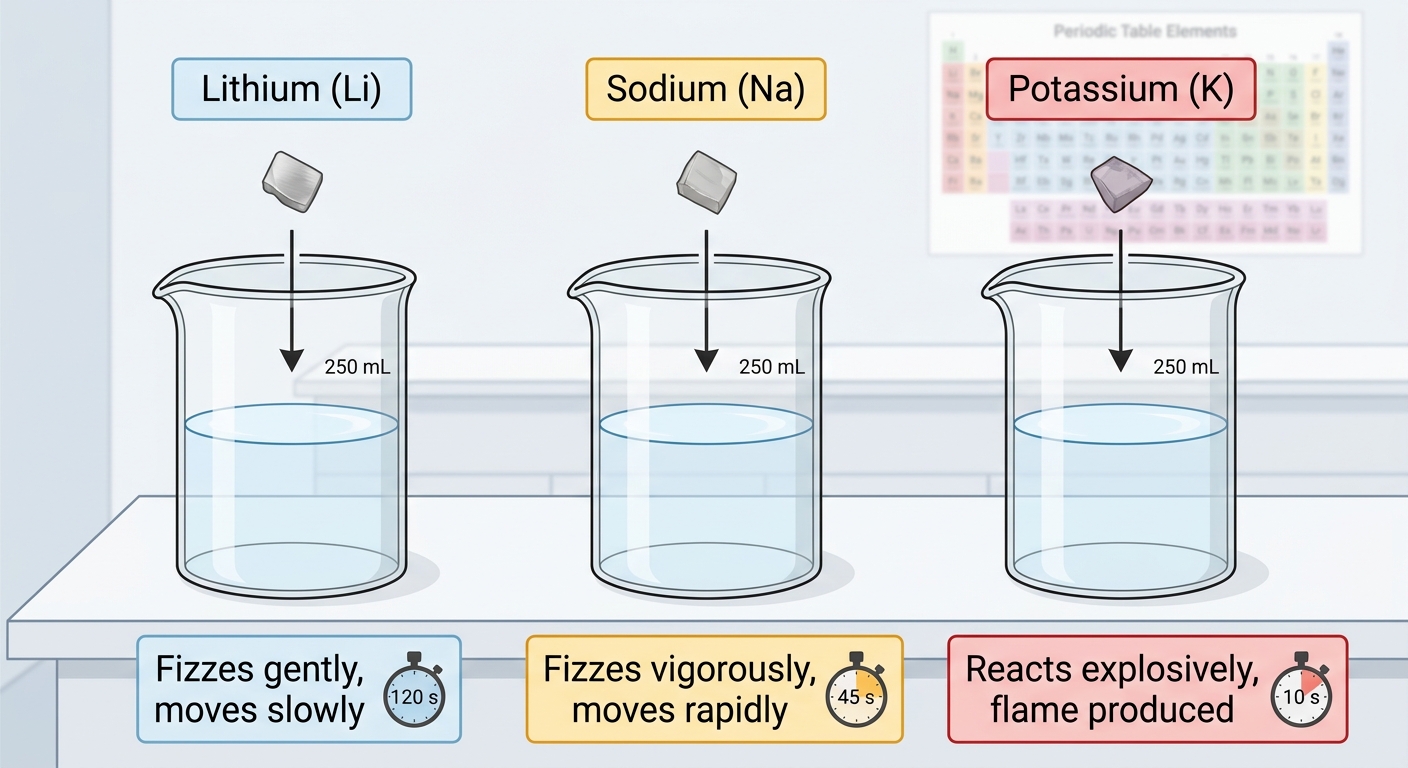
A student investigated the reaction of Group 1 metals with water and recorded the following data.
Metal — Time for complete reaction (s) — Observations
The student concluded: "Reactivity increases down Group 1 because the atomic radius decreases, so the outer electron is held more tightly and reacts more easily."
Metal — Time for complete reaction (s) — Observations
| Li | 120 | fizzes gently, moves slowly |
|---|---|---|
| Na | 45 | fizzes vigorously, moves rapidly |
| K | 10 | reacts explosively, flame produced |
The student concluded: "Reactivity increases down Group 1 because the atomic radius decreases, so the outer electron is held more tightly and reacts more easily."
a
State the correct trend in atomic radius down Group 1. [1]
b
Explain, using atomic radius and electron shielding, why reactivity increases from Li to K. [2]
c
Evaluate the student's conclusion using the experimental data and your knowledge of periodic trends. [2]
Solutions
4QuestionGroup 17 Halogens and Group 18 Noble GasesAssessment Practice
7 marks~11 minCriterion D
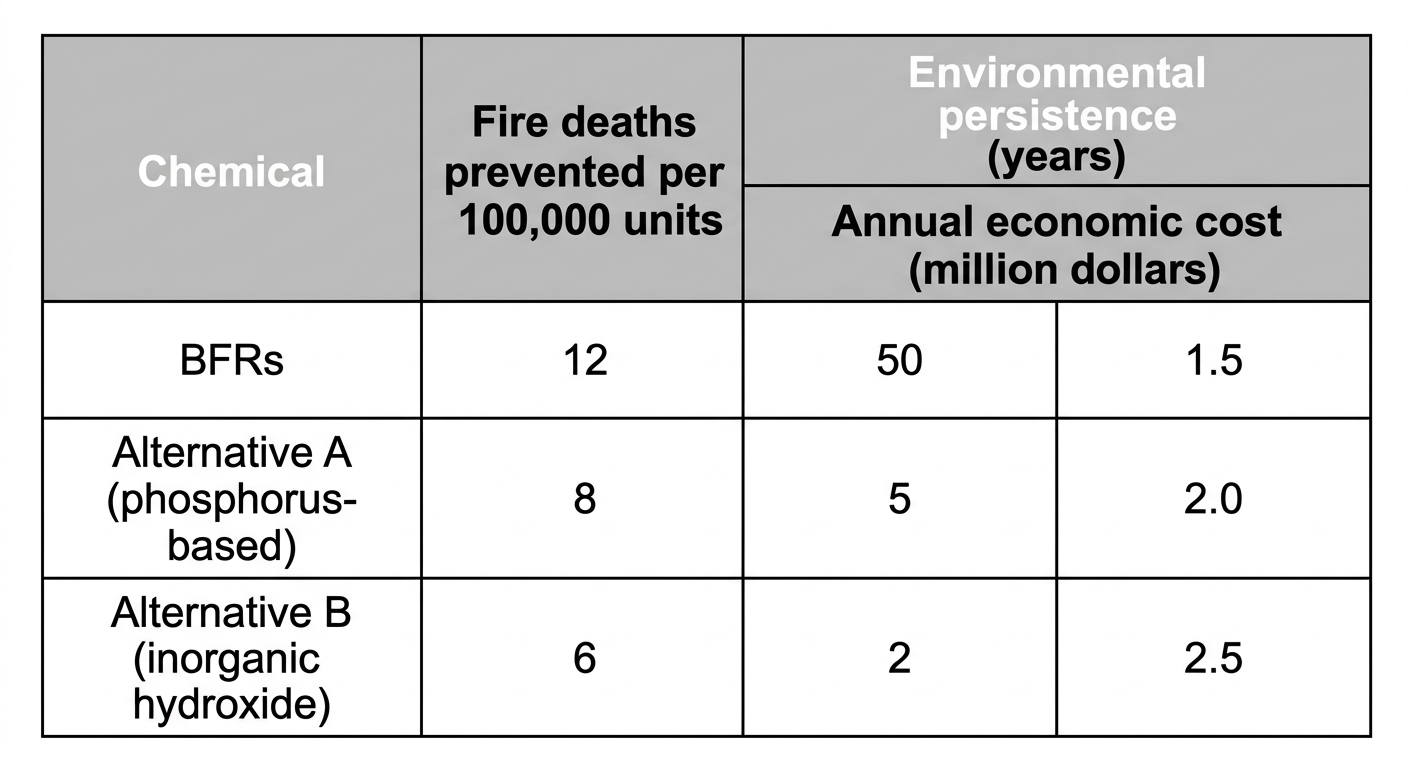
A government is evaluating a potential ban on brominated flame retardants (BFRs) in electronics. BFRs reduce fire-related fatalities but persist in the environment, accumulate in food chains, and pose health risks to humans and wildlife. Two alternatives have been assessed:
Fire deaths prevented per 100,000 units: BFRs = 12, Alternative A (phosphorus-based) = 8, Alternative B (inorganic hydroxide) = 6
Environmental persistence (years): BFRs = 50, Alternative A = 5, Alternative B = 2
Annual cost (million dollars): BFRs = 1.5, Alternative A = 2.0, Alternative B = 2.5
Fire deaths prevented per 100,000 units: BFRs = 12, Alternative A (phosphorus-based) = 8, Alternative B (inorganic hydroxide) = 6
Environmental persistence (years): BFRs = 50, Alternative A = 5, Alternative B = 2
Annual cost (million dollars): BFRs = 1.5, Alternative A = 2.0, Alternative B = 2.5
a
Explain one chemical property of halogens that contributes to the environmental persistence of BFRs. [2]
b
Evaluate the trade-offs between fire safety, environmental impact, and annual cost for BFRs and both alternatives, using the data provided. [3]
c
Discuss one limitation of using this data alone to decide whether to ban BFRs. [2]
Solutions
That's every free question here — 4 of 80.
+76 more questions, plus Mock Papers & Worksheets, are waiting in Premium.