
Biology: How One Faulty Channel Causes Cystic Fibrosis
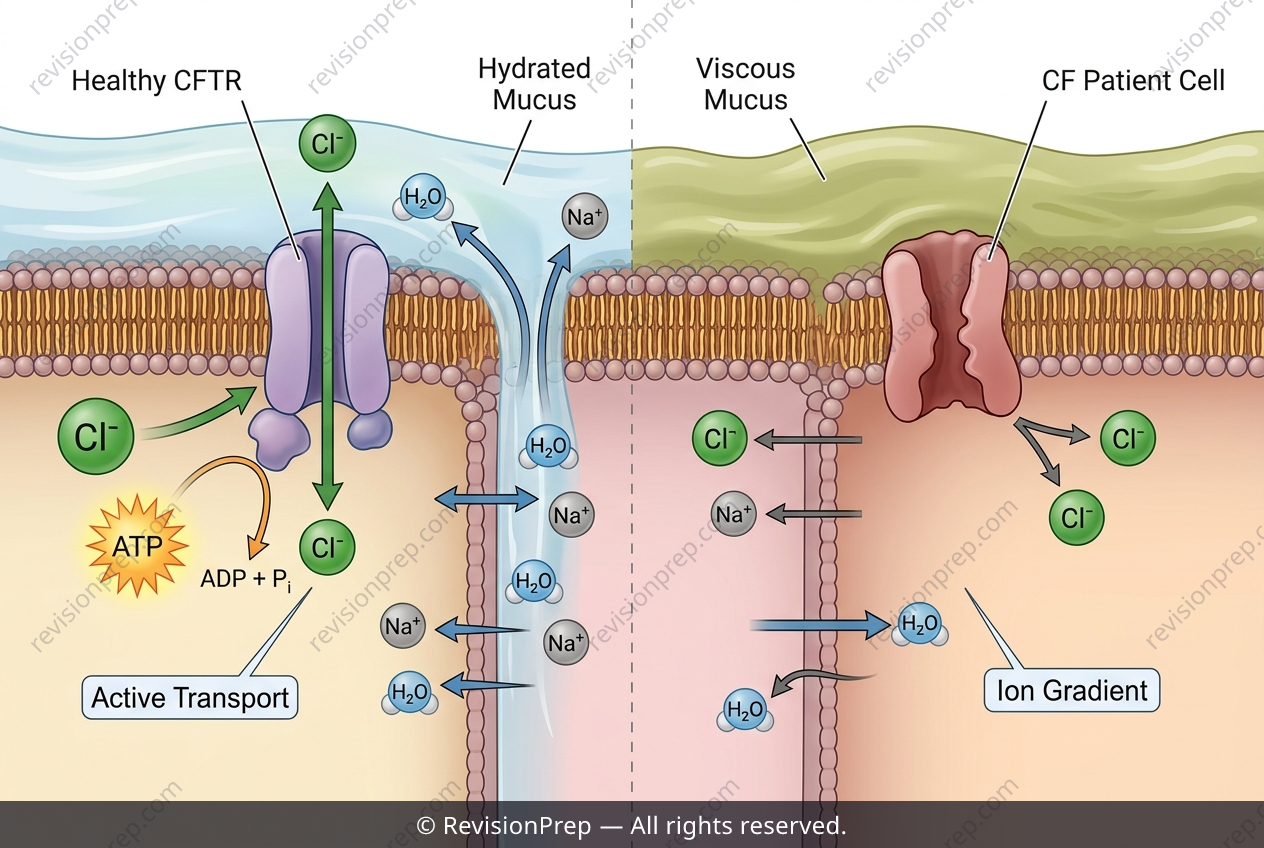
Cystic fibrosis is a genetic disorder in which mutations in the CFTR gene disrupt a chloride ion channel in the plasma membrane of epithelial cells. In healthy cells, CFTR hydrolyses ATP to pump chloride ions out against their concentration gradient, and this low intracellular chloride concentration drives sodium and water to follow by paracellular transport, keeping mucus hydrated. When CFTR fails, chloride efflux falls, water movement slows, and the resulting dehydrated, viscous mucus obstructs airways. This matters because it shows how a single membrane protein links ion transport to tissue-level function. Comparing chloride uptake between a healthy cell line and a CF cell line reveals the underlying relationships: net uptake equals total intracellular chloride divided by time, while at steady state efflux must equal influx, so cells with defective active efflux need a higher internal chloride concentration to drive passive back-diffusion. Such experiments isolate the mutation's effect, though monolayer cultures omit the mucus layer and immune interactions of real airways.
Start practising IB questions today
150,000+ IB-styled questions, criteria-mapped and instantly accessible.