
Answers, notes and concepts — for every step of the IB journey.
Parent and student FAQs, chapter-by-chapter quick notes from MYP 1 to the Diploma, and deep-dive articles on the ideas that show up again and again.
Parent & Student FAQs
Plain-language answers, from MYP 1 to the Diploma.
Best Resources for IB Biology
Q. What are the best resources for IB Biology?
Common Mistakes in IB Biology Exams
Q. What are the most common mistakes in IB Biology exams?
Common Mistakes in MYP Biology Assessments
Q. What are common mistakes in MYP Biology assessments?
Do You Need IB Biology HL for medicine, dentistry or the life sciences?
Q. Do you need IB Biology HL for medicine, dentistry or the life sciences?
How Hard Is IB Biology? (SL & HL)
Q. How hard is IB Biology at SL and HL?
How Hard Is MYP Biology (Years 4–5)?
Q. How hard is MYP Biology in Years 4 and 5?
How Is MYP Biology Graded (1–7)?
Q. How is MYP Biology graded from the criteria to a 1–7?
How Many Hours Should You Study IB Biology?
Q. How many hours should you study for IB Biology?
How to Get a 7 in IB Biology
Q. How do you get a 7 in IB Biology?
How to Prepare for the MYP Biology eAssessment
Q. How do you prepare for the MYP Biology eAssessment?
How to Write a MYP Biology Lab Report / Investigation
Q. How do you write a strong MYP Biology lab report / investigation?
IB Biology: biodiversity & conservation
Q. Biodiversity & conservation: what do you actually need to know for IB Biology?
IB Biology: carbohydrates & lipids
Q. How do you answer carbohydrates & lipids questions in IB Biology?
IB Biology: cell respiration
Q. Cell respiration: what do you actually need to know for IB Biology?
IB Biology: cell theory & cell types
Q. How do you answer cell theory & cell types questions in IB Biology?
IB Biology: classification & cladistics
Q. How do you answer classification & cladistics questions in IB Biology?
IB Biology: climate change & the carbon cycle
Q. Why do students lose marks on climate change & the carbon cycle in IB Biology?
IB Biology Command Terms and Mark Schemes
Q. What do IB Biology command terms mean and how are marks awarded?
IB Biology: data-based questions in biology
Q. Why do students lose marks on data-based questions in biology in IB Biology?
IB Biology: digestion & absorption
Q. How is digestion & absorption tested in IB Biology?
IB Biology: DNA structure & replication
Q. How is DNA structure & replication tested in IB Biology?
IB Biology: drawing & annotating biological diagrams
Q. How do you answer drawing & annotating biological diagrams questions in IB Biology?
IB Biology: ecosystems & energy flow
Q. Ecosystems & energy flow: what do you actually need to know for IB Biology?
Quick Notes
Chapter-by-chapter, from MYP 1 to the Diploma.
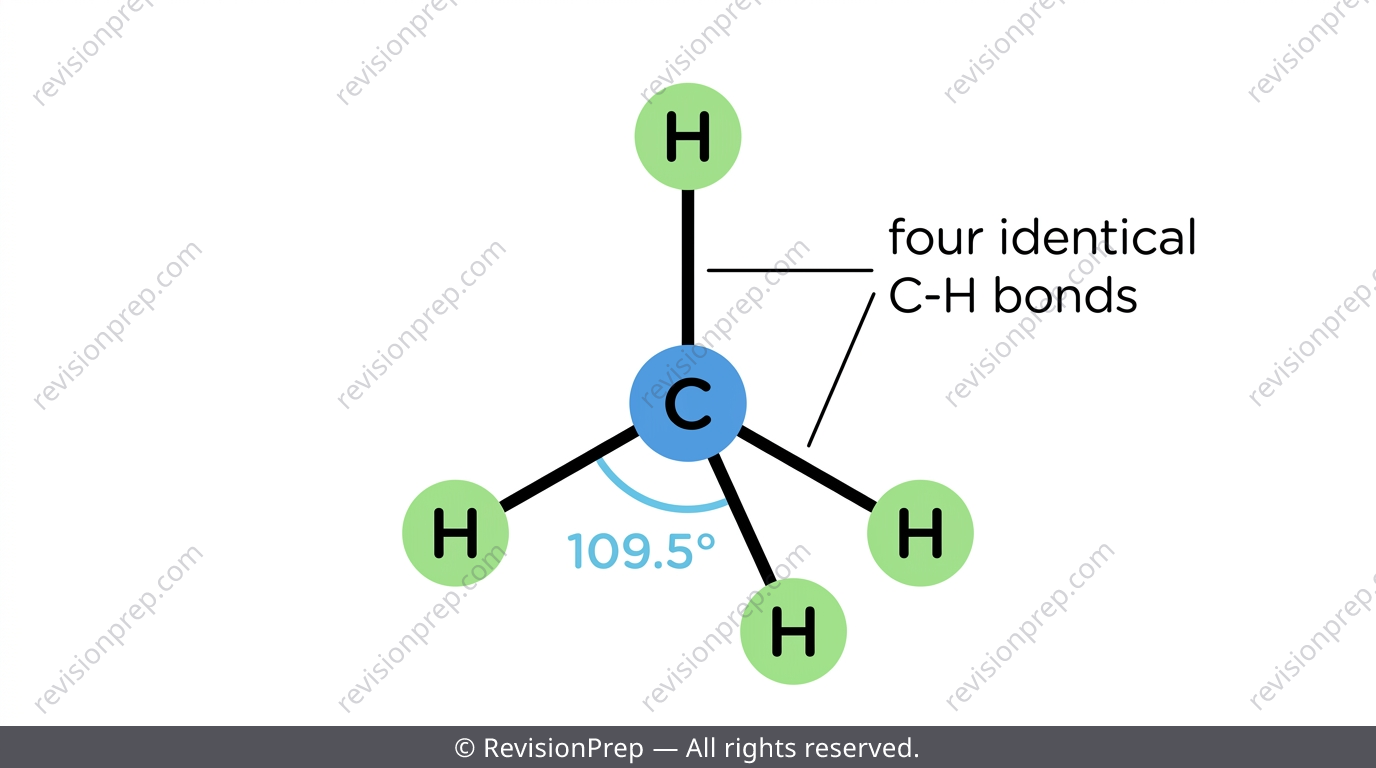
Chemistry: Why Carbon Makes Millions of Compounds
MYP 5 Organic Chemistry teaser: tetravalency, catenation, IUPAC naming and isomers explained. Full revision notes on RevisionPrep.
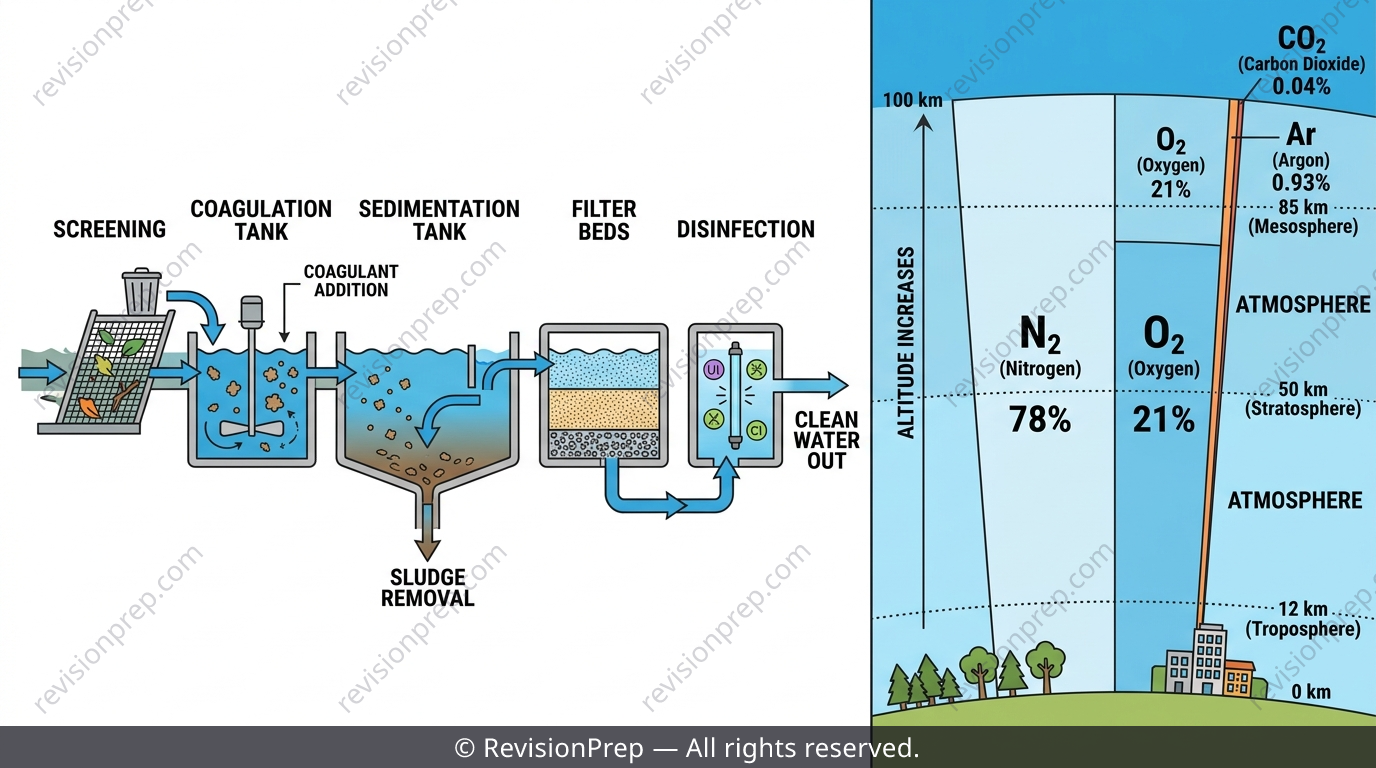
Chemistry: Water Treatment and Atmospheric Stability
IB MYP 5 Chemistry: water treatment steps, coagulation, wastewater stages, atmospheric composition & gas reactivity — quick revision teaser.
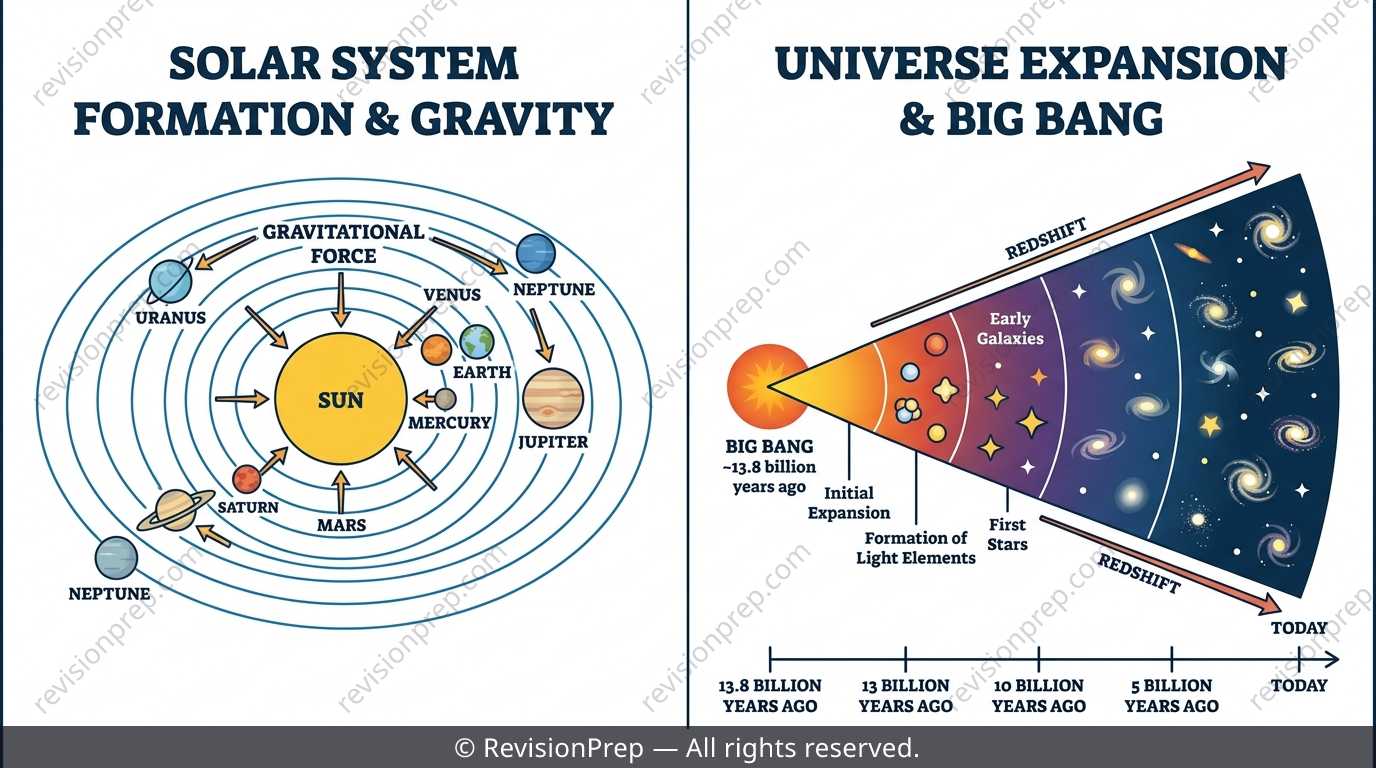
Physics: Gravity, Orbits, and the Expanding Universe
IB MYP 5 Astrophysics teaser: gravity, orbits, Kepler's Laws, satellites, the Big Bang, redshift & CMB — with tips, mistakes and practice questions.
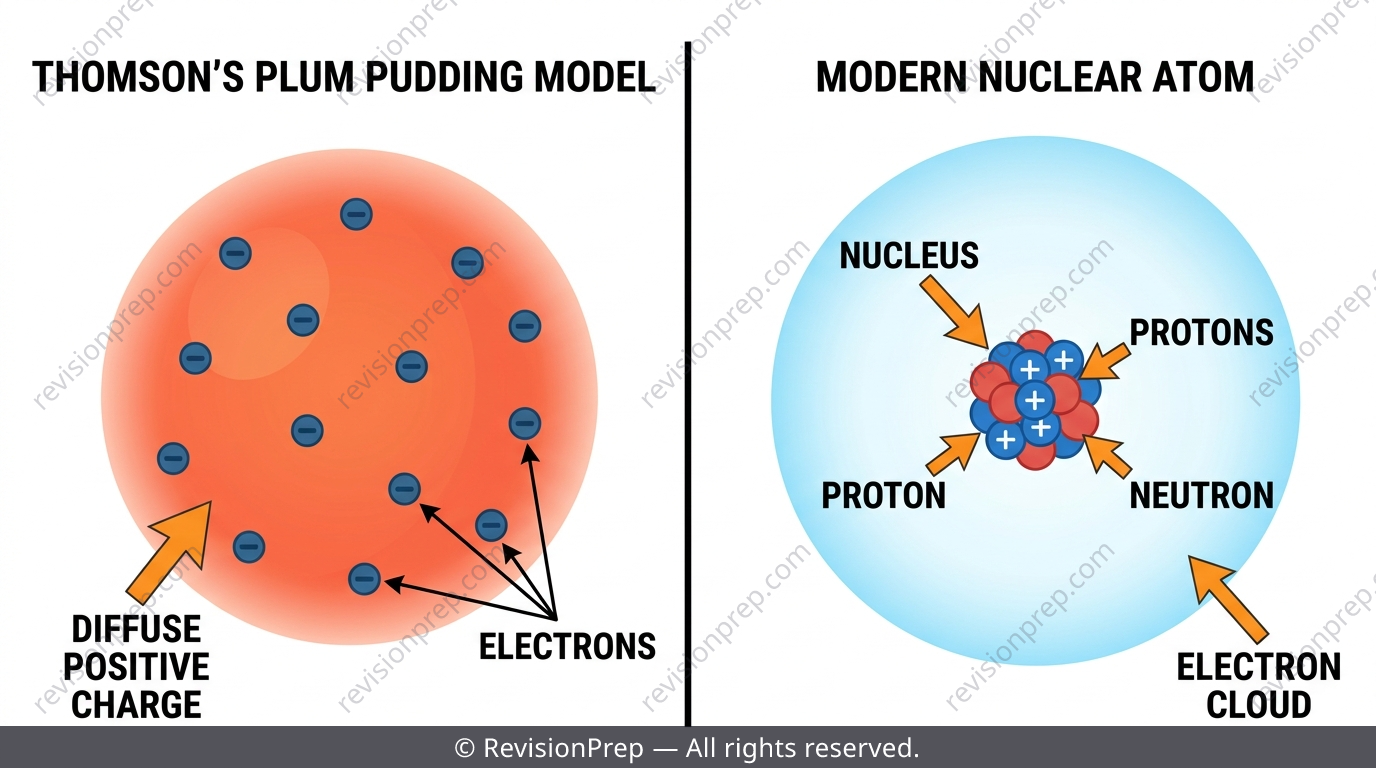
Physics: Atomic Structure and Decay Exam Essentials
Master atomic structure, isotopes, nuclear stability and radioactive decay for IB MYP 5 Physics with clear examples and exam tips.

Physics: Why Electricity and Magnetism Are One Idea
IB MYP 5 Physics: field lines, electromagnets, circuits, safety devices & Q=It explained fast, with links to the full revision notes.
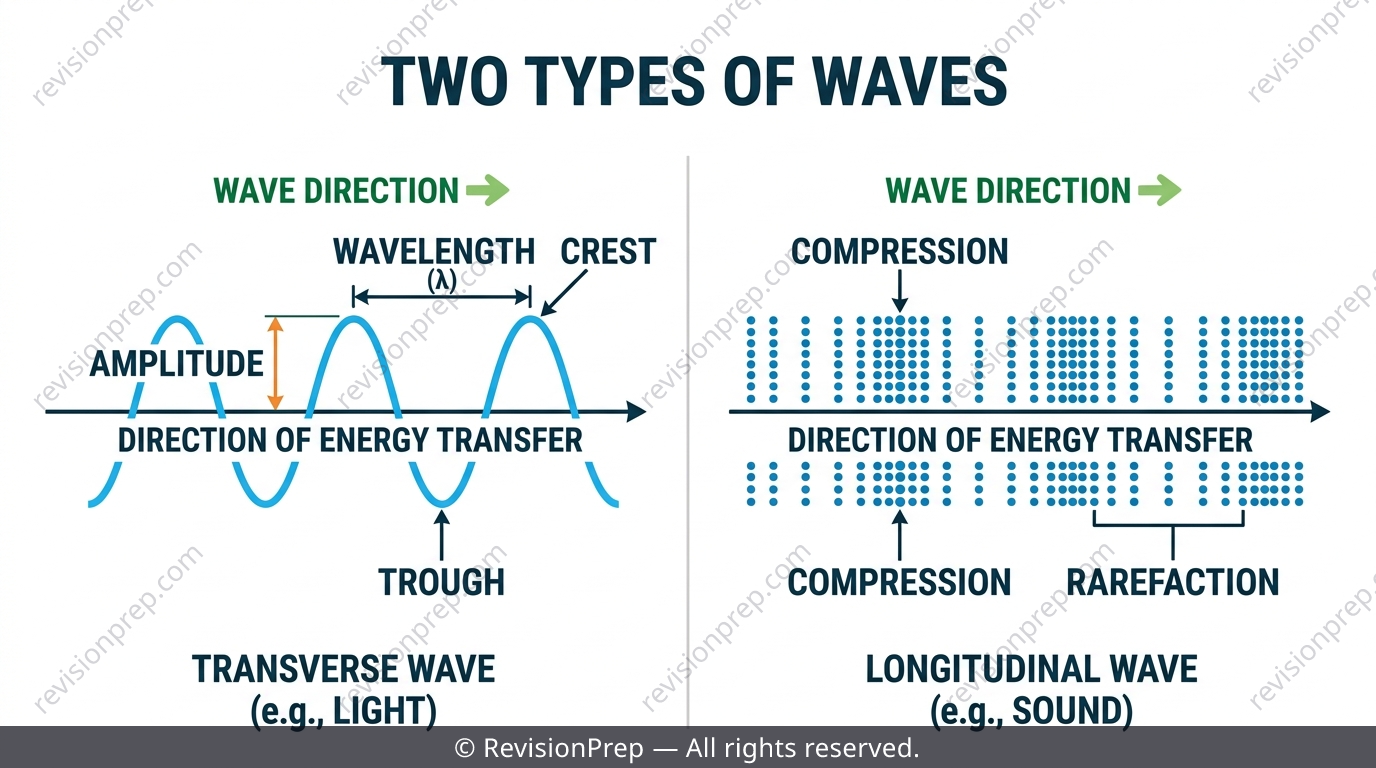
Physics: The Three Tests Behind Every Wave Question
IB MYP 5 Physics: EM spectrum, sound, light & refraction explained fast. Formulas, common mistakes, exam tips and practice questions inside.
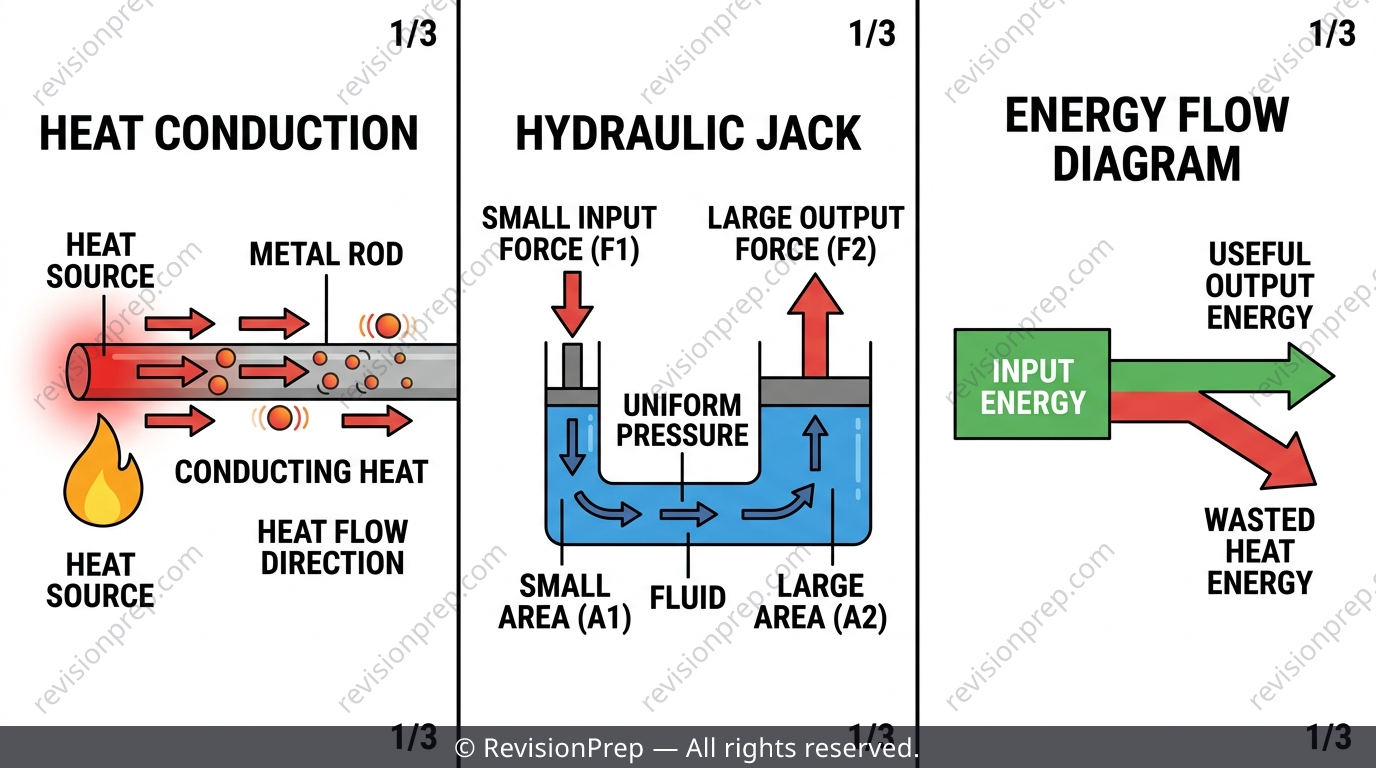
Physics: Energy Conservation Across Heat and Pressure
IB MYP 5 Physics: master conduction, convection, radiation, pressure, hydraulics, energy conservation and efficiency with quick teaser notes.
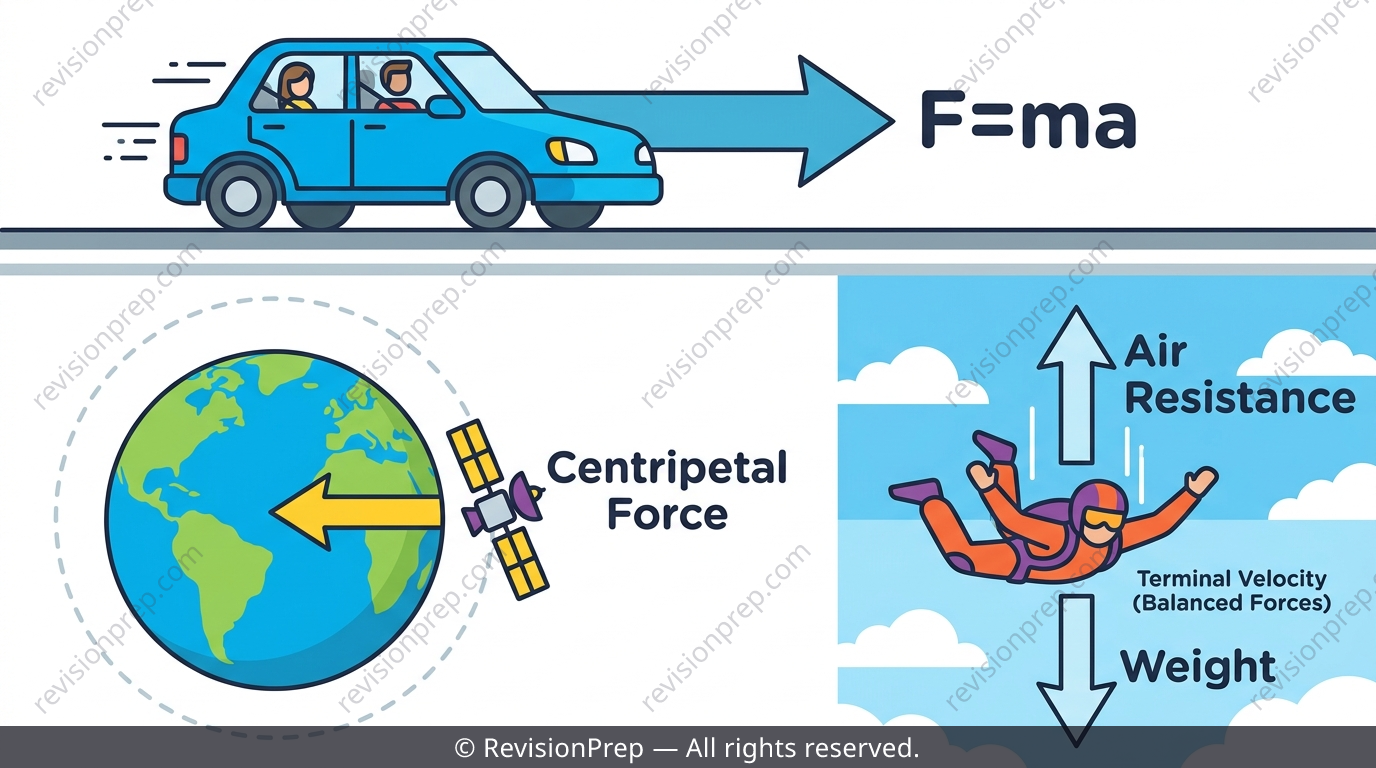
Physics: Why F=ma Is the Engine Behind Every Motion
IB MYP 5 Physics: master F=ma, W=mg, centripetal force, terminal velocity and motion graphs with quick revision notes and exam-style practice.
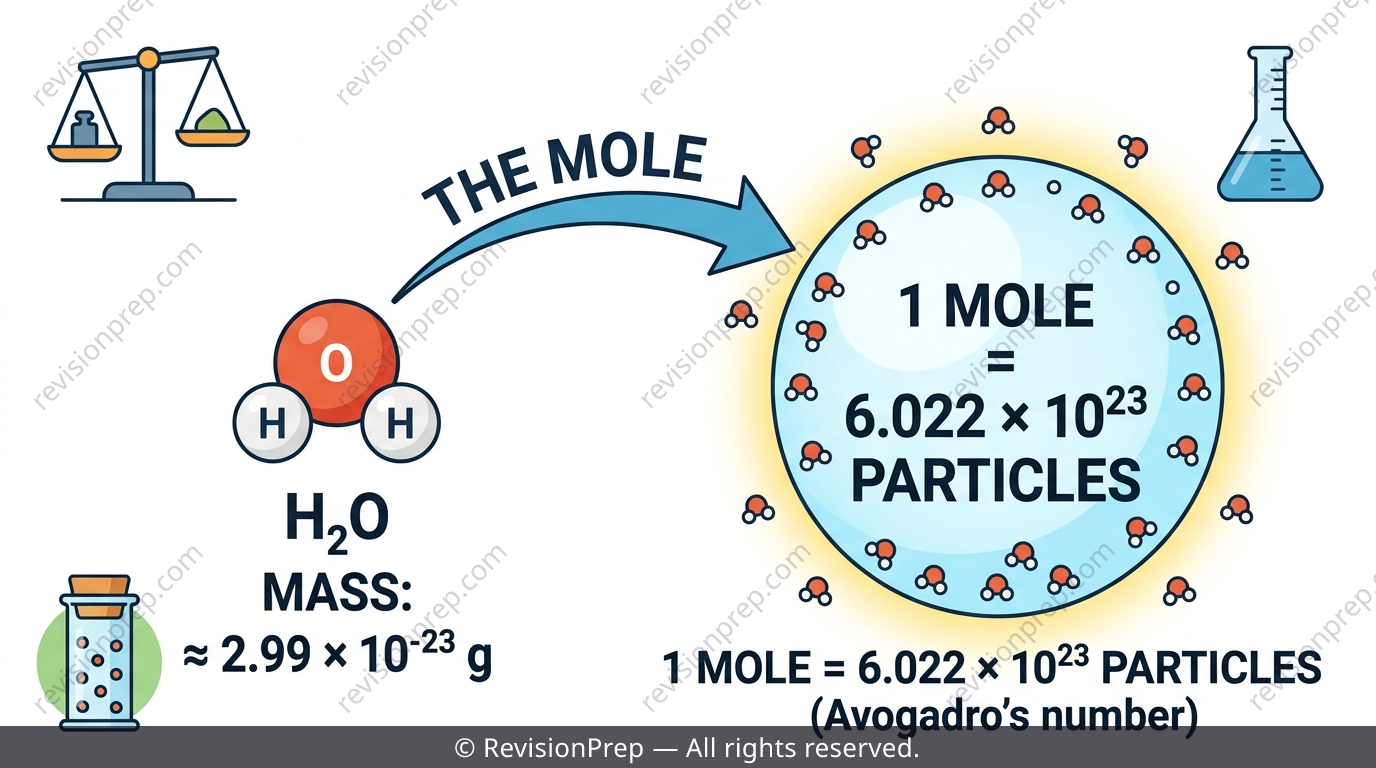
Chemistry: Mastering the Mole Concept and Stoichiometry
Master moles, Avogadro's constant, molar mass, gas volume and concentration for IB MYP 5 Chemistry with clear formulas and examples.
Concept Explorer
Deep-dive articles on ideas that recur across grades.
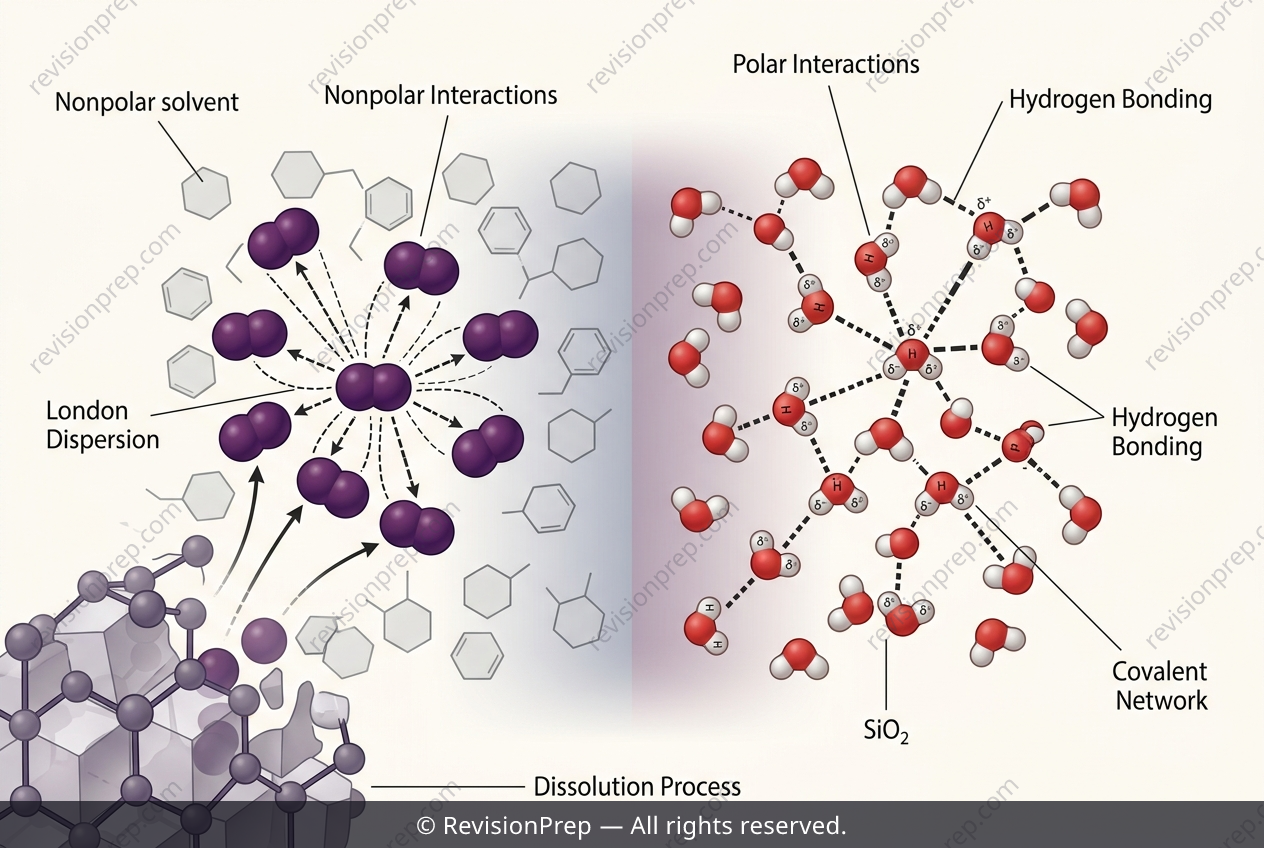
Chemistry: How Intermolecular Forces Affect Solubility
Why does iodine dissolve in cyclohexane while sand settles untouched at the bottom? The answer lies in the interplay between bonding, intermolecular forces, and polarity. Iodine molecules (I₂) are held together by weak London dispersion forces, while silicon dioxide (SiO₂) exists as a giant covalent lattice in which each silicon atom bonds covalently to four oxygen atoms — no discrete molecules exist to separate. This distinction matters because dissolving is never simply about mixing: it requires solute–solvent interactions strong enough to compete with the forces holding a substance together. Nonpolar cyclohexane interacts only through London dispersion forces, which match iodine's own intermolecular forces in strength, so "like dissolves like" applies and dissolution is energetically favourable. Sand offers no such match — breaking its covalent network demands far more energy than weak dispersion forces can supply. Even water, polar and hydrogen-bonding, cannot overcome those bonds.
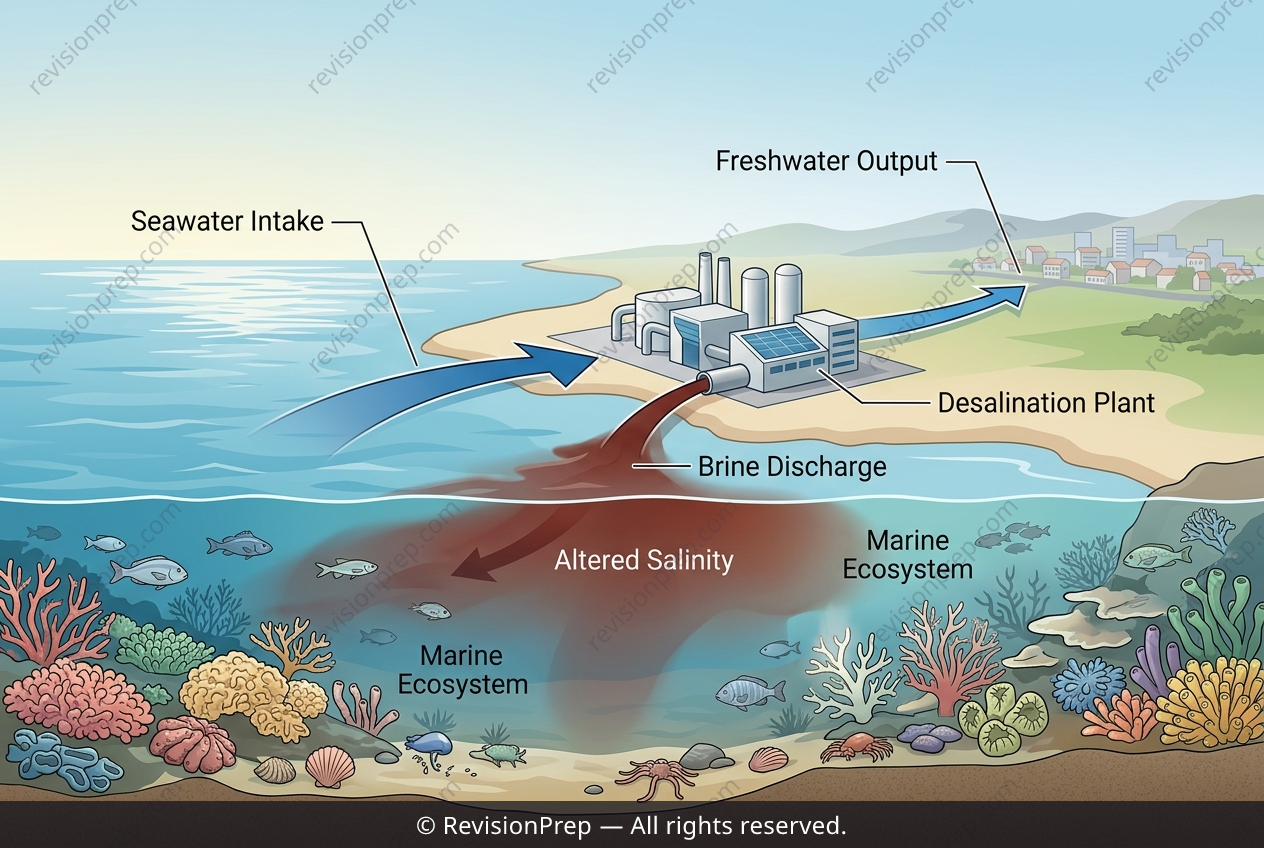
Chemistry: Solar Desalination and Marine Impact
Desalination by solar-powered evaporation turns an abundant resource—seawater—into fresh drinking water, offering a lifeline to coastal towns facing water scarcity. By heating seawater, collecting the water vapour, and condensing it, the process separates pure water from dissolved salts, reducing dependence on limited freshwater sources and easing pressure on groundwater reserves. This matters increasingly as climate change intensifies drought and water insecurity in many regions. Yet the same separation that produces clean water also concentrates what remains. The leftover brine, now far saltier than the original seawater, is discharged back into the ocean, where it raises local salinity and creates a sharp concentration gradient. This disrupts the osmotic balance of marine organisms, forcing water out of their cells and damaging ecosystems near the discharge point. Understanding this trade-off—between securing freshwater and protecting marine environments—is central to evaluating desalination as a sustainable solution.
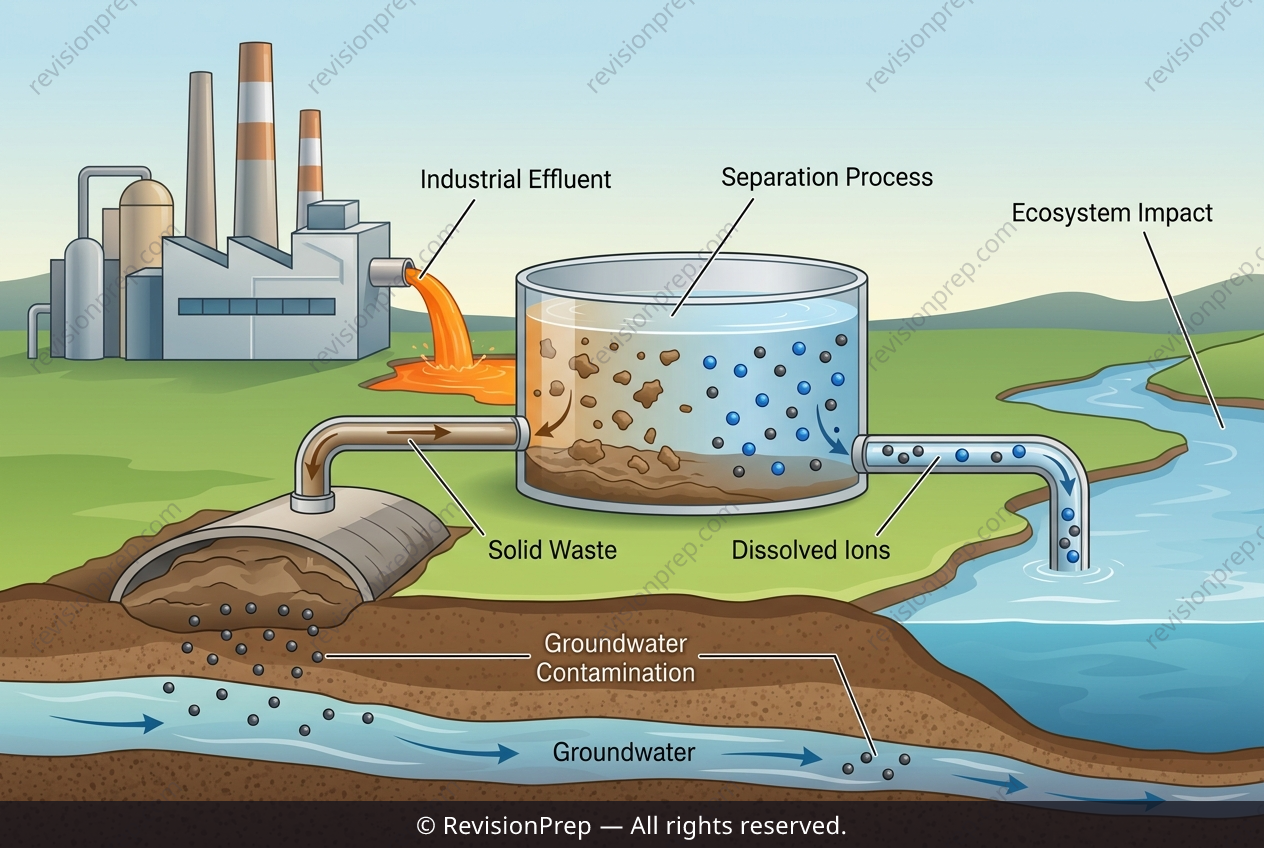
Chemistry: Separation Techniques in Wastewater Recovery
Filtration, evaporation and crystallisation are separation techniques that underpin sustainable industrial wastewater management. In mining, vacuum filtration recovers dissolved copper(II) sulfate, CuSO₄, from acidic wastewater by separating particles according to size relative to the filter pore diameter. Because dissolved Pb²⁺ and Cd²⁺ ions are far smaller than any filter pore, they pass through with the filtrate, while the recovered CuSO₄ can be sold or reused in processes such as electroplating and fungicide production, generating revenue and reducing demand for virgin materials. This matters because recovery conserves a non-renewable mineral resource, lowering the environmental impact of primary copper extraction. Yet the filter cake retains toxic heavy metals, and rainwater percolating through landfill can leach Pb²⁺ and Cd²⁺ into soil and groundwater. Persistent contamination renders drinking water unsafe, bioaccumulates through aquatic food chains, and reduces agricultural productivity, so effective separation must connect resource recovery with long-term environmental protection.
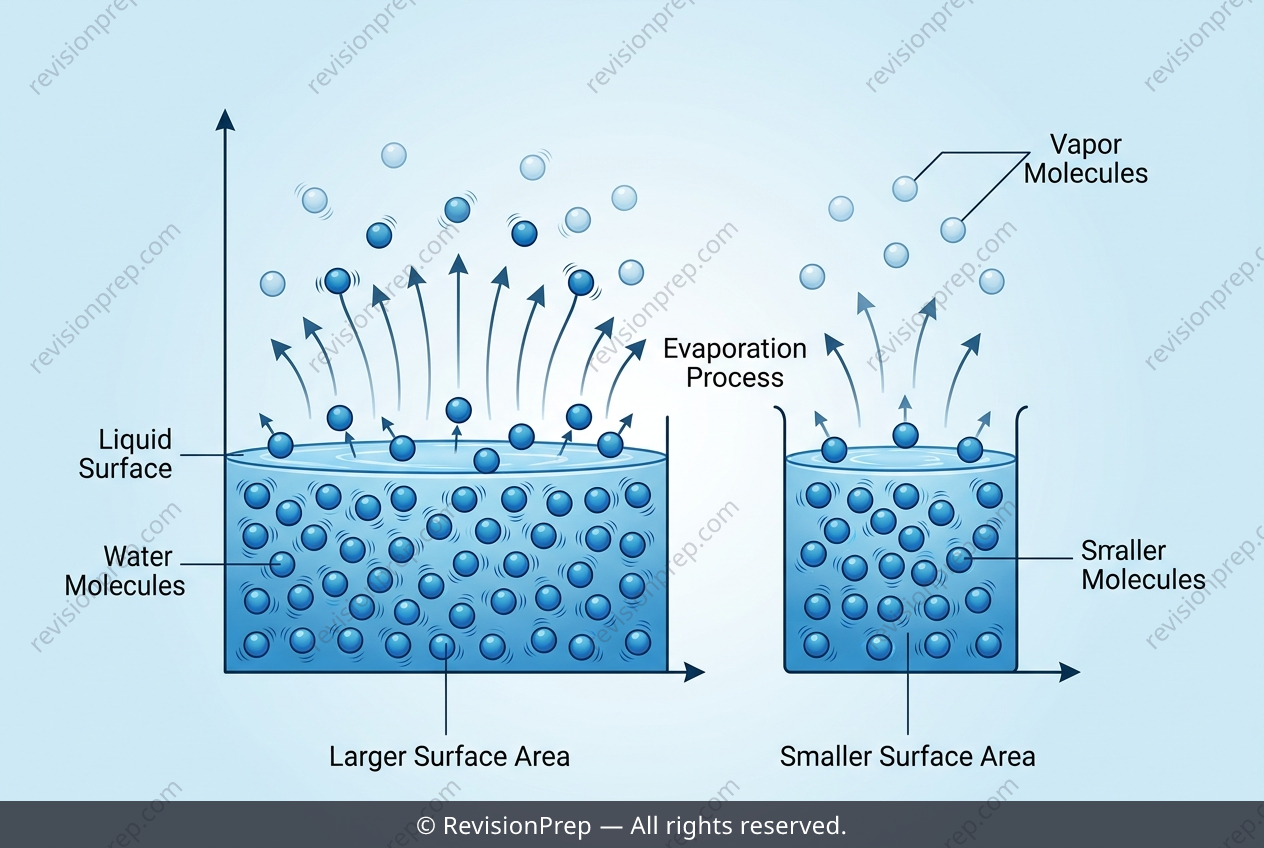
Chemistry: How Surface Area Controls Evaporation Rate
Evaporation is the process by which liquid particles at a surface gain enough energy to escape into the surrounding air as a gas. Its rate depends on several factors, including temperature, humidity, airflow, and — crucially here — the surface area of the liquid exposed to the atmosphere. A larger exposed surface allows more molecules to escape per unit time, so the volume of liquid falls more quickly, producing a steeper gradient on a volume–time graph. This matters because evaporation underpins separation techniques such as crystallization and is central to understanding how physical conditions control the speed of change. When two identical liquids are left under the same conditions, any difference in their evaporation rates must come from a variable that actually differs between them. Since temperature is held constant, surface area becomes the deciding factor: the wider the container, the greater the exposure, and the faster the volume decreases.
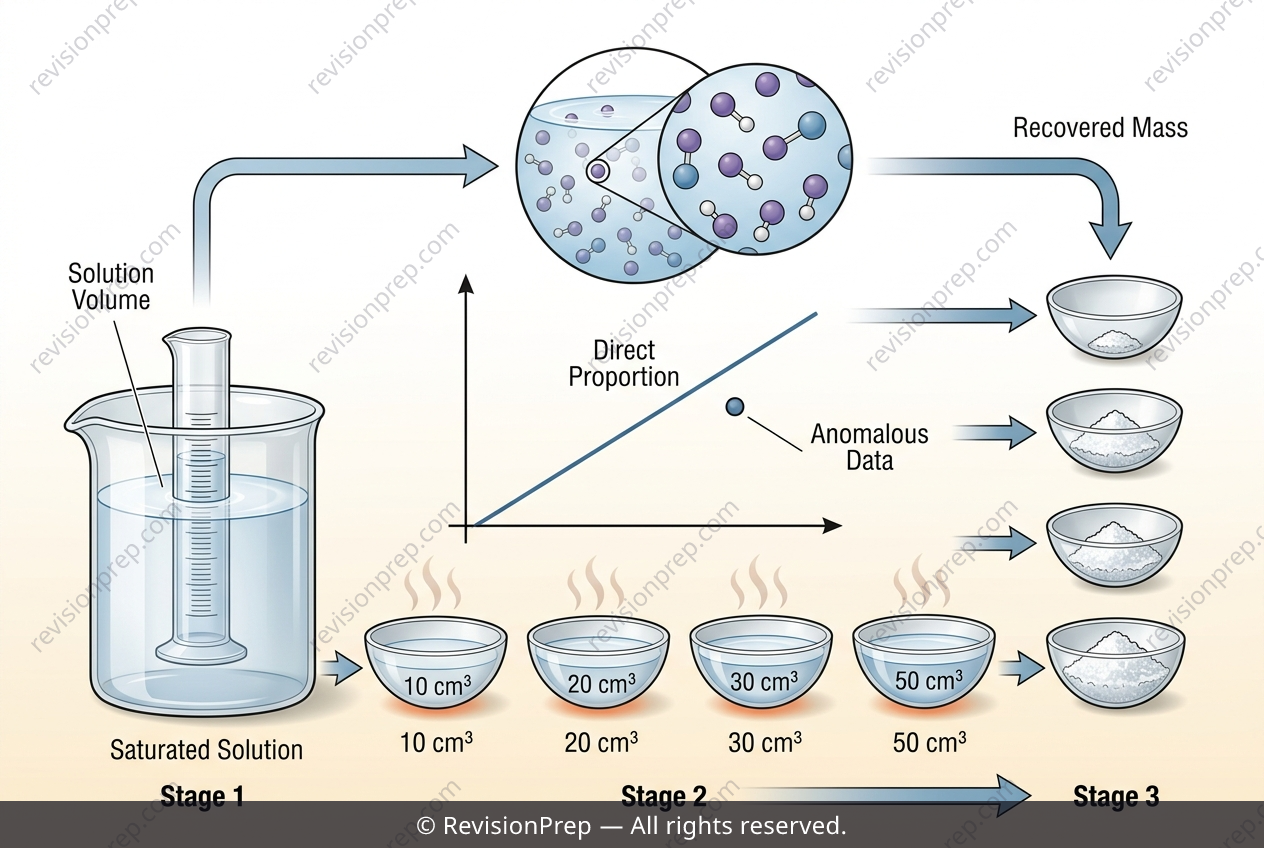
Chemistry: How Solute Mass Relates to Solution Volume
Quantitative relationships in solutions describe how the amount of dissolved solute scales with the volume of solution. For a saturated solution at a fixed temperature, concentration is uniform throughout, so mass and volume stay in a constant ratio: concentration = mass ÷ volume. This proportionality is the foundation for predicting how much solid remains after evaporation or crystallisation. Understanding this matters because it links everyday separation techniques to measurable, predictable quantities. When evaporation is complete, the recovered solid reflects the solute present in that volume, so doubling the volume doubles the mass, tripling triples it, and so on. Plotting mass against volume should therefore give a straight line through the origin. Real data rarely behave perfectly. One inconsistent point can break the trend, often through incomplete evaporation or loss of solid during transfer. Identifying such anomalies, and explaining them using the expected proportional relationship, is central to analysing solutions quantitatively.
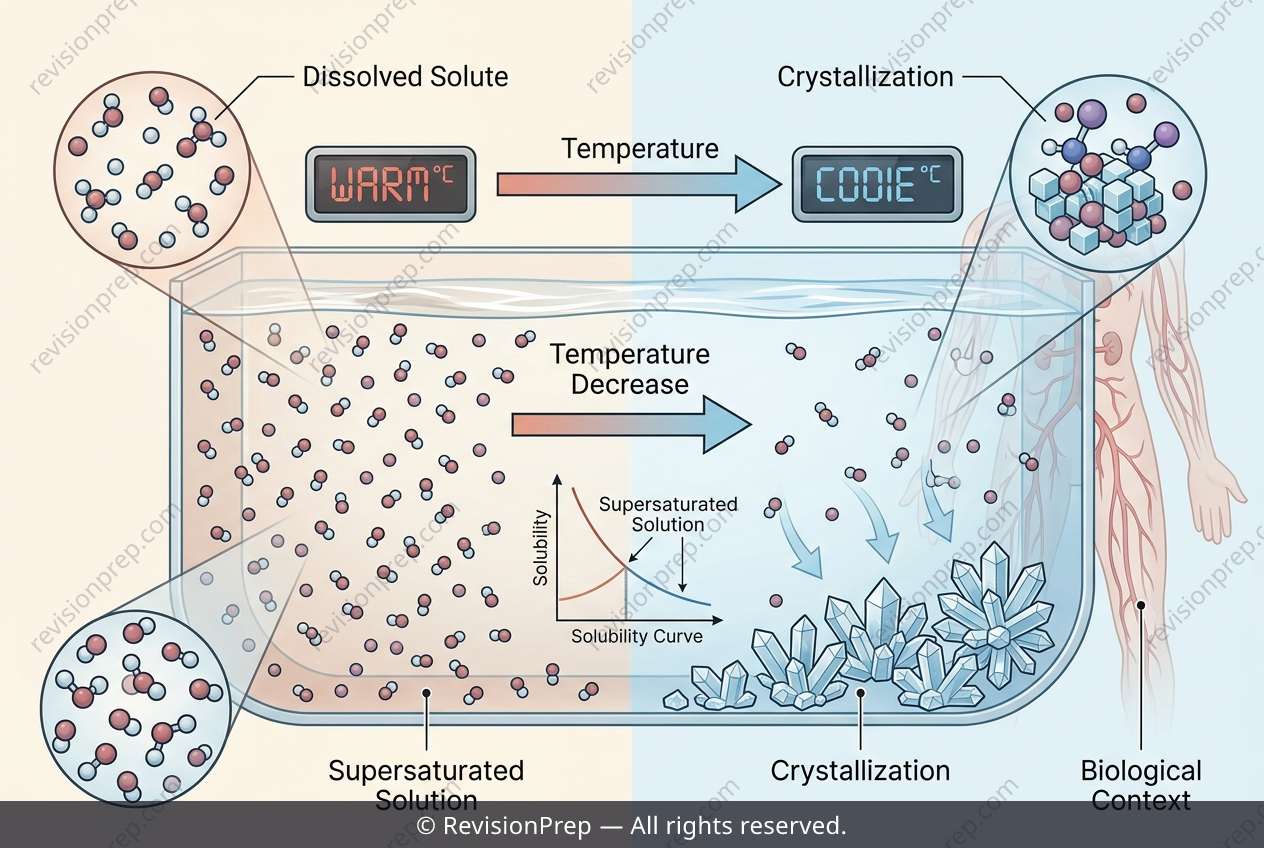
Chemistry: Temperature, Solubility and Crystallisation
Solubility is not a fixed property — it shifts with temperature, and potassium nitrate shows this dramatically. Its solubility climbs from 32 g per 100 g water at 20 °C to 110 g at 60 °C, meaning a solution that is comfortably dilute when warm can become supersaturated as it cools. When concentration exceeds the local solubility limit, the excess solute precipitates as solid crystals. This matters because crystallisation is not confined to the laboratory. In the human body, core temperature near 37 °C keeps ingested KNO₃ dissolved, but cooler extremities — hands and feet, approaching 20–30 °C — lower the solubility threshold, so crystals may form in peripheral tissues and cause localised damage. Yet the solubility curve alone cannot predict toxicity: it is measured in pure water, while body fluids contain salts and proteins that alter effective solubility, and excretion, circulation, and individual organ function all reshape real risk.
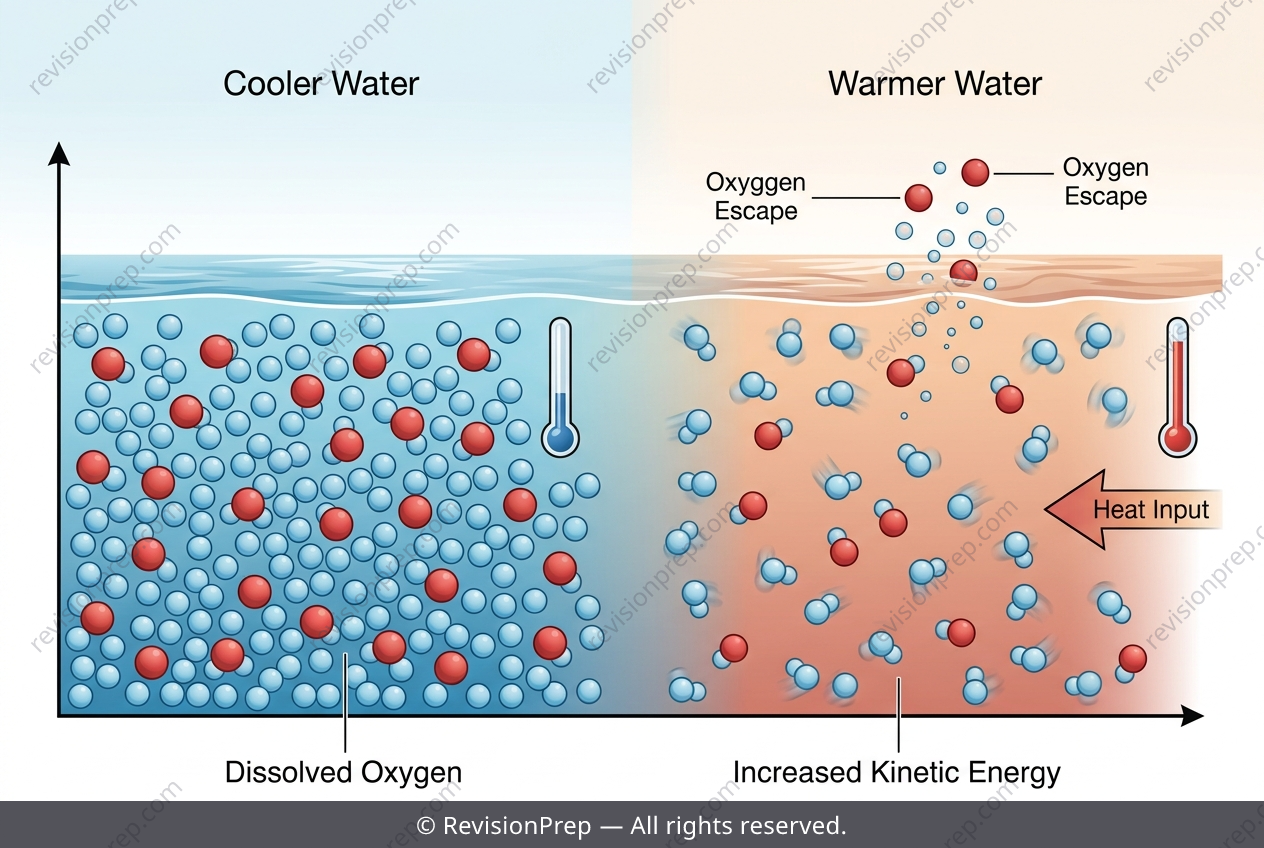
Chemistry: How Temperature Affects Gas Solubility
Dissolved gases behave very differently from solid solutes when water warms up. While most solids become more soluble at higher temperatures, gases become less soluble — a direct consequence of the fact that dissolution is exothermic for gases, so added heat shifts the equilibrium back towards the gaseous state. In practical terms, the concentration of dissolved oxygen in a river is inversely related to its temperature: as thermal energy increases, oxygen molecules escape the liquid more readily, and the water simply cannot hold as much of it. This relationship matters enormously in aquatic ecosystems, where dissolved oxygen is the currency of survival. Fish and other organisms depend on it for cellular respiration, so any sustained rise in water temperature steadily erodes the oxygen supply they rely on. When a power plant discharges warm water into a river, that seemingly small thermal increase can push oxygen levels below the threshold needed to sustain life, creating hypoxic conditions that ripple outward through the entire food web.
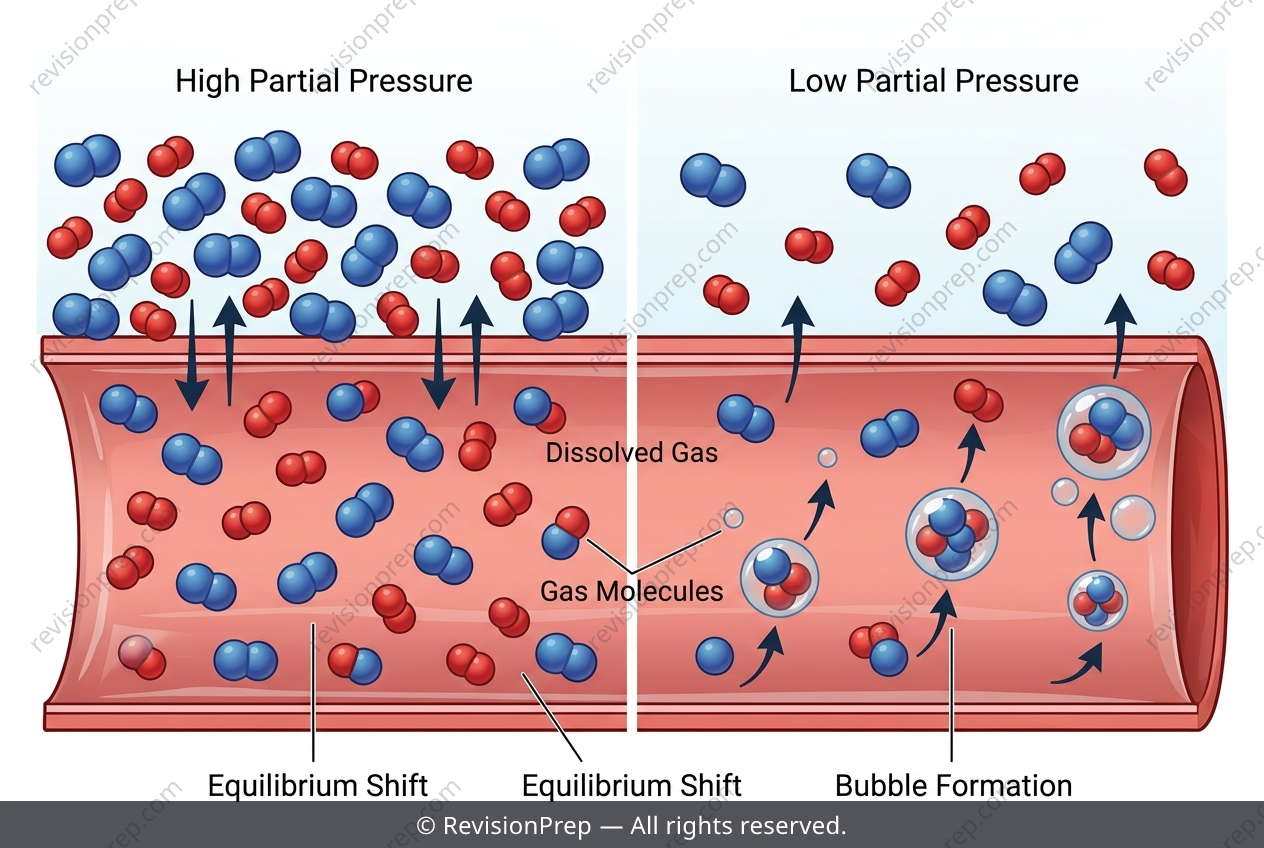
Chemistry: Henry’s Law, Pressure and Gas Solubility
Henry's Law describes how the solubility of a gas in a liquid is directly proportional to the partial pressure of that gas above the liquid. For a gas mixture, the partial pressure of each component is found from its mole fraction multiplied by the total pressure, so P(gas) = mole fraction × total pressure. This relationship explains why the amount of gas that dissolves changes whenever the pressure above a liquid changes. This matters in situations where pressure varies dramatically, such as deep-sea diving. As a diver descends, total pressure rises, so the partial pressures of nitrogen and oxygen increase, and more gas dissolves in the blood. If the diver ascends too rapidly, external pressure falls quickly, solubility drops, and the blood becomes supersaturated. The excess gas cannot leave through the lungs fast enough, so bubbles form in tissues and bloodstream, causing decompression sickness. Henry's Law therefore connects pressure, solubility, and the practical consequences of changing depth.
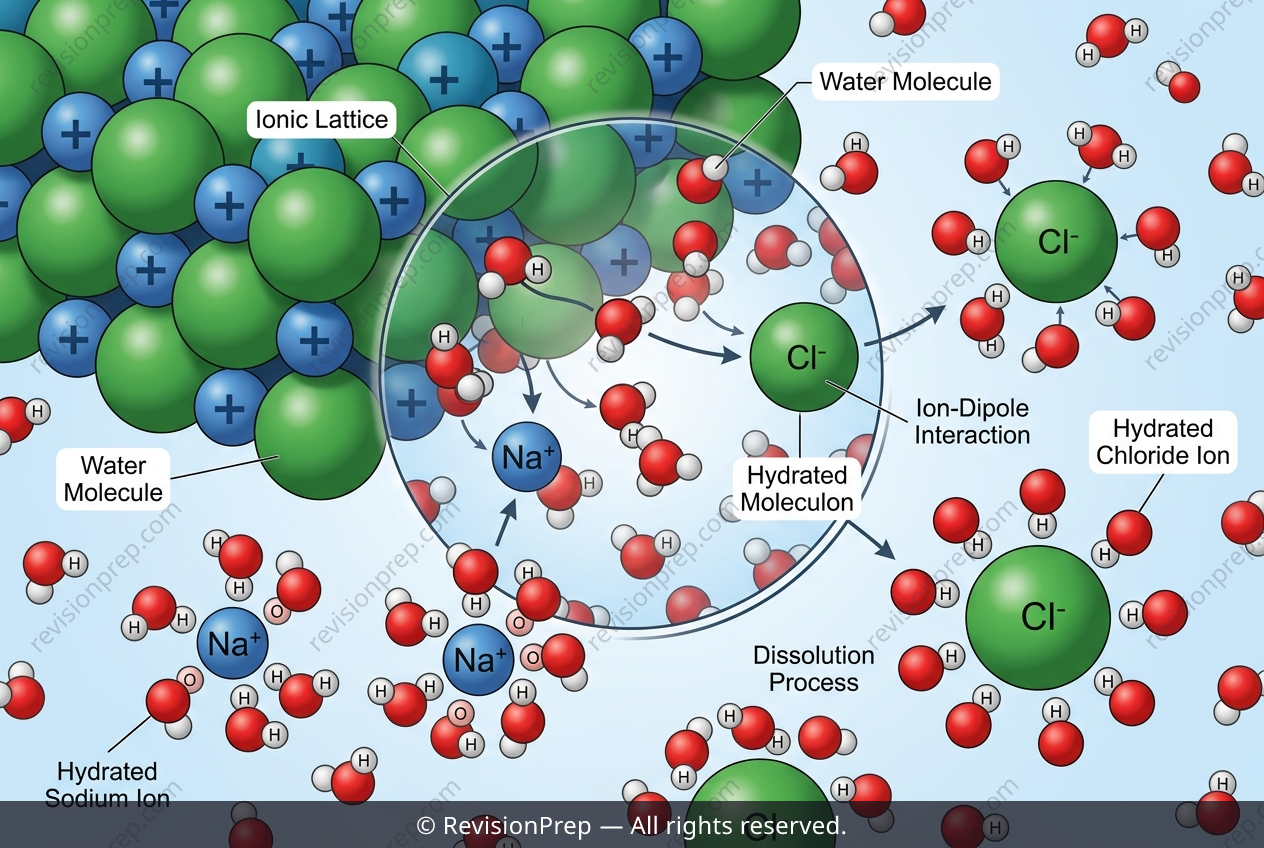
Chemistry: How Water Hydrates Ions in Solution
When an ionic crystal such as sodium chloride is placed in water, its orderly lattice breaks apart and the ions disperse throughout the liquid, forming a homogeneous solution. Here, sodium chloride acts as the solute and water as the solvent, and the process can be summarised by the equation NaCl(s) → Na⁺(aq) + Cl⁻(aq), in which the solid lattice separates into freely moving, hydrated ions. This concept matters because it explains why ionic solids dissolve at all, and why the resulting solution conducts electricity. The key lies in water's polarity: the partially negative oxygen atom is attracted to Na⁺ ions, while the partially positive hydrogen atoms are attracted to Cl⁻ ions. Each ion becomes surrounded by a shell of water molecules — a process called hydration. The ion–dipole attractions formed release energy that compensates for the energy needed to break the ionic lattice, so the separated ions stay dispersed rather than re-forming a crystal.
Ready to take your IB results further?
Train smart with IB-aligned question banks and examiner-style practice.