
Biology: Why 'Like Interacts With Like' in Membranes
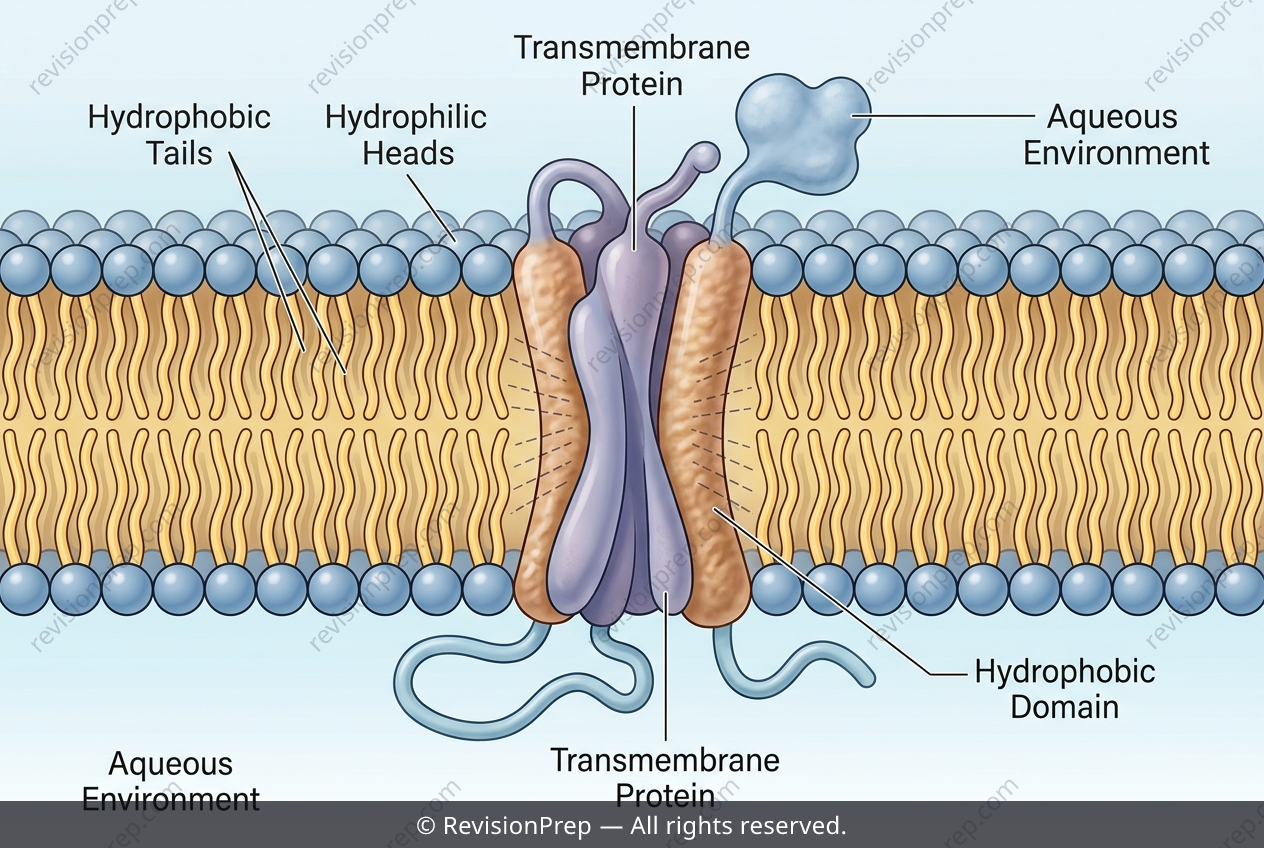
The fluid mosaic model describes cell membranes as dynamic structures in which proteins drift within a phospholipid bilayer. Among these, transmembrane proteins span the entire membrane, and their stability depends on a simple principle: like interacts with like. Phospholipids are amphipathic, meaning each molecule has a hydrophilic phosphate head facing the watery environments on either side and hydrophobic fatty acid tails buried in the bilayer interior. Transmembrane proteins share this dual nature. Their hydrophobic regions interact with the hydrophobic tails in the membrane's core, while hydrophilic regions face the aqueous environments on each side. This arrangement anchors the protein in place without covalent bonding to the phospholipid heads. Understanding this orientation matters because it underpins nearly every membrane function — transport, signalling and cell recognition all depend on proteins sitting correctly within the bilayer.
Start practising IB questions today
150,000+ IB-styled questions, criteria-mapped and instantly accessible.