
Economics: Same Average Income, Different Realities
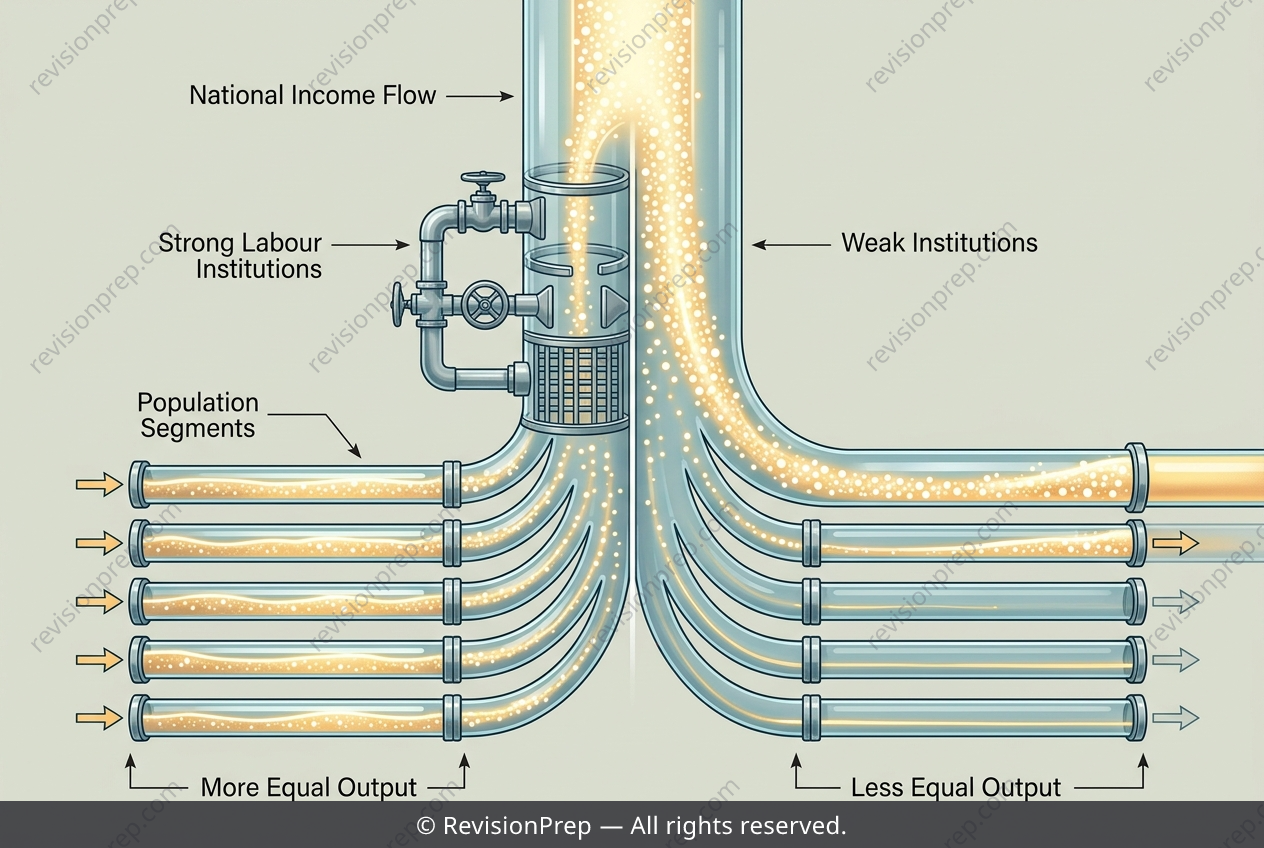
Income inequality describes how unevenly income is distributed across individuals or households in an economy. It is most commonly measured using the Gini coefficient, where a value closer to 1 signals a more unequal distribution, or simply by comparing the gap between the highest and lowest earners. This matters because two countries can share similar GDP per capita yet deliver very different living standards depending on how that output is shared. Labour market institutions are central to this. In Country D, minimum wage legislation sets a wage floor while strong unions bargain collectively, pushing wages up for lower-skilled workers and compressing the wage distribution. In Country E, weak unions and no minimum wage leave market forces free to hold down low-skilled pay while high earners retain a larger income share, widening the gap. The same average income, in short, can conceal sharply different distributions.
Start practising IB questions today
150,000+ IB-styled questions, criteria-mapped and instantly accessible.