
Economics: Why Education Alone Cannot Fix the Income Gap
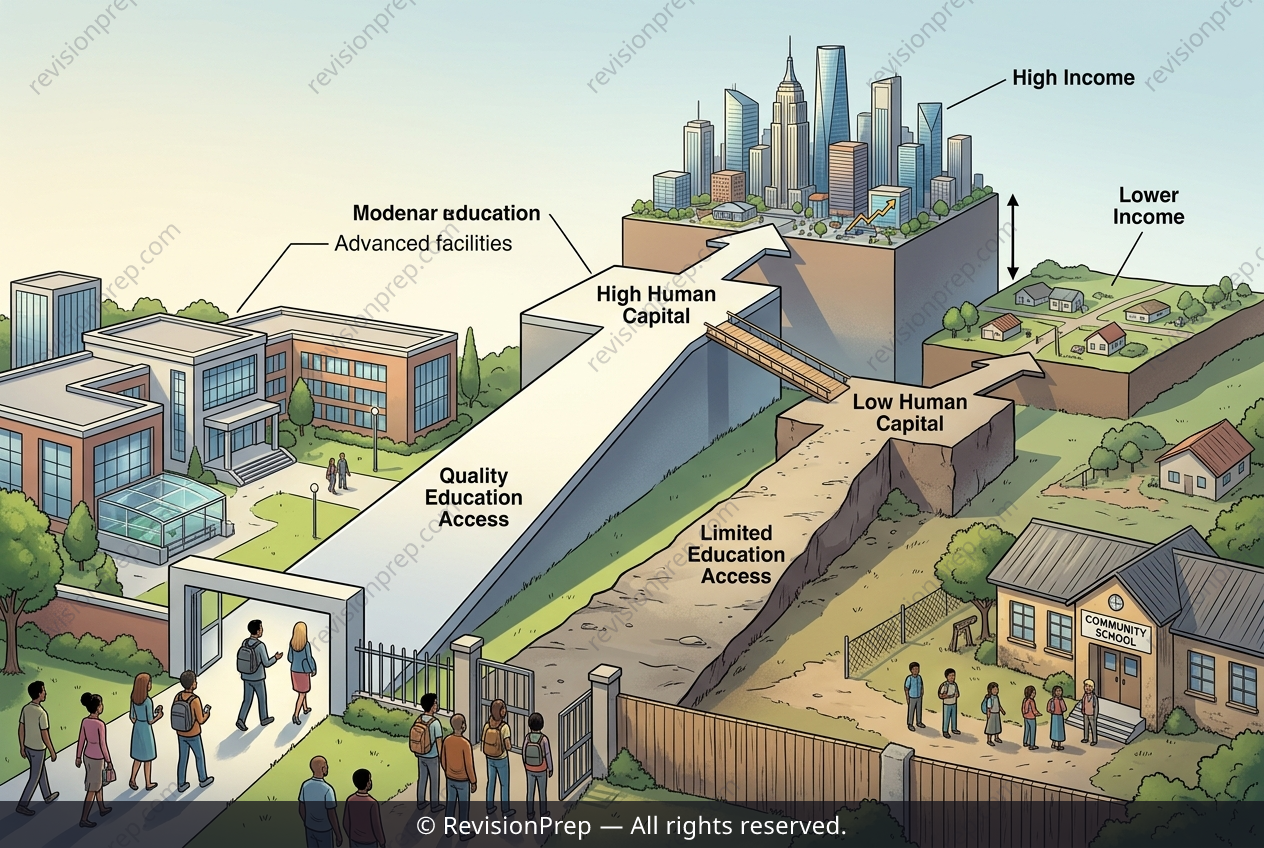
Income inequality refers to the unequal distribution of total income among individuals or households within an economy, typically measured using the Gini coefficient or illustrated by the Lorenz curve. It captures the widening gap between the highest- and lowest-income groups, and it matters because persistent disparities shape living standards, social mobility, and long-run economic growth. Understanding income inequality requires tracing how its causes connect. Differences in education, for instance, translate into differences in human capital: workers with higher education gain access to high-skilled, higher-wage employment, while those with less education remain confined to low-skilled, low-wage work, widening the earnings gap. Because education addresses this root cause by raising productivity and wages over time, it is often proposed as a remedy. Yet inequality also stems from inherited wealth, discrimination, and monopsony power, which education alone cannot correct, so redistributive tools such as progressive taxation and transfers remain important complements.
Start practising IB questions today
150,000+ IB-styled questions, criteria-mapped and instantly accessible.