
Chemistry: Gas Compressibility, Laws & Cylinder Hazards
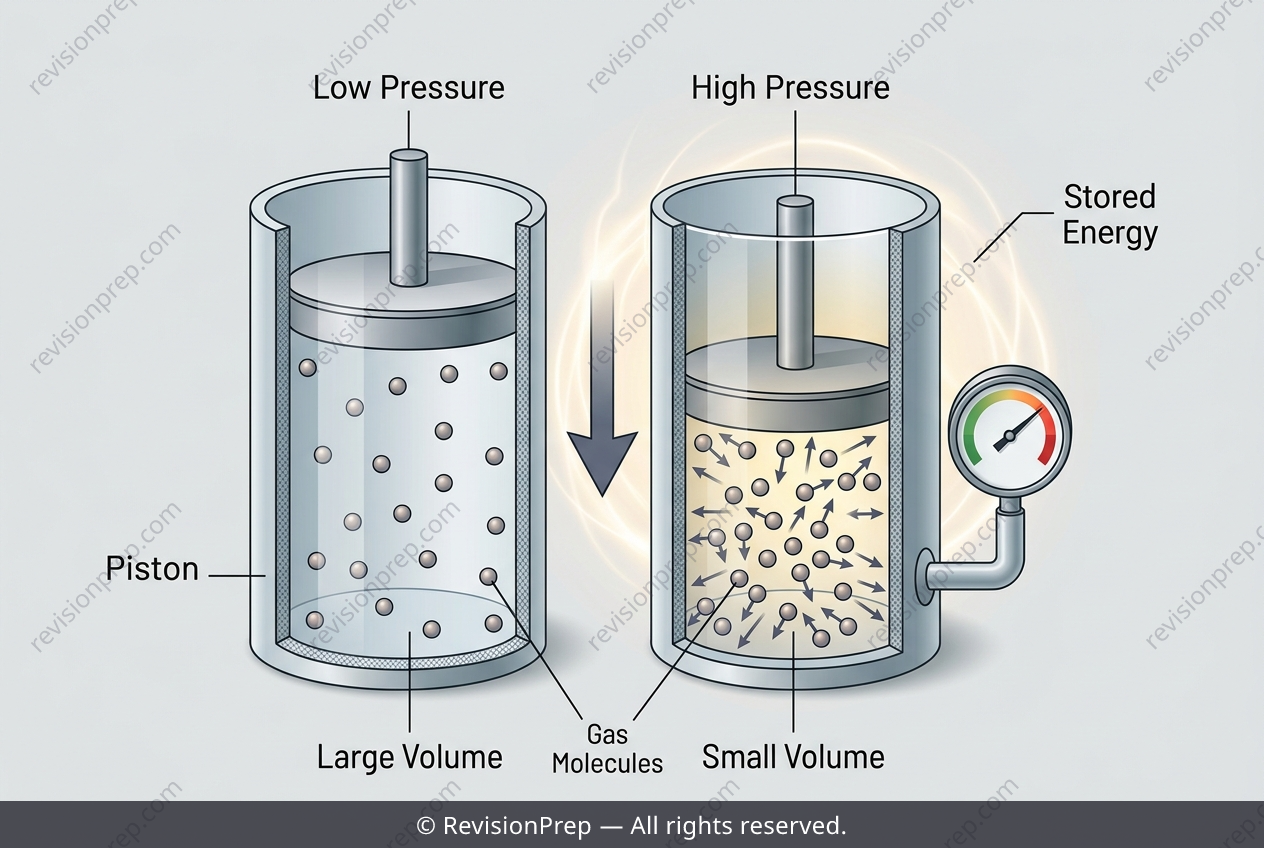
Gases behave very differently from solids and liquids because their particles are widely spaced and move freely. This means a gas can be squeezed into a much smaller volume — compressibility — and will also expand to fill whatever container it occupies. These two properties underpin the behaviour described by the gas laws, where pressure, volume, and temperature are linked: at constant temperature, increasing pressure reduces volume, while the average kinetic energy of the molecules rises with temperature. This matters because compressibility makes gases practical to store and transport. Compressed natural gas, for example, is forced into reinforced cylinders at around 200 atm, shrinking its volume dramatically so a useful quantity of fuel fits on board a bus or delivery vehicle. The same stored energy that makes this convenient also creates risk: a damaged, corroded, or overfilled cylinder can rupture violently. Understanding pressure, volume, and molecular kinetic energy together explains both the usefulness and the hazards of compressed gases.
Start practising IB questions today
150,000+ IB-styled questions, criteria-mapped and instantly accessible.