
Biology: Amplification, Then the Brake
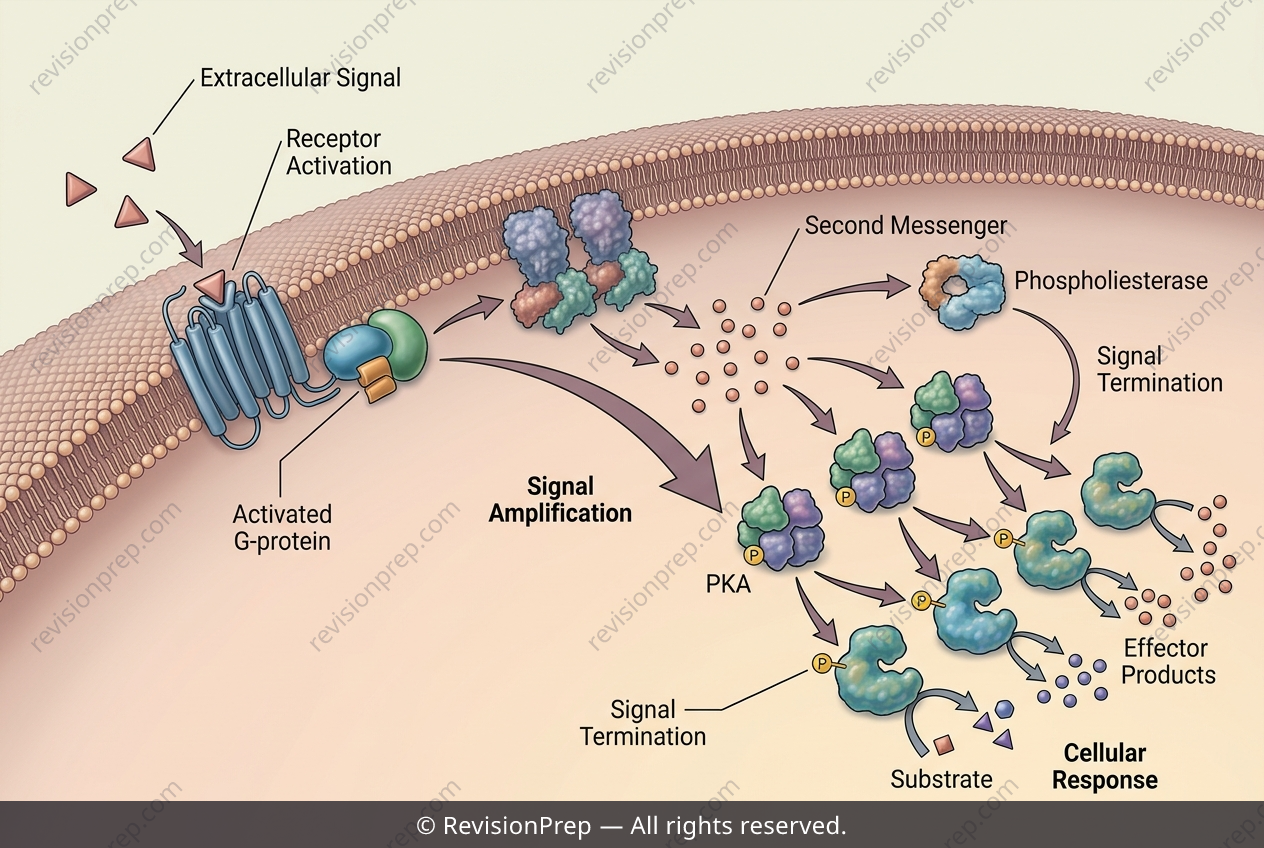
A single hormone molecule should not need to shout to be heard—it whispers, and the cell amplifies that whisper into a roar. This is the essence of signal transduction: a cascade of molecular hand-offs that converts a tiny extracellular signal into a massive intracellular response. In the case of adrenaline binding to G-protein-coupled receptors (GPCRs) on liver cells, the message is urgent: mobilise glucose for fight or flight. The beauty lies in the mathematics of amplification. Each active receptor recruits multiple G-proteins, each G-protein switches on an adenylyl cyclase, and each cyclase churns out hundreds of cyclic AMP (cAMP) molecules per second. These second messengers then activate protein kinase A (PKA), which in turn phosphorylates enzymes to release glucose. The cascade multiplies at every step—100 receptors can ultimately trigger billions of glucose molecules. But this power demands control: phosphodiesterase acts as the brake, degrading cAMP to shut the system down. Without it, the signal would rage unchecked, draining the liver’s glycogen reserves and flooding the blood with sugar.
Start practising IB questions today
150,000+ IB-styled questions, criteria-mapped and instantly accessible.