
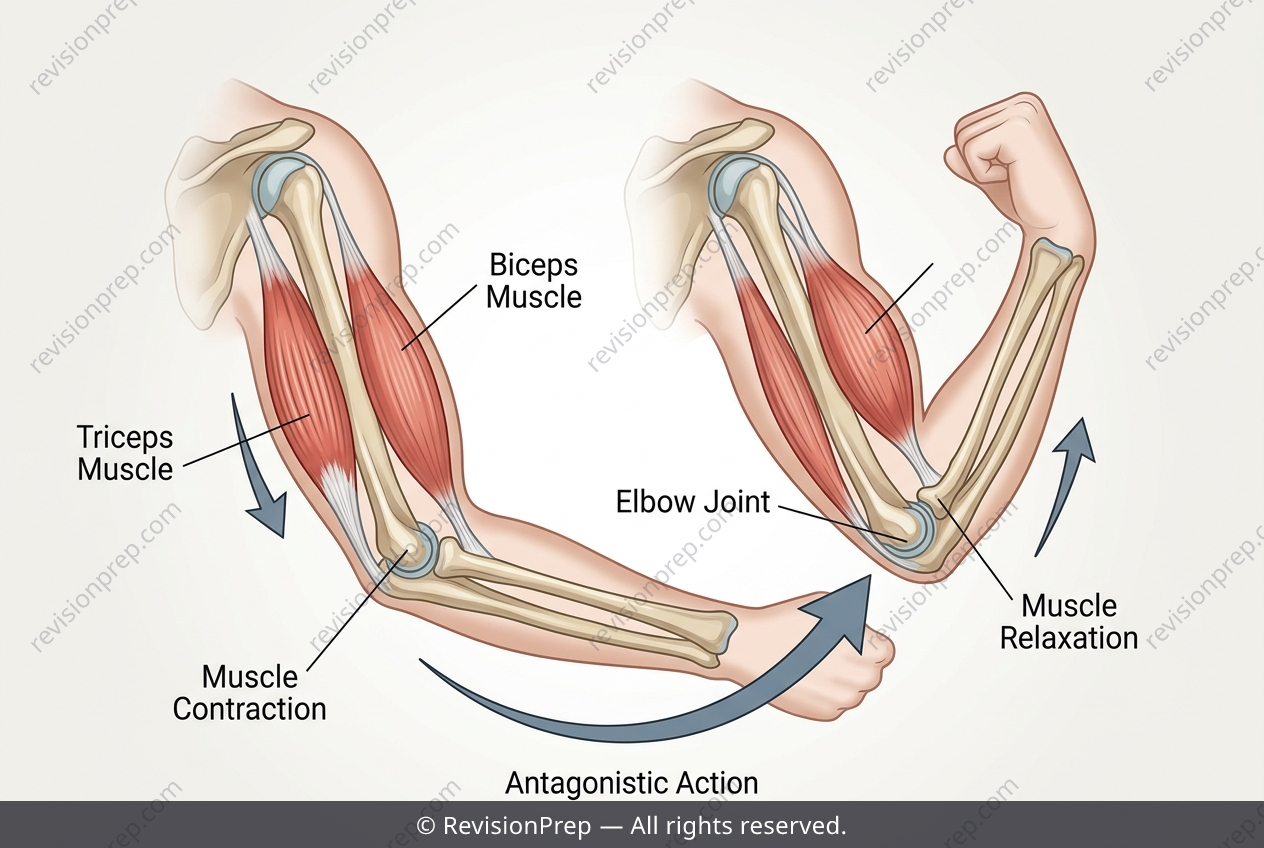
Biology: Antagonistic Muscle Pairs: Biceps and Triceps in Action
The human body moves through a beautifully coordinated system of levers and pulleys, and at the heart of this lies the concept of antagonistic muscle pairs. When you bend your arm at the elbow, you are witnessing a precise, reciprocal dance between two major muscles: the biceps and the triceps. This simple action is a perfect model for understanding how skeletal muscles, which can only pull and never push, create movement by working in opposition. The key relationship is one of contraction and relaxation. As the arm bends, the biceps—the prime mover—actively shortens and tightens to pull the forearm upward. Simultaneously, the triceps, acting as the antagonist, must lengthen and relax to allow this movement to occur smoothly. This coordinated mechanism ensures that the joint is not fighting against itself, preventing damage and enabling controlled, efficient motion. Without this paired relaxation, even the simplest gesture would be stiff and jerky, highlighting why this antagonistic design is fundamental to all voluntary movement.
Start practising IB questions today
150,000+ IB-styled questions, criteria-mapped and instantly accessible.