
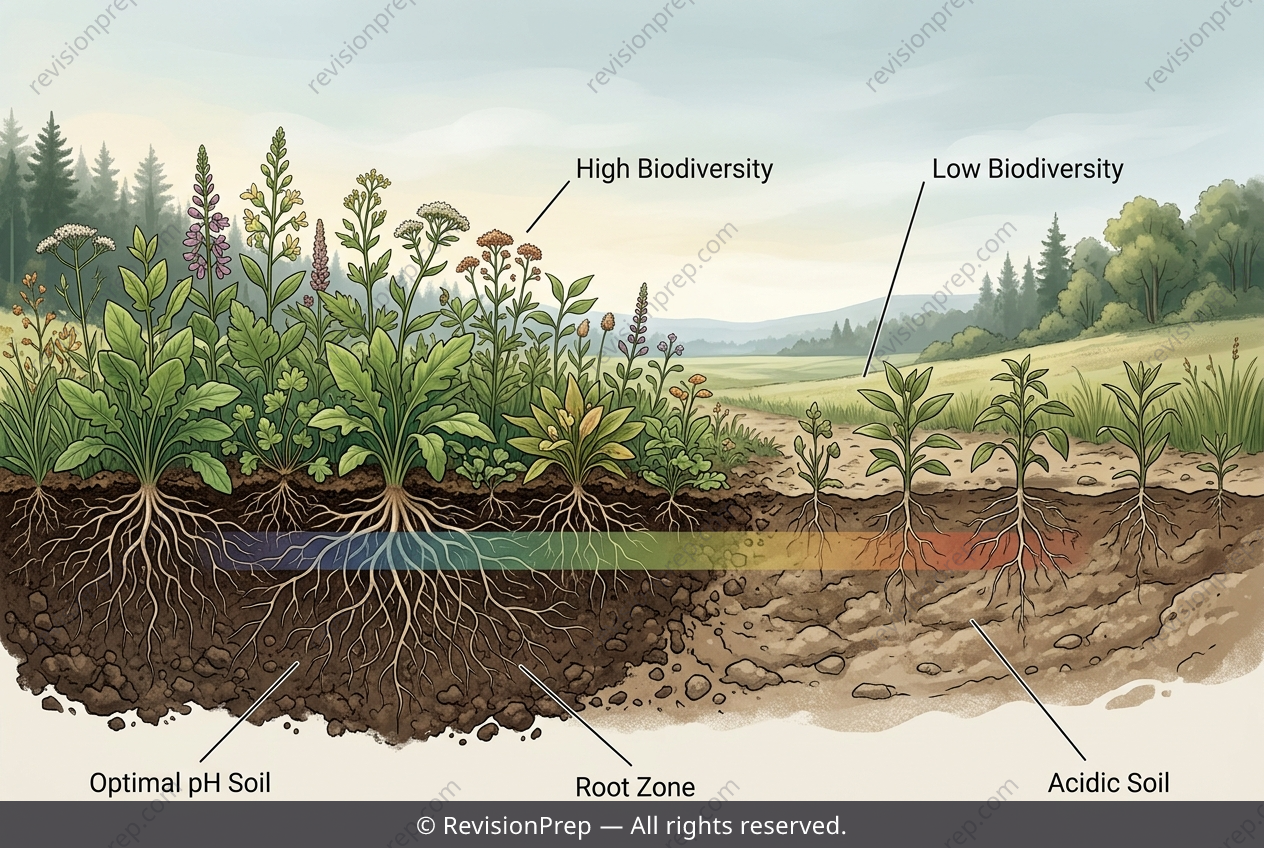
Biology: Why Falling pH Means Falling Biodiversity
Soil pH is one of the most influential abiotic factors shaping terrestrial ecosystems. It governs the availability of nutrients, the solubility of toxic ions such as aluminium, and the activity of decomposing microorganisms, so it indirectly determines which plants can establish and persist. Because different species tolerate different acidity levels, pH acts as a filter on community composition: as soils become more acidic, the range of species able to survive narrows, and overall biodiversity tends to fall. This relationship between an abiotic factor and ecosystem biodiversity is central to understanding environmental change and pollution. Industrial activity, acid deposition and waste discharge can all lower soil pH over time, gradually reducing the number of plant species a habitat supports. In the data below, five sites near a factory show a clear pattern linking declining pH to declining species richness, offering a simple but powerful illustration of how a single chemical property can reshape an entire community.
Start practising IB questions today
150,000+ IB-styled questions, criteria-mapped and instantly accessible.