
Biology: Antagonistic Muscle Pairs for Joint Movement
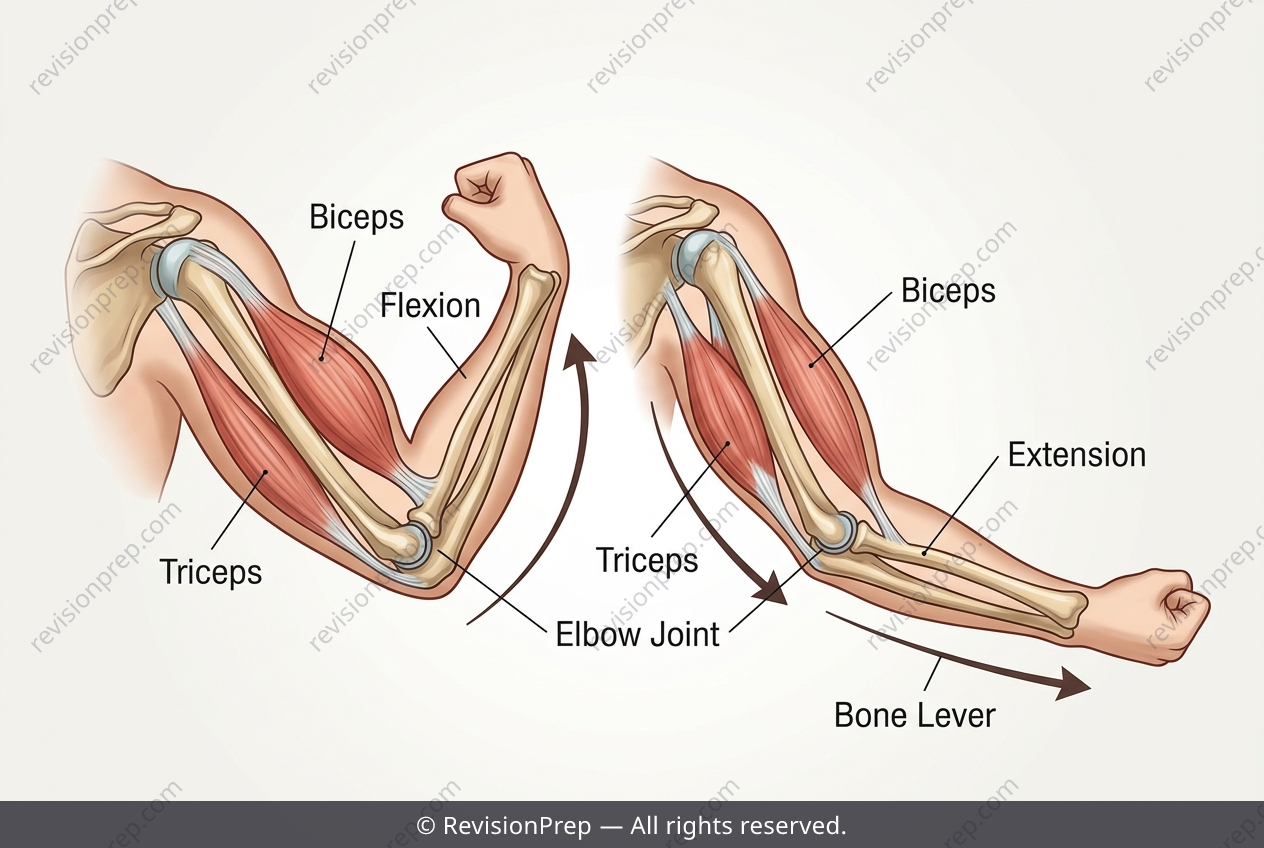
The arm’s ability to bend and straighten hinges on a simple yet elegant partnership: antagonistic muscle pairs. In this system, two muscles work in opposition—one contracts to flex a joint, while the other relaxes to allow the movement. This push-and-pull relationship is the foundation of all voluntary motion, from lifting a cup to throwing a ball. At the elbow, the flexor (muscle A) and extensor (muscle B) are classic examples. When the flexor contracts, it shortens, pulling the forearm upward and bending the arm at the elbow. Simultaneously, the extensor relaxes, permitting this flexion. To straighten the arm, the roles reverse: the extensor contracts while the flexor relaxes. This coordinated action—contraction and relaxation—ensures smooth, controlled movement. The key mechanism is that muscles can only pull, never push, so every joint requires at least two opposing muscles to move back and forth. Understanding this pairing explains not just elbow motion, but the design of all skeletal joints, where the balance between flexor and extensor determines range and stability.
Start practising IB questions today
150,000+ IB-styled questions, criteria-mapped and instantly accessible.