
Biology: Bleaching Light on Membrane Motion
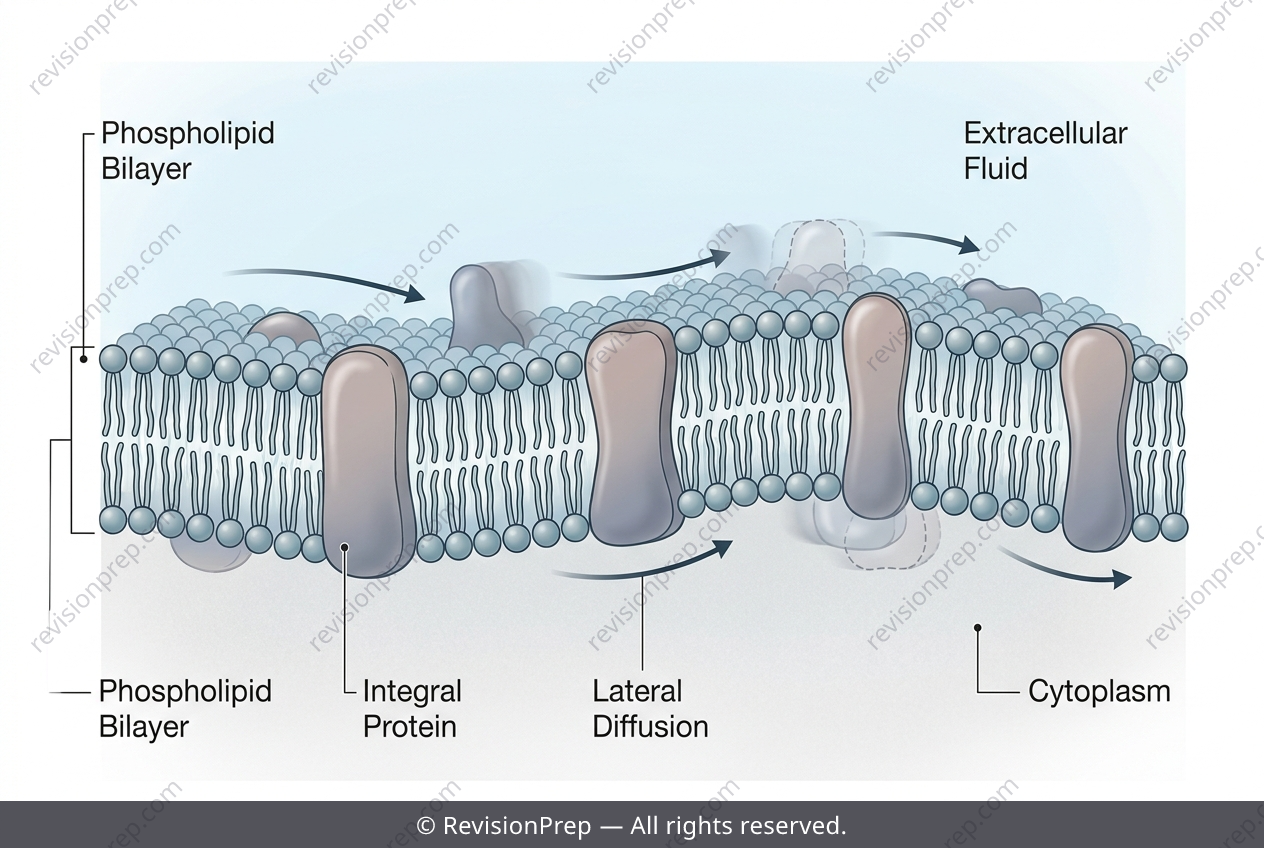
The cell membrane is not a static barrier but a dynamic, ever-shifting mosaic of lipids and proteins. At its heart, the fluid mosaic model describes a phospholipid bilayer where the fatty acid tails remain in a semi-fluid state, allowing integral proteins—those embedded within the membrane—to drift laterally across its plane. This constant motion is the fundamental reason membranes can change shape, cluster receptors, and repair themselves, making fluidity a cornerstone of cellular function. The key to this behaviour lies in the weak hydrophobic interactions between lipids and proteins, which permit movement without breaking the membrane’s integrity. Fluorescence recovery after photobleaching (FRAP) exploits this by irreversibly bleaching a small patch of fluorescently labelled proteins, then observing how quickly unbleached proteins diffuse back into the area. Recovery time directly reflects the lateral diffusion coefficient of the protein—a measure of how freely it moves. While cholesterol can stiffen regions and peripheral proteins only loosely associate with the surface, it is the fluid bilayer itself that enables integral proteins to slide sideways, a process essential for signal transduction and cell recognition.
Start practising IB questions today
150,000+ IB-styled questions, criteria-mapped and instantly accessible.