
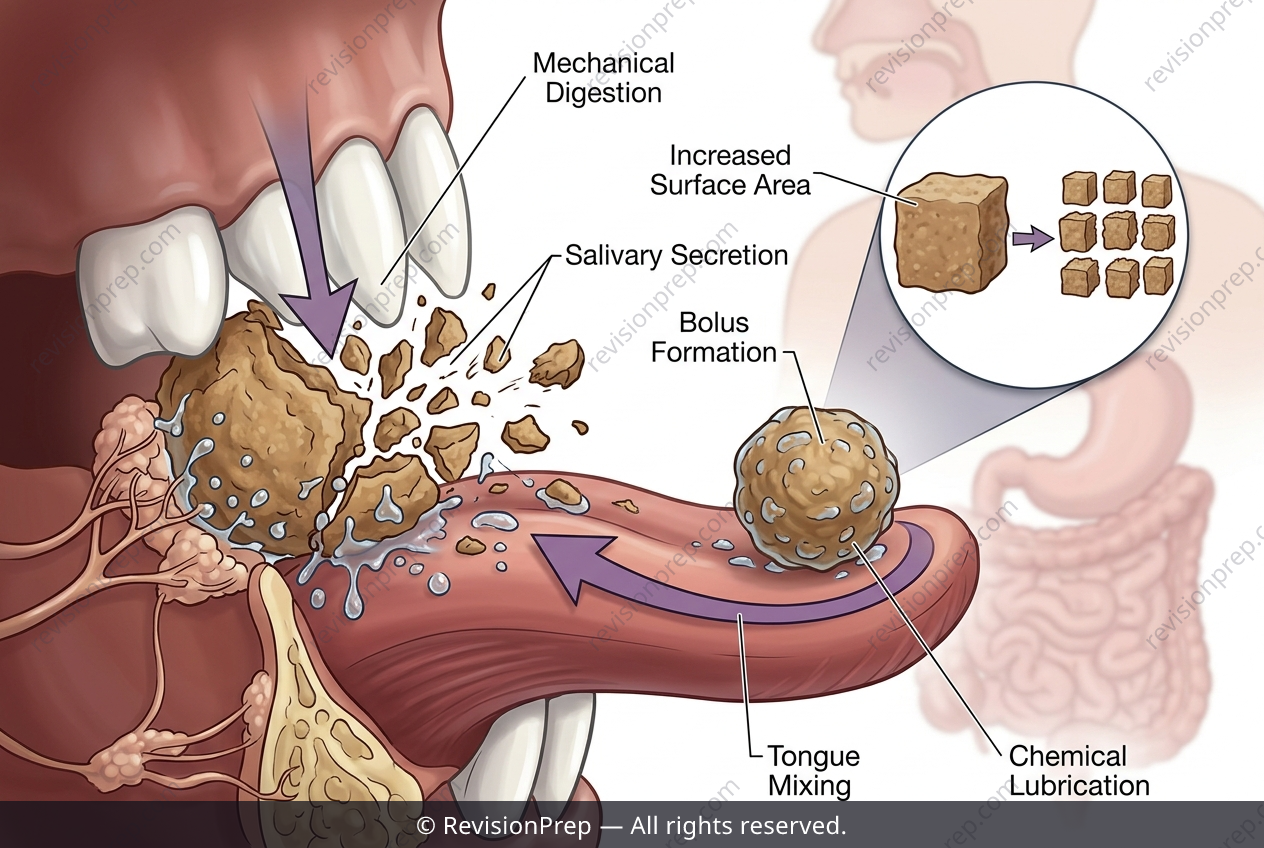
Biology: Bolus Formation: Teeth, Tongue & Saliva in Digestion
The journey of digestion begins long before food reaches the stomach—it starts in the mouth, where mechanical and chemical processes work in tandem. At the heart of this initial stage is the physical breakdown of food by the teeth, a process known as mastication. By cutting, tearing, and grinding, the teeth reduce large pieces into smaller fragments. This seemingly simple action has a profound effect: it dramatically increases the food’s surface area. A larger surface area means that digestive enzymes, which act on food molecules, can access their targets far more efficiently, accelerating the entire digestive process. Working alongside the teeth are the tongue and salivary glands, which transform the chewed fragments into a cohesive unit. The tongue actively moves and mixes the food with saliva, a fluid secreted by the salivary glands. This mixing moistens and softens the material, binding it into a rounded, pliable mass known as a bolus. The bolus is essential for safe and effortless swallowing, as it can glide smoothly down the oesophagus. Together, these structures ensure that food is not only broken down physically but also prepared for the chemical and enzymatic stages that follow.
Start practising IB questions today
150,000+ IB-styled questions, criteria-mapped and instantly accessible.