
Biology: Cardiovascular Adaptation and Biometric Monitoring Accuracy
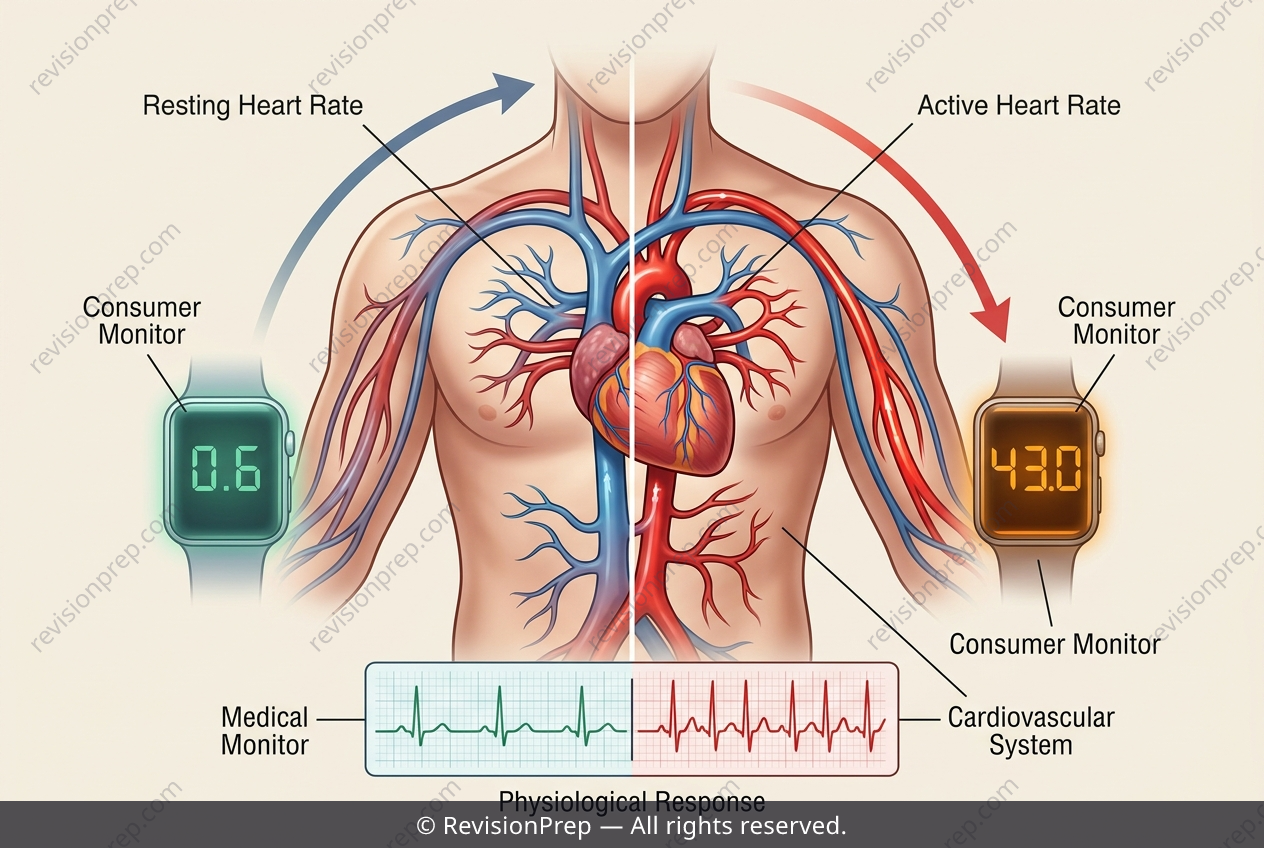
When you sprint across a field or sit still in class, your heart rate shifts dramatically—and understanding that shift is the foundation of cardiovascular physiology. This topic explores how the heart and circulatory system adapt to meet the body’s changing oxygen demands, and how we can measure those adaptations using modern technology. At its core, this concept connects three ideas: the heart’s rate as a dynamic variable, the body’s need to regulate blood flow during rest versus exercise, and the tools we use to observe these changes. A fitness tracker, for instance, records beats per minute (bpm) in real time, giving a snapshot of cardiac output during everyday activity. For a 12-year-old, this instant feedback matters because it helps them stay within a safe exercise zone—avoiding overexertion during a period of rapid physical growth. However, accuracy is not guaranteed: wrist movement or poor sensor placement can distort readings, unlike medical-grade equipment that uses clinical sensors and professional interpretation. The relationship between heart rate, stroke volume, and cardiac output (cardiac output = heart rate × stroke volume) underpins why both monitoring methods exist—one for convenience, the other for precision.
Start practising IB questions today
150,000+ IB-styled questions, criteria-mapped and instantly accessible.