
Biology: Cell Ultrastructure for Absorption
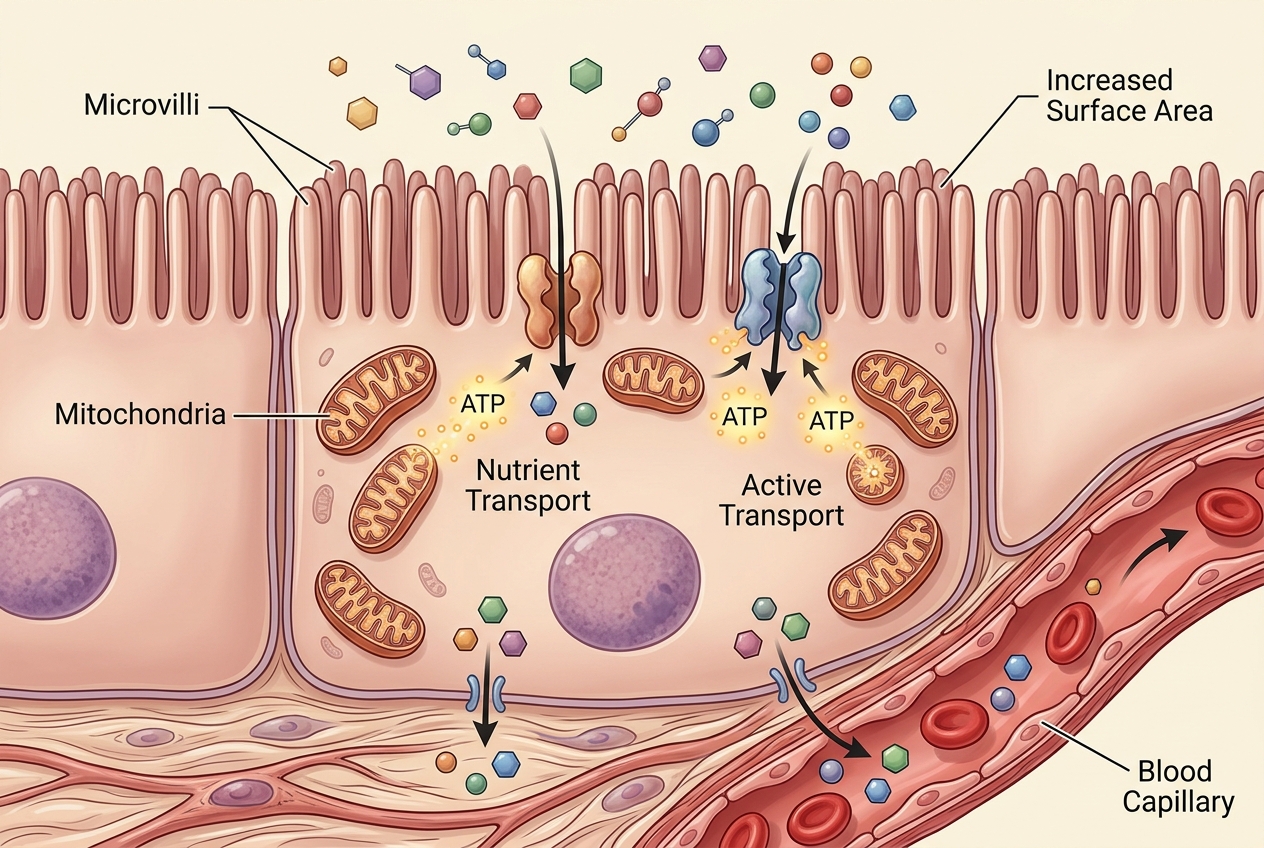
The small intestine is lined with a specialised epithelial cell whose ultrastructure is a masterclass in form following function. At its core, this cell is designed for one purpose: maximising the rate of nutrient absorption from the intestinal lumen. Every visible feature, from the surface to the interior, is an adaptation that accelerates the movement of molecules across the membrane, whether by passive diffusion or active transport. The key to this efficiency lies in two interdependent structural features. First, the apical membrane is covered in densely packed microvilli, which dramatically increase the surface area available for transport proteins. Second, mitochondria are concentrated near this apical surface, positioning the primary source of ATP directly adjacent to the active transport sites. This close spatial relationship ensures that the energy required to pump glucose and amino acids against their concentration gradients is delivered with minimal diffusion distance. Together, the expanded surface area and the localised energy supply create a system where increased absorptive capacity is matched by an equally robust energy budget, illustrating how ultrastructure directly dictates physiological performance.
Start practising IB questions today
150,000+ IB-styled questions, criteria-mapped and instantly accessible.