
Biology: Chemiosmosis and the Leaky Membrane
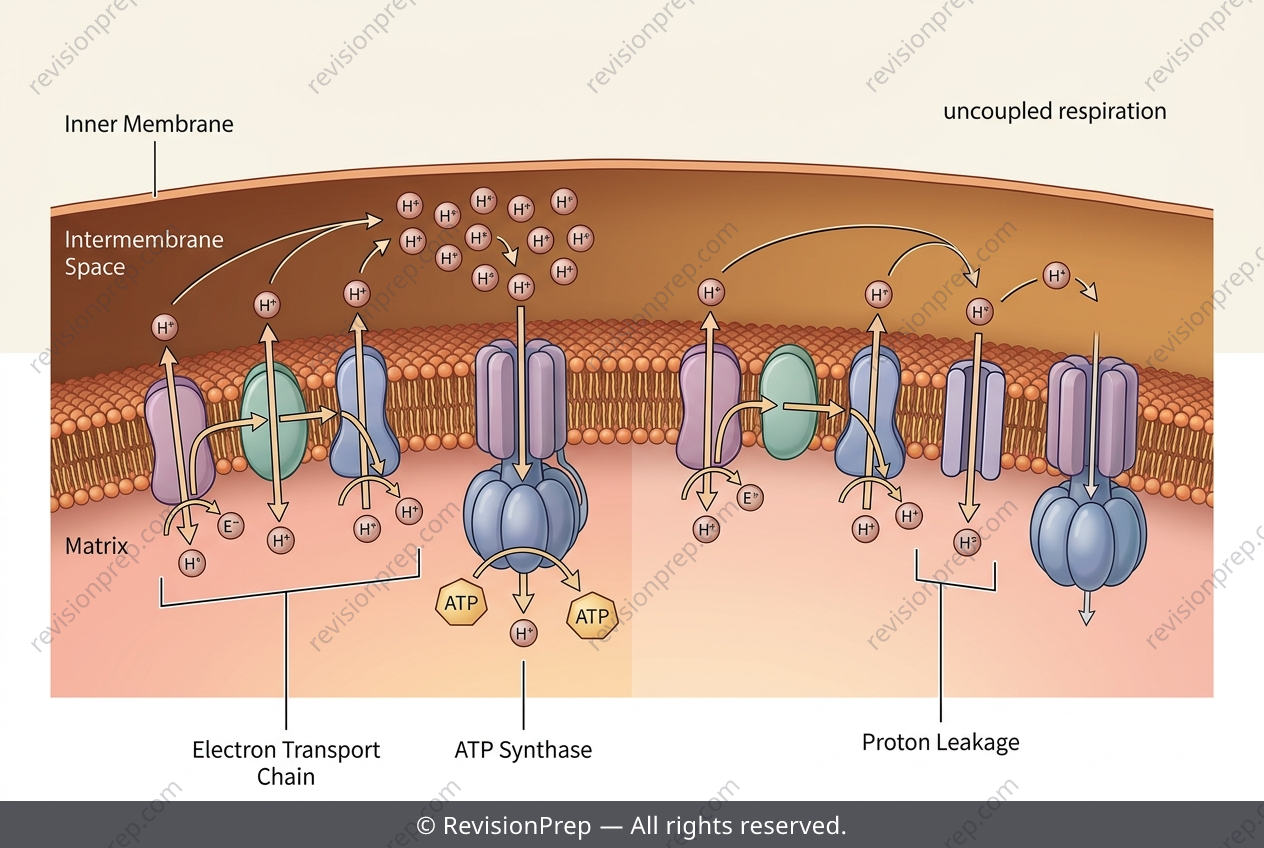
Oxidative phosphorylation is the final stage of cellular respiration, where the energy stored in electron carriers is finally converted into ATP. At its heart is chemiosmosis, a process that links the electron transport chain (ETC) to ATP synthase via a proton gradient. The inner mitochondrial membrane houses the ETC, which pumps protons (H⁺) from the matrix into the intermembrane space, creating a concentration and charge gradient. This gradient is the key—it represents stored potential energy. That energy is harnessed as H⁺ flows back down its gradient through ATP synthase, a molecular turbine that phosphorylates ADP to form ATP. The entire system depends on the membrane being impermeable to protons, forcing them to take the ATP synthase route. Oxygen acts as the final electron acceptor, driving the ETC forward. By measuring oxygen consumption, we can track the rate of this process. When the membrane is made leaky to H⁺, as with uncouplers like DNP, the gradient dissipates without generating ATP, and the ETC accelerates futilely, consuming more oxygen while releasing energy as heat.
Start practising IB questions today
150,000+ IB-styled questions, criteria-mapped and instantly accessible.