
Biology: Compartments—The Eukaryotic Edge
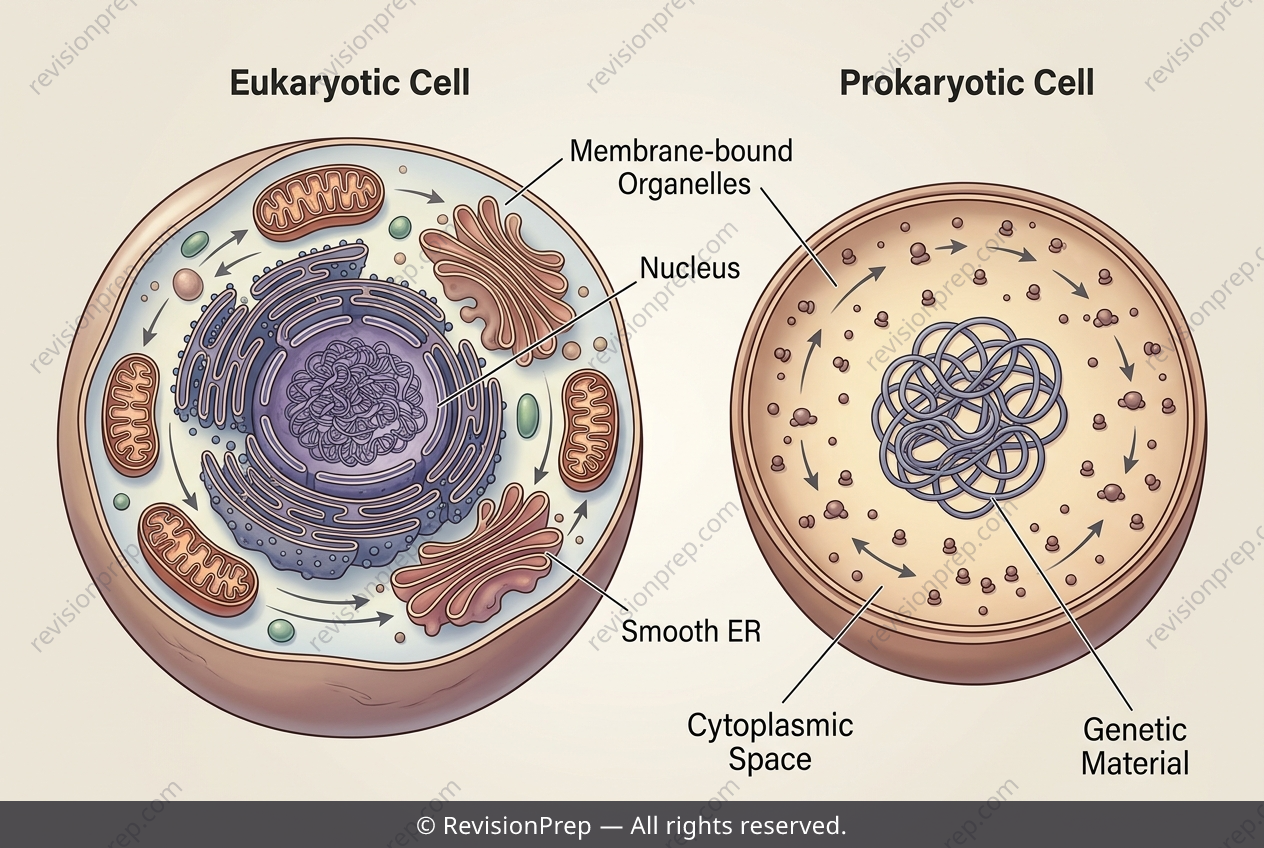
The structural divide between prokaryotic and eukaryotic cells is one of the most fundamental distinctions in biology, shaping how life organises its internal chemistry. At its core, this topic contrasts the simple, open cytoplasm of a prokaryote (like a bacterium) with the intricate, membrane-bound architecture of a eukaryote (like a plant or animal cell). The presence or absence of internal membranes is not just a cosmetic difference—it dictates the very logic of cellular function. In a eukaryotic cell, the nuclear envelope and organelles such as mitochondria and chloroplasts create distinct compartments. This functional compartmentalisation allows incompatible reactions—like protein digestion and ATP synthesis—to occur simultaneously in separate, optimised environments. In contrast, a prokaryotic cell lacks these internal boundaries, so all metabolic processes share a single cytoplasmic space, meaning reactions must be coordinated without spatial isolation. This explains why eukaryotes can achieve greater metabolic complexity, while prokaryotes rely on speed and simplicity. Understanding this contrast is key to predicting which processes can occur where, and why compartmentalisation is a hallmark of eukaryotic life.
Start practising IB questions today
150,000+ IB-styled questions, criteria-mapped and instantly accessible.