
Biology: EC50 and the Language of Cells
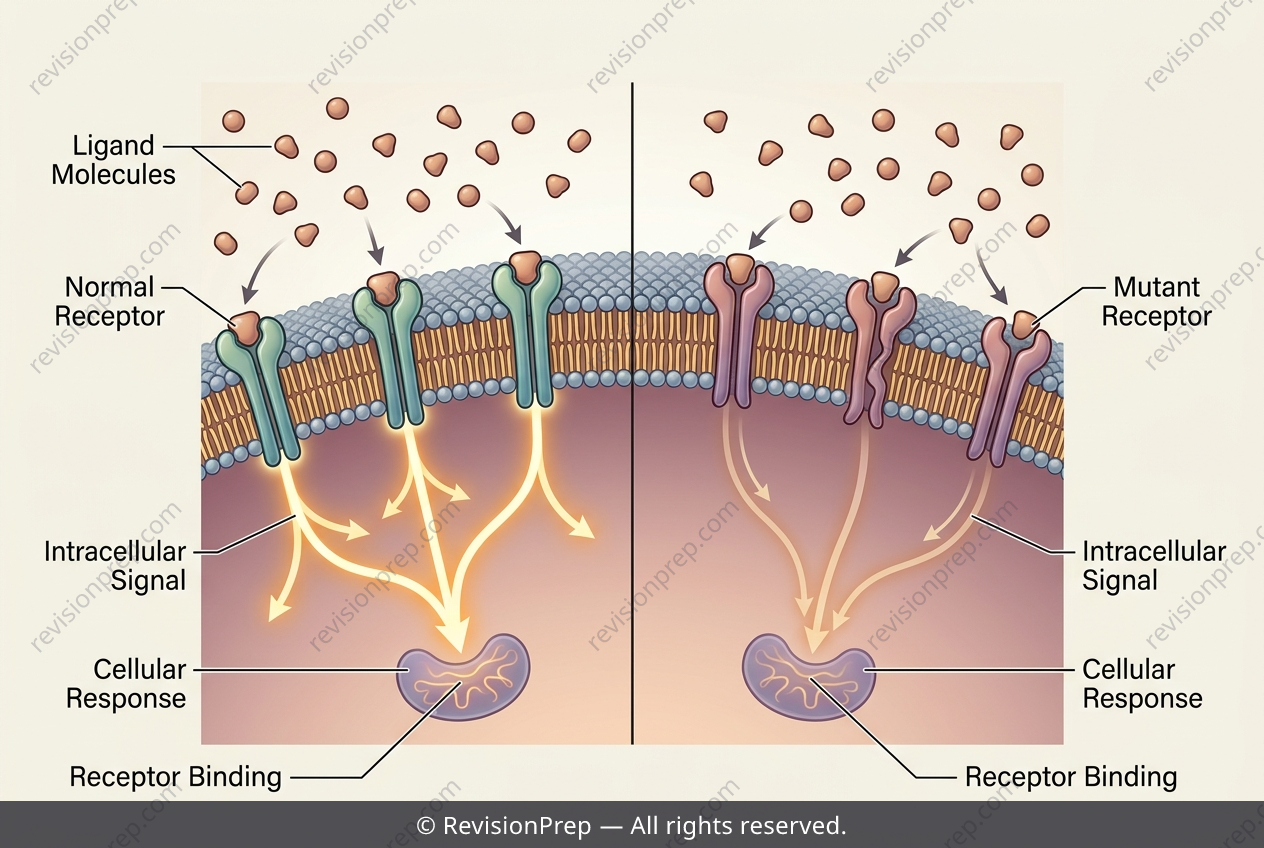
Paracrine signalling is how cells talk to their immediate neighbours, and in the inflammatory response, it’s the difference between a localised repair and a systemic crisis. At its heart lies receptor-ligand dynamics: the binding of a chemical messenger (the ligand) to a specific receptor, which then triggers a cascade of intracellular events. This interaction is not binary—it’s graded, governed by the relationship between ligand concentration and the receptor’s EC50, the concentration needed for half-maximal activation. Understanding this relationship explains why a mutation that raises EC50—meaning lower binding affinity—can blunt a cellular response. At a given histamine concentration, a normal receptor may be near saturation, while a mutant receptor only achieves partial occupancy. Fewer receptor-ligand complexes mean fewer activated G-proteins and second messengers, so the downstream amplification is reduced, producing weaker vasodilation and less capillary permeability. The system’s sensitivity is therefore a product of both receptor number and affinity, and the same signal can produce vastly different outcomes depending on the receptor’s molecular state. This balance between signal strength and receptor sensitivity is central to how cells fine-tune their responses to injury.
Start practising IB questions today
150,000+ IB-styled questions, criteria-mapped and instantly accessible.