
Biology: Enzyme-Substrate Specificity Through Lactose Intolerance
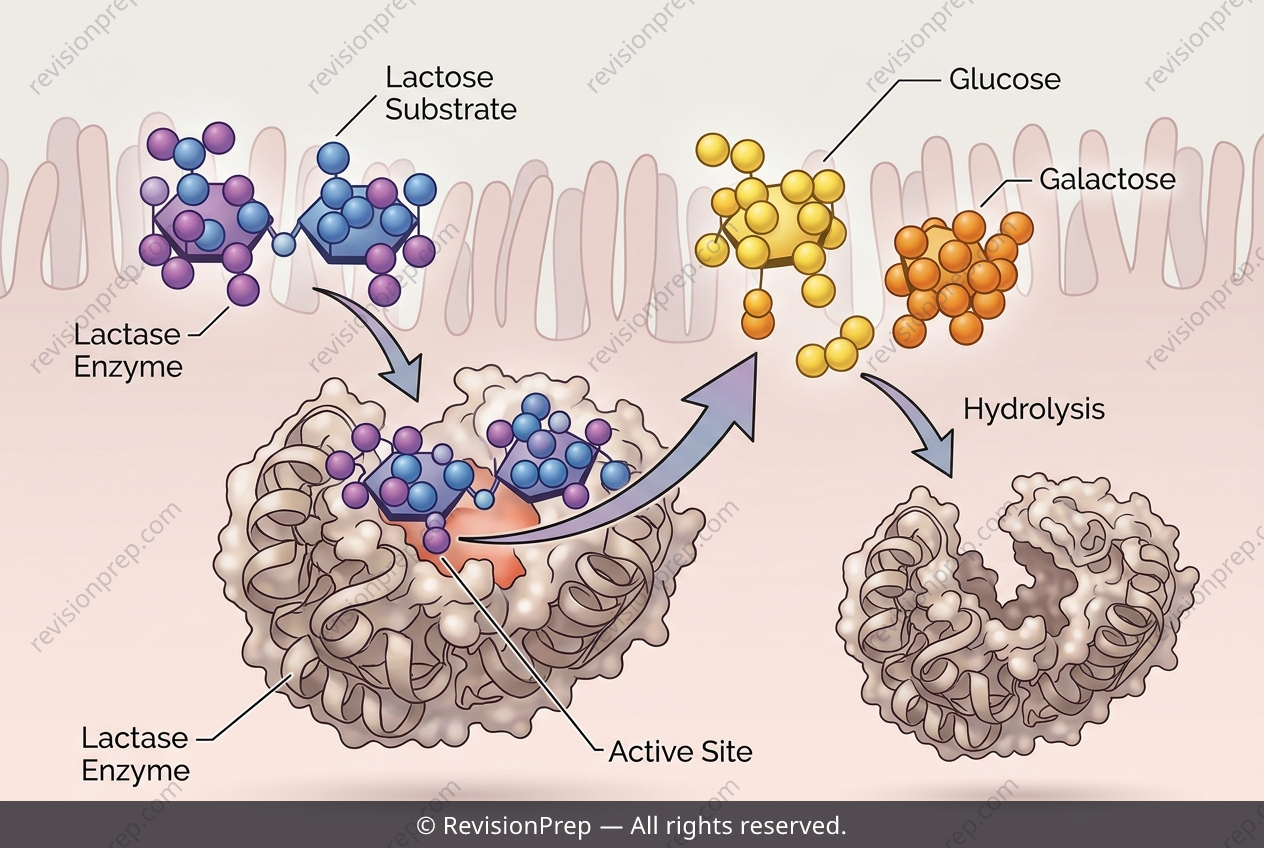
Enzymes are the body’s molecular scissors, and nowhere is their precision more evident than in digestion. At the heart of this process lies enzyme-substrate specificity: each enzyme is shaped to bind only one type of substrate, like a key fitting a specific lock. For lactose, the enzyme lactase is that key, and its job is to perform hydrolysis—a chemical reaction that splits a larger molecule by adding water. In this case, lactase hydrolyses lactose into two simpler sugars, glucose and galactose, which are small enough to be absorbed through the wall of the small intestine into the bloodstream. This specificity explains why a deficiency in lactase leads to lactose intolerance: without the enzyme, undigested lactose travels to the large intestine, where bacteria ferment it, producing gas and discomfort. A lactase supplement works by providing the missing enzyme externally, effectively performing the same hydrolysis that natural lactase would. However, the supplement is a temporary workaround—it does not restore the body’s own production. The relationship between enzyme, substrate, and product is therefore not just a biochemical fact but a practical model of how a single missing catalyst can disrupt an entire system, and how a supplement can bridge that gap only as long as it is present.
Start practising IB questions today
150,000+ IB-styled questions, criteria-mapped and instantly accessible.